Can You Put Tile on Plywood What to Know
Many homeowners wonder, “Can You Put Tile on Plywood? What to Know First” before starting a tiling project. It seems like a simple question, but the answer isn’t always a straightforward yes.
Plywood can be a good base for tiles, but not all plywood is created equal, and there are some important things to check first. If you get it wrong, your beautiful new tile floor could end up cracked or loose. Don’t worry, though!
We’ll break down exactly what you need to know in easy steps so you can tile with confidence. Let’s look at what makes plywood ready for tile.
Can You Put Tile on Plywood? What to Know First
This section talks about whether plywood is a good surface for tiling and what makes it suitable. We’ll cover the basic idea that plywood can work, but it needs to be the right kind and prepared well. This will help you decide if your current plywood subfloor is ready for a tile makeover or what needs to be done to make it ready.
Plywood as a Tile Subfloor A Basic Look
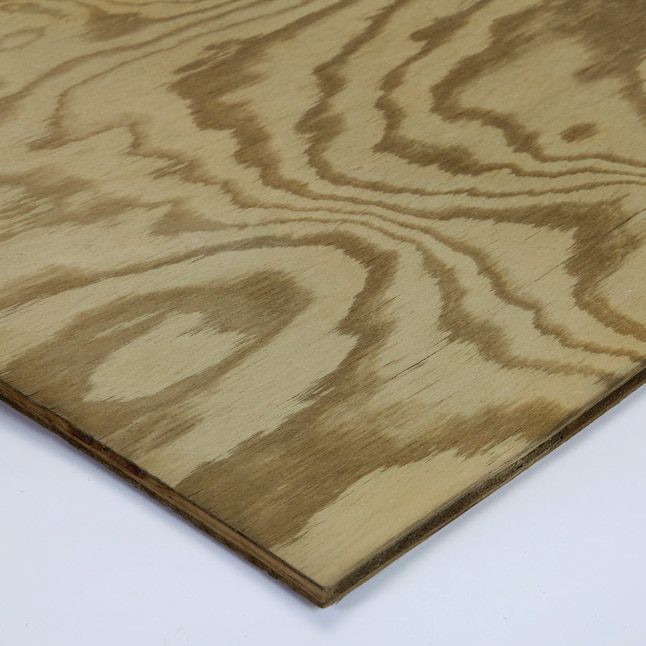
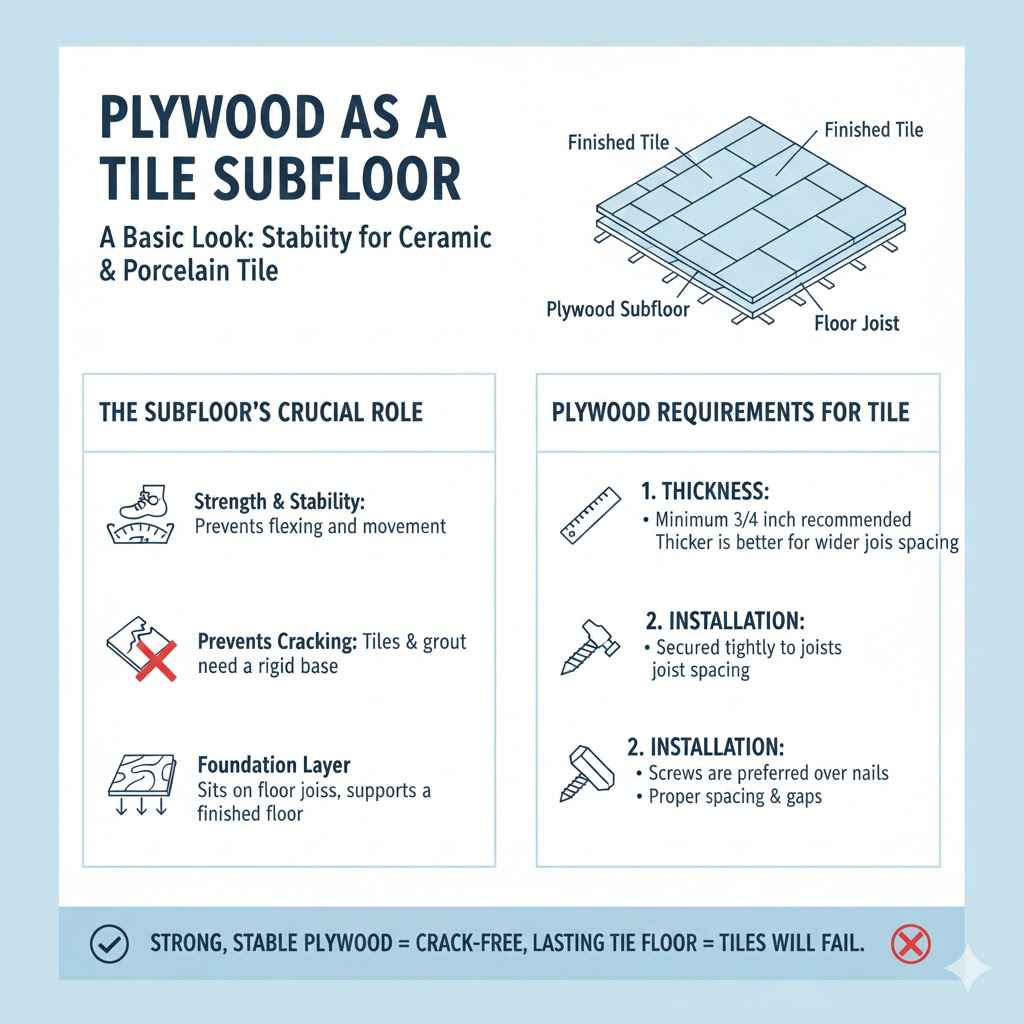
Plywood is a common material used for subfloors in homes. A subfloor is the layer of wood that sits directly on top of your floor joists, and it’s what you install your finished flooring on top of. When it comes to tiling, the subfloor needs to be very strong and stable.
This means it shouldn’t bend or move too much when you walk on it, because tiles and grout can crack if the floor moves.
Plywood can be a decent subfloor for tile if certain conditions are met. It’s made by gluing thin layers of wood together, which makes it pretty strong. However, the thickness of the plywood and how well it’s attached to the joists are super important.
A weak or flexible plywood subfloor is the main reason why tiles can end up cracking or becoming loose over time. We need to make sure the plywood is thick enough and secured tightly to prevent any movement.
Thickness Requirements for Plywood Under Tile
The thickness of your plywood subfloor is one of the most critical factors when deciding if you can tile over it. For most standard tile installations, a minimum of 3/4-inch (19mm) thick plywood is recommended. This thickness helps to provide the necessary rigidity to prevent excessive flexing of the floor when weight is applied.
If your plywood subfloor is thinner than 3/4 inch, especially if it’s 1/2 inch (12.7mm) or less, it’s generally not considered strong enough on its own for a tile installation. Thinner plywood will flex too much, which can lead to cracked tiles and grout. In such cases, you’ll likely need to add another layer of plywood or a different underlayment material to create a stable base.
When checking the thickness, make sure you’re looking at the actual plywood subfloor, not any carpet padding or other soft materials that might be on top. Sometimes, you might need to lift a corner of existing flooring to see the actual subfloor thickness.
A common rule of thumb is that the span of your floor joists (the distance between the beams supporting your floor) will influence the required plywood thickness. For typical 16-inch on-center joist spacing, 3/4-inch plywood is usually sufficient. If your joists are spaced further apart, you might need thicker plywood or additional support.
Types of Plywood and Their Suitability
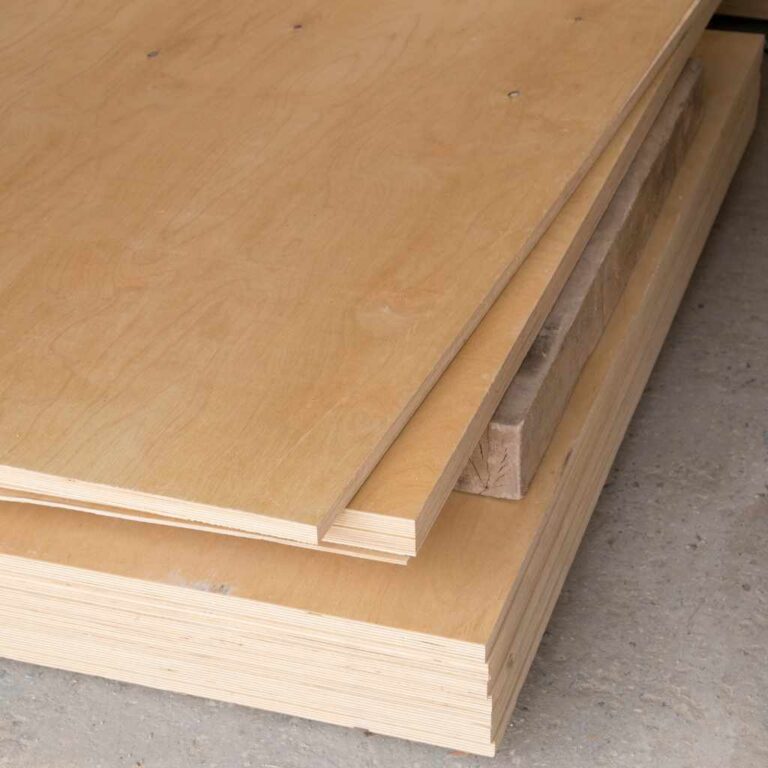
Not all plywood is created equal, and some types are much better suited for tiling than others. The most common type of plywood you’ll find used for subflooring is referred to as “construction grade” or “CDX” plywood. CDX is a grade that indicates its intended use.
The ‘C’ and ‘D’ refer to the quality of the wood veneers used on each side, with ‘C’ being better than ‘D’. The ‘X’ means it’s rated for exterior use, which implies it uses waterproof glue, making it more resistant to moisture than interior-grade plywood.
While CDX plywood can be used, it’s important to ensure it’s of good quality and free from large knots or voids that could weaken it. There are also specialized underlayment grade plywoods available, which are designed to provide a smooth and stable surface for flooring. These can be an excellent choice if you’re looking to install tile.
You should avoid using particleboard or oriented strand board (OSB) as a direct subfloor for tile unless it’s specifically rated for this application or you add a suitable underlayment. Particleboard and some types of OSB can break down when exposed to moisture, and they don’t offer the same level of stability as good quality plywood.
The quality of the glue used in the plywood also matters. Plywood made with exterior-grade adhesives is less likely to delaminate (separate into layers) if it encounters any moisture, which is a significant concern in areas like bathrooms or kitchens where spills can happen.
Checking Your Existing Plywood Subfloor
Before you even think about laying tile, it’s essential to carefully check the condition of your current plywood subfloor. This step is crucial because trying to tile over a damaged or unstable subfloor will lead to problems down the road, no matter how well you tile.
Look for any signs of water damage. This could include dark stains, soft spots, or areas where the plywood seems to be breaking apart. Water damage can weaken the plywood significantly, making it unsuitable for tiling.
If you find any water-damaged areas, they will need to be cut out and
Also, check how well the plywood is attached to the floor joists. The plywood should be laid flat and securely fastened to the joists. If you notice any loose boards, squeaking floors, or areas where the plywood seems to be lifting, these will need to be addressed.
Loose plywood means the floor can move, which is bad for tile.
Tap on the plywood with your foot or a hammer handle. Listen for any hollow sounds, which could indicate delamination or areas where the plywood is no longer bonded well to the joists. A solid sound means the plywood is firmly attached and stable.
It’s also important to check for any dips or humps in the subfloor. The plywood should be as flat and level as possible. Unevenness can cause issues with tile adhesion and can result in a finished floor that looks unprofessional and can be prone to damage.
If you have multiple layers of subflooring, ensure they are all in good condition and securely fastened. Sometimes, an existing subfloor might be covered by another layer. Understanding the total thickness and condition of all layers is important for determining the overall stability.
Signs of Moisture Damage and Weakness
Moisture is the enemy of plywood when it comes to tiling. Even if your plywood seems thick enough, if it has been compromised by water, it might not be suitable. The most obvious sign of moisture damage is discoloration, often appearing as dark or black stains.
These stains indicate that water has penetrated the wood and potentially caused rot.
Another key indicator is softness. If you can press your finger or a screwdriver into the plywood and it feels spongy or gives way easily, this means the wood fibers have likely degraded. This softness is a direct result of moisture breaking down the wood and its glues.
Such areas must be removed and replaced.
You might also notice warping or cupping of the plywood. This happens when one side of the plywood absorbs more moisture than the other, causing it to swell and distort. Warped plywood creates an uneven surface, which is difficult to tile over and can lead to tiles not adhering properly.
Look for signs of mold or mildew. These organisms thrive in damp conditions and indicate a persistent moisture problem. If mold is present, it’s a clear sign that the area needs to be thoroughly dried and the affected material replaced.
Delamination, where the layers of plywood start to separate, can also be caused by prolonged exposure to moisture. You might see bubbles or edges lifting. This weakens the structural integrity of the plywood, making it unstable for tiling.
Ensuring Plywood is Securely Fastened
A secure subfloor is paramount for a durable tile installation. This means the plywood must be firmly attached to the floor joists. Loose plywood will move when you walk on it, causing stress on the tile and grout, leading to cracks and potential failure of the installation.
Inspect the subfloor for nails or screws that have loosened over time. You might hear squeaking when you walk on certain areas, which is a common sign of loose subflooring. If you find loose fasteners, you can often reinforce them by adding more screws or using a construction adhesive.
When adding screws, use screws specifically designed for subflooring. These screws have a self-drilling tip and threads that grip the wood securely, preventing them from backing out. Make sure the screws are long enough to go through the plywood and into the floor joists.
For 3/4-inch plywood, screws around 1 3/4 to 2 inches long are generally suitable.
If the plywood is particularly old or has many loose spots, you might consider laying a new layer of plywood on top. This not only adds thickness but also helps to create a fresh, secure surface for tiling. When installing a second layer, ensure the seams of the new plywood do not line up with the seams of the original layer; this is called staggering the seams and creates a much stronger floor.
The spacing of fasteners is also important. Generally, screws or nails should be placed about 6 inches apart along the edges of the plywood and around 10-12 inches apart in the field (the middle areas) of the sheet. This ensures consistent support across the entire surface.
Preparing the Plywood for Tile
Once you’ve confirmed your plywood subfloor is in good condition and securely fastened, the next step is to prepare it properly. This preparation is key to ensuring the tile adheres well and the floor remains stable. It involves cleaning, leveling, and sometimes adding an extra layer for stability and moisture protection.
The plywood surface needs to be completely clean and free of any debris, dust, paint, wax, or old adhesive. Any contaminants on the surface can prevent the thin-set mortar (the adhesive used for tiles) from bonding correctly to the subfloor. A thorough cleaning will make a big difference in the final result.
If the plywood has any high spots or unevenness, these need to be addressed. You can often fix minor imperfections by sanding them down. For more significant dips or humps, you might need to use a floor leveling compound.
A smooth and flat surface is essential for a professional-looking tile job.
Adding a cement board or a suitable decoupling membrane is a highly recommended step, especially over plywood. While plywood can be a subfloor, it’s still a wood product that can be affected by moisture and expansion/contraction. These additional layers provide a more stable and waterproof base.
Let’s look at these preparation steps in more detail to make sure you’re ready to lay tile.
Cleaning and Leveling the Subfloor
A clean subfloor is the foundation of a successful tile installation. Before applying any adhesives or underlayment, sweep and vacuum the plywood thoroughly to remove all dust, dirt, and debris. If there are any stubborn remnants of old glue, paint, or other coatings, you may need to scrape them off or use a solvent designed for that purpose.
Ensure the area is completely dry after cleaning.
Leveling is just as important. Use a long, straight edge or a level to check the flatness of the plywood. Any areas that are more than 1/8 inch out of level over a 10-foot span should be addressed.
High spots can usually be sanded down. For low spots or dips, a self-leveling underlayment (SLU) is the best solution. This is a cementitious product that you mix with water and pour onto the floor, where it flows and settles to create a perfectly flat and smooth surface.
Applying SLU requires careful preparation, including sealing any cracks or holes and using a primer recommended by the manufacturer to ensure proper adhesion. Follow the manufacturer’s instructions precisely regarding mixing ratios and application to achieve the best results. A well-leveled floor prevents lippage (where the edges of adjacent tiles are not flush) and ensures that tiles sit flat and securely.
For very minor imperfections, a patching compound specifically designed for subfloors can be used. However, for significant leveling, SLU is typically the preferred method for achieving a professional finish. The key is to have a uniform and smooth plane for the tile to adhere to.
Using Underlayment or Backer Board
While you might be able to tile directly over certain types of plywood subfloors, it’s generally best practice to install an underlayment or a cement board. This extra layer adds significant benefits to your tile installation.
Cement board is a rigid sheet made of cement and reinforcing fibers. It’s highly water-resistant and provides an excellent, stable surface for tiling, especially in wet areas like bathrooms. It doesn’t expand or contract much with changes in humidity, which helps prevent tiles from cracking.
It’s typically fastened to the plywood subfloor with special screws designed for cement board.
Another option is a decoupling membrane. These membranes are designed to absorb the movement between the subfloor and the tile. They create a separation layer, preventing cracks in the subfloor from transferring to the tile.
Some decoupling membranes also offer waterproofing benefits. They are often thin and can be adhered to the subfloor with a thin-set mortar or a specialized adhesive.
Even if your plywood subfloor is in excellent condition, using a cement board or decoupling membrane provides an additional layer of protection and stability. This is especially true if you are tiling over plywood in a high-moisture area. It adds a bit of cost and labor but significantly increases the longevity and success of your tile floor.
When installing cement board, ensure the seams of adjacent sheets are staggered, just like with plywood. Also, apply thin-set mortar to the back of the cement board before screwing it down, which helps to bond it securely to the plywood and prevents any voids.
When choosing a decoupling membrane, consider its thickness and any additional features like sound dampening or heating capabilities if that’s something you’re looking for.
Installing Tile on a Plywood Subfloor With Confidence
Now that you’ve checked and prepared your plywood subfloor, you’re ready to install tile. This section will guide you through the actual tiling process, focusing on how to work with your prepared plywood base. Remember, the steps you took to prepare the subfloor are crucial for the success of this final stage.
The type of thin-set mortar you use is important. You’ll want to select a thin-set mortar that’s specifically designed for use with your chosen underlayment and tile type. Always read the manufacturer’s recommendations.
The thin-set mortar is what actually bonds the tile to the subfloor (or the underlayment). It needs to be spread evenly to ensure full coverage under each tile.
Using the right trowel size for applying the thin-set is also key. The size of the notches on the trowel determines how much mortar is applied. A larger trowel is typically used for larger tiles to ensure adequate coverage.
When laying the tiles, ensure you maintain consistent spacing between them. This space is for grout, which fills the gaps and gives the tile a finished look. Use tile spacers to keep the grout lines even.
The grout also helps to distribute weight evenly across the tiles.
Take your time and work in small sections. This prevents the thin-set mortar from drying out before you can set the tiles. Check each tile as you lay it to make sure it’s level and properly set in the mortar.
Once the tiles are all set and the mortar has cured, you can move on to grouting.
Finally, remember to allow adequate curing time for both the thin-set mortar and the grout before walking on the floor or exposing it to heavy use. This ensures the entire installation is strong and durable.
Choosing the Right Mortar and Tools
The success of your tile installation hinges significantly on using the correct mortar and tools. For tiling over a plywood subfloor, especially with an underlayment like cement board, you’ll typically use a polymer-modified thin-set mortar. This type of mortar contains additives that improve its flexibility, adhesion, and water resistance, making it ideal for wood-based subfloors and areas prone to moisture.
When selecting thin-set, always check the manufacturer’s specifications to ensure it’s compatible with your tile material (e.g., ceramic, porcelain, natural stone) and your underlayment. Some natural stones require specific types of mortar to prevent staining or discoloration.
Essential tools for tile installation include:
- A notched trowel: The size of the notches is crucial. For most ceramic and porcelain tiles up to 12 inches, a 1/4-inch by 1/4-inch square-notched trowel is common. For larger tiles (12×24 inches or more), a larger-notched trowel, such as a 1/2-inch square-notched or a larger U-notch trowel, is often recommended to ensure full mortar coverage
- Tile spacers: These plastic pieces come in various sizes (e.g., 1/8 inch, 3/16 inch) and are placed between tiles to create uniform grout lines.
- A rubber mallet: Used to gently tap tiles into place, ensuring they are fully embedded in the mortar and level.
- A level: Essential for checking that tiles are laid flat and that the overall surface is even.
- A tile saw (wet saw or snap cutter): Necessary for cutting tiles to fit around edges, corners, and obstacles.A wet saw is recommended for porcelain or harder tiles.
- Buckets for mixing mortar and for water to clean tools.
- Sponges for cleaning excess mortar and grout.
- A grout float: A rubber-faced tool used to spread grout into the joints.
Using the correct trowel ensures that you achieve the required mortar coverage under each tile. Insufficient coverage, often due to using too small a trowel or not holding it at the correct angle (typically 45 degrees), can lead to tiles becoming loose or cracking later.
Laying the Tile and Grouting
Once your mortar is mixed and your tools are ready, you can begin laying the tiles. Start in a corner and work your way outwards, or begin from the center of the room for a symmetrical look. Apply the thin-set mortar to a small section of the underlayment using your notched trowel, holding the trowel at a 45-degree angle to create uniform ridges.
This ensures good coverage and allows for air to escape when the tile is pressed down.
Place the first tile firmly into the mortar. Then, gently tap it with the rubber mallet to set it. Place tile spacers at the corners of the tile.
Lay the next tile, ensuring it aligns with the first and that the spacers are in place. Continue this process, working in small, manageable sections so the mortar doesn’t dry out before you can set the tiles.
Periodically check with your level to ensure the tiles are even and that there is no lippage. Clean off any excess mortar that squeezes up between the tiles with a damp sponge before it hardens. Once all tiles are laid and the mortar has cured according to the manufacturer’s instructions (usually 24-48 hours), you can remove the tile spacers.
For grouting, mix the grout according to the package directions. Use the grout float to spread the grout over the tiles, pushing it into the joints at a 45-degree angle. Work diagonally across the tiles to ensure the joints are completely filled.
Scrape off excess grout with the float. After the grout has had a chance to set slightly (haze on the surface), use a damp sponge to gently clean the tile surfaces. Rinse the sponge frequently in clean water.
Allow the grout to cure fully as recommended by the manufacturer (typically 24-72 hours) before cleaning the floor again or allowing foot traffic. A final cleaning with a microfiber cloth can remove any remaining grout haze. Using a high-quality grout sealer after the grout has cured can help protect it from stains and moisture.
Common Problems and How to Avoid Them
Even with careful planning, tiling projects can sometimes run into issues. Understanding common problems and how to prevent them will save you time, money, and frustration. The good news is that most issues related to tiling over plywood are preventable with proper preparation and technique.
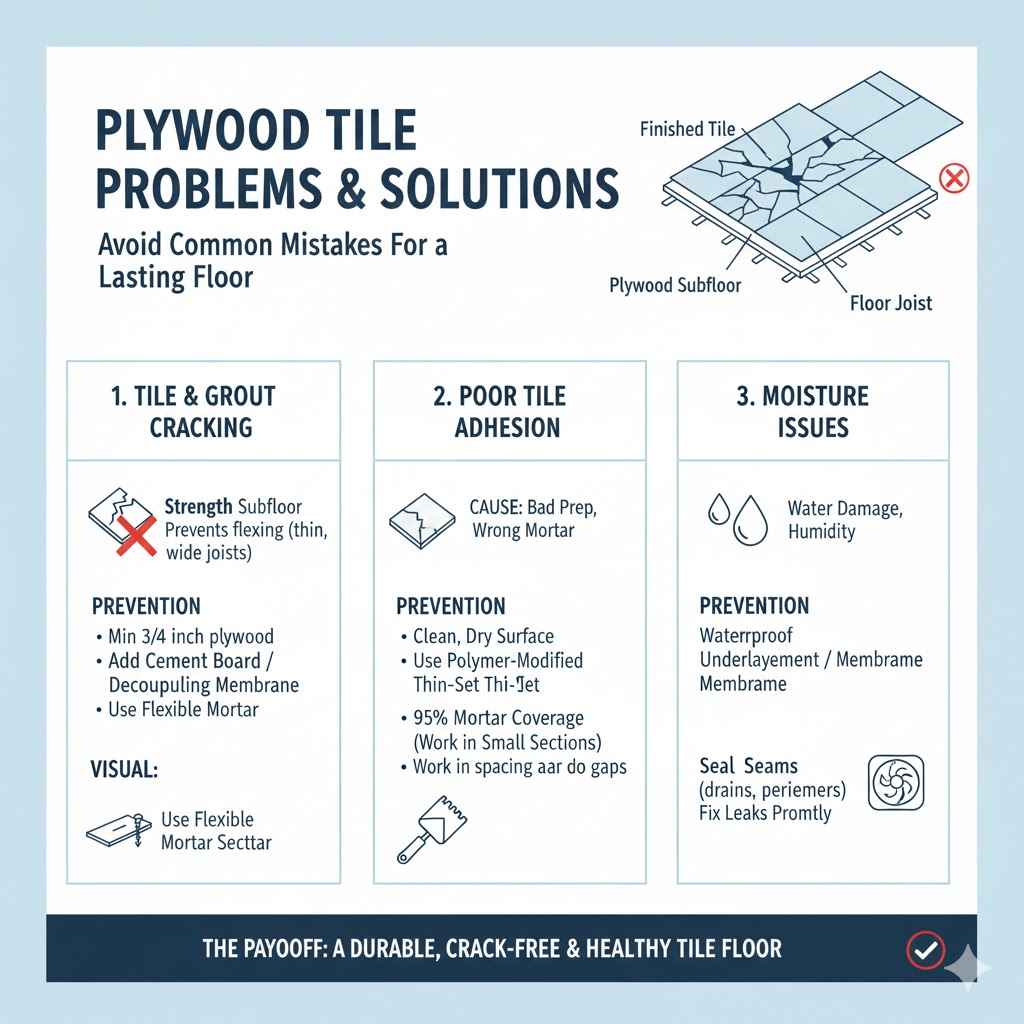
One of the most frequent problems is cracked tiles or grout. This often happens because the subfloor is not rigid enough and flexes under pressure. As we’ve discussed, ensuring you have at least 3/4-inch plywood, securely fastened, and potentially adding an underlayment like cement board or a decoupling membrane, is the best way to avoid this.
These steps create a stable foundation that doesn’t move excessively.
Another issue is tiles not adhering properly to the subfloor. This can be due to several reasons: the plywood might have been dirty or greasy when the tile was laid, the wrong type of mortar might have been used, or there wasn’t enough mortar coverage under the tiles. Always ensure the subfloor is clean and dry, use the correct mortar for your tile and subfloor type, and use the right trowel to achieve full mortar coverage.
Grout failing or staining easily is also a concern. This can be related to moisture issues, improper grout mixing, or not sealing the grout. Ensuring your subfloor and underlayment are well-installed to prevent moisture intrusion is key.
Also, follow grout mixing instructions precisely and apply a good quality grout sealer after installation.
Let’s look at some specific problems and their solutions.
Tile and Grout Cracking
Tile and grout cracking is arguably the most disheartening problem for a DIY tiler. The primary culprit is movement in the subfloor. Plywood, being an organic material, can expand and contract with changes in temperature and humidity.
If the plywood is not thick enough, not properly secured, or if the span between floor joists is too wide, it will flex when walked upon. This flexing puts immense stress on the brittle tile and grout, causing them to crack.
To prevent this, adhere strictly to the recommended subfloor thickness. For 16-inch joist spacing, 3/4-inch plywood is a minimum. If your joists are spaced wider, you may need thicker plywood or an additional layer of 1/2-inch plywood installed perpendicular to the existing subfloor.
The second layer should be glued and screwed for maximum stability.
Crucially, installing a decoupling membrane or cement board over the plywood subfloor provides an essential buffer. A decoupling membrane absorbs the movement between the plywood and the tile, preventing stress transfer. Cement board offers a rigid, stable, and moisture-resistant surface that is much less prone to flexing than plywood alone.
Using a flexible, polymer-modified thin-set mortar also plays a role. These mortars have additives that allow for some slight movement, which can help absorb minor subfloor shifts without cracking the tiles.
Regular maintenance of your grout is also important. If grout lines become damaged or porous, they can allow moisture to seep down, potentially affecting the plywood subfloor over time, which can indirectly lead to cracking issues. Keeping grout sealed and in good repair is part of the preventative maintenance.
Poor Tile Adhesion
When tiles don’t stick well to the subfloor, it can be due to a few common mistakes. Firstly, the surface of the plywood (or underlayment) must be completely clean. Any dust, grease, paint, or wax will act as a barrier, preventing the thin-set mortar from creating a strong bond.
Always sweep, vacuum, and if necessary, wipe down the surface with a recommended cleaner or solvent before applying mortar.
Secondly, using the wrong type of thin-set mortar is a frequent error. Different tiles and subfloors require specific mortars. For example, tiling over plywood often necessitates a polymer-modified thin-set for added flexibility and adhesion.
Natural stone tiles may need special mortars to prevent staining. Always check the compatibility chart provided by the mortar manufacturer.
Thirdly, inadequate mortar coverage is a major contributor to poor adhesion. This often happens when the wrong trowel size is used, or when the trowel isn’t held at the correct angle (usually 45 degrees) to create consistent ridges. The goal is to have at least 95% mortar coverage under each tile, especially in high-traffic or wet areas.
This ensures the tile is fully supported and bonded.
Finally, allowing the thin-set mortar to dry out before setting the tile will prevent a proper bond. Work in small enough sections so you can set tiles while the mortar is still wet and workable. If the mortar skins over, scrape it off and apply fresh mortar.
For challenging situations, some specialized adhesives or primers might be recommended by manufacturers for bonding tile to plywood or specific underlayments. Always refer to product data sheets for the best practices.
Moisture Issues and Their Impact
Moisture is a significant threat to any tile installation over a wood-based subfloor like plywood. Even with water-resistant materials, prolonged exposure to moisture can lead to problems. In areas like bathrooms, kitchens, or laundry rooms, spills, leaks, or high humidity can all contribute to moisture getting into the subfloor system.
If moisture penetrates the plywood, it can cause the wood to swell, warp, and potentially rot over time. This degrades the structural integrity of the subfloor, leading to movement that can cause tiles to crack. It can also foster mold and mildew growth, which is unhealthy and can damage the surrounding materials.
To combat moisture issues, several steps are critical. First, ensure the plywood subfloor itself is in good condition and free from existing damage. Second, the use of a waterproof or water-resistant underlayment like cement board or a dedicated waterproofing membrane is highly recommended, especially in wet areas.
These materials act as a barrier, preventing moisture from reaching the plywood.
When installing a waterproofing membrane, ensure all seams are properly overlapped and sealed according to the manufacturer’s instructions. Pay special attention to areas around drains, tubs, and showers, as these are common points of water intrusion. Using a waterproof sealant around the perimeter of the room, where the flooring meets the walls, is also a good practice.
Proper ventilation in the room can also help reduce humidity levels, further protecting the subfloor and tile installation. Regularly checking for and repairing any leaks from plumbing fixtures is also a vital preventative measure.
Frequently Asked Questions
Question: Can I put tile directly on plywood without any underlayment?
Answer: While it might be possible in very dry, low-traffic areas with thick, securely fastened plywood (at least 3/4 inch), it is generally not recommended. Plywood can expand and contract with moisture and temperature changes, which can lead to cracked tiles and grout over time. Using a cement board or a decoupling membrane as an underlayment provides a more stable and durable base for your tile.
Question: What is the minimum thickness for plywood subflooring to tile over?
Answer: The general minimum recommended thickness for plywood subflooring to tile over is 3/4 inch (approximately 19mm). If your joists are spaced further apart (e.g., more than 16 inches on center), you may need even thicker plywood or an additional layer of subflooring to ensure adequate rigidity.
Question: How do I know if my plywood subfloor is strong enough?
Answer: You can test the strength and stability of your plywood subfloor by walking on it. Listen for squeaks, which indicate loose fasteners. Check for any areas that feel soft or spongy, which suggests moisture damage or weakness.
Tap on the floor; it should sound solid. If it flexes significantly or feels unstable, it’s likely not strong enough on its own for tiling without reinforcement or an underlayment.
Question: What kind of screws should I use to secure plywood for tiling?
Answer: For securing plywood subflooring, it’s best to use subfloor screws. These are designed with threads that grip the wood securely and prevent them from backing out. They should be long enough to pass through the plywood and into the floor joists – typically 1 3/4 to 2 inches for 3/4-inch plywood.
Screws are generally preferred over nails for subflooring as they provide a tighter, more secure hold.
Question: Can I tile over particleboard or OSB?
Answer: Tiling directly over standard particleboard or OSB is generally not recommended. Particleboard can break down easily when exposed to moisture. Some OSB products might be suitable if specifically rated for tile underlayment, but even then, it’s often best to add a layer of cement board or a decoupling membrane for added stability and moisture protection.
Always check the manufacturer’s recommendations for the specific type of OSB or particleboard you have.
Final Thoughts
So, can you put tile on plywood? Yes, but with important conditions. Your plywood subfloor needs to be thick, strong, and securely fastened.
Proper preparation, including cleaning, leveling, and often adding an underlayment like cement board or a decoupling membrane, is key. By following these steps, you create a solid base that will ensure your tile installation lasts for years. You’ve got this!