Cedar Mulch vs Hardwood Mulch: Cost and Lifespan Compared
Cedar mulch and hardwood mulch both protect soil and cut down on weeding, but they behave very differently once they hit the ground. Cedar contains natural oils, including thujone, that repel insects such as termites and ants for roughly the first 3 to 6 months, then breaks down slowly over 3 to 5 years. Hardwood mulch has no insect-repelling oils, but it decomposes in 1 to 2 years and feeds the soil with organic matter much faster. This guide compares cost, pest control, decomposition, and soil pH so you can pick the right one for your yard.
Choosing Between Cedar and Hardwood Mulch
Best Bagged Cedar Mulch Pick
 |
MULCHEX Decorative Cedar Mulch, 3 Cu. Ft. – $49.99 100 percent cedar bark and wood fiber – the natural-oil, slow-decomposition pick this guide recommends for beds where pest control and a longer lifespan matter most.
|
Picking a ground cover is really about matching the mulch to what your garden needs most. Both cedar and hardwood mulch regulate soil temperature, slow moisture loss, and block weeds, and both eventually improve soil structure as they break down. The real differences show up in cost, how long each one lasts, and whether pest control matters to you. Here is how the two compare in detail.
Advantages of Cedar Mulch
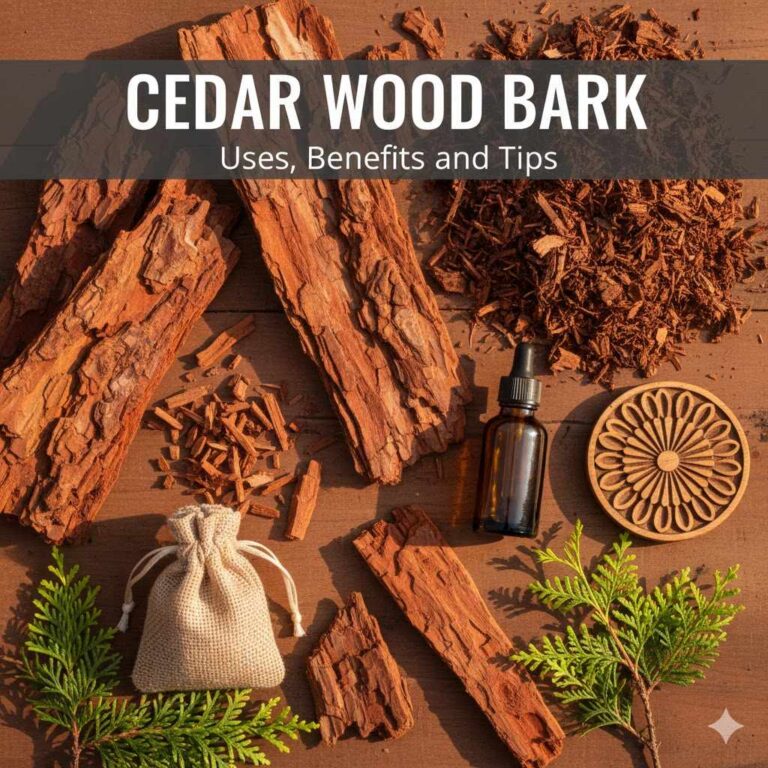
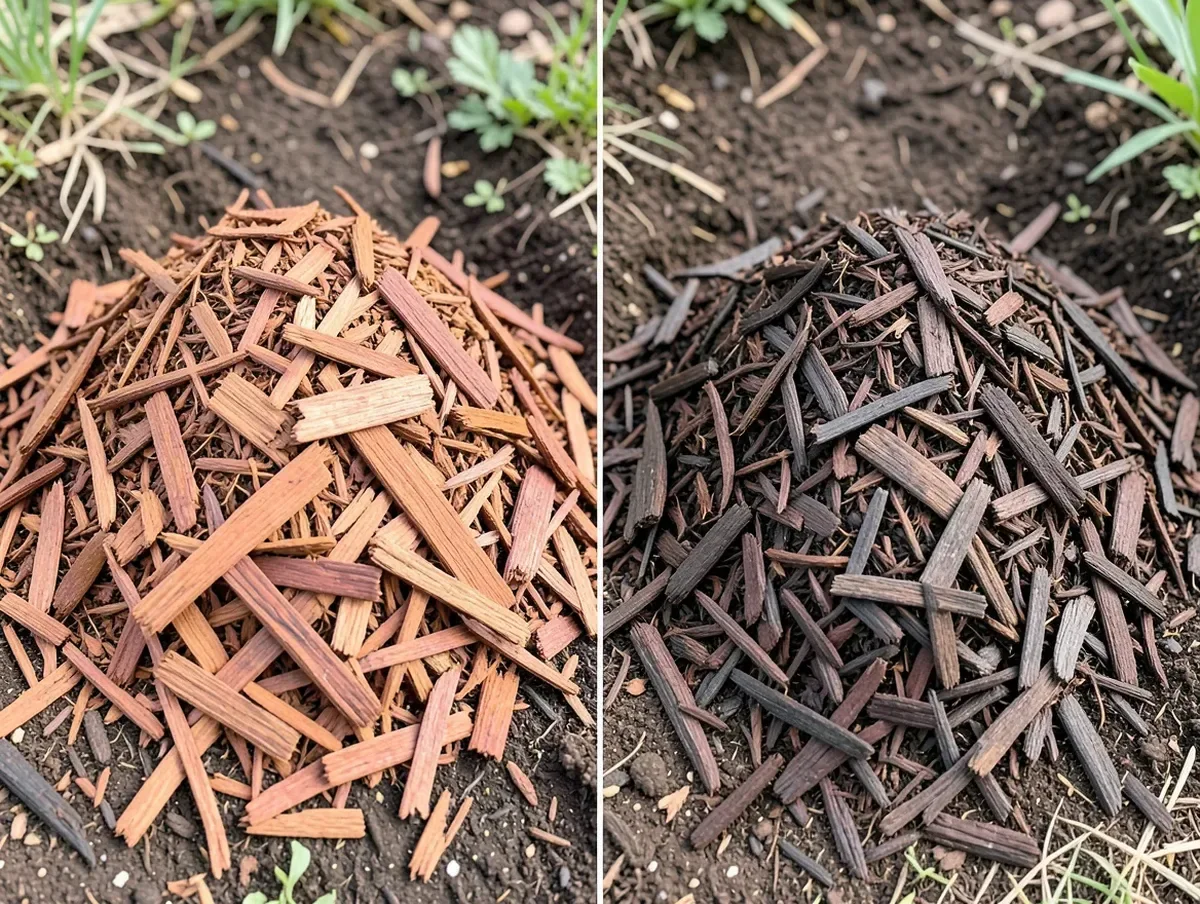
Cedar mulch is milled from the wood of cedar trees and carries a reddish-brown color and a strong, pleasant scent. Because cedar wood resists rot and fungal growth on its own, the mulch holds up in garden beds far longer than most wood mulches, which is the main reason it costs more per bag.
- Insect-repelling oils, for a limited window: Cedar wood contains natural oils, including thujone and related terpene compounds, that many insects such as termites and ants avoid. These oils are strongest right after the mulch is spread and volatilize into the air over roughly 3 to 6 months. After that window, the mulch keeps its other benefits but stops actively repelling pests, so a light top-up refreshes the scent and the deterrent effect if pest control is your main goal.
- Slow decomposition: Cedar’s natural rot resistance means it typically lasts 3 to 5 years before it needs full replacement, compared to 1 to 2 years for most hardwood mulches. That translates into less bagging, hauling, and spreading over time, even though the upfront cost per bag is higher.
- Color and scent that hold up: Cedar’s reddish-brown tone fades more gradually than dyed hardwood mulch, and the aromatic smell lingers well past the point where the insect-repelling effect has worn off.
- Natural disease resistance: Because cedar resists fungal growth, it is less likely to harbor the mold and fungal issues that can appear in wetter climates with faster-decomposing mulches.
Drawbacks of Cedar Mulch
Cedar mulch is not automatically the better choice for every bed. It costs more, its pest-repelling effect is temporary rather than permanent, and it can be a poor fit for a small number of acid-sensitive plants if it is piled too thick.
- Higher upfront cost: Cedar mulch typically costs more per bag than hardwood, which matters most on large beds. Check cedar mulch cost comparisons before covering a big area.
- Mild soil pH drop over time: Cedar is not strongly acidic, but a thick, repeated layer can nudge soil pH down slightly over several seasons. A yearly soil pH check catches this before it affects sensitive plants.
- Possible allelopathic effect in excess: Cedar contains compounds that can slow germination for a small number of seedlings if it is worked directly into the soil rather than kept as a surface layer. Keeping cedar mulch on top of the soil, not tilled in, avoids this in most gardens.
Exploring Hardwood Mulch
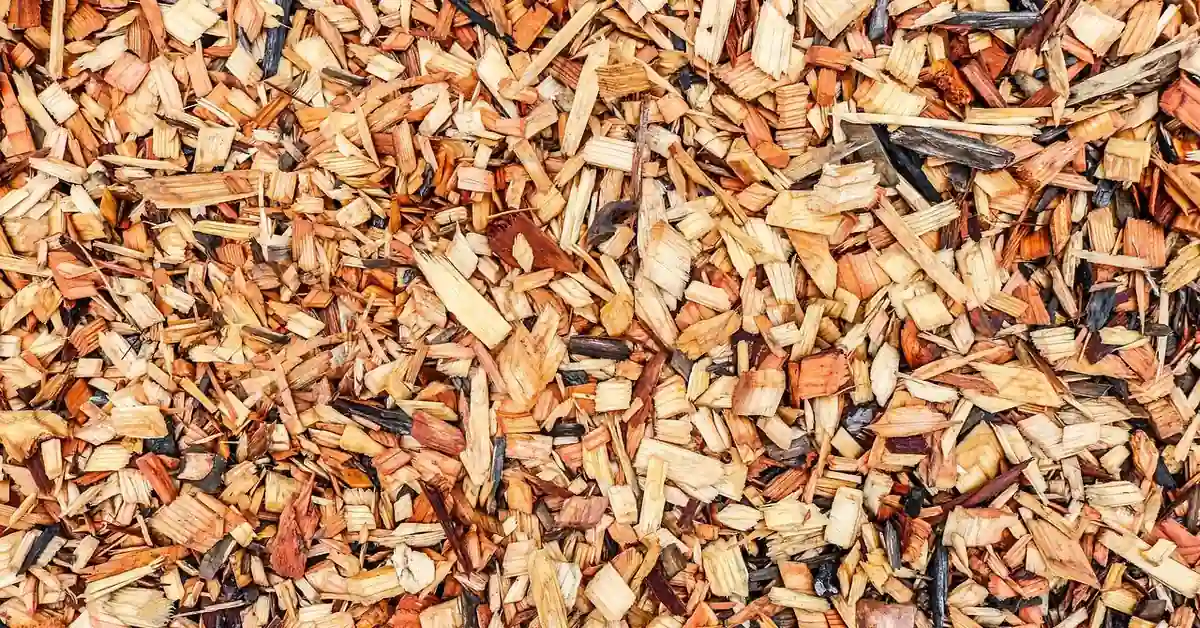
Hardwood mulch is a blend of various hardwood species, often a byproduct of tree removal and processing, shredded into a mix of oak, maple, birch, and similar woods. It costs less than cedar per bag, and because it breaks down faster, it adds organic matter and nutrients back into the soil sooner. The tradeoff is that faster decomposition means more frequent replacement.
Benefits of Hardwood Mulch
- Lower cost: Hardwood mulch is generally the more affordable option, which matters most when covering large beds, pathways, or a full landscaping project.
- Faster soil enrichment: Hardwood breaks down in about 1 to 2 years, releasing organic matter and nutrients into the soil sooner than cedar. This makes it a good fit for beds where you want to build soil quality over time, not just cover the ground.
- Solid weed control and moisture retention: A 2 to 3 inch layer blocks sunlight from weed seeds and slows water evaporation, cutting down on both weeding and watering.
Drawbacks of Hardwood Mulch
Hardwood mulch has one caution worth taking seriously: fresh, non-composted hardwood mulch can temporarily tie up nitrogen in the soil while microbes work through the wood’s carbon during early decomposition. This effect is real and documented, but it is usually mild for mulch sitting on top of the soil rather than tilled in, and it mostly affects shallow-rooted plants and new transplants. Using aged or partially composted hardwood mulch, or adding a light nitrogen source like compost underneath fresh mulch, avoids the issue.
- Faster decomposition means more replacement: Expect to top off or fully replace hardwood mulch every 1 to 2 years, which adds up in labor and cost over time even though each bag is cheaper.
- Temporary nitrogen tie-up when fresh: Uncomposted hardwood mulch can pull surface nitrogen away from shallow-rooted plants during its first season. Aged hardwood mulch or a light compost layer underneath solves this.
- No natural insect-repelling oils: Unlike cedar mulch, hardwood does not deter termites or ants on its own, so pair it with other pest control if that is a priority.
- Dye fading on colored hardwood: Dyed hardwood mulch can lose its color with sun exposure, so plan on refreshing the color, not just the volume, every year or two.
Making the Right Choice: Cedar Mulch or Hardwood Mulch
If pest deterrence, a longer lifespan, and a strong natural scent matter most, cedar mulch is worth the higher cost, especially in the first several months after spreading when the oils are strongest. If soil enrichment and budget matter more than pest control, hardwood mulch is the better value, as long as you account for the nitrogen tie-up with fresh material. Many gardeners use both: cedar around foundations and high-traffic beds where pests are a concern, hardwood in larger planting beds where feeding the soil matters more.
Side-by-Side Comparison
| Feature | Cedar Mulch | Hardwood Mulch |
|---|---|---|
| Cost per bag | Higher | Lower |
| Typical lifespan | 3 to 5 years | 1 to 2 years |
| Insect repellent | Yes, strongest for the first 3 to 6 months | No natural repellent effect |
| Soil enrichment speed | Slower, less immediate | Faster, more immediate |
| Fresh-mulch nitrogen risk | Low | Possible if not aged or composted |
| Weed control | Good | Good |
Factors to Consider Before You Decide
- Budget: Hardwood mulch costs less per bag, so it covers more ground for the same spend. Cedar costs more upfront but needs replacing less often, which can even out the cost over several years on smaller beds.
- Plant types: Most plants tolerate either mulch, but acid-sensitive or very shallow-rooted plants do better with aged hardwood or a thinner cedar layer. Some plants benefit more from cedar’s pest deterrence, especially near foundations.
- Pest pressure: If termites, ants, or other insects are a known issue in your area, cedar’s first few months of active oil release make the biggest difference. Refresh it periodically to keep that effect going.
- Maintenance tolerance: If you would rather mulch once and not think about it for years, cedar’s slower decomposition fits better. If you do not mind replacing mulch yearly in exchange for faster soil building, hardwood is the more practical pick.
Practical Scenarios for Mulch Selection
- New home landscaping on a budget: A newly landscaped yard with large beds, pathways, and tree rings to cover calls for hardwood mulch. The lower cost per bag lets a homeowner cover more ground without straining the budget, and the faster nutrient release helps new plantings establish.
- Small bed near the house: A small garden bed close to a foundation, where pest control and appearance both matter, is a strong fit for cedar mulch. See our cedar mulch picks for bagged options sized for smaller beds.
- Community garden on a tight budget: A community garden covering many raised beds benefits from hardwood mulch’s lower cost and faster soil enrichment, especially when beds are refreshed with compost each season anyway.
Frequently Asked Questions
Question: Is cedar mulch good for all plants?
Answer: No. Cedar mulch works well for most garden plants, but its slight, gradual effect on soil pH means it is not ideal for plants that need strictly neutral or alkaline soil. A yearly soil pH check is the easiest way to catch any issue early.
Question: How often should I replace hardwood mulch?
Answer: Most hardwood mulch needs replacing every 1 to 2 years, depending on climate and rainfall. Wetter climates speed up decomposition, so check the depth each spring and top off as needed rather than waiting for it to disappear completely.
Question: Does cedar mulch attract or repel termites?
Answer: Cedar mulch repels termites and other insects rather than attracting them. The natural oils in cedar wood, including thujone, act as a deterrent. That said, the effect is strongest in the first 3 to 6 months after the mulch is spread, so it is not a permanent barrier.
Question: How long do cedar mulch’s insect-repelling oils actually last?
Answer: Roughly 3 to 6 months. The natural oils in cedar wood evaporate gradually after the mulch is spread, which is faster than the mulch itself decomposes. After that window, cedar mulch still offers its other benefits, such as slow decomposition and weed control, but it is no longer actively repelling insects until it is refreshed.
Question: Can I mix cedar and hardwood mulch?
Answer: Yes. Mixing the two lets you combine cedar’s pest deterrence and longer lifespan with hardwood’s lower cost and faster soil enrichment. A common approach is cedar near the house and hardwood in larger beds further out.
Question: Is dyed mulch safe to use in my garden?
Answer: Yes, dyed mulch from a reputable supplier is generally safe for plants and people. The colorant will fade with sun exposure over time, so budget for a refresh if the color matters to your landscaping design.
Final Thoughts
Choosing between cedar and hardwood mulch comes down to what you are optimizing for. Cedar mulch is worth the higher cost if you want pest deterrence, especially in the first several months after spreading, along with a longer 3 to 5 year lifespan and a lasting scent. Hardwood mulch is the better value if your priority is building soil health quickly and keeping costs down, as long as you account for the temporary nitrogen tie-up when it is fresh. Many gardens do well with both, split between the beds where each one’s strengths matter most.
Sponsored / affiliate links. As an Amazon Associate I earn from qualifying purchases. I may earn additional commission from eligible campaigns.