Titebond 2 vs 3 (II vs III): Real TDS Numbers Compared
Titebond II and Titebond III are not the same waterproofing class: II passes ANSI Type II water-resistance, while III passes the stricter ANSI/HPVA Type I. Pick III for exterior work, longer glue-ups, and cold shops (45-47°F minimum), and II when you want a lighter glue line and a shorter set. Below are the real figures from Titebond’s own product pages, plus one hot-weather number most comparisons skip.
Titebond 2 vs 3: Which One Should You Buy?
| Best Waterproof Pick | |
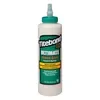 |
Titebond III Ultimate Wood Glue, 16 oz Best for: outdoor furniture, cutting boards, and any glue-up that needs more than 5 minutes. Why we picked it: Titebond lists it as passing ANSI/HPVA Type I, with an 8-10 minute open time and an application minimum of 45-47°F. Main drawback: it dries tan and costs a little more than Titebond II. |
| View Our Pick on Amazon | |
Short version: Titebond III is the safer default because its extra open time and lower temperature floor cost only a couple of dollars more. As of 2026-09-30 the Amazon listing data showed the 16 oz III bottle at $9.58 and the 16 oz II Premium bottle at $7.57. Titebond II is still a good glue for interior furniture where a faster set helps. For the full three-way picture including the original formula, see our Titebond 1 vs 2 vs 3 comparison.
We have not run our own lab tests on these glues. Every number below is taken from the Titebond product pages for II Premium and III Ultimate, read on 2026-09-30, and should be treated as the manufacturer’s figure.
Titebond II vs III Side by Side
| Spec (Titebond listing) | Titebond II Premium | Titebond III Ultimate |
|---|---|---|
| Water rating | Passes ANSI Type II water-resistance | Passes ANSI/HPVA Type I water-resistance |
| Open assembly time (70°F, 50% RH) | 3-5 minutes | 8-10 minutes |
| Total assembly time | 10-15 minutes | 20-25 minutes |
| Minimum application temperature | 55°F | 45°F listed in properties, above 47°F in guidelines |
| Color in the bottle | Honey cream | Tan |
| Dried film | Translucent, yellow | Light brown |
| Solids / pH | 48% / 3.0 | 52% / 2.5 |
| FDA indirect food contact | Yes (Premium only) | Yes |
| Shelf life | 24 months at 75°F | 24 months below 75°F |
| Continuous submersion | Not recommended | Not recommended |
One row deserves a second look. Both glues are labeled as not for continuous submersion, so “waterproof” means the joint survives repeated soaking and drying, not that it can live underwater. Our guide to whether wood glue is waterproof covers where that line falls.
Water Resistance: Type II vs Type I
Type II and Type I are separate pass levels in the ANSI/HPVA test method. Titebond describes II Premium as the first one-part wood glue to meet the Type II specification, and III Ultimate as the first one-part, water-cleanup wood glue proven waterproof under Type I.
In practice, a Type II joint handles humidity, rain splash on a sheltered porch, and a damp basement. A Type I joint is what you want for a picnic table, garden bench, or planter that gets wet and dries repeatedly. Titebond also says to contact its technical team before gluing exterior doors with III, so check that advice before building an entry door.
Our best wood glue for outdoor furniture roundup and the Titebond III review go deeper on outdoor use.
Open Time, Clamp Time, and Temperature
Open time is the window between spreading glue and closing the joint. Titebond lists 3-5 minutes for II and 8-10 minutes for III. That difference is small on a two-board edge joint and large on a drawer box, a frame with six corners, or a hot day in the shop.
- Two to four parts: either glue works if you are organized and have clamps set out.
- Five or more joints, or a glue-up you have never done before: III gives you nearly twice the assembly window.
- Cool garage or basement: II needs materials and glue at 55°F or above, while III is listed down to 45-47°F. See our notes on glue joints in cold weather.
Titebond lists total assembly time as 10-15 minutes for II and 20-25 minutes for III. Use that as your minimum time under clamps and do not stress the joint right after unclamping. Our clamp time chart and open time chart compare other brands.
Spread Rate, Clamp Pressure, and Storage
Titebond gives the same application numbers for both glues, so you do not need to relearn technique when you switch. Spread about 6 mils of glue, which the company equates to roughly 250 square feet per gallon, and bring the joint tight with enough pressure to close it.
- Softwoods (pine, cedar): generally 100-150 psi.
- Medium woods (poplar, cherry): generally 125-175 psi.
- Hardwoods (maple, oak): generally 175-250 psi.
Those psi figures are joint pressure, not clamp force, so on a small panel a few well-spaced bar clamps are usually enough. What matters more is a thin bead of squeeze-out along the joint, which tells you the surfaces actually met.
Storage is where the two differ slightly. Titebond lists a 24-month storage life for both, but says III should be kept below 75°F because heat can thicken it and shorten its usable life. Both labels say to keep the bottle from freezing, even though the physical properties list freeze/thaw stability as stable. If a bottle has thickened, our guide on whether wood glue expires shows what to look for before you toss it.
The Heat Number Most Comparisons Skip
Most articles say III is simply stronger. Titebond’s own ASTM D-905 figures, tested on hard maple, tell a more mixed story:
| Test condition (hard maple) | Titebond II Premium | Titebond III Ultimate |
|---|---|---|
| Room temperature strength | 3,750 psi | 4,000 psi |
| Room temperature wood failure | 72% | 57% |
| Strength after 150°F overnight | 1,750 psi | 800 psi |
| Wood failure after 150°F overnight | 6% | 0% |
Read this carefully. It is one manufacturer test, and both glues lose strength when hot. The takeaway is narrow: do not assume III is the stronger glue in every condition. If a joint will sit in a hot attic, a parked car, or next to a heat source, neither glue is a structural answer, and Titebond also labels both as not for structural or load bearing applications.
Food Contact, Color, and Finish
Both Titebond II Premium and III Ultimate are listed as U.S. FDA compliant for indirect food contact, which covers cutting boards. The trap is the II family. Titebond’s pages for II Dark and II Fluorescent state they are not FDA approved for indirect food contact, so a bottle labeled “Titebond II” is not automatically cutting-board safe.
Color matters more than most people expect. III is tan in the bottle and dries light brown, so on maple, birch, or ash a thick glue line can read as a visible line. II Premium dries translucent yellow. For a painted project the difference disappears. For a clear-finished light wood tabletop, use a thin, even spread and wipe squeeze-out while it is wet, then scrape and sand the rest. Titebond says both glues sand easily. Our note on glue turning yellow covers finish issues.
One more label detail: because of its low pH (3.0), Titebond warns that II can corrode metal surfaces, and III at pH 2.5 is more acidic still, so keep steel clamp faces protected with wax paper or packing tape.
Which Titebond Should You Choose?
| Your project | Better pick | Reason |
|---|---|---|
| Outdoor bench, planter, mailbox post | Titebond III | Type I water rating |
| Cutting board or butcher block | Titebond III (or II Premium) | Both listed for indirect food contact |
| Interior cabinet or shop furniture | Titebond II | Faster set, lighter glue line, lower price |
| Large glue-up with many joints | Titebond III | 8-10 minute open time |
| Cold garage in early spring | Titebond III | 45-47°F floor versus 55°F |
| Light wood, clear finish, tight glue lines | Titebond II | Translucent yellow dried film |
| Oily woods like teak and ipe | Check with Titebond first | Its page directs users to technical support |
For oily species, read our prep methods for teak and ipe. If you are comparing against another brand, see Gorilla Glue vs Titebond, and for a broader overview our wood glue buying guide.
Frequently Asked Questions
Is Titebond 2 waterproof?
No. Titebond’s own page says Titebond II Premium passes ANSI Type II water-resistance and is not for continuous submersion. Only Titebond III is listed as passing the stricter ANSI/HPVA Type I test, and even it is not for use below the waterline.
Can I use Titebond II on a cutting board?
Titebond II Premium is listed as U.S. FDA compliant for indirect food contact, so yes. The colored variants are different: Titebond’s pages for II Dark and II Fluorescent say they are not FDA approved for indirect food contact. Check the label on the exact bottle you buy.
Is Titebond III stronger than Titebond II?
In Titebond’s ASTM D-905 test on hard maple at room temperature, III measured 4,000 psi and II measured 3,750 psi. After an overnight soak at 150 F, the listed figures reversed: 800 psi for III and 1,750 psi for II. Both numbers come from a single manufacturer test, so treat the gap as a guide, not a guarantee.
Does Titebond III dry darker than Titebond II?
Yes. Titebond lists III as tan with a light brown dried film, while II Premium is honey cream with a translucent, yellow dried film. On maple, ash, or other pale wood a thick III glue line can show more.
What is the lowest temperature for using Titebond II and III?
Titebond lists 55 F as the minimum for II Premium. For III, the physical properties list 45 F and the application guidelines list above 47 F, so treat 47 F as the safe floor.
Bottom Line
Choose Titebond III when water, cold, food contact, or a long glue-up is in play, and choose Titebond II Premium for ordinary interior work where a quick set and a lighter glue line help. Neither glue is for submersion or structural loads, so match the bottle to the environment and confirm the exact variant on the label.
Sponsored / affiliate links. As an Amazon Associate I earn from qualifying purchases. I may earn additional commission from eligible campaigns.