Decking Ideas Around a Pond: Layouts, Materials, and Safety
Decking around a pond needs rot-resistant boards (cedar, teak, or capped composite) because standard pressure-treated pine cups and splinters within a season of splash exposure. Skip the wrong material or a code-height guardrail, and the payoff is a warped deck or a fall once boards ice over. This guide covers materials that survive standing water, wraparound and cantilever layouts, and the IRC guardrail rule (36 inch height, 4 inch gaps) required above 30 inches of drop.
Best Decking Materials for a Pond-Side Deck
Not every deck board belongs next to standing water. The board has to shed splash, resist the fungus that thrives in constant humidity, and survive freeze-thaw cycling if the pond ices over in winter. See our full wood decking guides for framing and staining once you have picked a material below.
| Material | Moisture Resistance | Maintenance | Best For |
|---|---|---|---|
| Cedar | Good (natural oils resist rot) | Reseal every 1 to 2 years | Natural look, budget mid-range |
| Teak | Excellent (dense, oil-rich) | Occasional oiling, or let it silver | Premium, low-movement boards at the waterline |
| Capped composite | Excellent (sealed shell, no wicking) | Soap and water only | Long-term, near-zero upkeep decks |
| Pressure-treated pine | Fair (needs sealing, cups if neglected) | Reseal every 1 to 2 years | Framing and budget decks set back from the edge |
Capped composite is the board to reach for at the actual waterline. Uncapped composite still absorbs water through cut ends and can swell or delaminate over time, while the fully encapsulated shell on capped boards stops that wicking at the source. Cedar and teak both work well too, provided the cut ends get sealed during installation.
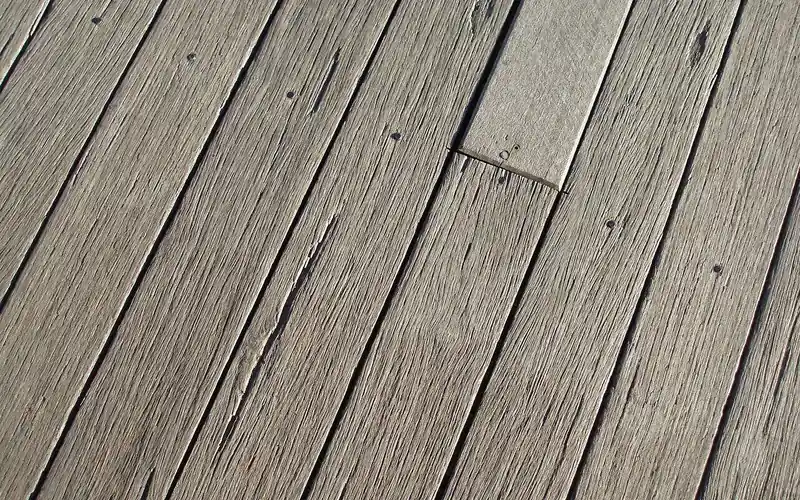
Pond Deck Layout Ideas That Actually Work
Two layouts do most of the work on a pond deck. A wraparound platform follows the pond’s edge and gives access from multiple sides, which suits an irregularly shaped or naturalistic pond. A cantilevered viewing deck extends a single rectangular platform out over or right up to the water on one side only, which is simpler to frame and cheaper per square foot since it needs fewer support posts in wet soil.
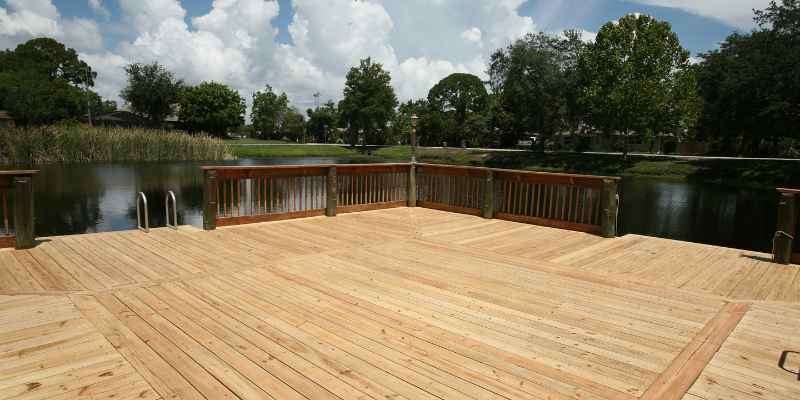
For a small backyard pond, keep the deck 4 to 6 feet wide; that is enough room for a chair and a walking path without overwhelming the pond visually. Larger properties can go wider and add a multi-level design, stepping the deck down toward the water in 6 to 8 inch tiers. If you want shade over the seating area, a pergola built into the decking layout works well on the side away from direct pond access, since posts set back from the bank avoid digging footings in saturated soil. A pond deck also pairs naturally with a broader water-feature deck design if you are adding a stream or fountain alongside the pond itself.
Fasteners That Won’t Rust Near Standing Water
The board almost never fails first on a pond deck. The fastener does. A standard coated deck screw is rated for general outdoor exposure, not for sitting a few inches from a permanent water source, and it will bleed rust streaks into the surrounding wood well before the boards themselves need replacing. Stainless steel is worth the extra cost at the waterline and around any framing that stays damp.
Best Pond-Deck Fastener Pick
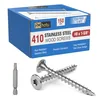 |
#8 x 1-5/8″ 410 Stainless Steel Deck Screws, 150-Pack – $16.99 410-grade stainless steel deck screws with a T20 star-drive bit included, sized for fastening deck boards and railings in the splash zone this guide covers above.
|
As an Amazon Associate we earn from qualifying purchases.
If you are building the deck framing itself rather than just fastening boards, see our notes on composite-specific fasteners and hidden clip systems, which avoid surface screw heads entirely on capped composite boards.
IRC Safety and Code Requirements for Pond Decks
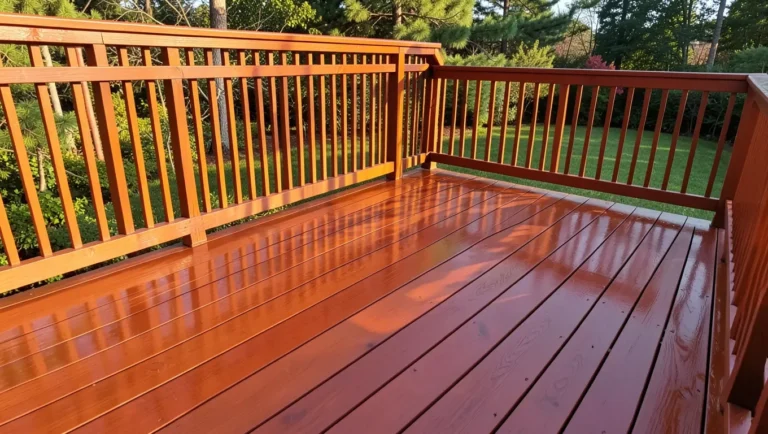
A deck built right at the edge of standing water carries real fall and drowning risk for kids and pets, and building departments treat it accordingly. Once the deck surface sits more than 30 inches above the ground or water below, the International Residential Code requires a guardrail at least 36 inches tall, with gaps no wider than 4 inches between balusters and a top rail able to resist a 200-pound load in any direction. Some cities require 42 inches near pools and ponds specifically, so confirm the local number before you build.
📊 IRC guardrails must resist a 200-pound concentrated load and block a 4-inch sphere between balusters – Source: Decks.com, Deck Railing Height Codes & Requirements, 2026
Beyond the railing itself, add a self-closing, self-latching gate on any fence between the house and the pond deck, choose a non-slip decking surface since algae and pollen film form faster near standing water than on a dry patio, and never leave a board gap wide enough to trap a small foot or paw.
What a Pond Deck Actually Costs in 2026
Material choice drives most of the cost swing on a pond deck, and it is worth pricing the full lifespan, not just the installed price, since a deck at the waterline gets resealed or replaced faster than one set back on dry ground.
| Material | Installed Cost (per sq ft) | Typical Lifespan |
|---|---|---|
| Pressure-treated pine | $25 – $50 | 15 to 20 years, with resealing every 1 to 2 years near water |
| Cedar or teak | $30 – $60 | 20+ years with regular oiling |
| Capped composite | $40 – $75 | 25 to 30+ years, often under a 25-year warranty |
Composite costs more upfront, but the math evens out. Pressure-treated pine needs cleaning and resealing every 1 to 2 years near standing water, while composite needs only an occasional wash, and most comparisons put the total-cost breakeven point around year 12 once you count the labor and materials for repeated sealing.
“The fastener is usually the first thing to fail on a deck built near standing water, not the boards. We’ve seen coated deck screws bleed rust streaks into cedar decking within two seasons at the waterline, where a 410-grade stainless screw would have outlasted the boards themselves.”
Common Mistakes to Avoid Near Standing Water
- Skipping ledger flashing: Where the deck meets the house, missing flashing lets moisture from pond spray and splashback wick into the rim joist, rotting the structure from the inside before the surface boards show any damage.
- Using coated screws at the waterline: Carbon-steel deck screws, even coated ones, corrode faster within a few feet of standing water than they would elsewhere on the same deck. Use stainless there.
- No slope for drainage: A deck built dead level next to a pond holds rain and splash instead of shedding it, accelerating rot and algae growth. Frame in a slight slope (about 1/8 inch per foot) away from the house.
- Building over 30 inches high without a guardrail: This is the single most common inspection failure on pond decks; measure the actual drop to water or ground before assuming a railing is optional.
- Ignoring the pond’s water level swings: A deck framed for the pond at its lowest summer level can end up partially submerged after heavy rain if footings and ledger height do not account for seasonal rise.
Frequently Asked Questions
What is the best decking material for a deck near a pond?
Capped composite decking is the safest all-around choice near standing water because the encapsulated shell keeps moisture out of the cut ends, which is the main failure point on uncapped boards. Cedar and teak also hold up well thanks to natural rot-resistant oils. Standard pressure-treated pine works too, but it needs resealing every 1 to 2 years at the waterline to prevent cupping.
How high does a deck railing need to be near a pond?
Under the International Residential Code, a guardrail must be at least 36 inches tall once the deck surface sits more than 30 inches above the ground or water below, with no gap wider than 4 inches between balusters and a top rail able to resist a 200-pound load. Some local jurisdictions near pools or ponds require 42 inches instead, so confirm the exact rule with your local building department before installing.
Do I need a permit to build a deck around a pond?
Most municipalities require a permit for any deck attached to a structure or built above a set height, and many add extra rules for decks near standing water, including guardrails, drainage, and setback distances from the pond edge. Check with your local zoning or building department before starting; skipping this step is a common reason pond deck projects fail inspection.
What decking pattern is most slip-resistant near water?
A grooved or brushed-texture composite surface resists slipping better than smooth boards, especially once algae or pollen film forms near standing water. Laying boards perpendicular to the main foot-traffic path, alternating direction at transitions, and adding a broom-finish to any stone or concrete sections all cut slip risk further.
Bringing It All Together
A pond deck that lasts comes down to three decisions made before the first board goes down: a moisture-resistant material at the actual waterline, stainless fasteners anywhere splash reaches, and a code-height guardrail if the drop to water or ground exceeds 30 inches. Get those three right and the layout, whether wraparound or cantilevered, is mostly a matter of how you want to use the space.
Sponsored / affiliate links. As an Amazon Associate I earn from qualifying purchases. I may earn additional commission from eligible campaigns.