Do MDF Cabinets Look Cheap? Not With the Right Finish
Not inherently — MDF cabinets look cheap when they’re finished with a thin, orange-peel-textured spray coat and simple butt-joint edges, not because the material itself is inferior. A properly primed, sprayed MDF door with routed profile edges is visually indistinguishable from painted solid wood at arm’s length.
The material that actually tips people off isn’t the MDF core — it’s almost always the finish quality and door-style corners cut to hit a price point. Here’s what separates a premium MDF cabinet from a builder-grade one, and how to upgrade what you’ve already got.
What Actually Signals “Cheap” on an MDF Cabinet
Best Cabinet Refinishing Kit
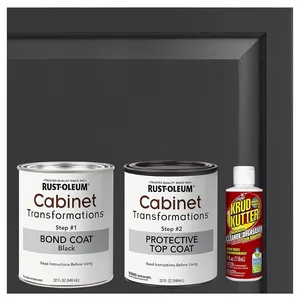 |
Rust-Oleum Cabinet Transformations Kit – $58.18 If your MDF cabinets look flat or dated, this kit bonds directly to the factory finish so you skip the sanding and priming that make DIY refinishing a hassle.
|
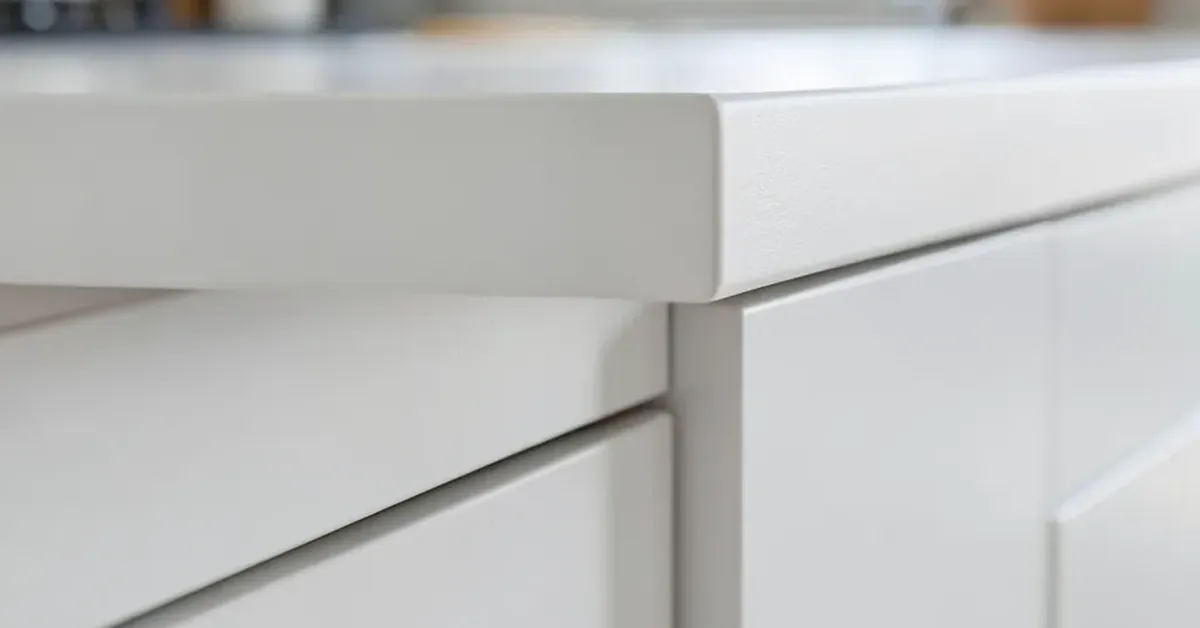
Three specific choices, not the MDF core, are what separate a cabinet that reads as premium from one that reads as builder-grade. The first is finish application: a factory-sprayed conversion varnish or catalyzed lacquer lays down in a thin, even film with almost no visible texture, while a rolled or brushed-on paint job — common on the cheapest stock cabinets — leaves a stippled, orange-peel surface that catches light unevenly and reads as low-budget from across a room. The second is door-edge profile: a routed edge with a soft radius or decorative profile diffuses light the way a milled solid-wood edge does, while a plain, unmilled square edge on a flat slab door is one of the fastest visual tells that a door was made to hit a price point rather than a design. The third is hardware — soft-close European hinges and substantial pulls read as intentional and higher-end, while stamped, visible hinges and thin, flexy pulls undercut even a well-finished door.
What MDF Is, and Why It Makes Sense for Cabinet Doors
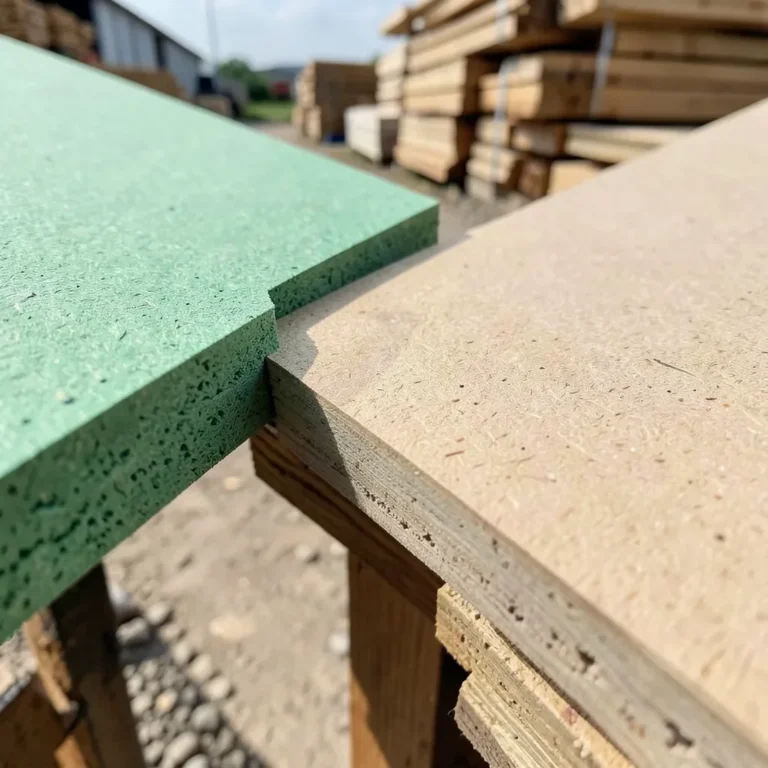
MDF (medium-density fiberboard) is manufactured by breaking wood down into fine fibers and pressing them, bound with resin, into a dense, grain-free panel — the same core material covered in more depth in our guide to how long MDF actually lasts. That grain-free structure is precisely why MDF became the cabinet industry’s default choice for painted doors: routing a decorative profile into MDF produces a perfectly smooth edge with none of the tear-out or grain-telegraphing that the same router bit would leave on an open-grained wood like oak or ash, which means less filler and sanding before the finish goes on. Combined with a lower material cost than solid hardwood, that’s the real reason so much of the cabinet industry — from big-box stock lines to custom shops — builds painted doors on an MDF core rather than solid wood, regardless of price tier.
Cost, Durability, and the Real Failure Points
MDF cabinet doors typically cost noticeably less than an equivalent solid-wood door, largely because the material itself is cheaper and machines faster with less waste than solid lumber. That savings comes with two genuine, specific weak points rather than general “it’s cheap” durability worries: exposed or unsealed MDF edges swell permanently if they get wet repeatedly, which is why the area around a sink or dishwasher is where MDF cabinet damage actually shows up first, and the fine fiber structure holds a screw less securely at a cut edge than solid wood or plywood does, which matters specifically at hinge-mounting points that get opened and closed thousands of times. Reputable cabinet lines address the second issue with threaded hinge inserts or reinforced mounting plates rather than a screw driven straight into raw MDF edge fiber — worth checking for on any MDF cabinet before assuming ordinary self-tapping screws will hold up over years of daily use.
Outside of those two specific weak points, a well-sealed, properly finished MDF door resists warping better than solid wood, since it has no grain to expand and contract unevenly with humidity — a real durability advantage MDF has over solid wood, not just a tradeoff.
Correcting the Common Misconceptions
The idea that MDF cabinets are inherently less durable than solid wood doesn’t hold up once you separate the material from the finish and construction quality: a well-sealed MDF door with reinforced hinge points will outlast a poorly-finished solid-wood door with cheap hardware, and vice versa. Quality genuinely does vary by manufacturer and price tier — a budget stock cabinet line and a custom shop both use MDF cores, but differ enormously in resin quality, edge sealing, hinge hardware, and finish application, which is exactly why “MDF” alone doesn’t predict how a cabinet will look or hold up. Veneered MDF (a thin layer of real wood veneer over the MDF core) splits the difference, offering real wood grain on the visible face while keeping MDF’s dimensional stability and lower cost underneath.
Design Options and Upgrading What You Already Have
Because MDF machines and paints so cleanly, cabinet doors built on it support a wide range of styles — flat slab, routed shaker-style profiles, raised-panel looks achieved with applied moulding, glossy or matte topcoats, and full color customization that a natural wood grain would otherwise limit. If existing MDF cabinets already look dated or cheap, a full refinish is usually more cost-effective than replacement: strip or lightly sand the old finish, prime with a stain-blocking primer made for MDF, and apply a sprayed or leveling brush-on topcoat rather than a standard wall-paint roller finish, which is exactly the texture problem covered above. Swapping flat, unmilled slab doors for shaker-style doors with a routed edge, or simply upgrading the hinges and pulls to soft-close hardware, closes most of the visual gap between a builder-grade cabinet and a premium one without a full cabinet replacement. Whatever finish goes on, properly sealing the new paint afterward is what actually protects it from the edge-swelling and wear issues covered above, especially near a sink.
Environmental Considerations
MDF is typically manufactured from recycled sawmill byproducts — sawdust and chips that would otherwise be waste — bound with a resin, which gives it a smaller raw-material footprint than milling solid lumber for the same cabinet. Most MDF sold today meets CARB Phase 2 or TSCA Title VI formaldehyde-emission standards, which significantly reduced off-gassing compared to older-generation panels; checking for that certification, or an FSC label confirming the wood fiber source is responsibly managed, is a reasonable way to compare options if indoor air quality or sourcing is a priority when choosing new cabinets.
Frequently Asked Questions
Are MDF Cabinets Considered Cheap?
MDF cabinets are typically more affordable than solid wood, but “cheap-looking” is really a function of finish quality and door-edge profile rather than the MDF core itself. A well-finished MDF door with routed edges and quality hardware reads as premium at arm’s length.
What Is The Disadvantage Of MDF Cabinets?
The two real weak points are exposed or unsealed edges swelling permanently if they get wet repeatedly (common near sinks and dishwashers), and weaker screw-holding at hinge-mounting points on a cut edge compared to solid wood or plywood. Reinforced hinge inserts and properly sealed edges address both.
What Is The Cheapest Style Of Cabinets?
Stock cabinets are the cheapest style available, mass-produced in standard sizes with limited customization. They’re a popular, budget-friendly option for straightforward kitchen renovations.
How Long Do MDF Kitchen Cabinets Last?
MDF kitchen cabinets typically last 10 to 15 years with proper care, and longer with a good finish, sealed edges, and reinforced hinge hardware. Keeping them dry near sinks and dishwashers is the single biggest factor in reaching the long end of that range.
Conclusion
MDF cabinets look cheap because of finish texture, unmilled door edges, and thin hardware — not because MDF itself is an inferior material. A properly sprayed, routed, well-hinged MDF door holds up visually and structurally against solid wood, and existing builder-grade cabinets can usually close most of that gap with a refinish and a hardware upgrade rather than a full replacement.
Sponsored / affiliate links. As an Amazon Associate I earn from qualifying purchases. I may earn additional commission from eligible campaigns.