Drywall Versus Paneling What Is Best
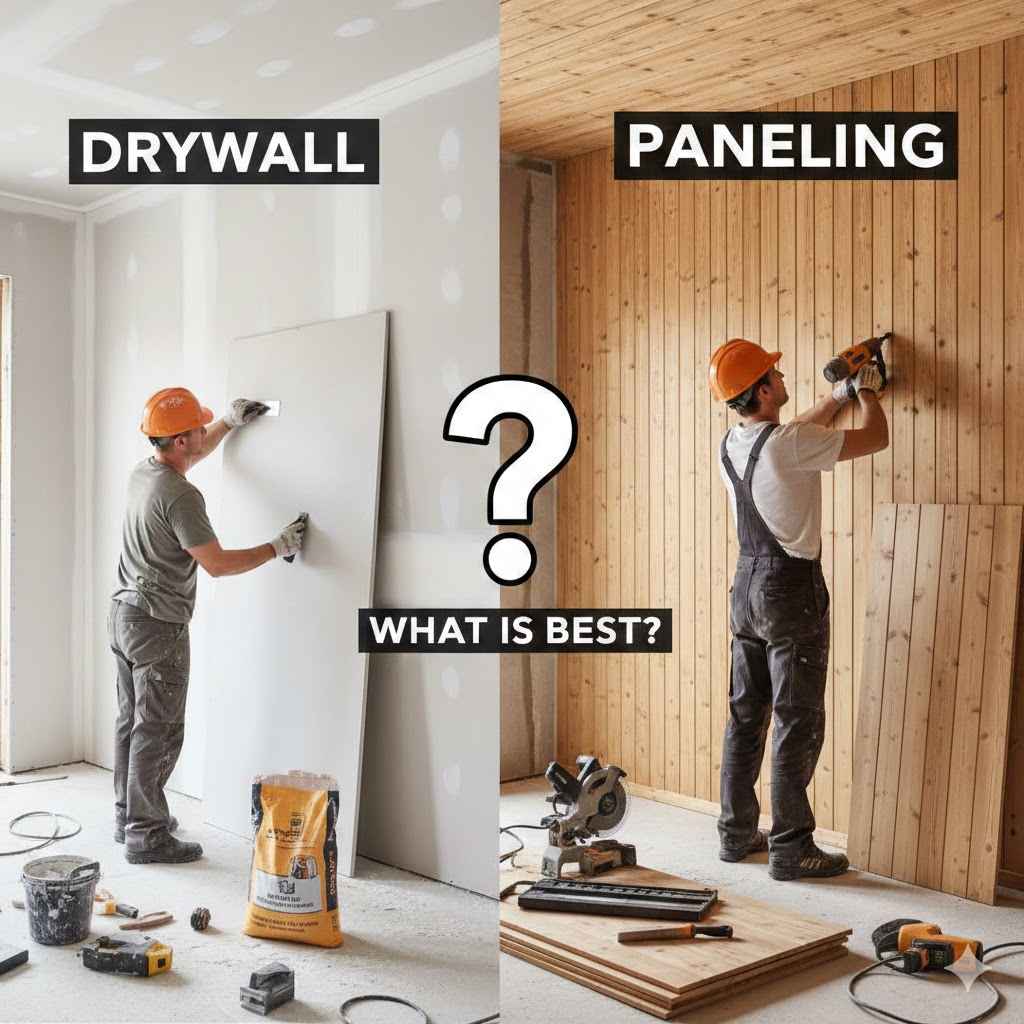
Choosing between drywall and paneling for your walls can feel tricky, especially if you’re new to home projects. Both have their good points and bad points, and knowing which one works best for your situation is key. Many people wonder if they should use drywall or paneling for a quick fix or a long-lasting wall.
This guide makes it simple, breaking down the Drywall vs Paneling: What’s Better for Walls? question step-by-step. We’ll help you figure out the best choice for your project.
Drywall vs Paneling What’s Better for Walls Explained
This section looks at the core differences between drywall and paneling, helping you see which might fit your project best. It’s about understanding their basic nature and how they are typically used in home building and renovation. Many homeowners face this choice when building new walls or updating existing ones.
Understanding the fundamental characteristics of each material is the first step in making an informed decision.
What Is Drywall
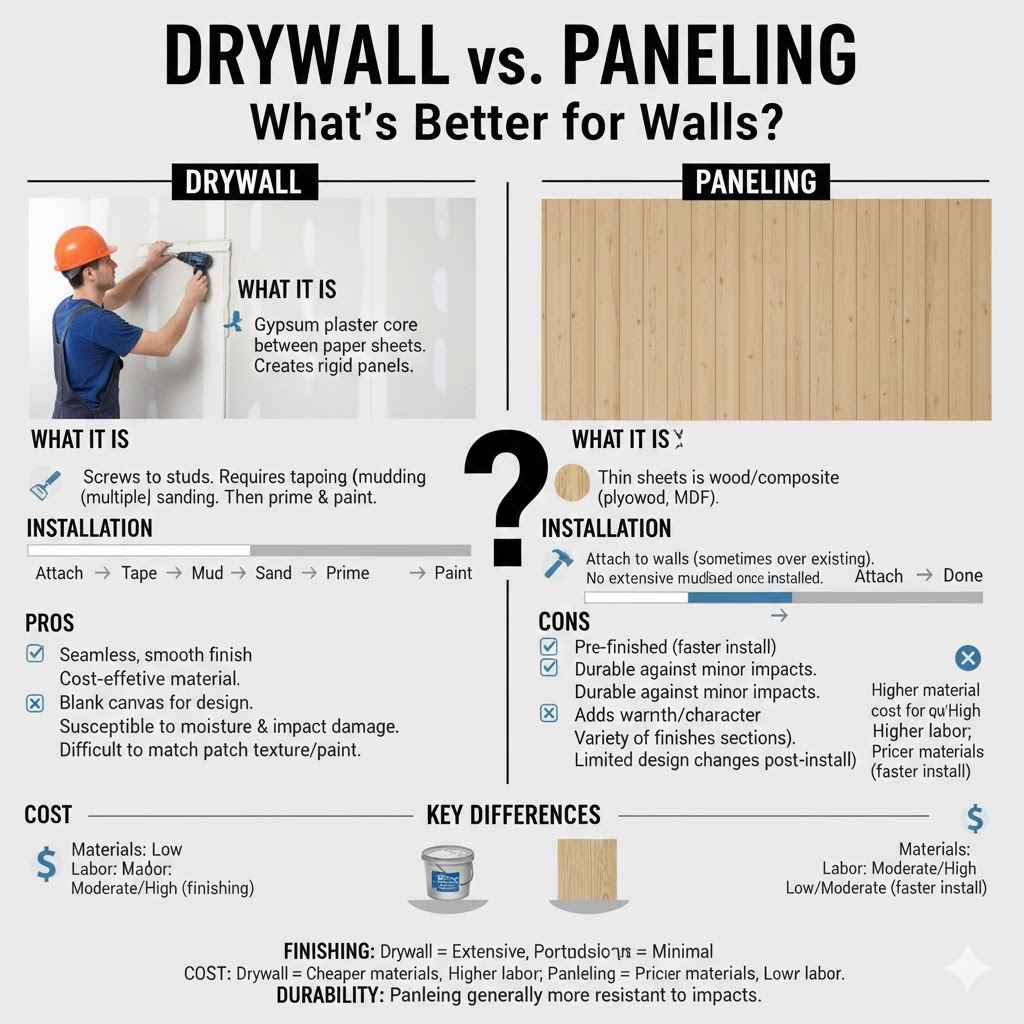
Drywall, also known as gypsum board or plasterboard, is a very common building material used for interior walls and ceilings. It’s made by sandwiching a gypsum plaster core between two thick sheets of paper. This creates a rigid panel that is strong and relatively easy to cut and install.
Drywall is usually attached to wall studs with screws. Once installed, the seams between the panels are covered with joint tape and a compound called “mud.” This mud is applied in several layers and then sanded smooth, creating a seamless surface that is ready for painting or wallpapering.
The main benefit of drywall is its smooth, paintable finish. It’s the standard for most modern homes because it provides a clean, unbroken surface. However, it requires multiple steps to finish, including taping, mudding, and sanding, which can be time-consuming.
Drywall is also susceptible to damage from moisture and impact. A strong impact can create dents or holes, and prolonged exposure to water can cause it to weaken and crumble.
Drywall is a cost-effective option for covering large areas quickly. The materials themselves are inexpensive, and while installation can take time, the labor costs are generally competitive due to its widespread use. It offers a blank canvas for interior design, allowing for a wide range of finishes and colors.
What Is Paneling
Paneling refers to thin sheets of wood or wood composite material that are attached to walls. Unlike drywall, paneling often comes with a finished surface already applied, such as a wood grain, a painted color, or a textured pattern. This means that once the panels are installed, the wall is essentially finished, and no additional painting or extensive finishing work is needed.
Paneling can be made from solid wood, plywood, MDF (medium-density fiberboard), or particleboard.
Paneling offers a different aesthetic and installation process compared to drywall. It can add warmth and character to a room, especially wood-paneled options. Some types of paneling can be installed directly over existing walls, simplifying renovations.
It’s also often more durable against minor impacts than drywall, as the surface material can be more resilient.
The variety of finishes available in paneling is vast. From rustic barn wood looks to sleek, modern patterns, paneling can dramatically change the feel of a space. Installation can sometimes be quicker than drywall if the panels are pre-finished and do not require extensive mudding and sanding.
However, the cost of some types of high-quality paneling can be higher than basic drywall.
Key Differences Summarized
The primary difference lies in the finishing. Drywall provides a raw surface that needs extensive finishing—taping, mudding, sanding, priming, and painting—to achieve its final look. Paneling, on the other hand, typically comes with a pre-finished surface that requires only installation.
This makes paneling a potentially faster option for achieving a finished wall, especially in areas where a specific aesthetic, like a wood finish, is desired.
Cost is another consideration. Basic drywall materials are generally cheaper than many types of decorative paneling. However, the labor costs for finishing drywall can add up, potentially making the total cost comparable or even higher than installing certain types of paneling, especially if you’re doing it yourself.
The durability also differs; some paneling is more resistant to scuffs and impacts than standard drywall.
When it comes to repair, drywall can be patched relatively easily, but matching the texture and paint can be challenging. Damaged paneling may require replacing an entire section or panel, which can be harder to match if the product is discontinued or batch-dyed. The choice often comes down to the desired look, budget, and how much finishing work you are willing to do.
Pros And Cons Of Drywall For Your Walls
Drywall is the go-to material for most new construction and major renovations for good reason. Its smooth, paintable surface offers a clean, modern look that many people prefer. It’s also quite affordable in terms of raw materials, making it an economical choice for large projects.
However, it’s not without its drawbacks, and understanding these can help you decide if it’s the right fit for your specific needs.
Advantages Of Drywall
The biggest advantage of drywall is the seamless, smooth finish it provides. Once properly finished and painted, it offers a uniform surface that looks clean and professional. This makes it ideal for any room where a polished appearance is desired.
It’s also very versatile; you can paint it any color, apply wallpaper, or even add textured finishes.
Drywall is also generally quite affordable. The cost of the boards themselves is low, and when installed over large areas, it offers excellent coverage for the price. This makes it a very budget-friendly option for builders and homeowners alike, especially for standard residential construction.
Another benefit is its fire resistance. Gypsum, the core material in drywall, contains chemically bound water. When exposed to heat, this water is released as steam, which helps to slow the spread of fire.
This is a significant safety feature that contributes to its widespread use in building codes.
Smooth Finish
Drywall creates a perfectly flat, smooth surface that is ideal for painting. This allows for a clean, modern look in any room. It hides the framing and other structural elements behind a uniform wall, making the space appear more polished and finished.
Cost-Effective Materials
The raw materials for drywall are relatively inexpensive compared to many other wall coverings. This makes it an economically sound choice for covering large areas, such as the walls and ceilings of an entire house, without breaking the bank. It offers a good balance of quality and price.
Fire Resistance
Drywall has inherent fire-resistant properties due to the water content in its gypsum core. This can help to slow the spread of flames in a fire, providing valuable time for occupants to escape and for firefighters to arrive. Building codes often specify drywall for its safety contributions.
Ease Of Repair
Minor damage like nail pops or small holes in drywall can be relatively easy to repair with joint compound. You can patch these areas and then sand them smooth to blend with the surrounding wall. This makes maintaining a finished drywall surface manageable over time.
Disadvantages Of Drywall
Despite its advantages, drywall has some significant drawbacks. One of the main issues is its susceptibility to water damage. If drywall gets wet, it can sag, crumble, and develop mold.
This makes it unsuitable for areas with high humidity or direct water exposure, such as bathrooms or basements without proper waterproofing.
Drywall is also not very impact-resistant. A sharp blow from a piece of furniture or a kicked ball can easily dent or puncture the wall. While minor damage can be repaired, significant damage might require replacing a whole section of the drywall sheet, which can be a noticeable repair if not done perfectly.
The finishing process for drywall is also a con for many DIYers. Taping, mudding, and sanding are multi-step processes that require practice and patience. Achieving a truly smooth, professional finish can be challenging, and imperfections are often visible under direct light or when painted with glossier finishes.
Vulnerability To Water
Exposure to water is a major weakness of standard drywall. It can warp, weaken, and even grow mold when wet, making it unsuitable for bathrooms, kitchens, or basements without special moisture-resistant types and careful installation. This limits its use in certain environments.
Low Impact Resistance
Drywall can be easily damaged by impacts, leading to dents, dings, or holes. This is common in high-traffic areas or homes with children and pets. Repairing these damages, especially if they are large, can be time-consuming and requires skill to make them blend seamlessly.
Labor-Intensive Finishing
Achieving a smooth, paint-ready finish on drywall requires multiple steps of applying joint compound, taping seams, and sanding. This process can be messy and time-consuming, and it requires a good deal of skill and practice to get right. Beginners may struggle with this aspect.
Susceptible To Cracking
In homes with settling foundations or in areas prone to earthquakes, drywall can develop cracks along the seams or corners. These cracks can be unsightly and require ongoing repairs to maintain the appearance of the walls. The movement of the building structure can stress the drywall joints.
When To Choose Drywall
You should choose drywall for your walls in many common situations. It’s the standard for most residential construction and renovation projects where a smooth, paintable surface is desired. This includes living rooms, bedrooms, hallways, and dining areas.
If you plan to paint your walls or apply wallpaper, drywall is an excellent choice because it provides a uniform base.
Drywall is also a good option when you are on a tight budget and need to cover large areas cost-effectively. The material itself is relatively inexpensive, and installation, while requiring multiple steps for finishing, is a well-understood process by most contractors. It’s the most economical choice for creating a clean, finished look in the majority of interior spaces.
Consider drywall if you are looking for a wall material that offers good sound insulation between rooms. With proper installation and insulation in the wall cavity, drywall can help dampen sound transmission effectively. Its dense nature, when installed correctly, contributes to a quieter living environment.
Finally, choose drywall if you are aiming for a modern or contemporary aesthetic. The seamless surface lends itself perfectly to minimalist designs or spaces where the walls are intended to be a neutral backdrop for art, furniture, or decorative elements. It allows for a clean, unadorned look that is highly adaptable.
Pros And Cons Of Paneling For Your Walls
Paneling offers a different approach to wall finishing, bringing unique advantages and some challenges. It’s often chosen for its aesthetic appeal, ease of installation in certain scenarios, and the character it can add to a room. However, like drywall, it has specific situations where it shines and others where it might not be the best fit.
Understanding these aspects is crucial for making the right selection.
Advantages Of Paneling
A major advantage of paneling is the speed and ease of installation, especially with pre-finished panels. Since the surface is already treated, there’s no need for taping, mudding, or extensive sanding. You can simply cut the panels and attach them directly to the wall framing or even over existing drywall.
This significantly reduces the time and labor involved in finishing a wall.
Paneling offers a wide array of aesthetic options. It comes in countless styles, from realistic wood grains and stone patterns to solid colors and textured finishes. This allows for a high degree of customization and the ability to create a specific look or mood for a room, such as a cozy cabin feel with wood planks or a modern look with sleek, contemporary panels.
Many types of paneling are more durable than standard drywall. Wood and laminate panels can be more resistant to dents, scratches, and scuffs. This makes them a good choice for high-traffic areas, kids’ rooms, or spaces where the walls might be subject to more wear and tear.
Some paneling can even be wiped clean, making maintenance simpler.
Faster Installation
When using pre-finished panels, installation can be much quicker than with drywall. There’s no waiting for mud to dry, no sanding, and no priming. You can cut and attach the panels directly to your wall frame, meaning a room can be finished much faster, which is great for quick renovations or DIY projects.
Variety Of Styles
Paneling comes in an incredible range of designs, colors, and textures. You can find options that mimic natural wood, stone, brick, or offer unique patterns. This allows you to achieve a specific aesthetic for your room without needing to paint or add decorative elements later.
Durability
Many types of paneling, especially those made from solid wood, laminate, or certain composites, are more resistant to impacts and scratches than drywall. This makes them a practical choice for areas that see a lot of activity, such as hallways, playrooms, or garages, where walls might get bumped or scuffed.
Added Character
Paneling can add significant character and warmth to a room. Wood paneling, for example, can create a cozy and inviting atmosphere. Different styles can evoke different moods, from rustic and traditional to sleek and modern, enhancing the overall design of your space.
Disadvantages Of Paneling
One of the main disadvantages of paneling can be its cost. While some basic vinyl or MDF panels are affordable, higher-quality wood or decorative panels can be more expensive per square foot than drywall. The initial material cost can be higher, especially if you opt for premium finishes or solid wood options.
Another consideration is that not all paneling is suitable for all environments. Some wood-based panels can be susceptible to moisture and warping, similar to drywall, if not properly sealed or in areas with high humidity. You need to choose the right type of paneling for the room you are working in, especially in kitchens or bathrooms.
Repairing paneling can also be more challenging than repairing drywall. If a panel gets damaged, you may need to replace the entire panel or a significant section of it. Matching the exact color, pattern, and texture can be difficult, especially if the product is no longer readily available or if the color has faded differently from the surrounding panels.
Higher Material Cost
While installation might be faster, the upfront cost of some types of paneling can be higher than drywall. Premium wood panels, for instance, can be significantly more expensive per square foot. This can make it a less budget-friendly option for large projects, depending on the style chosen.
Moisture Sensitivity
Like drywall, some wood-based paneling can be sensitive to moisture and humidity. In areas like bathrooms or unfinished basements, certain types of paneling might warp, swell, or be prone to mold if not specifically treated or designed for such environments. Always check product specifications for moisture resistance.
Repair Challenges
Fixing damaged paneling can be tricky. Replacing a single damaged panel might be necessary, and finding an exact match for the color, grain, and finish can be difficult, especially over time. This can lead to visible patches or a less seamless repair than might be achieved with drywall.
Limited Flexibility In Finishes
While paneling offers many pre-finished options, it limits your ability to change the look later without replacing the panels. Unlike drywall, which can be repainted countless times, if you tire of the panel’s finish, a full replacement is often the only way to alter the look significantly.
When To Choose Paneling
Paneling is an excellent choice when you need to finish a wall quickly and efficiently. If you’re working on a DIY project with limited time or want to minimize disruption, the faster installation of pre-finished panels can be a huge benefit. It’s also great for rooms where a specific aesthetic is desired immediately, like a rustic den or a feature wall in a bedroom.
Choose paneling when you want to add instant character and warmth to a room. Wood-look panels can create a cozy, inviting atmosphere that’s hard to achieve with standard painted drywall. It’s also a good option for accent walls or to cover up imperfections on existing walls without the need for extensive surface preparation.
Paneling can be a practical choice for high-traffic areas or spaces that are prone to wear and tear. Its relative durability against scuffs and impacts makes it a good fit for children’s rooms, playrooms, or even garages. Some paneling can also be easier to clean than painted drywall.
Finally, consider paneling if you’re looking for a unique or decorative finish that paint alone can’t provide. If you want the look of exposed brick, stone, or intricate wood patterns without the cost and labor of the real materials, specialized paneling can offer a convincing and attractive alternative.
Drywall vs Paneling What’s Better for Walls Comparison
When deciding between drywall and paneling, it’s helpful to directly compare them on key aspects. This makes it easier to weigh the pros and cons for your specific project. The best choice often depends on your priorities, whether it’s speed, budget, aesthetic, or durability.
Installation And Finishing
Drywall installation involves hanging large sheets and then applying joint tape and compound to the seams. This requires multiple applications of mud, drying time between coats, and significant sanding to achieve a smooth finish. It’s a labor-intensive process that often requires professional skill for the best results.
The entire finishing process can take several days to a week or more, depending on drying conditions and the number of coats needed.
Paneling, especially pre-finished paneling, is typically much faster to install. The panels are cut to size and then attached to the wall framing or existing wall surface using nails or adhesive. There is no mudding or sanding required for the panels themselves.
Once the panels are up, the wall is finished, saving considerable time and effort compared to drywall. This speed makes paneling attractive for quick renovations.
A real-life example: A homeowner wanted to update a playroom. Using drywall would have meant weeks of work including finishing and painting, which would leave the playroom out of commission for a long time. Instead, they opted for colorful, durable vinyl paneling.
The entire playroom walls were finished in just two days, allowing the children to start enjoying the updated space much sooner.
| Feature | Drywall | Paneling |
|---|---|---|
| Installation Time | Longer (requires finishing) | Shorter (often pre-finished) |
| Finishing Steps | Taping mudding sanding priming painting | Minimal to none (if pre-finished) |
| Skill Level Required | Moderate to High (for finishing) | Low to Moderate |
| Mess Involved | High (dust from sanding) | Low |
Aesthetics And Design
Drywall offers a blank canvas for interior design. Its seamless, smooth surface is perfect for creating a clean, modern look. You have complete freedom to choose any paint color, wallpaper, or texture finish imaginable.
This versatility makes drywall suitable for virtually any design style, from minimalist to traditional.
Paneling comes with a pre-determined aesthetic. While this offers variety, it also means your design choices are limited to the available panel styles. You can achieve specific looks like wood planks, brick, or textured patterns directly.
This can be a benefit if you want to quickly achieve a particular style without additional decorative steps, but it can also limit future design changes.
For example, a homeowner wanting to create a feature wall in their living room might choose wood-look paneling for a warm, rustic feel. This instantly adds texture and visual interest without the need for painting or complex wall treatments. In contrast, a homeowner aiming for a sleek, contemporary bedroom would likely opt for drywall, painted in a soft, neutral color, to create a calming and uncluttered space.
Sample scenario: A couple is redecorating their master bedroom. They want a calm, serene atmosphere. They decide to use drywall and paint it a soft blue.
This gives them the smooth, uninterrupted look they desire, allowing their furniture and decor to be the main focus.
Durability And Maintenance
Standard drywall is relatively soft and can be easily damaged by impacts, resulting in dents and holes. It is also highly susceptible to water damage, which can lead to structural weakening and mold growth. However, specialized moisture-resistant drywall is available for bathrooms and kitchens, and larger repairs on drywall can often be managed by patching and repainting.
Many types of paneling offer better resistance to minor impacts and scratches than drywall. Wood and laminate panels can hold up well to everyday wear and tear. However, like drywall, some paneling can be damaged by excessive moisture.
Maintenance typically involves wiping down the surface, which is often easier than cleaning painted drywall.
A case study involved a busy restaurant that wanted to upgrade its dining area. They chose a dark, wood-effect laminate paneling for the lower half of the walls. This choice proved highly effective in resisting the scuffs and bumps from chairs and customers moving around.
The paneling was also easy to clean, maintaining a fresh appearance even with heavy daily use. This solution provided both durability and a desired aesthetic for the restaurant’s atmosphere.
| Aspect | Drywall | Paneling |
|---|---|---|
| Impact Resistance | Low | Moderate to High (varies by type) |
| Water Resistance | Low (standard); Moderate (specialized) | Varies greatly by material |
| Ease of Cleaning | Moderate (paint can stain) | High (many surfaces wipe clean) |
| Repair Difficulty | Moderate (patching possible) | Difficult (matching can be an issue) |
Cost Considerations
The cost of drywall itself is relatively low, making it an economical choice for materials, especially for large areas. However, the cost of finishing drywall—including joint compound, tape, primer, and paint—along with the labor involved, can significantly increase the overall price. Professional finishing can add considerably to the budget.
The cost of paneling varies widely depending on the material. Basic vinyl or MDF panels can be quite affordable, sometimes comparable to or even cheaper than finished drywall when labor is factored in. However, high-quality wood or premium decorative panels can be considerably more expensive than drywall materials.
The decision often hinges on whether you prioritize material cost or labor savings.
Statistic: The average cost to install drywall, including materials and professional labor for finishing and painting, can range from $1.50 to $3.50 per square foot. In contrast, the cost for paneling can range from $0.50 per square foot for basic options to $5.00 or more for high-end wood panels, not including installation labor which can also vary.
A sample scenario: A homeowner is renovating a small powder room. They have a limited budget and want a clean look. They choose to install drywall themselves and have a professional finish and paint it.
The material cost is low. Alternatively, they could opt for affordable beadboard paneling, which might have a slightly higher material cost but saves on labor for finishing, potentially balancing out the total expense.
Specialty Applications And Considerations
Beyond the basic comparison, there are specific situations where one material might be clearly superior to the other. Understanding these specialized applications can help you make the most informed decision for your unique project, ensuring both functionality and desired aesthetics are met effectively.
Moisture-Prone Areas
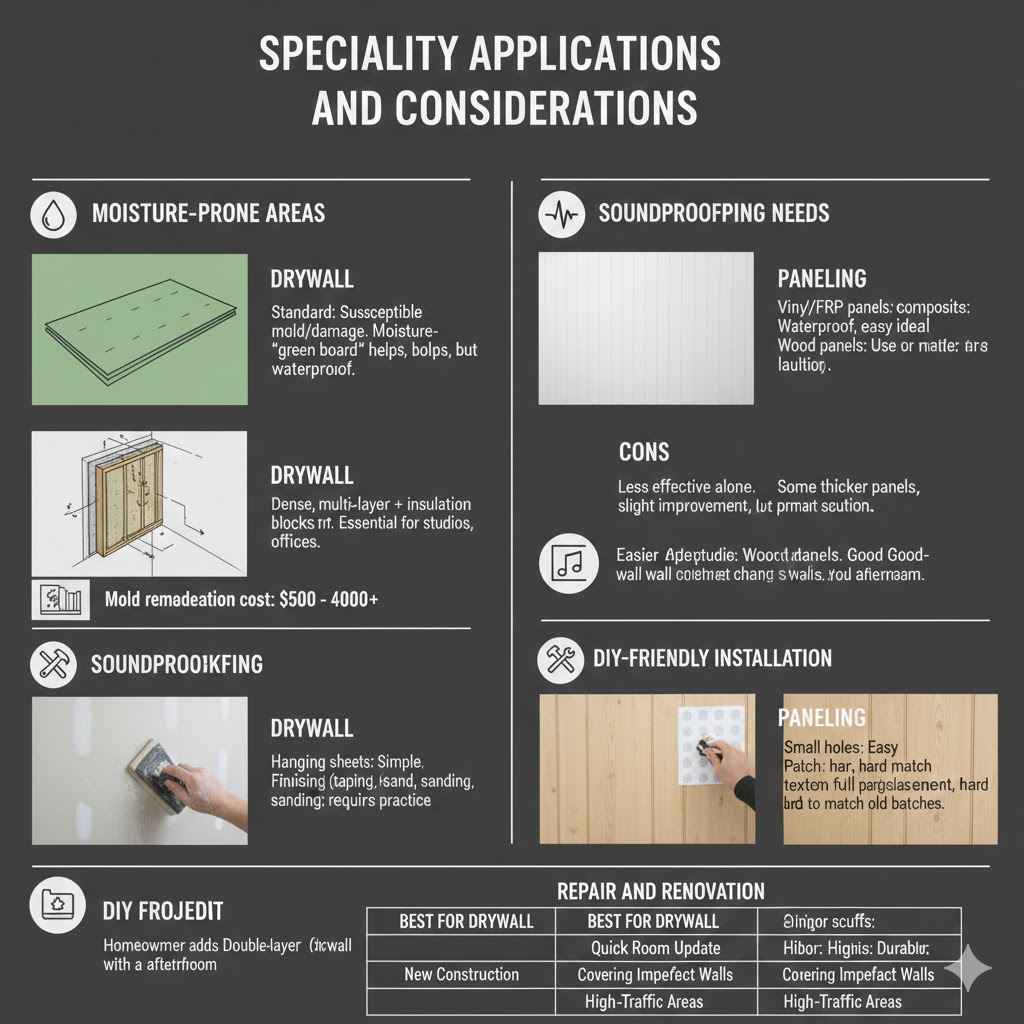
In areas like bathrooms, laundry rooms, and basements, moisture is a significant concern. Standard drywall is highly susceptible to water damage, leading to warping, mold growth, and structural compromise. While moisture-resistant drywall (often called green board or blue board) is an option, it’s not completely waterproof and requires careful installation and sealing.
Some types of paneling can be a better choice for these damp environments. Vinyl paneling, for example, is waterproof and easy to clean, making it ideal for shower surrounds or laundry rooms. Certain plastic or FRP (fiber-reinforced plastic) panels are also designed for high-moisture areas and offer excellent durability and resistance to mold and mildew.
However, wood-based panels, even if treated, should be used with caution in areas with direct water contact.
A statistic shows that mold remediation for water-damaged walls can cost homeowners anywhere from $500 to $4,000 or more, highlighting the importance of choosing water-resistant materials in damp areas.
Soundproofing Needs
When sound insulation is a priority, such as between bedrooms, offices, or in home theaters, drywall can be a good base. With the addition of insulation within the wall cavity and potentially multiple layers of drywall, or specialized sound-dampening drywall, you can achieve good soundproofing. The density of drywall contributes to blocking sound transmission.
Paneling alone typically offers less soundproofing than a properly constructed drywall wall. While some thicker, denser panels might offer a slight improvement, they are generally not the primary choice when significant soundproofing is required. If sound is a major concern, a combination of insulation, drywall, and specialized acoustic treatments would be more effective than relying on paneling.
Sample scenario: A musician is building a home recording studio. They need maximum sound isolation. They will use a double-layer drywall system with dense insulation between the studs and a specialized sound-dampening compound between the drywall layers.
Paneling would not be sufficient on its own for this level of soundproofing.
DIY Friendly Installation
For many DIY enthusiasts, paneling offers a more straightforward and less messy installation process than drywall. Pre-finished panels eliminate the need for taping, mudding, and sanding, which are often the most challenging and time-consuming aspects of drywall work. Cutting panels and attaching them with nails or adhesive is generally more accessible for beginners.
While hanging drywall sheets is relatively simple, achieving a professional, smooth finish requires practice and patience. The dust generated from sanding drywall can also be a significant deterrent for DIYers working in occupied living spaces. Paneling, with its pre-finished surface, often provides a more forgiving and cleaner DIY experience.
An example of a DIY project: A homeowner wanted to add a decorative accent wall in their living room. They chose peel-and-stick wood-look panels. They were able to measure, cut, and apply the panels themselves in an afternoon, transforming the room without needing special tools or dealing with the mess of drywall finishing.
Repair And Renovation Scenarios
When it comes to repairs, drywall is generally easier to patch for minor damage. Small holes or dents can be filled with joint compound, sanded smooth, and painted to match. However, large damage might require cutting out a section and fitting a new piece, which needs careful taping and mudding to blend seamlessly.
Renovating over existing walls can also favor one over the other. If you have existing drywall that is in good condition, you can paint or wallpaper it. If the existing walls are uneven or damaged, paneling can sometimes be installed directly over them, hiding imperfections without the need to strip down to the studs.
Conversely, if you’re aiming for a completely smooth, modern finish, starting with bare drywall is often preferred.
| Scenario | Best For Drywall | Best For Paneling |
|---|---|---|
| New Construction | Standard, cost-effective finish | For specific aesthetic needs or faster finishing |
| Quick Room Update | Requires significant finishing | Ideal for speed and immediate aesthetic |
| Covering Imperfect Walls | May require extensive prep | Can often be applied directly over |
| High-Traffic Areas | Can be prone to damage | More impact-resistant options available |
Frequently Asked Questions
Question: What is the main difference between drywall and paneling
Answer: The main difference is how they are finished. Drywall is a raw material that needs to be taped, mudded, sanded, primed, and painted to get a smooth wall. Paneling usually comes with a finished surface already applied, meaning it just needs to be installed to look complete.
Question: Is drywall or paneling better for a bathroom
Answer: For bathrooms, specialized moisture-resistant drywall or waterproof paneling like vinyl or FRP panels are better choices than standard drywall. Standard drywall can easily get damaged by moisture and lead to mold.
Question: Which is faster to install drywall or paneling
Answer: Paneling is generally faster to install because it often comes pre-finished, eliminating the need for multiple steps of mudding, sanding, and painting that drywall requires.
Question: Can you install paneling over drywall
Answer: Yes, in many cases, you can install paneling directly over existing drywall. This can be a quick way to update a room’s look, especially if the existing drywall has minor imperfections that you want to cover up.
Question: Which is more expensive drywall or paneling
Answer: The cost varies. Basic drywall materials are often cheaper than paneling, but the cost of finishing drywall with labor can make it more expensive overall than some types of paneling. High-end paneling can be more expensive than drywall.
Summary
When considering Drywall vs Paneling: What’s Better for Walls?, drywall offers a smooth, paintable canvas suitable for most rooms and budgets, though its finish requires time and skill. Paneling provides faster installation and instant character with various styles, often at a higher material cost but saving on labor. Choose drywall for a seamless look or paneling for speed and unique aesthetics.
Both have strengths depending on your project’s needs.