Is Composite Decking Fire Resistant? Depends on the Class Rating
No, composite decking is not completely fireproof, but Class A-rated products like Trex Refuge and AZEK Vintage now match Ipe hardwood’s top ASTM E84 flame-spread score. Choosing an unrated composite in a Wildland-Urban Interface (WUI) zone can fail inspection or void a wildfire-area building permit. This guide covers what Class A, B, and C fire ratings actually measure, which decking materials earn each one, and how to keep a fire pit or grill on composite boards safely.
Composite decking, including popular options like Ipe and AZEK, offers varying degrees of fire resistance. While no decking material is completely fireproof, understanding the fire ratings and certifications can help homeowners make informed decisions, especially in fire-prone areas. This blog will explore the fire resistance of composite decking and provide insights into selecting suitable materials for enhanced safety in outdoor spaces.
Introduction To Composite Decking And Fire Safety
Best Fire Pit Deck Mat Pick
Round Fire Pit Deck Mat (39.7in) – $40.08
A round heat-shield pad matches the footprint of most portable fire pits and stops radiant heat from reaching composite boards underneath — the “Safety Precautions” list above specifically calls for this kind of mat.
- Best for: Portable propane or wood-burning fire pits used directly on a composite deck
- Why we picked it: Round shape matches typical fire pit bases, sized for real heat coverage
- Main drawback: Not rated for direct in-fire contact — a heat shield, not a fireproof surface
Compare more deck heat-protection options
 Option 1 24x24in Square Fireproof Mat – $18.00
|
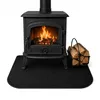 Option 2 Fireproof Hearth Heat Shield Mat – $26.31
|
 Option 3 1000°F Heat-Resistant Grill Mat – $30.35
|
As an Amazon Associate we earn from qualifying purchases.
Composite decking has gained popularity as a low-maintenance and durable alternative to traditional wood decking. However, concerns over fire resistance have led many homeowners to question the safety of composite decking materials. In this article, we will explore the rise of composite decking and its fire resistance, addressing the growing interest in this topic.
The Rise Of Composite Decking
Composite decking has seen a significant rise in popularity due to its long-lasting nature and minimal maintenance requirements. Made from a blend of wood fibers and plastic, composite decking offers enhanced durability and resistance to rot, mold, and insect damage. Its aesthetic appeal and eco-friendly attributes have made it a sought-after choice for outdoor living spaces.
Concerns Over Fire Resistance
One of the primary concerns surrounding composite decking is its fire resistance. While no decking material can be deemed completely fireproof, the fire resistance of composite decking varies based on its composition and manufacturing process. Homeowners in fire-prone areas are particularly interested in understanding the fire safety features of composite decking to protect their properties and ensure the safety of their families.

Material Composition And Flammability
Breaking Down Composite Materials
Composite decking is made up of a combination of materials, including wood fibers and plastic. The exact composition can vary between manufacturers, but the goal is to create a decking material that is durable, low-maintenance, and resistant to weathering and fading. However, one of the most important factors to consider when it comes to composite decking is its flammability.
Comparative Flammability Of Decking Materials
When compared to traditional wood decking, composite decking is generally considered to be more fire-resistant. This is because the plastic component of composite decking helps to minimize the risk of ignition, even when exposed to direct flame. However, it is important to note that no composite decking product is completely fireproof.
Some composite decking products are rated as Class B fire-resistant, which means that they meet certain fire safety standards. However, the fire treatment process can sometimes affect the overall quality and finish of the material, so it is important to research different products and choose one that meets both your aesthetic and safety requirements.
In conclusion, while composite decking is generally considered to be more fire-resistant than traditional wood decking, it is important to remember that no product is completely fireproof. When choosing a decking material, it is important to consider factors such as material composition, flammability, and fire safety ratings. By doing your research and choosing a high-quality product, you can help to ensure the safety and longevity of your deck.
Fire Ratings Explained
Every U.S. fire rating for decking traces back to one test: ASTM E84 (also called the Steiner Tunnel Test, referenced by the International Building Code). It measures how far flame travels across a material’s surface and how much smoke it produces, then scores both against a 0-100 scale calibrated to fiber-cement board (0) and red oak (100).
When it comes to building or renovating a deck, understanding what those scores mean is what actually determines whether a material clears a wildfire-zone building permit — not marketing language like “fire resistant.”
Understanding Classifications
ASTM E84 sorts every result into three classes by Flame Spread Index (FSI). Let’s take a closer look at each:
| Fire Rating Class | Flame Spread Index (FSI) | Example Decking Materials |
|---|---|---|
| Class A | 0–25 (best) | Ipe hardwood (naturally dense), Trex Refuge™ PVC, AZEK Vintage® Collection |
| Class B | 26–75 | Some fire-retardant-treated wood, select capped composite lines |
| Class C | 76–200 | Most standard, untreated wood-plastic composite and untreated softwood decking |
No wood or composite decking material is completely fireproof — even Class A materials burn under sustained direct flame. What Class A buys you is a much slower flame spread and lower ignition risk from wind-blown embers, which is what wildfire codes actually test for.
Impact Of Ratings On Material Selection
The fire rating of a decking material matters most in Wildland-Urban Interface (WUI) zones, where local code may require Class A or Class B materials outright. Ipe and Class A-rated engineered composites like Trex Refuge are the two paths to that top rating — one through natural wood density, the other through PVC/capped-composite engineering.
It’s also worth noting that the flame spread rating of a material is another important consideration. This rating indicates how quickly fire can spread across the surface of a material. Choosing materials with a lower flame spread rating can help reduce the risk of fire spreading rapidly.
In conclusion, understanding fire ratings and their impact on material selection is essential for creating a safe and fire-resistant deck. While no decking material is completely fireproof, choosing materials with higher fire ratings and lower flame spread ratings can help minimize the risk of fire-related accidents and protect your outdoor space.
Testing Composite Decking Against Fire
Composite decking’s fire rating isn’t a marketing claim — it comes from a specific lab test, and knowing what that test measures explains why two “fire-resistant” boards can perform very differently in a real fire.
Test Protocols And Procedures
Decking sold with a Class A, B, or C fire rating in the U.S. has gone through ASTM E84 (equivalent to UL 723), the Steiner Tunnel Test referenced by the International Building Code and International Wildland-Urban Interface Code:
- Setup: A sample is mounted along the ceiling of a 25-foot horizontal tunnel furnace.
- Ignition: A gas flame is applied to one end and held for 10 minutes.
- Flame Spread Index (FSI): Measures how far and how fast the flame travels down the sample.
- Smoke Developed Index (SDI): Measures how much smoke the material produces during the burn, capped at 450 for a passing rating.
Some manufacturers additionally run ember-exposure and radiant-heat tests aligned with California’s SFM 12-7A-4/12-7A-5 protocols for WUI-zone products, which more closely simulate wildfire ember attack than the tunnel test alone.
Interpreting Test Results
Once the FSI and SDI scores come back, the class rating follows directly from the table above. It’s important to understand that no composite decking can be considered completely fireproof at any class — only slower to ignite and slower to spread flame.
It’s also worth noting that Ipe’s Class A performance comes from its natural density (roughly 69 lb/ft³) rather than a chemical treatment, which is why it doesn’t lose its rating as it ages the way some retardant-treated products can.
In conclusion, understanding the ASTM E84 test and reading the resulting FSI/SDI numbers — not just a “fire-resistant” label — is what lets homeowners compare decking materials accurately.
Real-world Fire Performance
📊 IBHS ember research found that every ember-ignited deck fire in its testing started as a small smoldering fire in the gaps between deck boards, not from direct open-flame contact — and took over an hour to spread just 4 to 6 feet toward the house. That slow-smolder pattern is exactly what a higher flame-spread class rating is designed to interrupt. Source: Insurance Institute for Business & Home Safety (IBHS)
Case Studies Of Composite Decking In Fires
Real-world fire performance is a crucial aspect to consider when choosing a decking material. While no decking material is entirely fireproof, higher-density composite and PVC boards have shown better resistance to direct ember ignition than untreated wood boards in IBHS testing — the gaps between boards, not the board surface itself, are where most real deck fires actually start.
Limitations Of Fire Resistance
Composite decking is not entirely fireproof, and its fire resistance rating can vary widely depending on the specific product and manufacturer — an unrated big-box composite board and a Class A-rated Trex Refuge or AZEK Vintage board can perform very differently in the same fire.
Fire-retardant additives used to reach a given class rating can also affect the performance, quality, and finish of the material, and some additive-based treatments lose effectiveness over time. It’s essential to check the specific product’s current ASTM E84 test data, not just marketing copy, before making a purchase.
In conclusion, composite decking has proven to be a more fire-resistant option than traditional untreated wood decking in real-world ember testing. However, it’s crucial to understand that fire resistance still varies by product and to verify the specific rating before buying.
Enhancing Fire Resistance
When it comes to composite decking, enhancing fire resistance is crucial for safety and peace of mind. Let’s explore some key factors that contribute to improving the fire resistance of composite decking.
Fire Retardant Treatments
Fire retardant treatments play a vital role in enhancing the fire resistance of composite decking. These treatments are designed to reduce the combustibility of the material, slowing down the spread of fire.
Design And Construction Considerations
Proper design and construction considerations are essential for maximizing the fire resistance of composite decking. This includes factors such as the layout of the deck, ventilation, and the materials used in the substructure.
Regulatory And Safety Standards
No wood or composite decking is truly fireproof, but building codes in wildfire-prone regions increasingly require a specific class rating rather than leaving the choice to the homeowner. Knowing which code applies before buying decking material avoids a failed inspection.
Building Codes And Compliance
The International Wildland-Urban Interface Code (IWUIC) and California’s Building Code Chapter 7A are the two most-referenced standards for fire-rated decking. In a designated WUI zone, these codes can require Class A or Class B decking outright, or mandate ember-resistant assemblies under the deck (skirting, blocking gaps) in addition to the board rating itself. Local building or fire departments confirm whether a property falls inside a WUI zone before permitting.
Manufacturer’s Fire Ratings
A manufacturer’s stated fire rating should reference a specific, current ASTM E84 test report, not just a product page claim. Ratings can change between product generations — a board line that tested Class B several years ago may have since been reformulated to Class A, or vice versa, so it’s worth requesting the current test data sheet directly from the manufacturer rather than relying on older marketing material.
Making Informed Decisions
Considering fire safety is crucial when choosing decking materials. While no composite decking is completely fireproof, some options are more fire-resistant than others. It’s important to carefully research and consider the fire rating of composite decking to make informed decisions about safety for your outdoor space.
Choosing The Right Decking For Your Home
When considering composite decking, it’s crucial to assess its fire resistance properties. No decking material is entirely fireproof, but some options offer far better fire resistance than others. In a WUI zone, look specifically for Class A-rated products like Trex Refuge or AZEK Vintage, or naturally Class A hardwoods like Ipe.
Outside a WUI zone, consider the fire rating on a spectrum: most standard wood composites without added fire retardants test at Class C, higher-density or treated composites reach Class B, and a growing number of capped-composite and PVC lines now reach Class A without relying on additives that fade over time.
Balancing Safety With Aesthetics And Performance
When choosing decking for your home, it’s essential to balance safety requirements with aesthetic preferences and performance expectations. Opt for materials that offer a good mix of fire resistance, durability, and visual appeal to create a safe and stylish outdoor living space.
“Homeowners shouldn’t have to choose between meeting safety codes and style.”
Keep in mind that fire-retardant treatment can impact the quality and finish of some decking materials, though engineered PVC/capped-composite Class A products generally don’t have that trade-off. While complete fireproof decking doesn’t exist, selecting a fire-resistant option with a verified, current ASTM E84 rating can meaningfully improve safety in fire-prone areas.
Fire Pits And Composite Decking
When it comes to enjoying a cozy fire pit on your composite decking, safety should always be a top priority. Let’s explore some important aspects to consider when using fire pits on composite decking.
Safety Precautions
- Avoid placing fire pits directly on the composite decking surface.
- Use a heat-resistant pad or mat underneath the fire pit.
- Keep the fire pit a safe distance away from the decking and any structures.
- Always have a fire extinguisher or water source nearby.
Recommended Products And Practices
Consider using fire pits specifically designed for use on composite decking, such as propane or natural gas fire pits. These options provide a controlled flame and less heat transfer to the decking.
Additionally, investing in fire-resistant accessories like fire pit pads or mats can further protect your composite decking from heat damage.
Remember, while composite decking is not fireproof, taking these safety precautions and using recommended products can help you enjoy your fire pit safely on your deck.
Future Of Fire-resistant Decking Technologies
The future of fire-resistant decking technologies is already here in a way that wasn’t true a few years ago: Trex launched its Class A Refuge™ line in 2026 specifically for wildfire-prone regions, and AZEK’s Vintage® Collection has carried Class A ratings since testing confirmed it in earlier product cycles. While no decking material is completely fireproof, more composite and PVC options are reaching Class A — the top rating — rather than settling for Class B.
These innovations provide homeowners in fire-prone areas with safer and more reliable decking solutions.
Innovations In Composite Materials
As the demand for fire-resistant decking grows, manufacturers are investing in new technologies to develop composite materials with improved fire resistance. One such innovation is the use of fire retardants in the manufacturing process to make the decking less susceptible to fire. Other manufacturers are using new additives to make the decking more resistant to heat and flame.
Predictions For Industry Standards
With the increasing demand for fire-resistant decking, industry standards are likely to become more stringent in the future. As a result, manufacturers will need to develop new materials that meet these standards to remain competitive. Additionally, building codes may require the use of fire-resistant decking in certain regions to reduce the risk of wildfires.
In conclusion, the future of fire-resistant decking technologies looks promising, with manufacturers investing in new materials and innovations to meet the growing demand for safe and reliable decking options. As industry standards become more stringent, we can expect to see even more advancements in the field of fire-resistant composite decking.
Frequently Asked Questions
Are composite deck boards fire resistant?
Yes, but the degree varies a lot by product. Standard, untreated wood-plastic composite typically tests at Class C under ASTM E84. Higher-density or treated composites reach Class B, and engineered PVC/capped-composite lines like Trex Refuge or AZEK Vintage now reach Class A, the same top rating as Ipe hardwood. No composite decking is completely fireproof at any class.
What is the most fire-resistant decking?
Ipe hardwood and Class A-rated engineered products like Trex Refuge and AZEK’s Vintage Collection are the most fire-resistant decking options available, both scoring in the 0–25 Flame Spread Index range under ASTM E84. Composite decking without a Class A certification is not in the same category, even if it’s marketed as “fire resistant.”
Can you have a fire pit on composite decking?
Yes, with precautions. Never place a fire pit directly on composite decking — use a heat-resistant mat rated for the fire pit’s base temperature, keep at least 10 feet of clearance from structures and vegetation, and prefer a propane or natural gas fire pit over an open wood fire for more controlled, lower heat transfer.
What’s the difference between fire-resistant and fireproof decking?
Fire-resistant materials slow the spread of fire and resist ignition for a period of time, which is what an ASTM E84 Class A, B, or C rating measures. Fireproof means a material does not burn at all. No wood or composite decking product on the market today is truly fireproof — even Class A materials will eventually burn under sustained, direct flame.
Does composite decking melt or soften in high heat?
Yes. Standard composite decking can begin to soften well below open-flame temperatures, which is why manufacturers and fire-safety guidance both call for a rated heat-shield mat under any fire pit, grill, or smoker — direct radiant heat can deform the board’s surface long before it actually ignites.
Conclusion
No composite decking is entirely fireproof, but the gap between an unrated board and a Class A-rated one is real and code-relevant. In a WUI zone, verify the specific product’s current ASTM E84 rating rather than relying on “fire resistant” marketing language. For a broader look at fire-rated decking across all materials, not just composite, see our guide to fireproof decking options.
Sponsored / affiliate links. As an Amazon Associate I earn from qualifying purchases. I may earn additional commission from eligible campaigns.
 SuperStructuring Plugs for Decking - 1/4" Trex Composite Decking Wood Plugs, Weather-Resistant, UV Protection, Hole Covers for Outdoor Home Improvement & Repair - Enhance Naturals Foggy Wharf, 100-PcSuperStructuring Plugs for Decking - 1/4" Trex Composite Decking Wood Plugs, Weather-Resistant, UV Protection, Hole Covers for Outdoor Home Improvement & Repair - Transcend Tiki Torch, 100-Pc