Dyson V8 on Hardwood Floors: Use This Head, Not the Default One
Short answer: if you want to vacuum sawdust off hardwood shop floors with a Dyson V8, use the Soft Roller (“Fluffy”) cleaner head, not the standard Motorbar/Direct-Drive head that ships with most V8 kits. The stiff nylon bristles on the standard head are built to dig into carpet fibers, and that same aggressiveness can leave fine scratch marks on a hardwood finish over time. The Soft Roller head swaps those bristles for a felt-and-carbon-fiber roller designed specifically for hard floors.
What the Soft Roller Head Actually Is
Genuine Dyson Hardwood-Safe Head
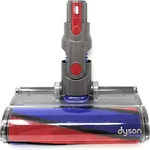 |
Dyson Soft Roller Cleaner Head – $122 The genuine Dyson attachment that replaces the stiff-bristle head your V8 shipped with for hardwood-safe sawdust cleanup.
|
Dyson calls it the Soft Roller cleaner head (marketed under the “Fluffy” name on some models). Instead of stiff bristles, the roller is covered in soft nylon combined with anti-static carbon fiber filaments, which help lift fine dust – sawdust included – without scattering it via static cling the way a plain nylon brush can. It attaches to any Dyson V8 (Absolute, Animal, or base model) the same way the other cleaner heads do: it clicks onto the wand and detaches with the same red release button. If your V8 kit didn’t include one, it’s sold as a standalone accessory and is the same head used across V7 through V15 cordless models with the compatible connector.
Why It Matters More in a Wood Shop Than a Living Room
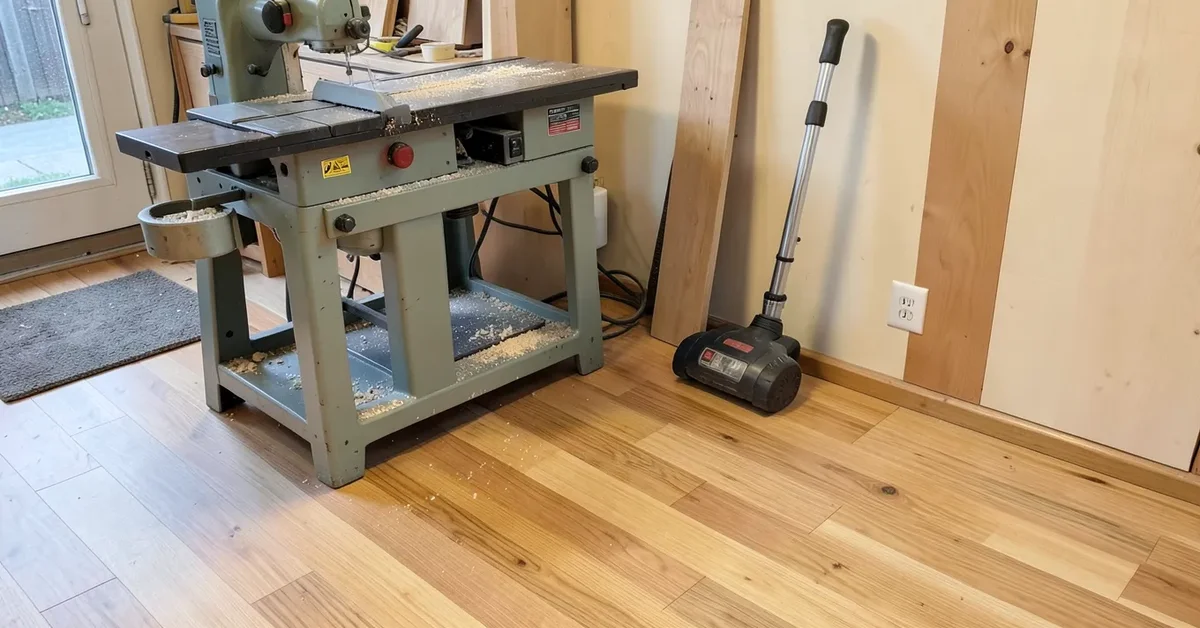
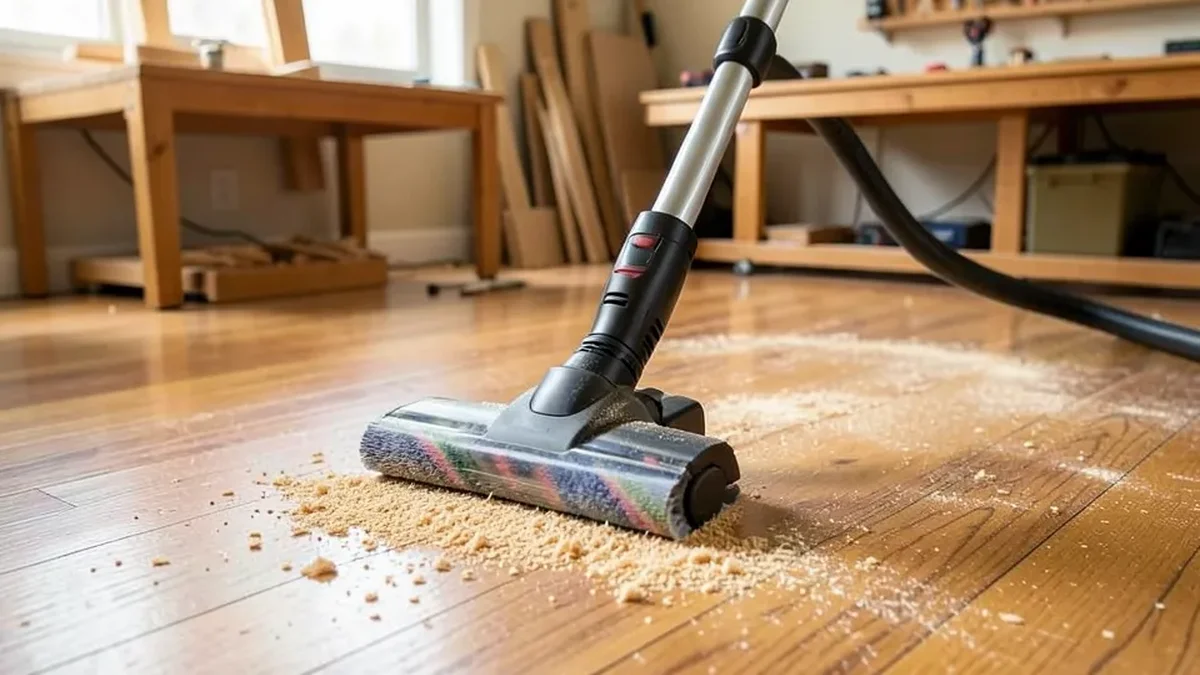
Household dust is soft. Sawdust and fine wood chips are abrasive, and they get ground into whatever surface they’re pushed across. A stiff-bristle head doesn’t just fail to clean well on hardwood – it acts like fine sandpaper dragging grit across the finish every time you vacuum. That’s the actual mechanism behind the scratches people report, not just “wrong tool, slightly worse cleaning.” Over months of repeated passes, that adds up to visible dulling of a hardwood finish, especially on lower-sheen or oil finishes that show wear more easily than a high-gloss polyurethane.
Soft Roller vs. the Other V8 Heads
| Attachment | Best surface | Safe on hardwood? | Watch out for |
|---|---|---|---|
| Soft Roller (Fluffy) | Hardwood, laminate, tile, vinyl | Yes | Not effective on carpet or rugs |
| Motorbar / Direct-Drive | Carpet, rugs | No | Stiff bristles can mark hard floors |
| Mini motorized tool | Upholstery, stairs, car interiors | Only for spot use | Too small for full-room floors |
| Combination tool | Shelves, workbenches, corners | Yes, for surfaces not floors | No powered brush – light dust only |
Using It in a Workshop: Practical Notes
- Clear large debris first. Offcuts, screws, and larger wood chips can jam the roller or get flung by the brush – sweep or pick those up before vacuuming.
- Standard suction mode is usually enough for fine sawdust and gives closer to the full ~40-minute runtime; save the boosted/MAX suction mode for heavier debris, since it drains the battery noticeably faster.
- Empty the bin after every session. Fine sawdust packs down and clogs the cyclone faster than household dust, which reduces suction well before the bin looks full.
- Wipe the roller down after use. Resin-heavy sawdust (pine, fir) can gum up the felt strip over time; a damp cloth after each session keeps it picking up dust instead of just pushing it around.
- Vacuum before you mop or tack-cloth a finish job. Wiping a dusty floor with a damp cloth just turns fine sawdust into a paste that’s harder to remove than the dry dust was.
Common Mistakes
The single most common mistake is exactly the one this page is about: using the standard carpet head on a hardwood shop floor because it’s the one that happened to be attached. The second most common is skipping roller maintenance – a roller gummed up with resin and dust stops picking anything up long before it looks visibly dirty, so cleaning performance quietly drops without an obvious cause. Third: trying to vacuum up large offcuts or hardware instead of hand-picking them, which can jam or damage the brushroll.
Buying It Separately
Not every V8 bundle includes the Soft Roller head – some kits (often sold as “Animal” or “Motorhead” bundles) only include the carpet-focused head. If yours didn’t come with one, buy directly from Dyson or a listing that clearly shows the genuine Dyson-branded part rather than a generic “compatible with” clone. Third-party replacement rollers are much cheaper but vary widely in build quality, and a stiff or off-spec clone roller can bring back the exact scratching problem you’re trying to solve.
Frequently Asked Questions
Is the Dyson V8 Soft Roller head worth the extra cost?
If your shop has hardwood, laminate, or tile floors, yes – it’s the difference between a cleaning tool that protects the finish and one that can dull it over months of use. If your shop floor is concrete or carpet, you don’t need it.
Can I use the Soft Roller head on other surfaces?
It’s built for hard, smooth surfaces – hardwood, laminate, tile, and vinyl. It doesn’t have the stiffness to agitate carpet fibers, so it’s a poor choice for rugs or carpeted areas; use the Motorbar or Direct-Drive head there instead.
How often should I clean the roller itself?
After every sawdust-heavy session. Pop the roller off and wipe it down with a damp cloth; resin from softwood dust builds up faster than typical household debris and will reduce pickup if left in place.
Will it pick up larger wood shavings, not just fine dust?
It handles small to medium shavings fine, but larger curls or offcuts can jam the roller or get flung rather than collected. Hand-pick anything bigger than a coin before vacuuming.
Bottom Line
The Dyson V8 itself isn’t the variable that protects your hardwood shop floor – the head you put on it is. Swap in the Soft Roller/Fluffy head for hardwood, laminate, and tile, keep the stiff-bristle head for carpeted areas only, and clean the roller after every sawdust-heavy session to keep it working the way it’s supposed to.
Own a different Dyson generation, or want the universal cross-model version of this same head? See our Dyson attachment for hardwood floors guide, which covers the V7 through V15 compatibility differences in one place.
Sponsored / affiliate links. As an Amazon Associate I earn from qualifying purchases. I may earn additional commission from eligible campaigns.