Best Dyson Vacuum for Hardwood Floors: V8 vs V11 vs V15 Compared
Every Dyson stick vacuum looks similar in a store aisle, but on hardwood floors the model number matters less than most buying guides admit. The part that actually determines whether a Dyson scratches your floor or leaves it spotless is the cleaner head attached to the tube — specifically whether it’s the soft roller (“Fluffy”) head built for hard floors, or the stiff-bristled Motorbar head built for carpet. Below is a real spec comparison of the current Dyson lineup, the one model worth buying if you want the least guesswork, and the setup mistakes that cause most of the hardwood-floor complaints you’ll find in Dyson’s own reviews.
Why the Cleaner Head Matters More Than the Model Number
Independent hands-on comparisons of the Dyson lineup on hardwood consistently find the same thing: a V8 fitted with its soft roller head cleans hard floors about as well as a V15 fitted with its soft roller head. The difference between models shows up in suction strength, run time, and features like dust-illuminating lasers — not in whether the floor gets scratched. If you already own an older Dyson and it came with a soft roller attachment, upgrading the whole machine won’t change your hardwood results nearly as much as simply using the correct head every time.
Best Overall Pick for Hardwood Floors
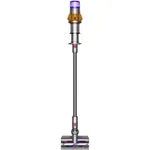 |
Dyson V15 Detect Cordless Vacuum – $686 Ships with the Fluffy Optic soft roller head made for hardwood, plus a green laser that reveals dust standard lighting hides.
|
Dyson V8 vs. V11 vs. V15 Detect: Spec Comparison
All three current Dyson lines can be fitted with a soft roller head for hardwood, so the real decision is how much suction, run time, and feedback you want. Here’s how the specs compare:
| Model | Motor Speed | Max Suction | Runtime | Hardwood Feature |
|---|---|---|---|---|
| Dyson V8 Absolute | Up to 110,000 RPM | Standard mode; 7-min Max boost | Up to 40 minutes | Soft roller head included standard |
| Dyson V11 | Up to 125,000 RPM | Up to 185 AW | Up to 60 minutes | LCD screen shows runtime by floor type |
| Dyson V15 Detect | Up to 125,000 RPM | Up to 240 AW | Up to 60 minutes | Green laser on Fluffy Optic head reveals hidden dust |
Caption: Specs reflect each model’s soft-roller/hardwood configuration as listed by Dyson; suction and runtime vary with power mode.
The V8 is the value pick: it comes with a soft roller head standard and handles daily hardwood cleanup without the higher price tag. The V15 Detect earns its price mainly through the laser, which is genuinely useful on hardwood because dust and pet dander show up clearly against wood grain in a way they don’t on carpet. The V11 sits in between — more suction and runtime than the V8, without the laser gimmick of the V15.
How to Vacuum Hardwood Floors With a Dyson Without Scratching Them
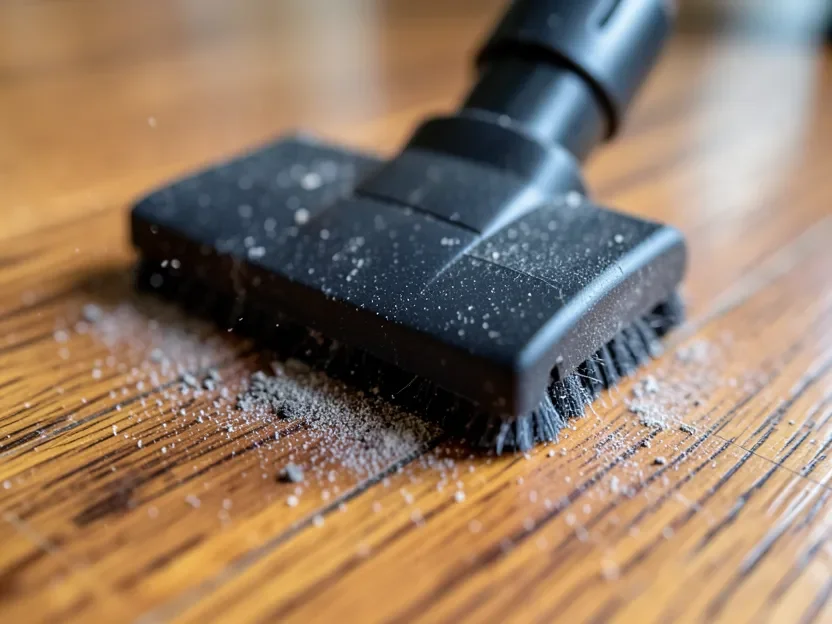
- Attach the soft roller head. Every current Dyson ships with one; the felt-covered bar is what protects wood finish. The stiff-bristled Motorbar head is for carpet only and can leave fine scratches on some wood finishes.
- Clear large debris by hand first. Toys, cereal, and other large items can jam the roller or get dragged across the finish before suction catches them.
- Use a lower power mode for daily cleaning. Max/Boost mode is meant for deep cleans and drains the battery in under 10 minutes; the standard mode is enough for routine dust and hair on wood floors.
- Move with the grain in long, even passes. This keeps the roller in full contact with the floor and avoids repeatedly dragging the head sideways across the same spot.
- Empty the bin at the MAX line. An overfull bin reduces suction, which causes the head to drag rather than lift dirt away from the floor.
Mistakes That Scratch Hardwood Floors
- Leaving the Motorbar head on. It’s designed to dig bristles into carpet fibers, which is the opposite of what a hard finish needs.
- Vacuuming grit without checking wheels first. Small stones or sand caught in the head’s wheels can act like sandpaper across a finish.
- Using the WashG1 or a wet-dry model on unsealed or old wood. Standing water can warp boards or lift finish that isn’t fully sealed — check your floor’s finish before using any wet-cleaning attachment.
- Skipping filter cleaning. A clogged filter reduces suction, which means the head has to be pressed down harder or passed over the same spot more times to pick up debris.
Maintaining a Dyson for Long-Term Hardwood Use
Rinse the filter under cold water roughly once a month (never in a dishwasher or washing machine) and let it air-dry fully for at least 24 hours before reinserting it — a damp filter reduces suction and can damage the motor. Pull hair and thread off the soft roller bar by hand or with scissors every few weeks; a roller wrapped in hair spins unevenly and can drag rather than glide. If the vacuum is cordless, avoid leaving it on the charging dock permanently at full charge for months at a time, which shortens battery lifespan faster than regular charge-and-use cycles.
Other Ways to Clean Hardwood Floors
A vacuum isn’t the only tool worth having for hardwood. A microfiber dust mop handles light daily dust between vacuum sessions without any risk of scratching. For sticky spills, a damp microfiber cloth or a spray mop made for sealed hardwood works better than a vacuum, which isn’t designed for wet messes. If you’re weighing a Dyson against other vacuum brands for hardwood specifically, our roundup of the best vacuums for hardwood floors compares Dyson to Shark, Tineco, and other options side by side. For everyday floor upkeep beyond vacuuming, see our guide on how to care for hardwood floors and make them last longer.
For most hardwood-floor households, the practical choice comes down to budget: the V8 Absolute covers routine cleanup with its included soft roller head at the lowest price point, while the V15 Detect adds the suction, runtime, and laser dust detection that make sense in a larger home or one with pets. Either way, the soft roller head — not the model number — is what actually keeps a hardwood finish scratch-free.
Whichever model you land on, make sure the soft roller head that ships with it is actually the one installed before you vacuum wood — see our Dyson attachment for hardwood floors guide for the full cross-model compatibility breakdown.
Frequently Asked Questions
What makes a Dyson vacuum safe for hardwood floors?
The soft roller (“Fluffy”) cleaner head is what makes it safe. Its felt-covered bar picks up dust and larger debris without the stiff bristles that a carpet-specific Motorbar head uses, which can leave fine scratches on some wood finishes.
Is the Dyson V15 Detect worth the extra cost over the V8?
The V15 costs roughly double the V8 mainly for its laser dust detection, higher suction (up to 240 AW vs. the V8’s standard output), and longer runtime (up to 60 minutes vs. 40). For a small hardwood space with light daily dust, the V8’s included soft roller head is enough; for a larger home or one with pets, the V15’s suction and runtime are the bigger practical upgrade.
Can I use a Dyson on other floor types too?
Yes. Switch to the Motorbar head for carpets and rugs, and back to the soft roller head for tile, laminate, and hardwood. Most current models include both heads in the box.
How do I clean and maintain a Dyson vacuum?
Rinse the filter under cold water about once a month and air-dry it fully for 24 hours before reinserting it. Remove hair wrapped around the soft roller bar every few weeks, and empty the dustbin at the MAX line rather than letting it overfill.
How long does a Dyson battery last on hardwood floors?
Most cordless Dyson models run 40 to 60 minutes in standard power mode, depending on the model, and closer to 6-10 minutes in Max/Boost mode. Standard mode is sufficient for routine hardwood dust and hair pickup.
Sponsored / affiliate links. As an Amazon Associate I earn from qualifying purchases. I may earn additional commission from eligible campaigns.