Glass Vs Wood Cutting Board: Which Wins for Your Kitchen?
Wood cutting boards protect knife edges and resist odors better than glass, but glass wins on sanitizing since it is non-porous and dishwasher-safe. Pick the wrong cutting board and you either dull a $150 knife set in months or risk bacteria hiding in deep knife grooves — though wood cutting boards are more sanitary than most assume. This guide compares durability, knife impact, hygiene, noise, cost, and environmental impact so you can choose the right board for your kitchen.
Material Characteristics
Best Wood Cutting Board Pick
THETCHRY Walnut End Grain Cutting Board – $36.99
End-grain construction lets small knife marks close up on their own, and no two walnut boards share the same grain pattern — the self-healing surface and one-of-a-kind look this guide credits to wood.
- Best for: home cooks who want one premium board that lasts for years
- Why we picked it: end-grain is the most knife-friendly, self-healing wood cut this guide describes
- Main drawback: needs regular oiling and is heavier than a bamboo board
Compare more wood cutting board options
 Option 1 Royal Craft Wood Bamboo Board Set – $29.95
|
 Option 2 Freshware Bamboo Board Set of 3 – $13.99
|
 Option 3 Non-Toxic Acacia Wood Board (FSC) – $39.95
|
As an Amazon Associate we earn from qualifying purchases.
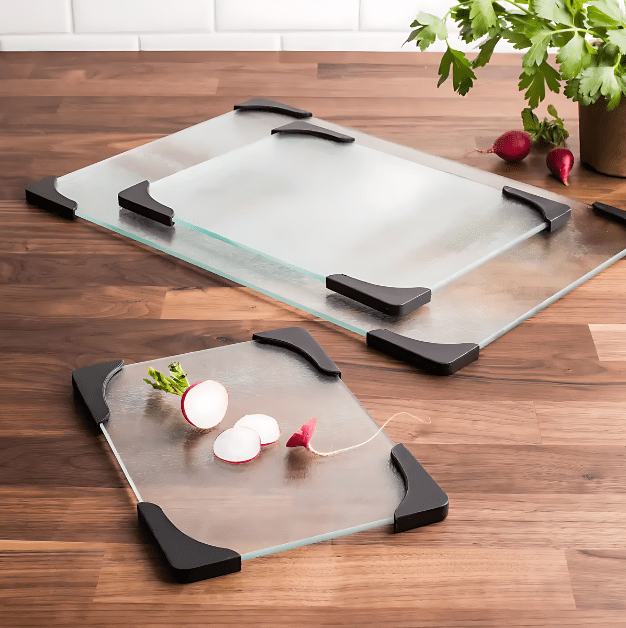
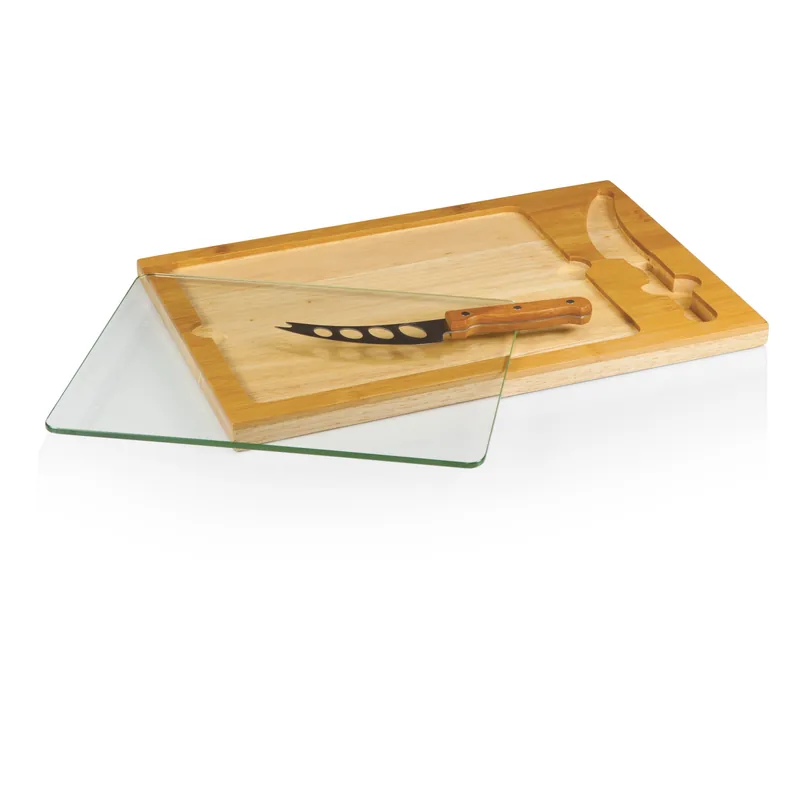
Glass cutting boards offer a sleek look and are easy to clean, but they can dull knives quickly. Wood cutting boards, on the other hand, provide a gentle surface for knives and add a warm, natural touch to kitchens.
Durability And Longevity
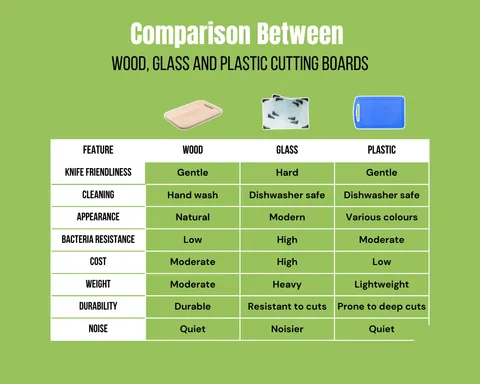
Glass cutting boards are very strong. They do not scratch easily. Wood boards might scratch over time. But they can last long if cared for. Wood can heal itself. Small cuts close up. This makes wood special.
Weight And Handling
Glass boards are heavy. They can be hard to move. Wood boards are lighter. Kids can carry them easily. Wood does not slip on the counter. This makes it safer to use.
Aesthetic Appeal
Glass looks shiny and clean. It matches modern kitchens. Wood boards have a warm look. They fit in cozy kitchens. Each wood board has unique patterns. This makes them one of a kind.
Impact On Knives
Glass cutting boardscan be hard on knives. They make blades dullquickly. This means more frequent sharpening. Wood cutting boardsare softer. They help keep knives sharp longer. This saves time and effort.
Glass boardscan be slippery. This might cause accidents. They are not friendly for kids. Wood boardshave a better grip. They are safer for cutting. Knife safety is important in the kitchen. Choosing the right board helps.
Hygiene And Maintenance
Glass cutting boards are very easy to clean. They have a smooth surface. Just wipe with a cloth, and they are clean. No need for scrubbing. Wood boards need more care. They must be washed by hand. Wood can soak up water. It takes time to dry.
Glass boards do not hold bacteria. They are non-porous. Bacteria cannot hide on them. Wood boards can hold bacteria. They have tiny holes. Stains can also stick to wood. Glass does not stain easily. It stays clear.
Environmental Considerations
Wood cutting boardsare often seen as more sustainable. Trees are a renewable resource. They grow back after being cut. Glass cutting boards don’t have this benefit. Glass is made from sand, but it isn’t renewable.
Wood boards can be compostedafter use. They break down naturally. Glass boards are recyclablebut need special facilities. Not all places have these facilities. This makes it harder to recycle glass.
Cost And Value
Glass cutting boards often cost less but can dull knives quickly. Wood boards are pricier, offering durability and gentle surfaces for knives. Each option presents distinct value depending on priority—cost-effectiveness or longevity.
Initial Investment
Glass cutting boards are often more expensiveat first. They can cost more than wood boards. Cleaning a wood cutting board come in many prices. Some are cheap, others cost more. Quality wood boards can cost a lot. But some people buy them for their beauty. Wood boards can be a good choice if you have less money.
Long-term Value
Glass cutting boards last a long time. They do not wear out quickly. They are strong and do not get scratches. But they can break if you drop them. Wood boards need more care. They can get deep cuts. You might need to sand and oil them. This keeps them nice and smooth. Over time, wood boards can look very pretty. They might last for years if you care for them well.
Noise And Comfort
Glass cutting boards can be quite noisy. Every slice makes a sharp sound. It might not be pleasant in a quiet kitchen. Wood boards are much quieter. They absorb some of the sound. This makes cooking more peaceful.
Wood boards are often more comfortablefor long use. They are softer on the hands. Your fingers and wrists feel less tired. Glass boards are hard and can cause discomfort. They might make you feel tired faster. Choose wisely for comfortand ease.
User Preferences
Many chefs love glass cutting boards. They think glass is easy to clean. Germs don’t stick to glass much. It’s a hard surface, so knives stay sharp. But, glass can be slippery. Some find it too noisywhen chopping. Wood boards are softer. They are gentle on knives. Chefs feel wood is warmand natural. Wood can be harder to keep clean. It needs extra care. Both types have fans among chefs.
Home cooks have mixed feelings. Some prefer glass for its clean look. It’s easy to wipe. Others find glass too hardand heavy. They worry about breaking it. Wood is popularfor its soft touch. It feels cozy. Many like the rustic styleof wood. But wood needs regular oiling. It can get damagedby water. Home cooks choose based on what they value more: easeor comfort.
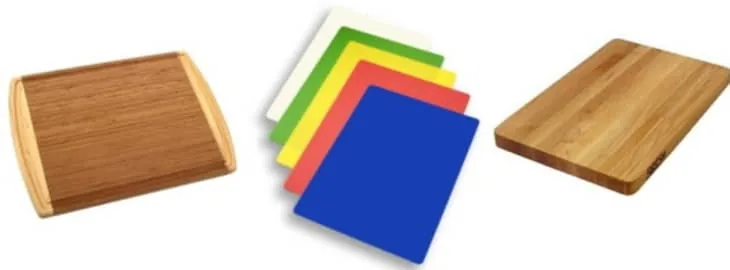
Frequently Asked Questions
What Are Benefits Of Glass Cutting Boards?
Glass cutting boards are non-porous and easy to clean, preventing bacteria buildup. They’re durable and resistant to stains and odors. However, they can dull knives faster. Despite this, their sleek design and variety of colors make them popular for aesthetics in the kitchen.
Why Choose Wood Cutting Boards For Kitchens?
Wood cutting boards are gentle on knives and have natural antibacterial properties. They offer a traditional look and feel. Though they require regular maintenance, their durability and self-healing surface make them ideal for long-term use. They add a warm, rustic charm to any kitchen.
How Do Glass And Wood Boards Differ In Maintenance?
Glass cutting boards require minimal maintenance; just wash with soap and water. Wood boards need regular oiling to prevent drying and cracking. Proper care ensures longevity. Glass is dishwasher safe, while wood should be hand washed and dried to maintain its condition.
Are Glass Cutting Boards Safe For Knives?
Glass cutting boards are hard, which can dull knife blades quickly. They don’t offer the same cushioning as wood. While hygienic, glass’s tough surface isn’t knife-friendly. Consider using glass for serving rather than cutting to prolong knife sharpness.
Conclusion
Choosing between glass and wood cutting boards can be tricky. Wood offers warmth and classic appeal. It’s gentle on knives and easy to clean. Glass shines with sleek style and durability. It’s non-porous, which means fewer bacteria. But, it can be tough on blades.
Consider your kitchen’s style and your cooking habits. Both options have their perks. Think about maintenance and cost, too. Make a choice that fits your needs. Find the balance between aesthetics and practicality. Your kitchen deserves the best cutting board for your culinary adventures.
Sponsored / affiliate links. As an Amazon Associate I earn from qualifying purchases. I may earn additional commission from eligible campaigns.