How to Make a Wood Gun Stock Shine: 5 Expert Tips
A wood gun stock gets its shine from thin, hand-rubbed coats of oil like Birchwood Casey Tru-Oil — not from furniture polish alone. Skipping the sanding step before oiling traps old finish under the new coat and leaves a cloudy, blotchy stock instead of a deep gloss. This guide covers the full Tru-Oil refinish (sanding through 0000 steel wool, staining, and 4-5 coats), plus a 10-minute no-sand quick-shine fix for stocks that just need freshening up.
If you’re shaping the grips themselves rather than refinishing an existing stock, see our guide on how to make custom wood pistol grips. This project pairs well with other woodworking projects that use hand-rubbed oil finishes.
Quick Answer
For a quick shine with no sanding, wipe on gun stock wax — it sets in about 10 minutes. For a cloudy, scratched, or dented stock, do a full refinish: sand 120 to 280 grit plus 0000 steel wool, then apply 4-5 thin Tru-Oil coats 24 hours apart.
What You’ll Need
Best Gun Stock Shine Pick
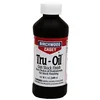
Birchwood Casey Tru-Oil Gun Stock Finish (8 oz) – $17.40
The oil used throughout the 4-5 coat refinish process in this guide — hand-rubbed in thin layers, it builds the deep, non-cloudy shine this article walks through step by step.
- Best for: A full refinish on a scratched, dented, or cloudy stock
- Why we picked it: The exact product this guide’s sanding-to-shine steps are built around
- Main drawback: Needs 12-24 hours between coats, so a full refinish takes about a week
Compare more gun stock refinishing options
 Option 1 Birchwood Casey Gun Stock Wax – $17.98
|
 Option 2 Birchwood Casey Rusty Walnut Stain – $12.50
|
 Option 3 Homax 0000 Steel Wool (12-Pack) – $4.98
|
As an Amazon Associate we earn from qualifying purchases.
- Mild soap solution and a lint-free cloth, for cleaning
- 120, 180, and 280-grit sandpaper, plus 0000-grade steel wool — only if the old finish is damaged
- Birchwood Casey Tru-Oil Gun Stock Finish, for the shine coats
- A water-based wood stain, such as Birchwood Casey Rusty Walnut, if you want to deepen or even out the color first
- Gun stock wax or a beeswax wood polish, for the quick fix and the final buff
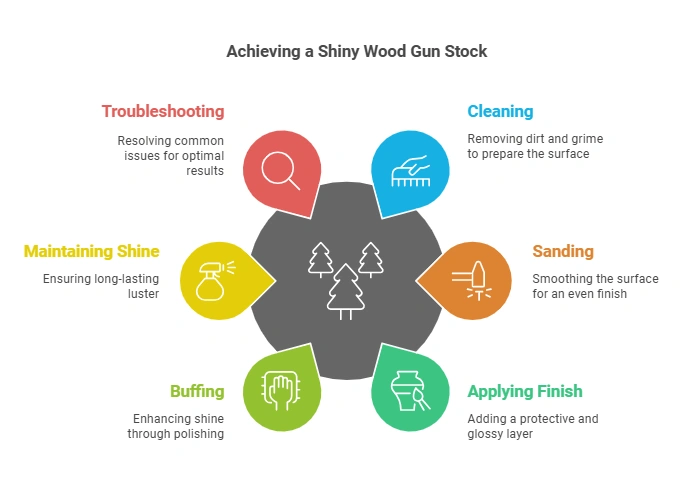
Best Products for a Tru-Oil Gun Stock Shine
These are the specific products referenced in this guide — the oil that does the actual shine work, plus the stain, wax, and steel wool used in the steps below.
How to Refinish a Gun Stock for a Deep Tru-Oil Shine
Use this full process when the stock has scratches, dents, a cloudy old finish, or bare wood. Plan on about a week, mostly waiting for coats to dry.
- Clean the stock: Wipe the entire stock with a mild soap solution on a lint-free cloth, working with the grain. Dry it completely before sanding — sanding damp wood tears the grain instead of smoothing it.
- Sand only if the old finish is damaged: Work through 120, then 180, then 280-grit sandpaper with the grain, finishing with 0000 steel wool. If the existing finish has no scratches or cloudiness, skip sanding entirely and go straight to oiling.
- Stain if you want a deeper color: This step is optional. Apply a water-based stain, such as Birchwood Casey Rusty Walnut, with a cloth and let it dry overnight before the first oil coat.
- Apply Tru-Oil in thin coats: Rub a small amount of Tru-Oil into the wood with a fingertip or lint-free cloth, spreading it thin enough that none pools on the surface. Apply 4 to 5 coats total, waiting at least 12 to 24 hours between each one.
- Cure before waxing: Let the final coat cure for a full 7 days before applying any gun stock wax or conditioner. Oil that hasn’t finished curing will look hazy under a wax layer.
- Buff to a high-gloss shine: Once cured, buff the stock with a clean, dry cloth in the direction of the grain. For a lower-sheen satin look instead of high gloss, knock the final coat down lightly with 0000 steel wool before buffing.
📊 Birchwood Casey’s own gun refinishing guide recommends 4 to 5 coats of Tru-Oil, at least 12 hours apart, with a full 7-day cure before applying stock wax or conditioner. — Source: Birchwood Casey Gun Refinishing Guide, 2026
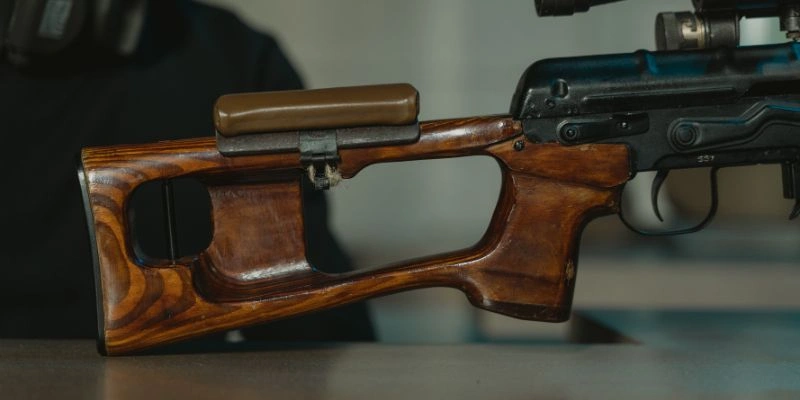
The 10-Minute Quick Shine Fix (No Sanding)
If the stock just looks dull and dry but has no scratches, dents, or cloudy patches, skip the full refinish. Wipe on a thin coat of gun stock wax or a beeswax wood polish, let it sit for 10 to 20 minutes, then buff it off with a clean cloth in the direction of the grain. This restores shine without touching the underlying finish.
Quick Fix vs. Full Refinish: Which Do You Need?
| Method | Time Needed | Best For |
|---|---|---|
| Wax or polish wipe-on | 10–20 minutes | Dull but undamaged finish, routine upkeep |
| Full Tru-Oil refinish | About a week (coat drying + 7-day cure) | Scratches, dents, cloudy or blotchy old finish |
| Stain + Tru-Oil refinish | Same as above, plus overnight stain drying | Faded color or an uneven wood tone |
Fixing Scratches, Dents, and a Faded Finish
A shallow dent (compressed wood, not a gouge) can often be raised without sanding: lay a damp cloth over the dent and touch a hot iron to it for a few seconds. The steam swells the compressed fibers back up. Once the wood is dry, smooth the spot with 600-grit sandpaper before oiling. For scratches or gouges that don’t raise, sand them out with 220 to 280-grit, working outward until the area blends in, then move to steel wool. See our full walkthrough on repairing a damaged wood finish for gouges deep enough to need wood filler.
A faded, sun-bleached stock usually needs the stain step above before oiling — oil alone won’t restore lost color, it only adds shine and protection on top of whatever color the wood already has.
How to Keep a Wood Gun Stock Looking Its Best
Wipe the stock down with a soft, dry cloth after each use to keep oils and dirt from building up in the grain. Re-apply a thin coat of wax every 3 to 6 months for stocks used or stored outdoors regularly, or once or twice a year for stocks kept mostly indoors. Store the firearm away from direct sunlight and extreme humidity swings — both fade the finish and can make the wood swell or crack over time. Some finishers also use shellac as a fast-drying alternative sealer on stocks that see heavy handling, though Tru-Oil remains the more common choice specifically because it resists water better than shellac does.
Frequently Asked Questions
How do I clean a wood gun stock before refinishing?
Wipe the stock with a mild soap solution on a lint-free cloth, working with the grain, then dry it completely. Avoid soaking the wood or using harsh solvents, which can lift old finish unevenly and leave a blotchy surface once you start sanding or oiling.
What products actually enhance a wood gun stock’s shine?
Birchwood Casey Tru-Oil is the standard choice for building shine through multiple thin, hand-rubbed coats. For stocks that just need freshening up, a beeswax-based gun stock wax or wood polish restores shine in minutes without any sanding or oiling.
How often should I re-oil or wax a gun stock?
Wax every 3 to 6 months for a stock used or stored outdoors regularly, or once or twice a year for one kept mostly indoors. A full Tru-Oil recoat is only needed when the existing finish is worn through, cloudy, or scratched.
Can I use linseed or tung oil instead of Tru-Oil?
Yes, both are traditional gun stock finishes and will darken and protect the wood. They dry slower than Tru-Oil, so plan on longer waits between coats, and expect a softer, lower-luster sheen than Tru-Oil’s harder, glossier finish.
How long does Tru-Oil take to dry between coats?
Birchwood Casey recommends waiting 12 to 24 hours between coats and letting the final coat cure a full 7 days before applying wax or a conditioner. Rushing this step is the most common reason a finish looks hazy instead of glossy.
What sandpaper grit should I use to refinish a gun stock?
Work through 120-grit, then 180-grit, then 280-grit, always sanding with the grain, and finish with 0000-grade steel wool right before the first oil coat. Skip sanding entirely if the existing finish has no damage.
Conclusion
Most wood gun stocks just need a wax wipe-on to look shiny again — save the full Tru-Oil refinish for a stock with real scratches, dents, or a cloudy old finish. Whichever method you use, thin coats and patience between them matter more than the specific product on the shelf.
Sponsored / affiliate links. As an Amazon Associate I earn from qualifying purchases. I may earn additional commission from eligible campaigns.