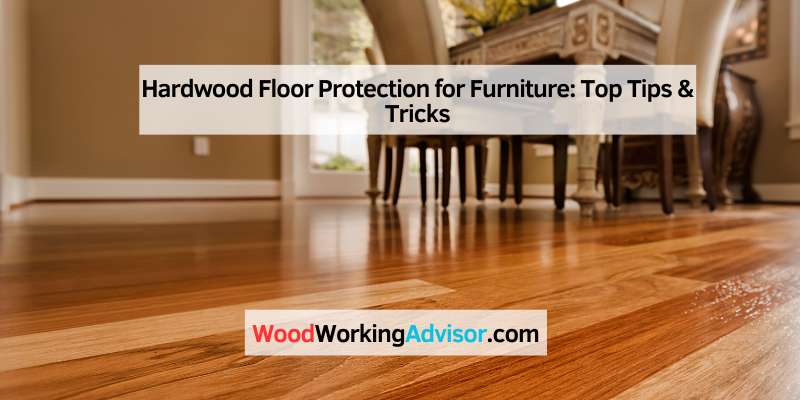
Hardwood Floor Protection for Furniture: Types, Costs & Application
The right hardwood floor protection depends on one question: does your furniture move? Felt adhesive pads work well for dining chairs and side tables, but rubber cups hold heavy sofas and cabinets in place without letting them slide. Using the wrong protector type causes the exact damage it is meant to prevent — rubber pads left under a sofa for years can yellow oak floors, while felt pads packed with grit become abrasive and scratch the surface they are supposed to protect. This guide covers the four main protector types, real costs per unit, which works for each furniture weight and use pattern, and how to apply each correctly so it actually stays on.
Quick Answer
Felt adhesive pads ($0.05-$0.50 each) protect most chairs and light tables. Heavy stationary furniture needs rubber cups or thick felt discs. Use PTFE furniture sliders only when moving heavy pieces — not as permanent protection. Replace felt pads when they look compressed or dirty; embedded grit makes them abrasive and causes the scratches you are trying to avoid.
Types of Hardwood Floor Protectors for Furniture
Best Furniture Pads for Hardwood Floors Pick
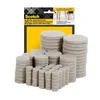
Scotch Felt Pads 162 PCS — Assorted Sizes
High-density felt pads in assorted sizes for chairs, tables, and decor items. Self-adhesive backing with peel-and-stick installation. Value pack covers an entire home.
- Best for: Dining chairs and frequently moved light furniture
- Why we picked it: Assorted sizes in one pack eliminate guesswork; Scotch adhesive holds on smooth and slightly textured leg surfaces
- Main drawback: Self-adhesive pads on rounded or tapered legs may need nail-in replacement for long-term hold
Compare more furniture pad options
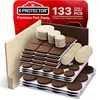 Option 1 X-PROTECTOR 133 PCS Premium Felt Pads
|
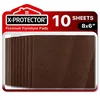 Option 2 X-PROTECTOR Heavy Duty 8×6 Felt Pads
|
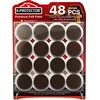 Option 3 X-PROTECTOR 48 Premium Chair Felt Pads
|
As an Amazon Associate we earn from qualifying purchases.
Five distinct protector types exist for hardwood floors, and each works best for a specific furniture weight and movement pattern. Choosing by price or convenience alone is the most common mistake — a thin felt pad is ineffective under a 200-pound media center, and a rigid rubber cup installed under a dining chair makes it hard to scoot in.
| Type | Best For | Cost Each | Thickness | Lifespan |
|---|---|---|---|---|
| Self-adhesive felt | Chairs, light tables | $0.05-$0.50 | 3-5mm | 6-18 months |
| Screw-in / nail-in felt | Chair legs (permanent fix) | $0.50-$1.50 | 5-7mm | 2-5 years |
| PTFE furniture sliders | Moving heavy furniture | $1-$4 | 1-3mm | Reusable |
| Rubber / silicone cups | Stationary heavy furniture | $2-$8 | 8-20mm | 3-7 years |
| Furniture socks | Chair and table legs (fabric) | $1-$2/set | Fabric wrap | 6-12 months |
Which material is safest for hardwood? Felt is the standard recommendation because it glides without gripping and does not react chemically with wood finishes. Silicone cups are safe but rigid. Standard rubber is problematic for hardwood floors specifically — rubber contains antiozonants that can migrate into wood finish and cause yellowing or darkening, particularly on light-colored or waxed floors. If using rubber products, look for “non-marking” or “food-grade silicone” labeling, which means the reactive compounds have been removed.
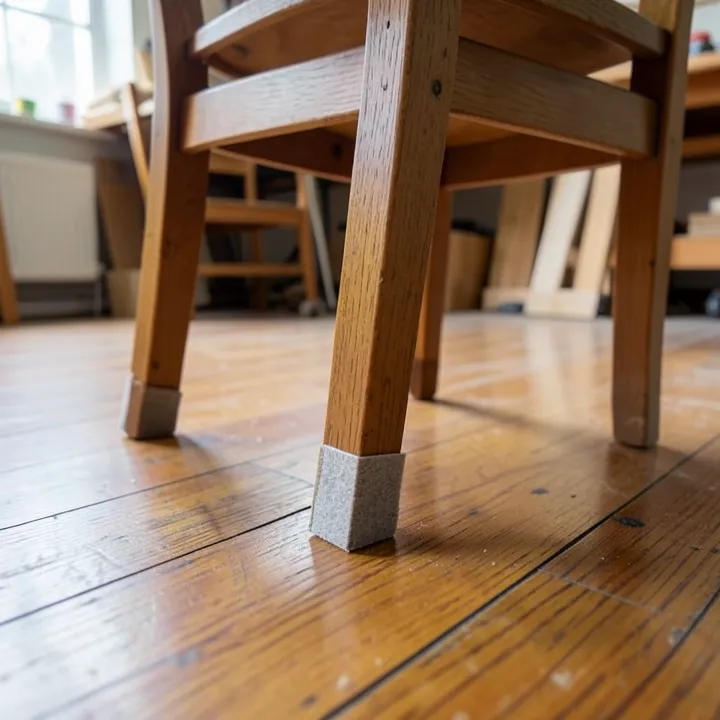
How to Apply Felt Pads to Furniture Legs
Felt pads fall off for one of three reasons: the leg surface was oily when applied, the wrong size was chosen, or the adhesive was not compressed long enough. These steps eliminate all three failure points.
- Clean the leg bottom with rubbing alcohol: Wipe the contact surface and let it dry completely — oils from wood finish, polish, and handling prevent adhesive from bonding.
- Measure the leg diameter: Choose a pad that matches the leg width or is slightly larger. A pad smaller than the leg leaves hard edges exposed, which scratch floors.
- Peel the backing and center the pad: Position it precisely — repositioning after contact weakens the adhesive layer.
- Press firmly for 30 seconds: Compress the adhesive by holding continuous pressure for a full half-minute. Do not just lay it down.
- Wait 24 hours before moving furniture: Most adhesives require full cure time before they can handle lateral force without peeling.
For legs with rounded or tapered bottoms, standard self-adhesive pads often peel off within weeks. A nail-in felt disc driven into the leg center with a small brad nail holds permanently and works better for high-use dining chairs that are pushed in and pulled out dozens of times daily. For more options, see our guide on best chair leg protectors for hardwood floors.
Matching Protection to Furniture Type
The same protection method does not work for every piece of furniture. A dining chair moves constantly, while a media cabinet may stay in one position for years — each needs a different approach.
- Dining chairs and barstools: Self-adhesive felt pads, replaced every 6-12 months. These move multiple times daily, so the pads accumulate grit fastest. Check quarterly and replace at the first sign of compression or shininess.
- Sofas and sectionals: Rubber cups or thick felt discs placed under each leg. These rarely move, so the primary risk is weight concentration causing dents — the thicker the protector, the more weight it distributes across the floor surface.
- Heavy cabinets and bookshelves: Rubber cups with non-marking silicone lining. Use a furniture slider under all four feet to position the piece first, then swap in rubber cups for permanent use.
- Rolling office chairs: A chair mat over the hardwood — not pads. Casters break through any pad over time, and dragging casters loaded with desk weight damage floors regardless of what is underneath the chair legs.
- Piano and upright cabinets: Piano caster cups, which are wider than standard cups and distribute the concentrated weight of piano legs over a larger floor area to prevent permanent dents.
Why Furniture Pads Fail (and How to Fix It)
Most pad failures happen for predictable reasons, and most are preventable with the right diagnosis.
- Pads falling off: Surface was oily at installation, or the leg has a rounded profile the adhesive cannot grip. Fix: sand the leg bottom lightly, clean with alcohol, and use a nail-in pad instead.
- Floor scratching despite pads: Felt has collected grit — embedded dust and pet hair effectively turns a felt pad abrasive under heavy furniture. Fix: peel off, discard, and reapply fresh pads immediately.
- Pads leaving residue: Low-quality adhesive backing left a sticky deposit. Fix: remove with a plastic scraper and mineral spirits, which do not damage most wood finishes.
- Floor discoloration under heavy furniture: Standard rubber is likely reacting with the floor finish. Fix: remove rubber pad, let floor air out, and apply a finish refresher recommended by the floor manufacturer.
DIY Floor Protection Solutions
Commercial protectors are inexpensive, but DIY options work for temporary situations and furniture with irregular leg shapes that standard pad sizes do not fit.
- Felt fabric cut from a sheet: A thick felt sheet (available at fabric stores for $5-10) can be cut to any shape. Use contact cement designed for felt, not hot glue, which does not hold under weight.
- Moving blankets under legs: An effective temporary solution when rearranging furniture. Fold a small section under each leg while positioning, then replace with permanent pads. Not suitable as a long-term fix because blankets shift under normal movement.
- Carpet remnants under heavy furniture: A 12-inch square of low-pile carpet under a sofa or cabinet protects the floor and prevents sliding. More stable than folded blankets and effective under any stationary piece.
“The single most common cause of hardwood floor scratches in homes we inspect is not bare furniture legs — it is felt pads that have not been replaced in years. Dirty, compressed felt is more abrasive than a bare wood leg because it holds grit against the floor surface under load.”
Incorporating Area Rugs for Additional Protection
Area rugs add a protective layer between furniture groups and hardwood, particularly under dining tables where chairs move constantly across the same zone. For hardwood floors, use a felt rug pad underneath — not rubber. A rubber-backed rug holds moisture against hardwood, and rubber can stain the finish over time. A felt pad allows the floor to breathe, prevents the rug from sliding (which causes the same scratching problem you are trying to avoid), and adds a layer of cushioning between the rug and the wood surface.
For long-term hardwood floor care, the combination of furniture protectors plus rugs in high-traffic zones is more effective than either alone — rugs reduce abrasion across the full zone while pads handle the concentrated point load at each furniture leg. For engineered hardwood specifically, see how to care for engineered hardwood floors for material-specific guidance.
Maintaining Your Floor Protectors
Protectors fail gradually, and the failure is often invisible until floor damage has already occurred. A simple maintenance schedule prevents most problems.
- Check every 3 months: Lift each piece briefly and inspect the pads. Look for compression (pads feel hard), shininess (felt fibers flattened), or visible embedded debris.
- Replace felt when compressed: Compressed felt provides less cushion and less surface area between the leg and the floor. Fresh pads for a dining chair set cost $5-15 — negligible compared to hardwood floor refinishing at $3-8 per square foot.
- Clean rubber cups annually: Wipe with a damp cloth and mild detergent. Grit trapped between a rubber cup and the floor can scratch even when the cup itself does not move.
- After any furniture move: Check all protectors on pieces that were relocated. Moving forces on protectors often dislodge pads on adjacent pieces that were not intended to be moved.
Common Mistakes to Avoid
- Applying pads without cleaning the leg: Adhesive does not bond to dust, oil, or old polish. A wipe with rubbing alcohol takes 30 seconds and doubles how long the pad stays on.
- Using standard rubber pads long-term under hardwood: Antiozonant compounds in rubber migrate into wood finish over time, causing yellowing or dark spots. Use silicone or felt for permanent installations.
- Ignoring worn pads on dining chairs: Dining chairs are used more than any other piece of furniture in most homes. Their pads wear out first and cause the most scratching when neglected.
- Using furniture sliders as permanent protection: PTFE sliders are designed for movement, not long-term static protection. Under a stationary sofa, a slider provides less floor protection than a felt pad because it has less surface area and a harder face.
- Dragging furniture without sliders: Even on well-protected floors, dragging a sofa — even a short distance — can scratch through a floor finish in a single pass. Lift or use proper moving sliders for any relocation.
Advanced Solutions for Maximum Floor Protection
For high-traffic areas or unusually heavy furniture, standard felt pads may not be sufficient. Higher-performance options include heavy-duty felt rated at 5-7mm thickness (significantly thicker than standard 3mm mass-market pads), industrial silicone cups designed for commercial-weight equipment, and furniture bases — flat platforms that sit under an entire piece, distributing weight evenly across a much larger floor area. For furniture glides specifically designed for hardwood floors, wider PTFE glides in 1-inch or larger diameter provide significantly more scratch protection during furniture movement than standard household sliders.
Frequently Asked Questions
How long do felt pads last on hardwood floors?
Self-adhesive felt pads last 6-18 months on dining chairs and other frequently moved furniture. On stationary pieces like sofas or cabinets, the same pads can last 3-5 years because they do not accumulate friction wear. Replace them when the felt looks compressed or shiny — compressed felt provides less protection and begins to act as an abrasive rather than a cushion.
Are rubber furniture pads safe for hardwood floors?
Standard rubber pads are safe short-term but can cause yellowing or dark staining on hardwood floors after months or years of contact. The reactive compounds in rubber (antiozonants) migrate into wood finish, particularly on lighter-colored or oil-finished floors. For long-term use under heavy furniture, choose non-marking silicone cups or high-density felt pads instead. If you already see discoloration, remove the rubber pad, allow the floor to air out, and consult your floor manufacturer about a compatible finish refresher.
What should I put under heavy furniture on hardwood floors?
Heavy furniture — sofas, bookshelves, pianos, and media centers — needs protectors with high weight capacity and a wide contact surface. Rubber or silicone cups (8-20mm thick) are the best option for stationary pieces; they distribute weight across a wider base and do not compress flat the way thin felt pads do. Piano caster cups are wider still and prevent the point loading that causes dents under piano legs. For pieces you move occasionally, use thick felt discs under each leg and furniture sliders only when relocating.
How do I keep furniture pads from falling off?
Pads fall off when the adhesive fails — from a dirty surface, rounded leg profile, or insufficient cure time. Clean the leg bottom with rubbing alcohol before applying, press firmly for 30 seconds, and wait 24 hours before moving the furniture. For legs with rounded or tapered bottoms where adhesive consistently fails, switch to nail-in felt discs: a small brad nail driven into the leg center holds permanently regardless of leg profile. Nail-in pads cost slightly more ($0.50-1.50 each) but outlast adhesive pads on high-use chairs by 3-5 times.
Do I need furniture pads for every piece of furniture on hardwood floors?
Yes — every piece of furniture on a hardwood floor should have protection, including pieces that rarely move. Static furniture causes slow damage through weight concentration: bare legs leave permanent dents in hardwood over months and years, particularly in softer species like pine, cherry, or walnut. Even furniture that never moves should have rubber cups or heavy felt discs underneath. The exception is furniture sitting on area rugs with a felt rug pad, where the rug and pad together provide adequate cushioning.
Can I use furniture sliders as permanent floor protectors?
No — furniture sliders are designed for temporary use during furniture relocation, not permanent floor protection. PTFE (Teflon) sliders have a hard, low-friction face that reduces contact surface area rather than distributing weight. A stationary sofa on sliders has less protection than the same sofa on thick felt pads. Use sliders only when moving furniture, then swap in felt pads or rubber cups for everyday protection.
Protecting hardwood floors from furniture does not require expensive products — it requires the right type for each situation and a simple replacement schedule. For dining chairs, felt pads replaced every 6-12 months outperform any alternative. For heavy stationary pieces, silicone or rubber cups installed once and checked annually do the job indefinitely. The most expensive protection decision is putting it off until the first scratch appears.
Sponsored / affiliate links. As an Amazon Associate I earn from qualifying purchases. I may earn additional commission from eligible campaigns.