New Hardwood Floor Cost: $1,200 to $75,000 by Home Size
A brand-new hardwood floor costs $6 to $25 per square foot installed — but for a whole room or home, that translates to a total project cost of $1,200 to $75,000+ depending on square footage, wood species, and subfloor condition. Skipping subfloor repair or old-floor removal in your budget is the most common way homeowners get blindsided by a mid-project change order. This guide covers total cost by home size, what per-square-foot calculators leave out, and where the real savings are.
Quick Answer
A new hardwood floor for an entire 2,000 sq. ft. home runs $12,000 to $50,000 installed (materials + labor), and $14,700–$44,000 is the average range reported industry-wide. A single 200 sq. ft. room runs $1,200–$5,000. Add 15–20% on top of any per-square-foot quote to cover old-floor removal, subfloor repair, and stairs if those aren’t already itemized.
Total Cost for a New Hardwood Floor by Home or Room Size
Best DIY Flooring Nailer Pick

DEWALT Flooring Stapler, 2-in-1 Tool (DWFP12569) – $221.80
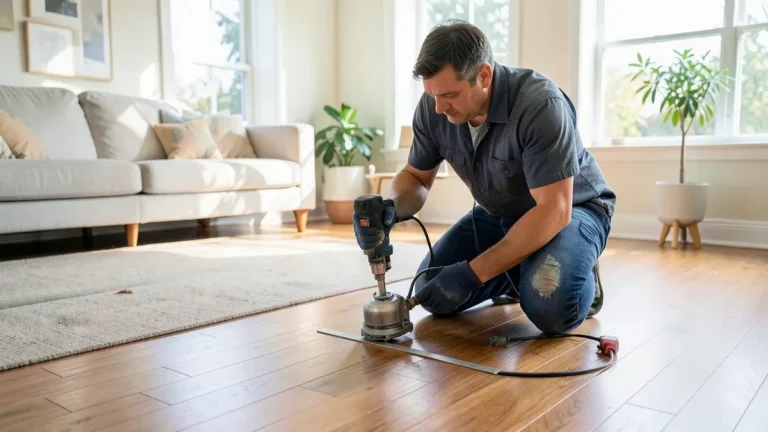
If you’re weighing DIY installation to cut the labor line out of your total budget, this is the tool that makes nail-down solid hardwood realistic for a first-timer — it switches between staples and L-cleat nails for different plank thicknesses.
- Best for: DIYers installing solid or engineered tongue-and-groove hardwood over a wood subfloor
- Why we picked it: 2-in-1 stapler/nailer covers both 3/4″ solid and thinner engineered planks without buying two tools
- Main drawback: Heavier than a rental-grade nailer — less comfortable overhead or on stairs for a full day of use
As an Amazon Associate we earn from qualifying purchases.
Most hardwood cost guides quote a per-square-foot range and stop there. For a genuinely new floor — replacing what’s down now, not patching a section — the number that actually matters is the total project cost for your whole space. Using the site-wide $6–$25 per sq ft installed range (materials + labor), here’s what that looks like at common home and room sizes:
| Space | Approx. Sq Ft | Low End Total | High End Total |
|---|---|---|---|
| One bedroom or living room | 200 sq ft | $1,200 | $5,000 |
| Small home / single floor | 800 sq ft | $4,800 | $20,000 |
| Average home, main floor | 1,500 sq ft | $9,000 | $37,500 |
| Whole house (typical) | 2,000 sq ft | $12,000 | $50,000 |
| Large home | 3,000 sq ft | $18,000 | $75,000 |
These totals assume a clean, level subfloor and a standard straight-lay pattern. A whole-home replacement almost always includes costs a single-room per-square-foot quote doesn’t: removing and disposing of the old flooring (typically $1–$2 per sq ft, or a $200–$500 flat haul-away fee), subfloor repair or leveling ($1,000–$3,000 if the existing subfloor is damaged or uneven), and temporarily relocating furniture. Budget 15–20% above your per-square-foot quote as a whole-project contingency — the detailed cost-by-flooring-type breakdown covers the per-type numbers behind this table if you want to narrow down a specific product.
📊 Installing hardwood floors throughout an entire 2,000 sq. ft. home costs $14,700 to $44,000 on average, including materials and labor. — Source: Angi, 2026 hardwood flooring cost data
Understanding the Factors That Influence Hardwood Flooring Costs
When you’re asking “how much does a new hardwood floor cost,” there isn’t one single price — the total is built from several stacked variables. Understanding each one is what lets you find real savings instead of guessing.
1. Material Costs: The Wood Itself
The species you choose is one of the biggest cost drivers. For a full species-by-species price breakdown — red oak vs. walnut vs. exotic species — see the hardwood cost by wood species guide. In short:
- Common & affordable: Red Oak and Maple — widely available, durable, and budget-friendly.
- Mid-range: Walnut and Cherry — richer color and grain, moderate price step-up.
- Premium & exotic: Brazilian Cherry, Teak, or Bamboo — priced up for rarity and harvesting cost.
Tip: Engineered hardwood has a real wood veneer over a stable core, offering the look of solid hardwood at a lower price point for rarer species, and it’s more dimensionally stable in humid rooms.
2. Installation Costs
Labor typically runs $3–$8 per sq ft nationally and is the line item most affected by your home’s layout. Removal of old flooring, subfloor prep, and installation method (nail, staple, glue, or float) all factor in. A stable subfloor is non-negotiable — see subfloor guidance from the National Association of Home Builders (NAHB).
- Removal of old flooring: Some installers include haul-away in their quote; others charge $1–$2 per sq ft extra — confirm this upfront.
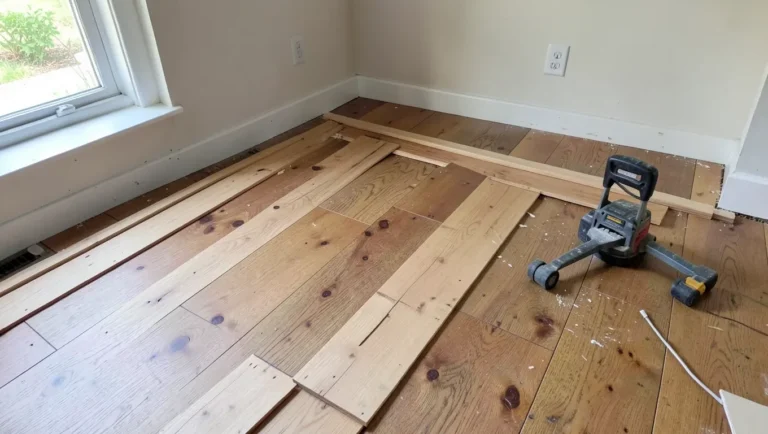
- Subfloor prep: A damaged or uneven subfloor can add $1,000–$3,000 to a 500 sq ft job.
- Complexity: Small irregular rooms, stairs, and herringbone/diagonal patterns all add labor hours.
Average Cost Breakdown: What to Expect Per Square Foot
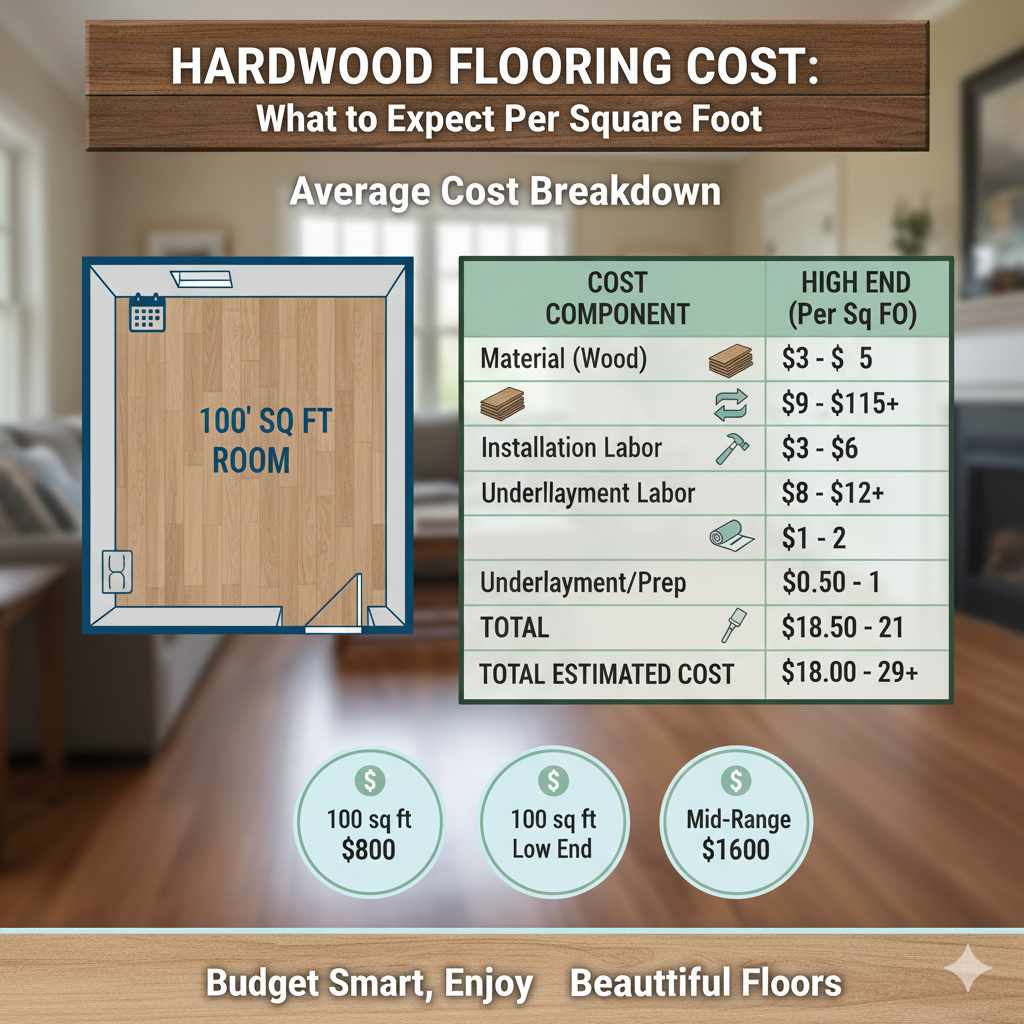
Consider a standard 10′ x 10′ room (100 sq ft) to visualize the per-square-foot numbers behind the whole-home totals above.
| Cost Component | Low End (Per Sq Ft) | Mid-Range (Per Sq Ft) | High End (Per Sq Ft) |
|---|---|---|---|
| Material (wood) | $3 – $5 | $5 – $9 | $9 – $15+ |
| Installation labor | $3 – $6 | $5 – $8 | $8 – $12+ |
| Underlayment / prep materials | $0.50 – $1 | $0.50 – $1.50 | $1 – $2 |
| Total per sq ft | $6.50 – $12 | $13.50 – $18.50 | $18 – $29+ |
For a 100 sq ft room: $800 at the low end, roughly $1,600 mid-range, up to $2,400 at the high end — and that still excludes rip-out, stairs, or complex subfloor repair, which is exactly why the whole-home table above budgets 15–20% higher.
Proven Savings Strategies: Get Beautiful Floors for Less
With a smart approach, you can get the hardwood floors you want without the high-end total from the table above.
1. Do Your Homework on Wood Species
- Embrace the classics: Red Oak, White Oak, Maple, and Hickory cost less than Walnut or Teak and are just as durable.
- Look for value grades: “Common” or “Select” grades have more natural character and cost less than “Clear” grade.
- Consider alternatives: Luxury vinyl plank gets a similar look for less if genuine wood isn’t a hard requirement — see the full hardwood vs. laminate and vinyl cost comparison.
2. Time Your Purchase and Shop Around
Flooring retailers run sales around Memorial Day, Labor Day, and Black Friday. Get quotes from at least three suppliers — prices vary significantly for the identical product, and buying the full whole-home quantity at once can qualify for a volume discount.
3. Consider DIY Installation
DIY installation can cut the labor line — roughly 40–50% of most quotes — by half or more, but it’s rarely a weekend project for a whole home. Click-lock or floating engineered floors are the easiest starting point; nail-down solid hardwood (see the flooring nailer above) has a steeper learning curve. Watch tutorials and practice on a low-visibility area first, and keep your subfloor perfectly level — that step alone determines whether the finished floor looks professional.
4. Refinish Instead of Replace, Where Possible
If your existing floor is solid hardwood that’s just dated or scratched, refinishing runs $300–$600 for a 100 sq ft room — a fraction of a full replacement. See the full breakdown in what sanding and refinishing a hardwood floor costs before committing to tearing anything out.
Budgeting for a New Hardwood Floor: A Step-by-Step Approach
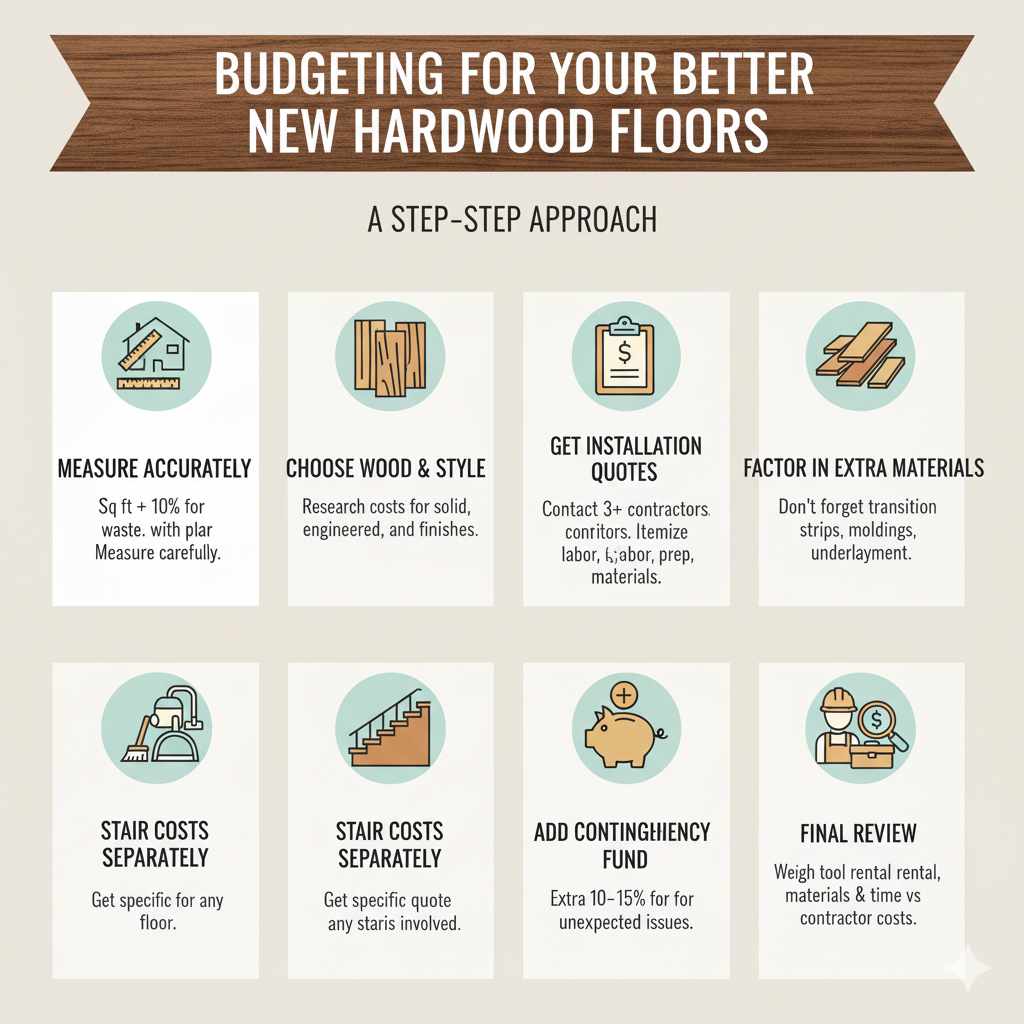
- Measure every room accurately: Multiply length by width per room, add 10% for cuts and waste. A 150 sq ft room needs at least 165 sq ft ordered.
- Pick 2–3 candidate species: Compare pricing using the species cost guide before falling in love with one option.
- Get 3+ installation quotes: Give each contractor the exact square footage and ask for an itemized quote covering removal, subfloor prep, underlayment, and labor separately.
- Price stairs separately: Stairs cost 2–4x more per step than flat flooring — get a dedicated line item.
- Add a 15–20% contingency: This covers subfloor surprises and material upgrades — see the whole-home table above for why this matters more on a full replacement than a single room.
- Check your timeline: A full-home install has an acclimation and drying window before you can move furniture back — the hardwood installation timeline guide breaks down how many days to plan for by room count.
Hardwood Flooring FAQs
What is the cheapest hardwood flooring option?
Domestic species like Red Oak or Maple in a lower grade (Number 2 Common) are the cheapest solid options. Engineered hardwood with a thinner veneer can cost even less than solid wood of the same species. Combine a common species with a sale period for the biggest total-project savings.
Is it worth the extra cost to get solid hardwood over engineered hardwood?
Solid hardwood can be sanded and refinished more times over its life, but engineered hardwood resists moisture better and installs in more locations, including over concrete and in basements. For a whole-home budget, engineered often wins on total cost since it needs less subfloor prep.
How much more does it cost to install hardwood floors on stairs?
Stairs cost 2 to 4 times more per step than flat flooring because of the precision cuts and fitting involved. On a whole-home total, budget stairs as a separate line item rather than folding them into your square-footage estimate.
A new hardwood floor’s total cost comes down to square footage, species, and how much of the “hidden” work — removal, subfloor repair, stairs — your quote already includes. Use the home-size table above as your starting budget, then get itemized quotes to fill in the real numbers for your space.
Sponsored / affiliate links. As an Amazon Associate I earn from qualifying purchases. I may earn additional commission from eligible campaigns.