How to Lighten Dark Stained Wood: 5 Proven Methods
To lighten dark stained wood, act by the clock: wipe wet stain with mineral spirits right away, sand stain that has dried, and strip any topcoat before bleaching, because bleach will not go through a finish. Oxalic acid will not lighten most dark stains. This guide covers five methods in order, the timing windows, and which bleach fits which problem.
How to Lighten Dark Stained Wood: Match the Method to the Stain Age
Best Finish Stripper Pick
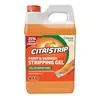 |
Citristrip Paint and Varnish Stripping Gel, 40 oz ($16.85) When the dark color sits under a varnish or polyurethane topcoat, the finish has to come off before any bleach or sanding can lighten the stain, which is method 3 below. Amazon lists it as removing varnish, lacquer, polyurethane and shellac.
|
As an Amazon Associate we earn from qualifying purchases.
Stain is not paint: it soaks into the wood rather than sitting on top, so it cannot be covered, only removed or worked around. This Old House puts it bluntly, calling a dark stain extremely difficult to lighten without removing the existing finish entirely. What changes the answer is how old the stain is and whether a topcoat is on it.
| Where you are | What works | Why |
|---|---|---|
| Stain still wet or tacky | Wipe with a rag dampened with mineral spirits (oil-based stain) | Minwax says wet or tacky stain comes off with a mineral-spirits rag |
| Stain dry, no topcoat yet | Sand it back, then bleach if needed | Dry stain has bonded with the wood; only abrasion or chemistry removes it |
| Stain dry under varnish or polyurethane | Strip the finish first, then sand or bleach | Bleach will not go through a finish (Bob Flexner) |
| Color is right but looks dull when dry | Do nothing yet: apply the clear coat | Minwax says clear finish usually makes the color rich again |
If your stain is lighter than you wanted and you are tempted to go the other way, see our guide on whether a second coat of stain makes wood darker. The rest of this page is for removing color.
Is the Stain Really Too Dark? Check Before You Sand
Two things make stain look wrong before it is finished. First, stain often dries dull and flat, and the clear coat then brings the color back up. Minwax says an oil-based topcoat adds warmth and depth while water-based topcoats usually dry crystal clear, so judge the final color only after the topcoat goes on. Our page on how much polyurethane darkens wood shows how big that shift can be.
Second, an old topcoat can be the culprit. Brad the Painter points out that aged varnish often causes the dark look rather than the stain itself, and suggests testing a hidden spot with stripper to see the true wood color before committing to a full sanding job. Do the same test here: strip a small hidden patch and look at it in daylight.
Wipe time sets the shade: Minwax says leaving wet stain on longer before wiping, sometimes as long as 15 minutes, gives a darker color, and warns not to let it dry longer than the label allows. Its gel stain label says to wipe after 3 minutes. Source: Minwax finishing FAQ
Method 1: Wipe Wet Stain Back With Mineral Spirits
This only works in the first minutes, which is why it is the best fix and the one people miss. Minwax says wet or tacky stain can be removed easily with a rag moistened with mineral spirits.
- Act fast: start while the surface still feels wet or tacky, before the stain has cured.
- Dampen a clean rag: wet it with mineral spirits, not soaked, and wipe with the grain.
- Refold the rag often: a loaded rag puts pigment straight back into the grain.
- Let it flash off: then judge the color in daylight before wiping again.
For water-based stain, use the cleanup solvent printed on that can instead, since mineral spirits is meant for oil-based products. Lay the used rags flat outdoors to dry, because oily rags can heat up and ignite.
Method 2: Sand the Dried Stain Back
Once the stain has cured, sanding is the simplest way to lighten it, because you are removing the colored wood fibers rather than chasing the color chemically. Work with the grain, vacuum, and wipe the dust off before you judge.
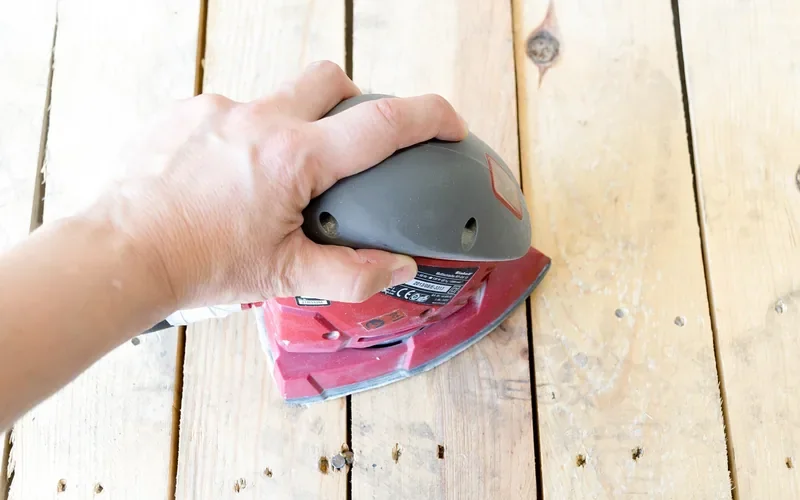
Grit matters in both directions. Minwax lists a coarser final sanding of 150 to 180 grit as one way to get darker stain, so the opposite should also hold: finish a notch finer, around 180 to 220 grit, if you want the next coat to take up less color. That finer-grit step is our inference from the Minwax advice rather than a published lightening rule, so test it on scrap.
Stop when the color is even, not when it is gone. Sanding through a thin veneer or using a coarse grit on a good table edge can cost more than the stain did. If sanding leaves a stubborn tint in the grain, that is the cue for the strip and bleach methods below.
Method 3: Strip the Topcoat, Then Remove the Stain
A finished piece needs the finish off before anything else works. This Old House says the fix for stain that is too dark is removing the finish by chemical stripper or sanding and starting over, and Brad the Painter says the same: you will be sanding the top of the wood off, and the dark stain with it.
- Test a hidden patch first: see whether the wood underneath is really that dark.
- Apply the stripper: follow the label for thickness and wait time, wear chemical-resistant gloves, and work in fresh air.
- Scrape and wash off residue: use the cleanup step named on the label before sanding.
- Sand to even color: use method 2, then bleach only if color remains.
Method 4: Bleach the Wood, but Pick the Right Bleach
This is where most advice goes wrong, including this page before this update. Oxalic acid is often sold as “wood bleach,” but Bob Flexner explains that it removes rust-type stains, while the two-bottle product containing sodium hydroxide and hydrogen peroxide is the one that lightens wood color. According to Popular Woodworking, four bleaches matter:
| Bleach | What it does | Use it when |
|---|---|---|
| Chlorine (household laundry bleach) | Removes dye-based stain, not pigment-based stain; leaves salt residue to brush off | The stain is a dye and the wood is bare |
| Two-part A/B wood bleach (lye + peroxide) | Lightens wood color; can de-color many pigments and dyes | You need to lighten the wood itself before restaining |
| Oxalic acid crystals | Removes blackish iron stains and grayed, oxidized wood | Dark marks come from iron or water, not stain |
| 35 percent peroxide | Removes blue mold stain on maple; neutralizes itself to water and oxygen | The dark mark is mold-blue, not stain |
“Bleach will not go through a finish.”
So the order is always the same: strip, scuff-sand, bleach, rinse, dry, then restain. Flexner notes that with two-part bleach you apply a wet coat of one part and follow it with the second before the first dries, though some brands tell you to mix first. Use the label for your brand.
- Protect yourself: Popular Woodworking says to wear long neoprene gloves with the ends cuffed to catch drips, a waterproof apron and goggles for two-part bleach.
- Oxalic acid mix, if the marks are iron or gray: Savogran label directions call for about 3 oz per quart of hot water, reapplied every 10 minutes, then rinsed three times.
- Rinse well: residue left in the grain interferes with the new finish, so follow your label neutralizing and rinsing step.
Our full walkthrough of the process is in how to bleach wood.
Method 5: Restain Lighter With a Shorter Wipe Time
After sanding, stripping or bleaching, the wood is ready for a lighter second attempt, and the earlier lesson applies: wipe time controls the shade. Wipe sooner for a lighter result, and test on a scrap of the same wood sanded to the same grit before touching the piece. The full process is in our guide to restaining wood.
- Soft or blotchy woods: Minwax says to apply Pre-Stain Wood Conditioner, let it penetrate 5 to 15 minutes, wipe off the excess, and stain within two hours.
- Lighter over dark does not work: a lighter stain over a dark one will not lighten it, because the old color still shows through. Remove first.
- Dry and judge: let it dry the full time on the label, then look at the sample in daylight with a topcoat on it.
If you are dealing with several staining problems at once, such as blotches and lap marks, our page on how to fix wood stain mistakes covers the others.
Which Method Should You Start With?
| Situation | Start with | Skip |
|---|---|---|
| Stain applied minutes ago | Method 1: mineral spirits wipe | Sanding and bleach |
| Cured stain on bare wood | Method 2: sanding | Oxalic acid |
| Stain under varnish or polyurethane | Method 3: strip the topcoat | Bleach before stripping |
| Dark tint left after sanding | Method 4: two-part A/B bleach | Oxalic acid for dye stains |
| Going to a lighter shade of the same color | Method 5: restain with a shorter wipe time | Staining lighter over dark |
Dark Stain FAQ
How do you lighten stain that is too dark?
Match the method to the stain age. Wipe wet or tacky stain with a rag dampened with mineral spirits. Sand dried stain on bare wood. If a topcoat is present, strip it first. For a stubborn tint, use two-part A/B wood bleach, then restain lighter with a shorter wipe time.
Can you lighten dark stain without sanding?
Only while it is wet or tacky, when a mineral-spirits rag removes it. After it dries, you need sanding, a stripper or two-part bleach. Applying a lighter stain on top will not lighten it, because stain is absorbed into the wood and the older color still shows through.
Does oxalic acid lighten dark stain?
Usually not. Bob Flexner says oxalic acid removes rust-type stains and grayed wood, while two-part sodium hydroxide and hydrogen peroxide bleach is the product that lightens wood color and many dyes. Match the bleach to the problem, and strip any finish first.
Will stain get lighter as it dries?
It can look duller and flatter as it dries, and Minwax says the clear protective finish usually restores the rich color. Judge the shade after topcoating, not while wet or dry. Stain left on the wood longer before wiping, up to about 15 minutes, comes out darker.
Can you put a lighter stain over a dark stain?
No. Stain colors the wood rather than covering it, so a lighter stain over a dark one leaves the dark color showing. You must remove the dark stain first by sanding, stripping or bleaching, and then apply the lighter stain to bare wood.
Does sanding lighten stained wood?
Yes, when the stain is still in the surface fibers. Sanding removes the colored wood, so the color gets lighter as you cut through it. Work with the grain, and stop when the color is even. If a tint remains deeper in the grain, move to stripping or two-part bleach.
Final Check Before You Start
Check the age of the stain, check for a topcoat, and test any method on a hidden patch first. The quickest fixes only work in the first minutes after staining. After that, expect to sand or strip, and keep oxalic acid for iron and gray marks rather than dye.
Sponsored / affiliate links. As an Amazon Associate I earn from qualifying purchases. I may earn additional commission from eligible campaigns.