How Does Ash Wood Age? Color Change, Timeline & Care Tips
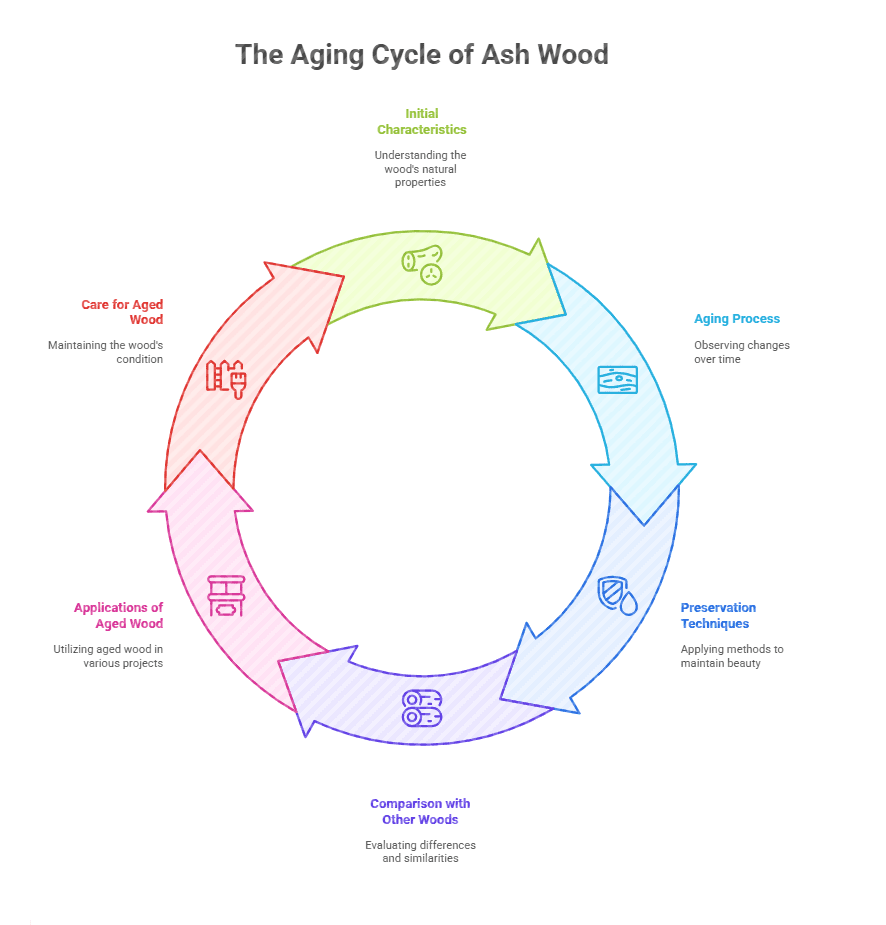
Ash wood ages from a pale, almost cream-colored surface to a warm honey-amber tone over roughly five to ten years indoors, mostly from UV exposure and oxidation of the wood’s natural extractives. Left outdoors and unfinished, that same board skips the amber stage and turns silvery-gray within a year or two instead.
Which direction it goes, and how fast, depends on light exposure, the finish you put on it (or don’t), and how much handling and moisture the piece sees. Below is what actually happens to ash at the wood-fiber level, a realistic timeline, and the specific product I’d reach for to control the process rather than let it happen randomly.
What Ash Wood Looks Like Before It Ages
Best Pick For Controlling How Ash Ages
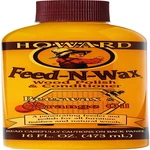 |
Howard Feed-N-Wax Wood Polish & Conditioner – $11.48 A beeswax-and-orange-oil conditioner that slows UV yellowing on bare or oiled ash and evens out blotchy aging on furniture that’s aged unevenly near a window.
|
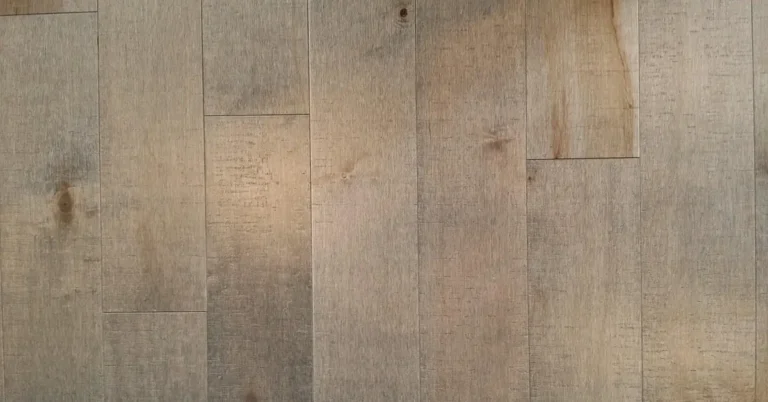
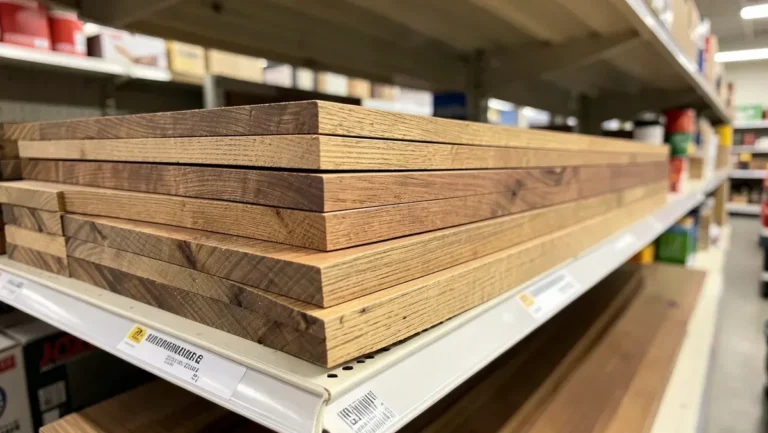
Freshly milled ash heartwood runs from off-white to light tan, with a straight, open grain that’s easy to spot up close — the pores line up in visible rows because ash is a ring-porous hardwood, the same structural family as oak. That open grain is also why ash takes stain unevenly if you don’t seal it first; the early wood soaks up far more pigment than the dense late wood next to it.
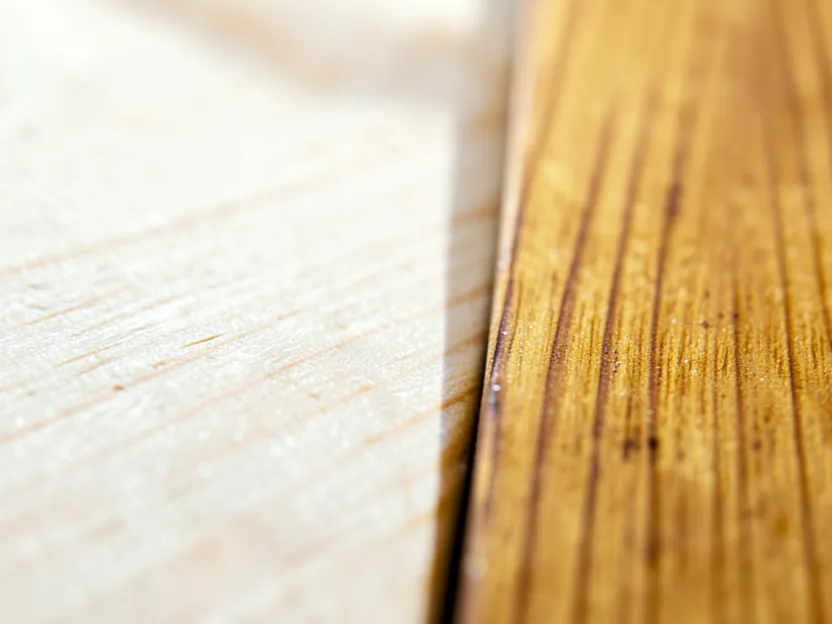
Janka hardness for white ash runs around 1,320 lbf, roughly on par with red oak and noticeably harder than soft maple or poplar. Combined with its flexibility — ash bends without snapping, which is exactly why it’s the classic choice for baseball bats, tool handles, and bent-wood chair parts — that hardness means the surface resists dents well even as the color shifts underneath it.
How Ash Actually Changes Color Over Time
The color shift isn’t ash “getting dirty” or absorbing dust into the grain, it’s a chemical reaction. Wood contains lignin and other extractives that oxidize when exposed to oxygen and, especially, ultraviolet light. UV breaks down the lignin at the surface, which is what produces that classic amber-to-honey patina on indoor furniture. It’s the same mechanism that turns cherry and pine darker with age, just at a slower rate on ash than on cherry.
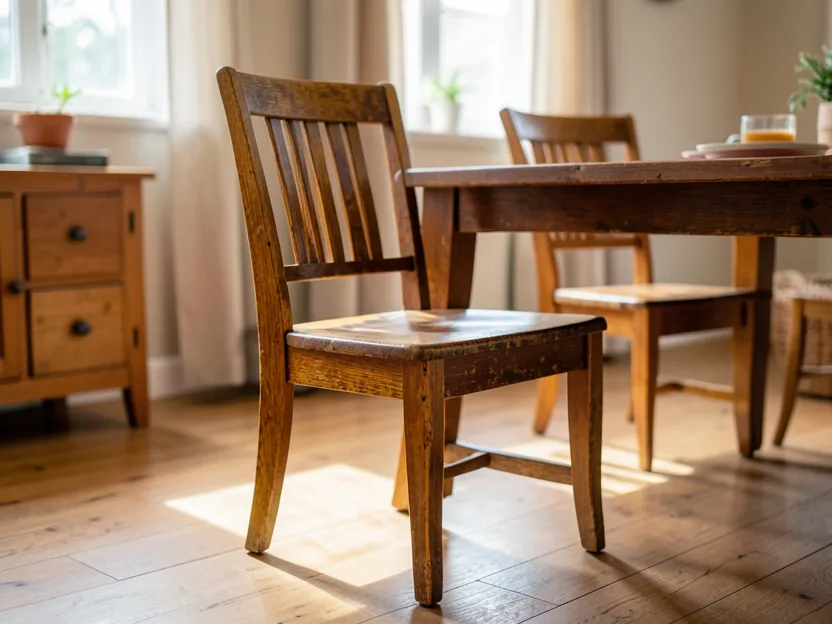
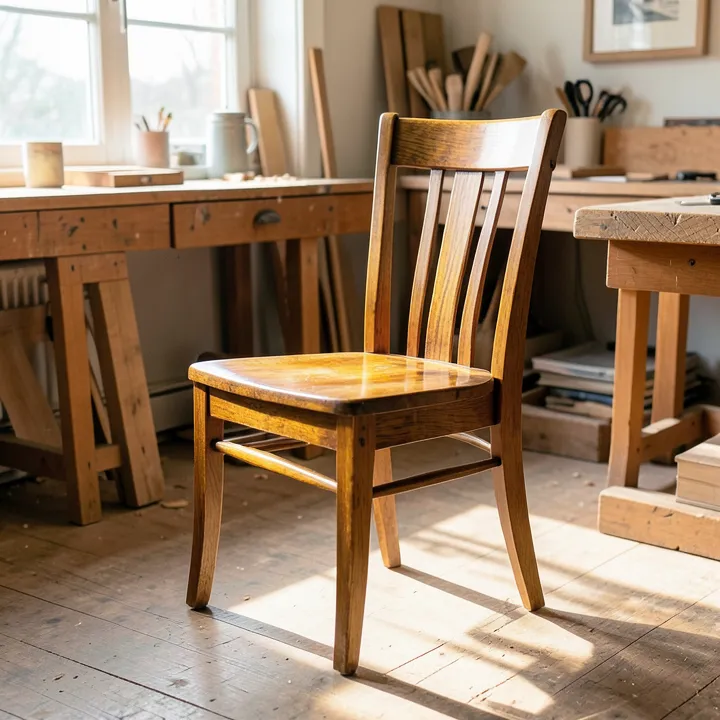
Indoors, out of direct sun, expect a noticeable shift within 6 to 12 months and a settled, richer amber tone by year 3 to 5. Sit a piece in direct window light and the change accelerates dramatically — I’ve seen ash windowsill trim visibly two-tone within a single summer, darker where the sun hits and still pale where a rug or picture frame blocked the light. That uneven “tan line” effect is the single most common complaint people have with aging ash, and it’s avoidable with UV-blocking window film or by simply rotating furniture pieces periodically during the first year.
Outdoors and unfinished, ash skips the amber phase entirely. UV and moisture cycling break down the surface lignin faster than it can build the amber compounds, so the wood bleaches to a silvery-gray patina within a year or two — the same weathered look you’d get from cedar or teak left bare outside. If you want ash to hold its warm tone outdoors, it needs a UV-blocking exterior finish, not just any sealer.
What Speeds Up or Slows Down the Aging Process
Four things move the needle in practice. Direct sunlight is the biggest one by far — UV exposure alone can cut the timeline to a visible color shift from a year down to a few weeks. Finish type matters too: an oil finish (Danish oil, tung oil) ambers the wood itself as part of curing, while a water-based poly leaves the wood’s natural tone closer to untouched and lets the ash’s own oxidation do the coloring work more slowly and evenly.
Humidity swings are the third factor, and they affect texture more than color: ash that repeatedly wets and dries can raise its grain slightly, giving older pieces a subtly more textured feel under your palm even when the color change is minor. Last is simple handling — oils from hands, cooking splatter near kitchen furniture, and cleaning products all interact with the surface chemistry, which is why a well-used ash dining table often ages unevenly compared to a display piece that’s rarely touched.
One more thing worth flagging if you’re sourcing ash rather than just finishing furniture you already own: North American ash trees are under serious pressure from the emerald ash borer, an invasive beetle that has killed hundreds of millions of trees since it was first detected in Michigan in 2002. It doesn’t change how the lumber ages once it’s milled, but it’s a big part of why ash boards can be harder to find at some mills than they were a decade ago. If you’re checking a living ash tree rather than milled lumber, our guide to spotting an infected ash tree covers the specific warning signs.
Keeping Aged Ash Looking Its Best
Once ash has developed its amber patina, the goal shifts from managing color change to protecting what you’ve got. Dust with a dry or barely-damp microfiber cloth — ash’s open pores can trap grit from a wet rag, and that grit acts like fine sandpaper every time you wipe the surface. Skip ammonia-based cleaners; they strip oil and wax finishes and can blotch the amber tone unevenly.
- Re-oil or re-wax bare/oiled ash every 6 to 12 months depending on how much handling it gets — a wax-finished dining table used daily needs it closer to every 3 to 4 months.
- Keep it out of direct, unfiltered window light where possible; even sheer curtains cut a meaningful amount of the UV that drives uneven fading.
- Fill small dents and scratches with a color-matched wax stick before they trap dirt and darken faster than the surrounding wood.
- Keep indoor humidity in the 35–55% range if you can — it won’t stop the color shift, but it prevents the grain-raising and small seasonal cracks that make aged ash look rougher than it needs to.
For furniture with cracks, chips, or a finish that’s gone patchy rather than evenly amber, a light hand-sanding with 220-grit along the grain followed by a fresh coat of oil or wax will usually even things back out without erasing the character the aging has already built up.
How Ash Compares to Other Woods as It Ages
Ash and red oak age along a similar timeline and both start pale, but oak’s color shift leans more golden-brown while ash tends to land on a cleaner honey-amber. Oak’s grain is also more pronounced and slightly more porous, which shows dust and dirt build-up faster than ash’s tighter, straighter lines.
Against hard maple, the difference is more about speed than direction: maple ambers far more slowly than ash because it has less lignin near the surface, so a maple cutting board can look nearly the same after five years while an ash board next to it has already gone noticeably golden. Cherry sits at the other extreme — it darkens faster than both, often showing a visible shift within weeks of first exposure to light, which is why cherry furniture is famous for “tanning” faster than almost anything else in a woodshop.
Frequently Asked Questions
Does ash wood darken with age?
Yes. Indoor ash typically shifts from pale cream to a warm honey-amber over 6 months to 5 years, driven by UV exposure and the natural oxidation of lignin at the wood’s surface. Unfinished ash left outdoors goes the opposite direction and bleaches to silvery-gray instead, because UV and moisture break the surface down faster than the amber compounds can form.
What is the disadvantage of ash wood?
Its biggest practical downsides are supply and susceptibility: the emerald ash borer has killed enormous numbers of North American ash trees since 2002, which has tightened supply at some mills, and ash itself has no natural resistance to rot or insects once it’s cut, so it needs a finish for any piece exposed to moisture or the outdoors. Its open, ring-porous grain also takes stain unevenly if it isn’t sealed first.
How long does an ash tree take to reach maturity?
Most ash species reach harvestable maturity in 30 to 40 years under good growing conditions, though full old-growth size can take considerably longer. Soil quality, spacing, and climate all affect the rate more than any single factor.
Can you slow down or stop ash from aging?
You can slow it significantly but not stop it completely. UV-blocking window film or keeping furniture out of direct sun cuts the rate dramatically, and a UV-inhibiting topcoat (rather than plain oil) blocks more of the light that drives the color change. Regular conditioning with a beeswax product also keeps the shift even instead of blotchy, which is usually what people actually mean when they say they want to “stop” the aging — they want to stop it looking patchy, not stop it entirely.
Conclusion
Ash wood’s aging is a predictable chemical process, not random wear: UV and oxidation turn it from pale cream to amber indoors within a few years, or bleach it silver-gray if it’s left bare outdoors. Controlling which way it goes, and how evenly, comes down to light exposure and finish choice more than anything else — a beeswax conditioner and a bit of attention to direct sunlight will get you a piece that ages evenly instead of in blotchy patches.
Sponsored / affiliate links. As an Amazon Associate I earn from qualifying purchases. I may earn additional commission from eligible campaigns.