How Hard Is Maple: A Proven, Essential Guide
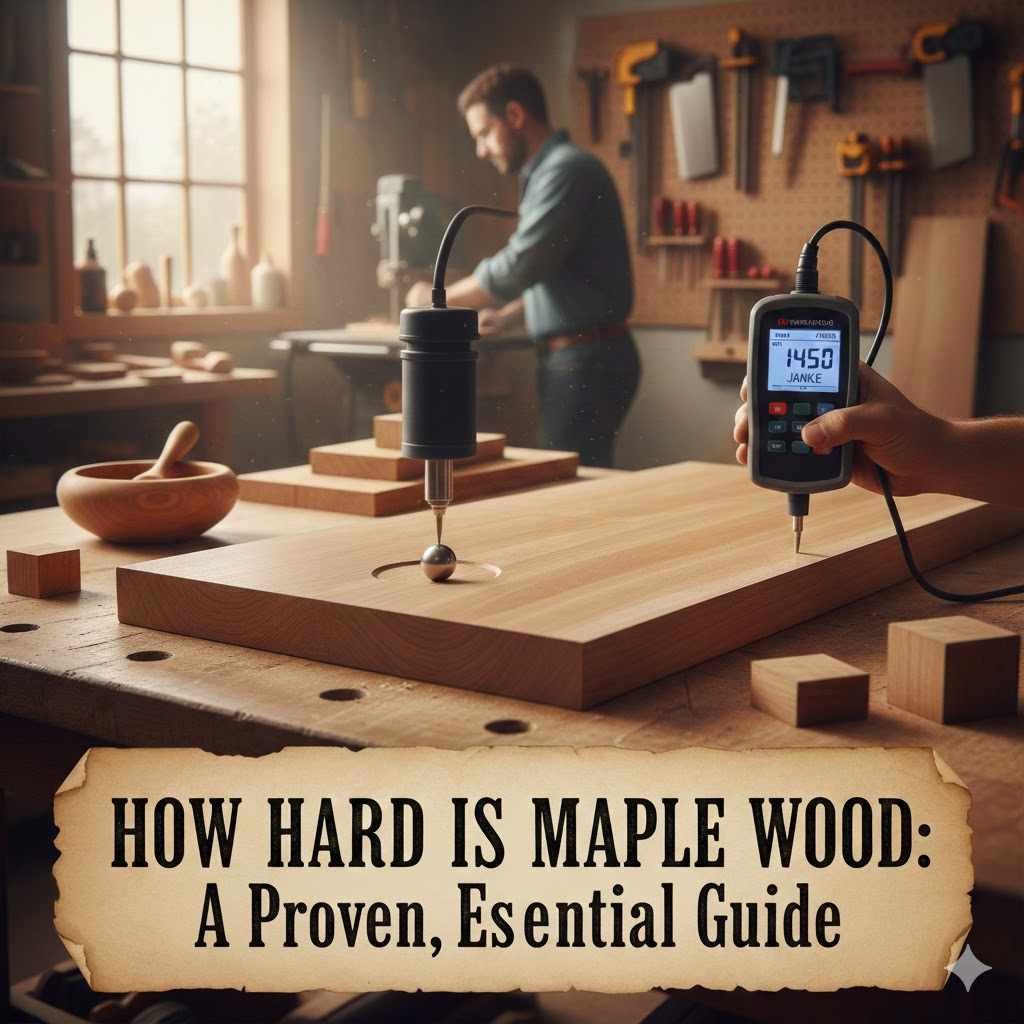
Hard maple is one of the toughest domestic hardwoods, ranking 1450 on the Janka hardness scale—harder than red oak. Its dense grain resists dents and scratches, making it ideal for high-wear items like flooring and cutting boards. However, its hardness requires sharp tools and careful techniques to prevent burning or splitting.
Hello, fellow makers! I’m Md Meraj. In my workshop, I often see beginners pick up a beautiful piece of maple. They love its smooth, light color. But then, a question pops up: “Just how hard is this stuff to work with?” It’s a great question. You hear “hard maple” and might worry it will be a difficult, frustrating experience.
I’m here to tell you it doesn’t have to be. Maple is an amazing wood, but its hardness does mean you need to approach it the right way. Don’t worry, I’ll walk you through everything. We will break down what “hardness” really means, explore the different types of maple, and share proven tips to make your first maple project a huge success. Let’s get started!
Understanding Wood Hardness: What Does “Hard” Really Mean?
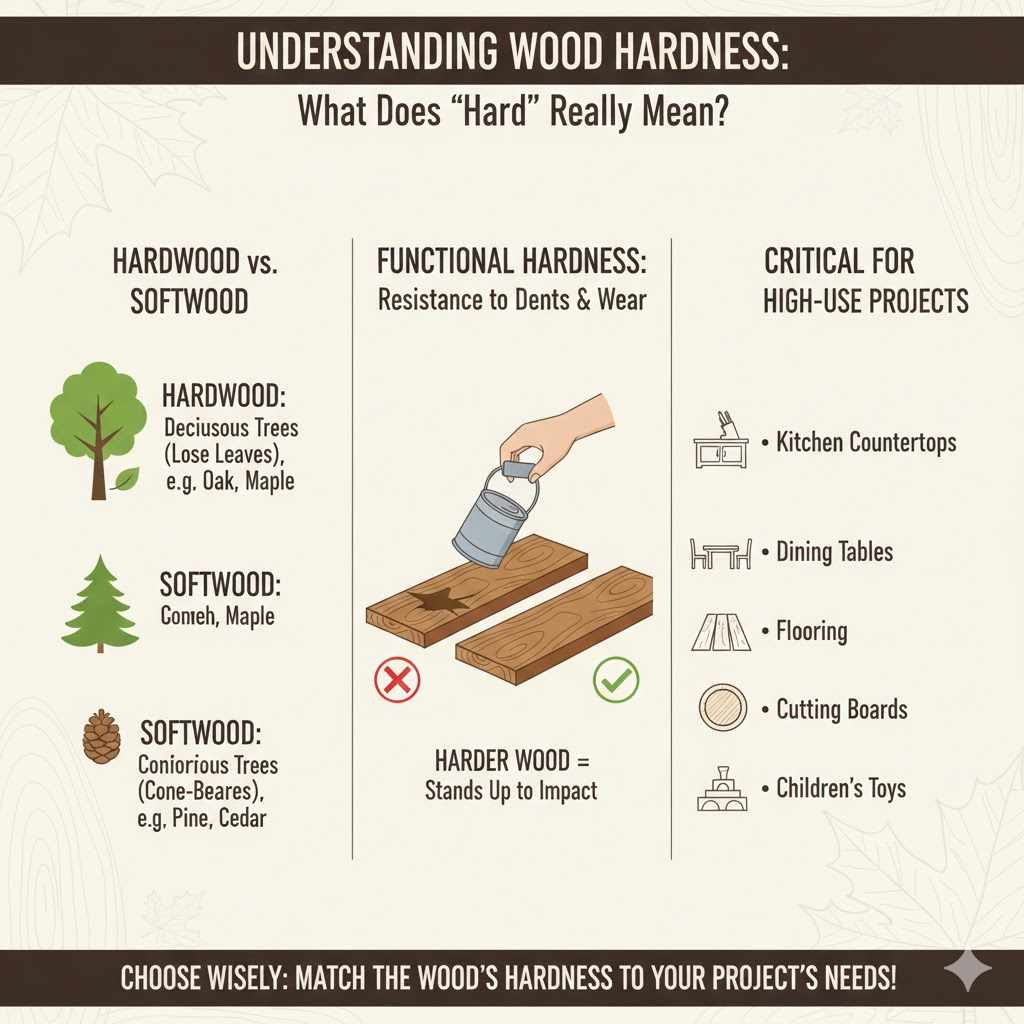
First things first, let’s clear up a common misunderstanding. When woodworkers talk about “hardwood,” they aren’t just talking about how difficult it is to work with. The term “hardwood” comes from the type of tree—a deciduous tree (one that loses its leaves), like an oak or maple. “Softwood” comes from a coniferous tree (a cone-bearer), like pine or cedar.
But when we ask, “How hard is maple?” we’re usually talking about something else: its ability to resist dents, dings, and wear. Think about dropping a heavy can on a wooden floor. A softer wood will dent easily. A harder wood will stand up to the impact much better.
This is a critical quality for projects that will see a lot of use, such as:
- Kitchen countertops
- Dining tables
- Flooring
- Cutting boards
- Children’s toys
To measure this resistance, we use a standardized test that gives us a reliable number. This helps us compare different woods and choose the best one for our project.
The Janka Hardness Scale: A Simple Guide for Woodworkers
The standard test for wood hardness is called the Janka Hardness Test. I know, it sounds super technical, but the idea is actually very simple.
Imagine pushing a small steel ball (0.444 inches in diameter) into a piece of wood until it’s halfway submerged. The amount of force (in pounds-force, or lbf) needed to do that is its Janka rating. A higher number means the wood is harder.
Why does this matter to you? It helps you predict a wood’s durability. A high Janka rating means the wood will resist scratches and dents in your finished project. It also gives you a clue about how it might behave in the workshop. Harder woods often require sharper tools and a little more patience.
Let’s look at how maple stacks up against some other common woods you might find. This chart gives you a great visual reference.
| Wood Species | Janka Hardness Rating (lbf) | Common Uses |
|---|---|---|
| Balsa | 100 | Crafts, model airplanes |
| White Pine | 380 | Construction framing, simple furniture |
| Poplar | 540 | Drawer interiors, paint-grade projects |
| Cherry | 950 | Fine furniture, cabinets |
| Soft Maple (Red) | 950 | Furniture, cabinetry, millwork |
| Red Oak | 1290 | Flooring, cabinets, furniture |
| Hard Maple (Sugar) | 1450 | Flooring, cutting boards, workbenches |
| Hickory | 1820 | Tool handles, flooring |
As you can see, Hard Maple sits comfortably above Red Oak, which is a very common standard for durable furniture and flooring. Soft Maple is similar in hardness to Cherry, making it a great all-around choice for many projects. For more details on wood species, the U.S. Forest Service’s wood database is a fantastic resource.
The Two Faces of Maple: Hard Maple vs. Soft Maple
When you go to the lumberyard, you’ll likely see two main types of maple: Hard Maple and Soft Maple. This is where things can get a little confusing for beginners. “Soft” maple is not actually soft like pine; it’s still a very capable and durable hardwood.
The name is simply for comparison. Let’s break down the differences so you can confidently choose the right one.
Hard Maple (Acer saccharum): The Tough Champion
This is the star of the show when we talk about hardness. Hard Maple, also known as Rock Maple or Sugar Maple (yes, the same tree that gives us maple syrup!), is incredibly dense and strong. With a Janka rating around 1450 lbf, it is a true workhorse wood.
Its grain is usually straight and fine, with a creamy white color that looks clean and modern. Because of its extreme durability, Hard Maple is the top choice for:
- Flooring: Especially in high-traffic areas like basketball courts and gymnasiums.
- Butcher Blocks & Cutting Boards: Its dense, closed-grain structure is hygienic and resists knife marks.
- Workbenches: It can take a beating from tools and heavy projects without denting easily.
- Fine Furniture: Particularly for pieces that need to last for generations, like chests and tables.
Soft Maple (Acer rubrum): The Versatile Cousin
Soft Maple isn’t a single species. It’s a category that usually includes Red Maple or Silver Maple. With a Janka rating between 700 and 950 lbf, it’s about 25% softer than Hard Maple. But as you saw in the chart, it’s still harder than poplar and on par with cherry.
So why choose Soft Maple? It offers a few great advantages for a hobbyist:
- Easier to Work With: It’s less demanding on your tools. It’s easier to cut, drill, and shape than Hard Maple.
- More Affordable: It generally costs less than Hard Maple, making it great for larger projects or practicing your skills.
- Absorbs Stain Better: While maple in general can be tricky to stain, Soft Maple is a bit more forgiving and can take stain more evenly.
It’s an excellent choice for cabinets, dressers, bed frames, and decorative items where extreme hardness isn’t the number one priority.
| Feature | Hard Maple (Sugar Maple) | Soft Maple (Red/Silver Maple) |
|---|---|---|
| Janka Hardness | ~1450 lbf | ~700 – 950 lbf |
| Durability | Excellent, resists dents and wear | Good, suitable for most furniture |
| Workability | More challenging, dulls tools faster | Easier to cut, shape, and sand |
| Cost | Higher | Lower |
| Best For | Flooring, cutting boards, workbenches | Cabinetry, furniture, painted projects |
| Staining | Can be blotchy, needs conditioner | Takes stain a bit more easily, but still benefits from conditioner |
Working with Maple in Your Shop: A Practical Guide
Now we get to the core question: Is maple hard to work with? The answer depends on your tools, your technique, and whether you’re using hard or soft maple. But with a few simple rules, you can absolutely master it.
Cutting and Shaping Maple
Maple’s density means it can be tough on saw blades and router bits. If you try to cut it with a dull blade, the wood will resist, and the friction can create heat. This leads to ugly, dark “burn marks” on the edge of your cut.
My top tips for cutting maple:
- Use a Sharp Blade: This is non-negotiable. A sharp, clean blade with a high tooth count (60-80 teeth for a table saw) will give you the cleanest cut.
- Maintain a Steady Feed Rate: Don’t force the wood through the blade, but don’t pause midway through a cut either. Pausing is a common cause of burning.
- Take Shallow Passes with a Router: When using a router, don’t try to remove all the material at once. Make several shallow passes instead. This is easier on your router and your wood.
Drilling and Joining Maple
Because maple is so hard and has very little “give,” driving a screw directly into it is a recipe for disaster. The screw will struggle to get through, and the pressure it creates can easily cause the wood to split, especially near the end of a board.
The golden rule is simple: pre-drill your holes!
Always drill a pilot hole for every screw. The pilot hole should be slightly smaller than the screw’s shank. This gives the threads something to bite into without putting stress on the wood. Using a countersink bit is also a great idea for a clean, professional finish.
When it comes to glue, maple is fantastic. Its tight grain creates strong, nearly invisible glue lines. Just be sure to apply even clamping pressure to bring the joints together tightly.
Sanding and Finishing Maple
This is where maple truly shines—and where it can sometimes be a little tricky.
First, the good news. Maple sands beautifully. Because it’s so hard, you can sand it to an incredibly smooth, glass-like surface. Start with a medium grit (like 120), and work your way up to a fine grit (like 220) for a flawless finish.
Now, the challenge: staining. Maple’s dense grain can absorb stain unevenly, resulting in a splotchy, blotchy appearance. This is a common point of frustration for beginners. But don’t worry, there’s a solution!
To avoid blotching, always use a pre-stain wood conditioner. It’s a thin, clear liquid that you apply before the stain. It partially seals the wood, allowing the stain to be absorbed more evenly. You can learn more about how different finishes work from this helpful guide from the University of Arizona Extension (.edu).
Alternatively, many woodworkers choose to celebrate maple’s natural beauty with a clear finish like polyurethane, shellac, or lacquer. These finishes protect the wood while letting its light, creamy color shine through.
Is Maple the Right Choice for Your Project?
With everything we’ve covered, how do you decide if maple is right for you? Let’s quickly recap its strengths and weaknesses.
When to Choose Maple:
- You need exceptional durability and dent resistance (Hard Maple).
- You want a wood for a cutting board or kitchen item (Hard Maple).
- You love a light, bright, and modern look.
- Your project will be painted (Soft Maple is an affordable and stable choice).
- You want to practice your skills with a true hardwood that provides rewarding results (Soft Maple).
When You Might Reconsider Maple:
- You want a dark, rich finish. Staining maple dark is possible, but woods like cherry or walnut achieve it more easily.
- You are working with dull or low-quality tools.
- Your project will be kept outdoors. Maple has poor rot resistance and is not suitable for outdoor use without heavy-duty chemical treatment.
- You’re on a very tight budget (pine or poplar might be better options).
Expert Tips for Success with Maple
Feeling ready to take on a maple project? Keep these simple tips in your back pocket. They will help you avoid common pitfalls and get professional results.
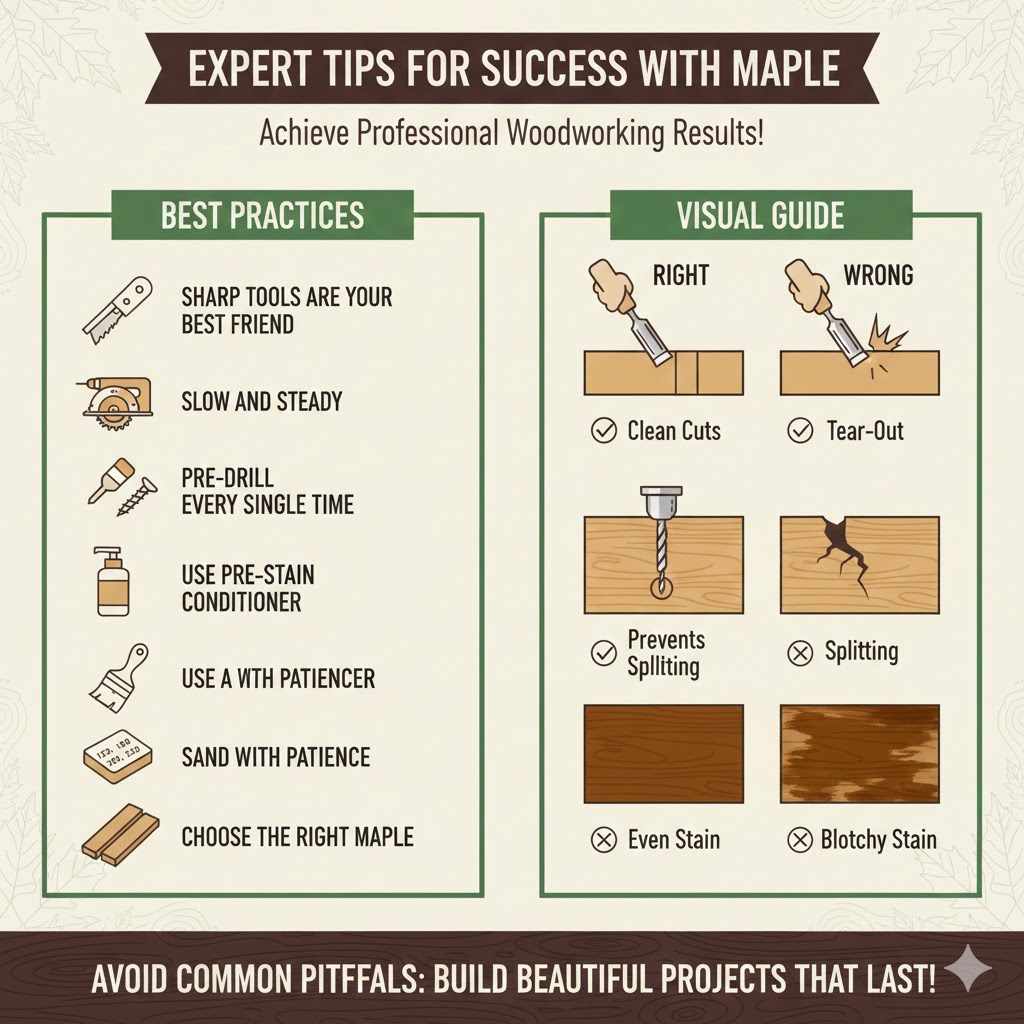
- Sharp Tools Are Your Best Friend: I’ve said it before, and I’ll say it again. Sharp blades, bits, and chisels make working with maple a joy. Dull tools make it a chore.
- Slow and Steady Wins the Race: Don’t rush your cuts or routing. A consistent, controlled pace prevents burning and tear-out.
- Pre-Drill Every Single Time: Make it a habit. This one small step will save you from the heartache of splitting your beautiful workpiece.
- Use a Pre-Stain Conditioner: If you plan to stain your maple project, don’t skip this step. It’s the secret to an even, professional-looking finish.
- Sand with Patience: Work your way through the grits (e.g., 120, 180, 220) without skipping any. Maple’s dense grain will show scratches if you don’t sand properly.
- Choose the Right Maple: Don’t use Soft Maple for a workbench top or Hard Maple for a simple painted bookshelf. Matching the wood to the job is key.
Frequently Asked Questions About Maple Wood
Is maple harder than oak?
It depends on the type. Hard Maple (1450 Janka) is significantly harder than Red Oak (1290 Janka). However, Soft Maple (around 950 Janka) is softer than Red Oak. For durability, Hard Maple is the winner.
Can I use maple for a cutting board?
Absolutely! Hard Maple is one of the best choices for cutting boards. Its hardness resists knife scarring, and its closed-grain structure is considered food-safe because it doesn’t harbor bacteria as easily as open-grained woods.
Why did my maple project get burn marks when I cut it?
Burn marks are caused by friction and heat. This usually happens for one of three reasons: your saw blade is dull, your feed rate is too slow (the blade spins in one spot for too long), or the blade is dirty with resin buildup. Start by cleaning or sharpening your blade.
Does maple wood darken over time?
Yes, but very subtly. Maple will slowly amber or yellow over time, especially when exposed to UV light. This is a natural aging process that adds warmth and character to the wood. Applying a finish with UV inhibitors can slow this process.
Is maple wood expensive?
Maple is generally considered a mid-range domestic hardwood. It is typically more expensive than poplar or pine but often more affordable than cherry or walnut. Soft Maple is usually less expensive than Hard Maple.
How can I tell the difference between hard and soft maple?
For a beginner, it can be tricky. Hard Maple is often heavier, denser, and has a creamier, more uniform color. Soft Maple might have wider-spaced growth rings and sometimes has light brown or reddish streaks. When in doubt, ask your supplier at the lumberyard—they can confirm what you’re buying.
Conclusion: Embracing the Beauty and Strength of Maple
So, how hard is maple? It’s physically hard, yes—a tough, dense, and incredibly durable wood that stands the test of time. But as you’ve seen, that doesn’t mean it has to be hard to work with.
With the right knowledge, sharp tools, and a little patience, maple can be a true pleasure in the workshop. It rewards careful work with beautiful, clean lines and a smooth, elegant finish. From the unmatched durability of Hard Maple in a kitchen to the versatile, budget-friendly nature of Soft Maple in a bedroom dresser, there’s a place for this amazing wood in almost any home.
Don’t be intimidated by its reputation. See its hardness not as an obstacle, but as a promise—a promise of a project that will be strong, functional, and beautiful for many years to come. Now, go grab a board and start making something you can be proud of!