Will Hardwood Acclimate in the Box? What NWFA Guidance Says
Mostly no. A sealed carton is not a substitute for acclimation. The National Wood Flooring Association (NWFA) describes the process as conditioning the wood to the room, and its method for hard cases calls for completely opening the packaging and stacking boards with spacers. The one real exception is flooring that arrives already matching your home’s conditions, and you prove that with a moisture meter, not by waiting.
This page covers when a closed box can work, when it cannot, and how to check. The numbers come from the NWFA’s 2019 Acclimation/Conditioning technical publication and the USDA Forest Products Laboratory moisture ranges it cites. For how to stack boards once the cartons are open, see our guide to stacking solid hardwood to acclimate it.
Can Hardwood Flooring Acclimate in the Box?
Best Pin Meter Pick
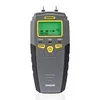 |
General Tools MMD4E Moisture Meter (about $39.98) Acclimation is decided by moisture readings, not by the calendar, and this is a pin-type meter that reads wood directly.
|
The honest answer depends on what is in the box and what the room is doing. Wood trades moisture with the air through its surfaces and end grain. Boards packed tight inside a closed carton have far less exposed surface than boards spread on spacers, so a change in the room’s humidity reaches them slowly and unevenly. That last part is my reasoning from how the NWFA’s conditioning method works, not a measured result. What the NWFA does state is that conditioning is done by opening the packaging and cross stacking with 3/4 to 1 inch spacers so air reaches all sides of every board until the wood reaches equilibrium moisture content (EMC).
It also states the opposite case plainly: when flooring is delivered at a moisture content that matches the expected in-use conditions and the manufacturer’s required conditions, and the subfloor matches too, the flooring may be installed immediately. Nothing in that wording depends on days. It depends on readings.
What Acclimation Actually Means to the NWFA
The NWFA calls it conditioning because the goal is to match the flooring and the building, not to let time pass. Its checklist for solid wood starts before the boxes arrive and repeats on delivery day.
- Before delivery, record the jobsite temperature and relative humidity and the subfloor moisture, and confirm they fit the flooring you chose.
- On delivery, recheck and record temperature and humidity in the room. They must be within the manufacturer’s requirements.
- Take moisture readings on multiple boards from a variety of bundles. For solid flooring the NWFA asks for at least 40 boards for the first 1,000 square feet, plus 4 more readings per additional 100 square feet, then average them.
- Recheck the subfloor too. For wood subfloors the minimum is 20 test locations for up to the first 1,000 square feet, plus 4 per 100 square feet after that, with extra attention near exterior walls and plumbing.
- Isolate any board with an unusually high or low reading rather than installing it.
Two points stand out in the source. First, it never gives a single number of days for solid flooring. Second, it warns that changing the moisture content on purpose can make boards shrink or swell out of their manufactured size, because solid wood does not take on or give up moisture uniformly.
The numbers to compare your readings against
The NWFA’s chart lists the equilibrium moisture content wood settles at for a given temperature and humidity. The 70 F values in the table below come straight from that chart. The USDA Forest Products Laboratory averages it cites for interior wood are 8% in most of the United States (range 6 to 10%), 6% in dry southwestern regions (range 4 to 9%), and 11% in damp, warm coastal areas (range 8 to 13%).
| Room at 70 F | Relative humidity | Wood EMC (NWFA chart) |
|---|---|---|
| Dry winter heating | 30% | 6.2% |
| Typical comfortable home | 40% | 7.7% |
| Humid season, no dehumidifier | 50% | 9.2% |
The NWFA rule of thumb for a wood subfloor is that its moisture content should be no more than 4 percentage points above solid strip flooring (under 3 inches wide) and no more than 2 points above solid plank flooring (3 inches or wider). That is the check most people skip: they compare boards to the room but never to the subfloor.
When Leaving It in the Box Can Work
A closed carton is fine in a few situations, and I would only trust it after measuring.
- The flooring shipped at the right moisture. If your meter shows the boards already match the room’s EMC and the subfloor, the NWFA text says you may install immediately.
- The manufacturer says so. The NWFA guidance applies unless the flooring maker directs otherwise, and engineered products in particular may come with their own instructions. Read the sheet in the carton and follow it, since it also protects your warranty.
- The wait is only for logistics. Storing sealed cartons inside the conditioned room, off a concrete slab, is far better than a garage. It just is not a way to finish conditioning.
If you have not yet decided what to install, our wood flooring guide compares types, and engineered products have their own rules, covered in does engineered hardwood flooring need to acclimate.
How to Condition Flooring the Right Way
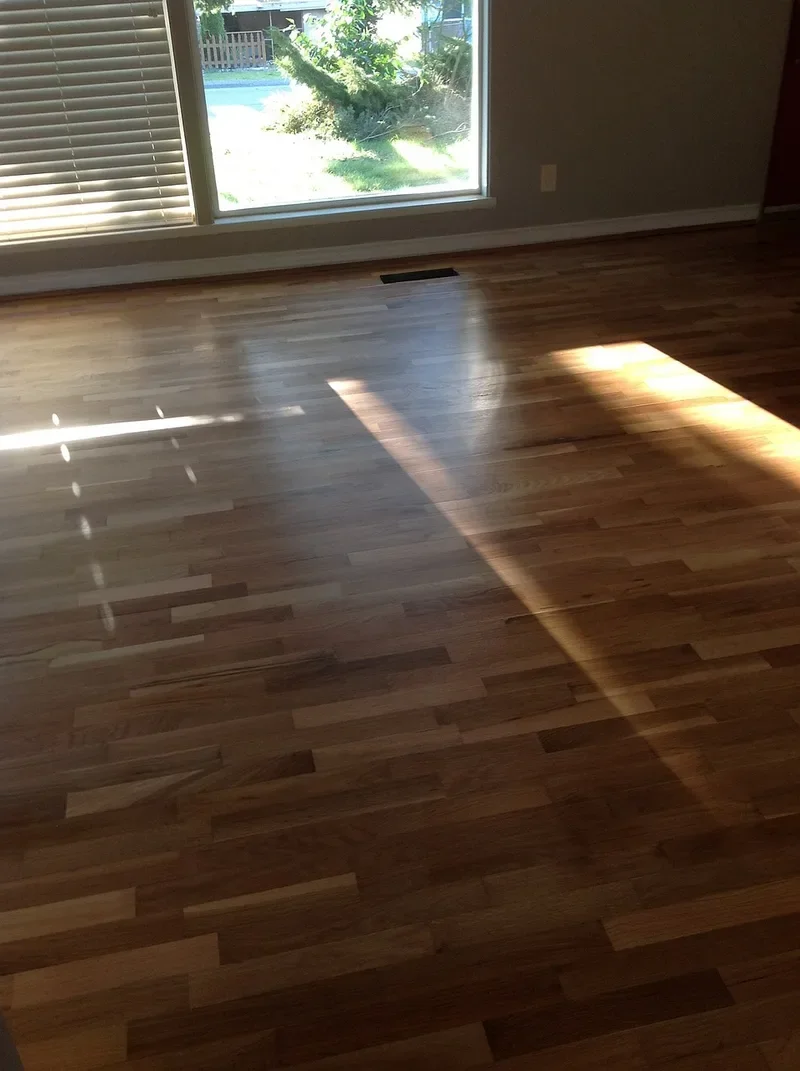
- Get the house to living conditions first. The HVAC should be running and holding the range in the flooring maker’s instructions. A commonly cited target is 60 to 80 F and 30 to 50% relative humidity.
- Store it in the install room, not the garage. The NWFA wants the flooring exposed to the space it will be installed in.
- Open the cartons. Cut the packaging fully open. For hard cases the NWFA suggests splitting the flooring into small lots.
- Cross stack on spacers. Use 3/4 to 1 inch stickers between layers so air reaches every side of every board, and keep the stack off the slab or subfloor.
- Read moisture, do not guess. Take readings on the back of boards with a pin meter and average them, then compare against the subfloor average.
- Install only when the numbers agree. Boards within the subfloor tolerance and near the room’s EMC are ready.
The species matters as well. The NWFA notes that imported and tropical species often need two to three times longer than most domestic species to equilibrate, because of their density, oils, resins and interlocking cell structure. Build that into your schedule instead of borrowing a number of days from a different floor.
Myths About Acclimating in the Box
| Common claim | What the guidance supports |
|---|---|
| “Boxed flooring is already acclimated.” | Only if readings show it matches the room and the subfloor. |
| “Three days is the rule.” | The NWFA sets no fixed day count for solid flooring. Moisture readings decide. |
| “Prefinished wood does not need to adjust.” | A factory finish does not change the need to match moisture content to the room. |
| “Any dry spot in the house works.” | The flooring should sit in the space it will be installed in, at living conditions. |
The NWFA does give one real timing figure for unfinished solid flooring. After installation and before sanding and finishing, it suggests letting the floor stabilize for 5 to 7 days when the schedule allows. That is a post-installation step, not acclimation time in the carton.
Mistakes That Cause Gaps and Cupping
- Buying the meter after the flooring is nailed down, when the readings can no longer change anything.
- Checking only the top boards of a stack, when the NWFA asks for boards from a variety of bundles.
- Ignoring the subfloor. Over a slab, moisture testing comes first, and our guide on laying hardwood over concrete covers it.
- Running the house at construction conditions and then turning on the heat after installation.
- Installing a mixed batch that includes boards with an unusually high reading.
Once the floor is down, small details help it last, such as protecting cords with cord covers for hardwood floors and planning your paint palette with our notes on matching wall color with wood floor. If bamboo is on your list instead, the maker’s own instructions apply, and our bamboo flooring at Home Depot page shows the brands sold there.
Frequently Asked Questions
Will hardwood flooring acclimate in the box?
Not reliably. The NWFA conditions solid wood by completely opening the packaging and cross stacking boards on spacers so air reaches every side. Flooring already at the right moisture content for the room and subfloor may be installed right away, and you confirm that with a moisture meter.
How long should hardwood acclimate before installation?
There is no fixed day count in the NWFA guidance for solid flooring. It is ready when moisture readings on the flooring match the room’s expected equilibrium moisture content and sit within the subfloor tolerance. Tropical and imported species often need two to three times longer than most domestic species.
What moisture difference between hardwood and subfloor is acceptable?
For a wood subfloor, the NWFA rule of thumb is that the subfloor should be no more than 4 percentage points above solid strip flooring under 3 inches wide, and no more than 2 points above solid plank flooring 3 inches or wider.
Conclusion
Treat the box as packaging and the moisture meter as the decision maker. Open the cartons, stack them on spacers in the room at living conditions, compare readings against the subfloor, and follow your flooring maker’s sheet when it differs. If the numbers already agree on delivery, you can proceed without a waiting period.
Sponsored / affiliate links. As an Amazon Associate I earn from qualifying purchases. I may earn additional commission from eligible campaigns.