How Many Plies in 3/4 Plywood? 5, 7 or 13 by Type (2026)
3/4 inch plywood has 5 plies in softwood CDX sheathing, usually 7 in hardwood cabinet grade, and 13 in Baltic birch – and the panel is really 23/32 inch thick, not 0.750 inch. Sources disagree because ply count changes with the manufacturer and the panel type. This guide gives the count by type, the average thickness of each ply, and a quick way to count plies on the sheet in your shop.
Ply Count of 3/4 Plywood by Type
Best Sheet Thickness Checker
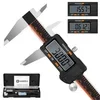 |
HARDELL Digital Caliper 6 Inch with Large LCD A 0 to 6 inch stainless caliper that switches between inches and millimeters, so you can tell 23/32 inch sheathing from 18 mm Baltic birch on the actual panel edge.
|
There is no single ply count for 3/4 inch plywood, because the label describes thickness, not construction. The table below combines the counts published for each common type with a calculation of how thick the average ply must be. That last column is the one most articles leave out, and it explains why the counts differ so much.
| Type of 3/4 inch panel | Typical plies | Actual thickness | Average ply thickness |
|---|---|---|---|
| Softwood CDX / sheathing | 5 | 23/32 in (0.719 in) | about 0.144 in (roughly 9/64 in) |
| Hardwood cabinet grade (birch, oak, maple face) | 7 | 0.703 to 0.719 in | about 0.103 in (roughly 1/10 in) |
| Marine grade | 7 to 9, void-free | 0.703 to 0.719 in | about 0.08 to 0.10 in |
| Baltic birch | 13 | 18 mm (0.709 in) | about 0.055 in (1.4 mm) |
The average ply figure is simply actual thickness divided by ply count, so it ignores glue lines and sanding loss, but it shows the pattern: a 5-ply sheathing panel uses veneers about two and a half times thicker than the veneers in a Baltic birch panel. Thick veneers are cheaper to peel and dry, and that is a large part of why CDX costs less. Counts are from published product guides and differ by mill, so treat the table as typical values, not a guarantee.
The ply count also tells you what to expect when you cut. A 5-ply sheathing panel has coarse, thick plies that tear out at the face and can hide small voids in the core, while a 13-ply Baltic birch panel cuts with a much tighter, more uniform edge. If you plan to leave the edge visible on a shelf or drawer front, the higher ply count is the one that looks intentional.
Why You See 3 to 5, 5 to 7, and 9 in Different Articles
Search for this topic and you will find answers of three to five, five to seven, and nine. Most of the confusion comes from three sources.
- Plies versus layers. Some sources count every veneer sheet as a ply, while others count a group of veneers with the same grain direction as one layer. Industry descriptions mention panels made in 3 to 5 layers but with 3 to 6 plies, so a 5-ply panel can be described as having fewer layers.
- Mixing thicknesses. A count of 3 plies is common for thin 1/8 to 1/4 inch panels. It gets repeated for 3/4 inch plywood even though a full 3/4 inch panel starts at 5.
- Mixing types. Sheathing, hardwood ply, marine ply and Baltic birch are all sold as 3/4 inch, but they are built from different veneer thicknesses.
If a page gives one number for all 3/4 inch plywood, it is skipping the type. Use the table above and confirm on your own panel.
How to Count the Plies on a Sheet You Already Own
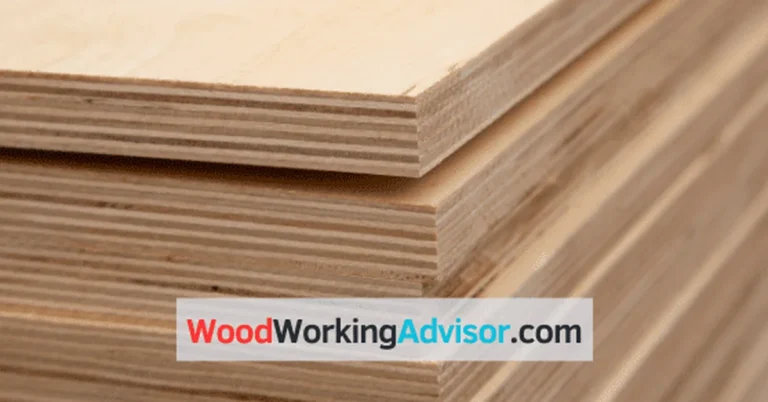
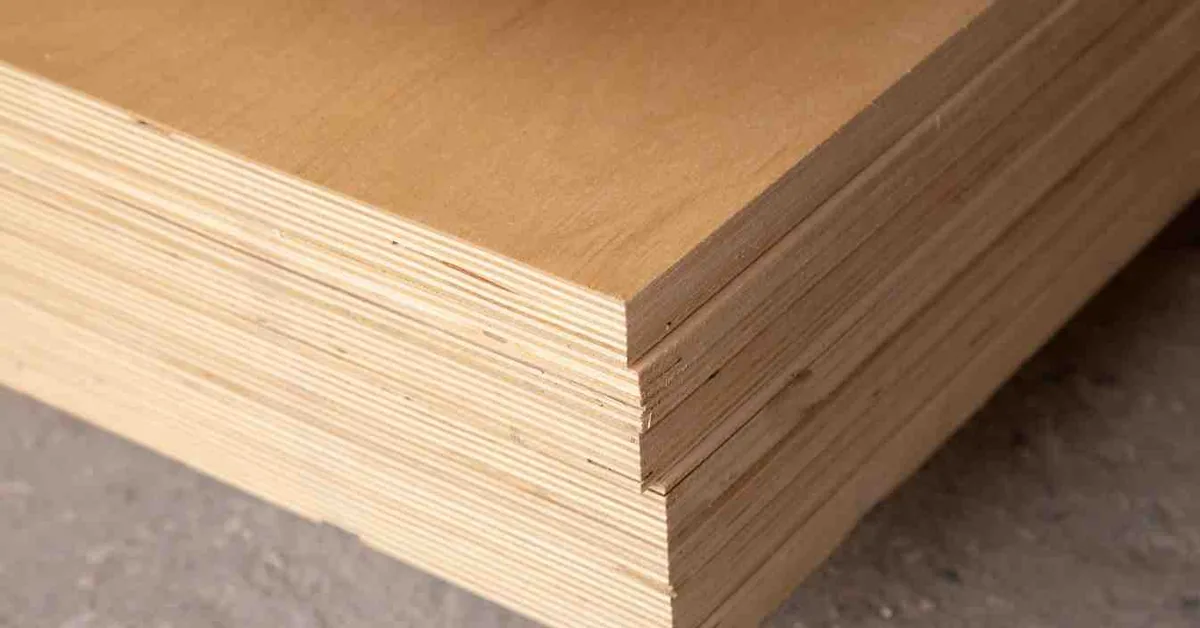
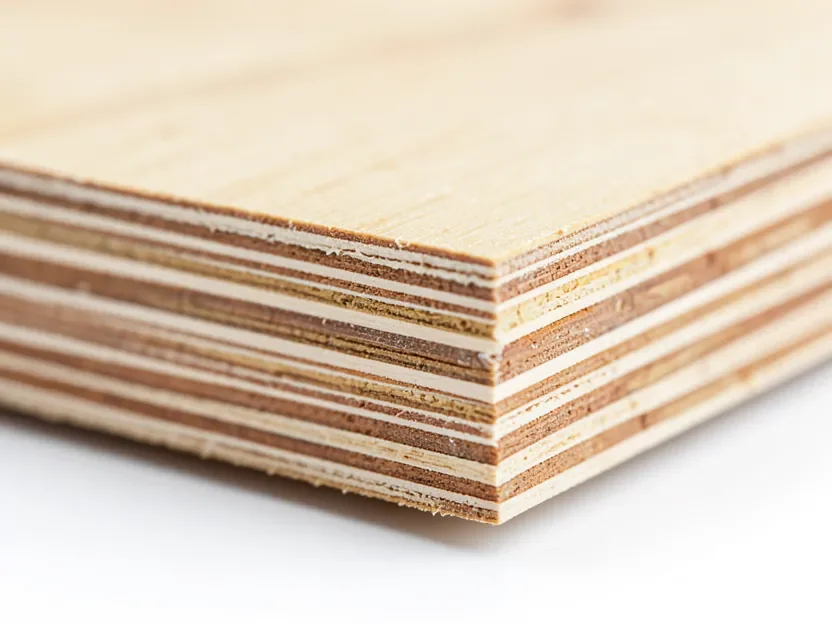
- Pick a clean edge. Use a factory edge or a fresh crosscut. A saw-cut edge with tear-out is hard to read, so lightly sand it or drag a sharp utility knife across it.
- Find the two face veneers. Start at the top face and count down through the thin outer veneer.
- Count the glue lines. Each dark line is a glue layer between two plies. The number of plies is the number of glue lines plus one.
- Expect odd numbers. Most panels are built symmetrically around a center ply, so counts of 5, 7, 9 and 13 are more common than 6 or 8.
- Check the thickness. Measure with a caliper. About 0.719 inch suggests 23/32 inch sheathing or hardwood ply, and 0.709 inch suggests 18 mm metric plywood such as Baltic birch.
On thick-veneer panels like CDX the plies are easy to see. On Baltic birch the 13 layers are so thin that a magnifier or a light sanding with 220 grit helps, and that is the reason Baltic birch edges look striped and clean.
Do More Plies Mean Stronger Plywood?
The common rule is that more plies means stronger plywood, and it is only half true. For panels of the same thickness, more plies means thinner veneers, and thinner veneers can be dried, sanded and glued more evenly, so the panel tends to have fewer voids and a flatter surface. That is why 13-ply Baltic birch is a favorite for drawer boxes and jigs, and why it costs noticeably more than 5-ply sheathing.
But ply count is only one variable. The wood species, the veneer grade, the glue type and whether the core has gaps all change how the panel performs. A well-made 7-ply hardwood panel can outperform a poorly made panel with more layers, and a sheathing panel is designed for framing, not for furniture. For a direct thickness comparison of common sizes, see our guides on 1/2 vs 3/4 plywood and 5/8 vs 3/4 plywood.
Which 3/4 Plywood Should You Buy for Your Project?
| Project | Panel type to look for | Why |
|---|---|---|
| Subfloor, roofing, shed walls | 5-ply CDX sheathing | Cheapest per sheet and built for framing; plies are thick and rough |
| Kitchen cabinets, bookcases, built-ins | 7-ply hardwood cabinet grade | Sanded face veneer takes stain and paint and is available in 4 by 8 foot sheets |
| Drawer boxes, jigs, laser and CNC work | 13-ply Baltic birch | Thin, uniform plies and clean edges you can leave exposed; usually 5 by 5 foot sheets |
| Boats and damp areas | Marine grade, 7 to 9 plies | Void-free plies bonded with waterproof adhesive |
For the Baltic birch versus standard birch decision in more detail, read Baltic birch vs birch plywood. If price is the deciding factor, our Baltic birch plywood cost guide breaks down what you pay per sheet.
3/4 Inch Is Not Really 3/4 Inch
Most 3/4 inch plywood in the United States is 23/32 inch, which is 0.719 inch or about 1/32 inch under nominal. Metric Baltic birch is 18 mm, or 0.709 inch, a little thinner again. That matters when you cut dados: a true 3/4 inch router bit will leave a sloppy fit around a 23/32 inch panel, and a bit sized for 18 mm may be tight on sheathing.
Measure with a caliper and cut a test joint on scrap before you commit. If you want the full explanation of nominal versus actual sizes, our actual thickness of 3/4 inch plywood guide covers it, and 23/32 vs 3/4 plywood explains why the two labels are used for the same panel. The same rounding happens at smaller sizes, as covered in 11/32 vs 1/4 plywood.
Frequently Asked Questions
How many plies are in 3/4 inch plywood?
It depends on the type. Softwood CDX sheathing has 5 plies, hardwood cabinet-grade panels usually have 7, marine grade has 7 to 9, and Baltic birch has 13. Check the edge of your own sheet, because counts vary by manufacturer.
Is 3/4 inch plywood 3-ply?
Not in the standard sheet specs we found. The lowest count for a full 3/4 inch panel is 5 plies. Three-ply panels exist, but they are much thinner stock, so a sheet sold as 3/4 inch with only 3 plies would be unusual.
Does 3/4 inch plywood have 7 plies or 13?
Both are real. A 7-ply panel is typical of hardwood cabinet-grade plywood from a home center, while 13 plies is the norm for Baltic birch, which is built from many thin birch veneers and is usually sold in 5 by 5 foot sheets.
Why does 3/4 inch plywood measure 23/32 inch?
Plywood is sold to a Performance Category size and then sanded or pressed slightly under the nominal size. Softwood sheathing is 23/32 inch (0.719 inch) and 18 mm Baltic birch is 0.709 inch, so neither is a true 0.750 inch.
Do more plies make plywood stronger?
Not by themselves. A 13-ply Baltic birch panel is stiffer and more void-free than a 5-ply sheathing panel of the same thickness, but the wood species, veneer grade, glue and core quality matter as much as the count.
How can I tell how many plies my plywood has?
Look at a clean edge, count the dark glue lines between the veneers, and add one. On thin-veneer panels such as Baltic birch, lightly sand the edge with 220 grit or use a magnifier so the layers are easier to read.
Bottom Line
A 3/4 inch plywood panel has 5 plies if it is CDX sheathing, about 7 if it is hardwood cabinet grade, 7 to 9 if it is marine grade, and 13 if it is Baltic birch. Count the glue lines on the edge and add one, and use a caliper to tell 23/32 inch from 18 mm before you cut joinery.
Sponsored / affiliate links. As an Amazon Associate I earn from qualifying purchases. I may earn additional commission from eligible campaigns.
 Baltic Birch Plywood Sheets Box of 45 - Laser Engraving Cutting, Scroll Saw Nature Veneer Color, Stronger Than Basswood, A/A Grade,12 x 12 x 1/8”, 3mm Thickness Perfect for Wood Burning
 Baltic Birch Plywood 1/8'' x 12'' x 18'', 6 Pack, B/BB Grade, Void-Free Core, Laser Cutting Ready, Flat Sheets for CNC, Engraving, DIY Crafts, Art Painting, Wood Burning, Staining