5/8 vs 3/4 Plywood: Real Thickness, Sag and Best Uses
The short answer: 3/4 plywood is the stiffer, stronger panel and 5/8 is the lighter, cheaper one, but the gap is bigger than the 1/8 inch on the label suggests. A real “5/8” sheet is a 19/32 inch panel and a real “3/4” sheet is 23/32, so the true difference is 4/32 inch (about 21 percent thicker), and that 21 percent buys roughly 77 percent more bending stiffness. Below you get the APA span ratings for both, the stiffness math worked out for shelves, and a plain rule for choosing between them. If you are only deciding on a subfloor, jump to the dedicated 5/8 vs 3/4 plywood subfloor guide.
5/8 vs 3/4 Plywood at a Glance
Best Plywood Thickness Checker
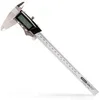 |
General Tools 147 6-Inch Digital Caliper – $36.29 Labels say 5/8 or 3/4, but the panel in your hands is a 19/32 or 23/32 category sheet. A caliper reads the real thickness in decimal inches, fractions or millimeters before you cut a dado or drill a pocket hole.
|
Here is the side-by-side. The category and span-rating rows come straight from APA (The Engineered Wood Association) tables; the last three rows are calculated from the thickness ratio and assume the same species and layup in both panels.
| Spec | 5/8 plywood | 3/4 plywood |
|---|---|---|
| APA Performance Category | 19/32 | 23/32 |
| APA Rated Sheathing span rating | 40/20 | 48/24 |
| Thickness in decimal inches | 0.594 | 0.719 |
| Relative weight per sheet (calculated) | 1.00 | about 1.21 |
| Relative bending strength (calculated) | 1.00 | about 1.47 |
| Relative stiffness, less sag (calculated) | 1.00 | about 1.77 |
Both are sold in 4 x 8 foot sheets, so a full sheet of 3/4 weighs about a fifth more than the same sheet in 5/8. That difference is real when you carry a sheet alone up a ladder, and it is the main reason 5/8 stays popular for roofs and wall sheathing.
Why “5/8” Is Really 19/32 and “3/4” Is Really 23/32
Structural panels are sold by trade name but rated by Performance Category. APA lists the common categories for Rated Sheathing as 3/8, 7/16, 15/32, 19/32 and 23/32, and pairs them with span ratings of 24/0, 24/16, 32/16, 40/20 and 48/24. Nothing in that list is a true 5/8 or 3/4, which is why panels come in slightly under the name. The full story on the smaller number is in our guide to what 19/32 plywood is, and the thicker one is covered in 23/32 vs 3/4 plywood.
This matters in the shop more than on the roof. A 3/4 inch dado bit or a 3/4 inch spacer cuts a loose joint in a 23/32 panel, and a 5/8 inch rabbet is wider than a 19/32 sheet is thick. Measure the actual sheet you bought at the edge, in several places, before setting any joinery cut. A digital caliper takes the guesswork out, and it shows the fractional reading directly in 32nds.
The Stiffness Math: What 21 Percent More Thickness Really Buys
Most comparison pages stop at “3/4 is stronger.” Here is how much stronger, using the standard beam relationships for a flat panel or shelf that is otherwise identical (same material, same layup, same span, same load):
- Stiffness (resistance to sag) rises with the cube of thickness. (23/19) cubed is 1.77, so a 5/8 shelf sags about 77 percent more than a 3/4 shelf under the same load.
- Bending strength (load at failure) rises with the square of thickness. (23/19) squared is 1.47, so 3/4 carries roughly 47 percent more before it breaks.
- Weight and cost of material rise about in line with thickness, roughly 21 percent.
Notice that stiffness, not breaking strength, is what you actually feel: shelves and desktops rarely snap, they bow. And because sag grows with the fourth power of span but falls with the cube of thickness, you can trade one for the other. To match the sag of a 3/4 shelf, a 5/8 shelf has to be about 13 percent shorter between supports:
| If a 3/4 shelf spans | A 5/8 shelf sags the same at about |
|---|---|
| 24 inches | 20.8 inches |
| 30 inches | 26.0 inches |
| 36 inches | 31.2 inches |
These are calculated values for a uniformly loaded shelf resting on two supports, not lab test results. Real plywood varies with the face grain direction (shelves are stiffer when the face grain runs along the span) and with veneer quality, and plywood creeps under a constant load, so leave a margin for a heavily loaded shelf such as books. If a 5/8 shelf is already built and bowing, an edge band or a hardwood face strip cuts the sag a lot; see our guide on how to stiffen plywood for four fixes.

APA Span Ratings: What 40/20 and 48/24 Actually Mean
A span rating is two numbers separated by a slash. The first is the maximum support spacing in inches when the panel is used as roof sheathing, and the second is the maximum spacing when it is used as a subfloor, both with the long panel dimension across the supports. So a 40/20 panel (the 5/8 class) reaches 40 inches on a roof and 20 inches under a floor, while a 48/24 panel (the 3/4 class) reaches 48 and 24. Sturd-I-Floor panels use a single number, such as 20 oc or 24 oc, for the floor spacing.
APA publishes a useful table for the case people ask about most, a floor under 3/4 inch hardwood flooring. Its minimums are:
| Floor framing spacing | Minimum Performance Category | Minimum span rating |
|---|---|---|
| 16 inches | 19/32 (5/8 class) | 40/20 or 20 oc |
| 19.2 inches | 23/32 (3/4 class) | 48/24 or 24 oc |
| 24 inches | 7/8 | 60/32 or 32 oc |
Two things are worth noticing. First, a 5/8 class panel is fully acceptable at 16 inch spacing, so “5/8 is too thin for a subfloor” is a myth for standard joists. Second, once joists are at 19.2 inches you need the 3/4 class, and at 24 inches neither one is enough for a hardwood floor; APA lists 7/8 and the National Wood Flooring Association suggests two layers as an alternative. Code minimums for other floor coverings differ, so check the current requirements for your area and see our plywood flooring thickness guide for joist-by-joist detail.
Which Thickness to Use for Common Projects
- Shelves and bookcases: choose 3/4 for anything spanning much past 24 inches or carrying books. Use the equal-sag table above if you want to stay with 5/8 and shorten the span.
- Cabinet boxes and workbench tops: 3/4 is the usual choice because the box sides carry the load and take screws and joinery. Drawer boxes and cabinet backs can drop to thinner stock. Our page on plywood for cabinet doors shows how thickness changes for slab and frame doors.
- Subfloors: 5/8 class works at 16 inch joist spacing, 3/4 class at 19.2 inches, per the APA table above. Details are in the subfloor comparison.
- Roof sheathing: the span rating alone lets 5/8 reach 40 inches, but snow load, roofing type and local code set the real minimum, so confirm with your building department. See 5/8 plywood for a roof for installation notes.
- Wall sheathing, backing and shop jigs: 5/8 saves weight and money when nothing is bearing a heavy load.
- Between 1/2 and 3/4: if you are also weighing the thinner option, read 1/2 vs 3/4 plywood.
Handling, Cutting and Cost
Because a 3/4 sheet weighs about a fifth more, a two-person carry becomes more likely, and a circular saw or table saw works a little harder. Cut quality depends far more on the blade than the thickness; a fine-tooth blade and a scoring pass reduce face tear-out on either panel (see cutting plywood without splintering). Screws hold in both, but a thicker panel gives fasteners more bite, and edge screws are safer in 3/4 than in 19/32 because the edge is the weak spot.
Price per sheet moves with grade, species and region, and 3/4 typically costs more than 5/8 because it uses more veneer. Check current prices at your local yard rather than trusting a chart, and compare the same grade and face species in both thicknesses.
How to Decide in 30 Seconds
- Measure the span between supports and estimate the load. Long span or heavy, constant load means 3/4.
- If a floor is involved, match the joist spacing to the APA table above.
- If weight or budget rules and the load is light, 5/8 is fine, especially with shorter spans.
- If a joint depends on exact thickness, measure the sheet you actually bought, not the label.
Frequently Asked Questions
Is 3/4 plywood stronger than 5/8 plywood?
Yes. For the same material and layup, 3/4 inch (23/32) plywood carries about 47 percent more load before failing and sags about 44 percent less under the same load (a 5/8 panel sags about 77 percent more), based on the standard thickness-squared and thickness-cubed relationships.
Can I use 5/8 plywood for a subfloor?
Yes, at 16 inch joist spacing. APA lists 19/32 Performance Category with a 40/20 span rating as the minimum for a subfloor under 3/4 inch hardwood at 16 inch framing. At 19.2 inch spacing you need 23/32 with a 48/24 rating.
Is 5/8 plywood actually 5/8 inch thick?
No. APA lists the category as 19/32 inch, which is about 0.594 inch, a bit under 5/8 (0.625). Likewise, 3/4 plywood is a 23/32 category panel, about 0.719 inch. Measure the sheet you buy.
How much stiffer is 3/4 plywood than 5/8 plywood?
About 77 percent stiffer in bending, because stiffness rises with the cube of thickness and 23/32 divided by 19/32 is about 1.21. Real panels vary with ply layup and grain direction, so treat this as a good estimate rather than a test result.
Can I use 5/8 plywood for shelves?
For short or lightly loaded shelves, yes. For the same sag as a 3/4 shelf, keep the 5/8 span about 13 percent shorter, for example 26 inches instead of 30, and add a face frame or edge band for heavy loads.
Bottom Line
Choose 3/4 (23/32) when the panel has to span, carry weight or hold joinery, and choose 5/8 (19/32) when weight, price or short spans matter more. Remember that neither is the size on the label, so measure your sheets, and use the APA span ratings rather than a rule of thumb when a floor or roof is involved.
Sponsored / affiliate links. As an Amazon Associate I earn from qualifying purchases. I may earn additional commission from eligible campaigns.