1/2 vs 3/4 Plywood: Which Thickness Should You Actually Use?
Plywood comes labeled by nominal thickness, but 1/2 inch and 3/4 inch panels are not interchangeable just because they sound close on a shopping list. The difference of a quarter inch changes how much weight a panel can carry, whether it sags between supports, which hardware will actually mount to it, and whether a building inspector will sign off on it. Below is the real difference between the two, backed by the APA span-rating system lumberyards actually use, plus a project-by-project breakdown so you’re not guessing at the store.
1/2″ vs 3/4″ Plywood: The Quick Answer
Best Straight-Edge Guide For Cutting Sheets
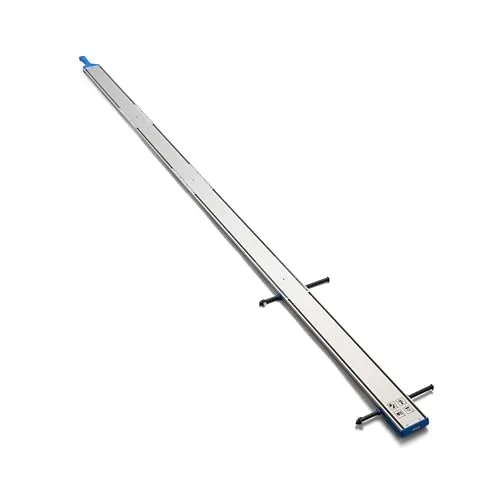 |
Kreg Straight Edge Guide XL, 98 Inch (KMA4700) – $79.00 Whichever thickness you land on, you still need a straight cut off a full sheet — this guide clamps to material up to 8 feet and keeps a circular saw tracking a true edge instead of a pencil line.
|
Use 1/2 inch plywood for cabinet backs, drawer bottoms, light shelving under about 24 inches of unsupported span, and craft or hobby builds where weight isn’t a factor. Use 3/4 inch plywood for subfloors, countertop substrates, load-bearing shelving and furniture, and cabinet carcasses that need to hold hardware like hinges and shelf-pin standards. If you’re cutting full 4×8 sheets down to project size for either thickness, a straight-edge guide like the one above keeps the factory edge straight instead of wandering off a pencil line.
What Actually Changes Between 1/2″ and 3/4″ Plywood
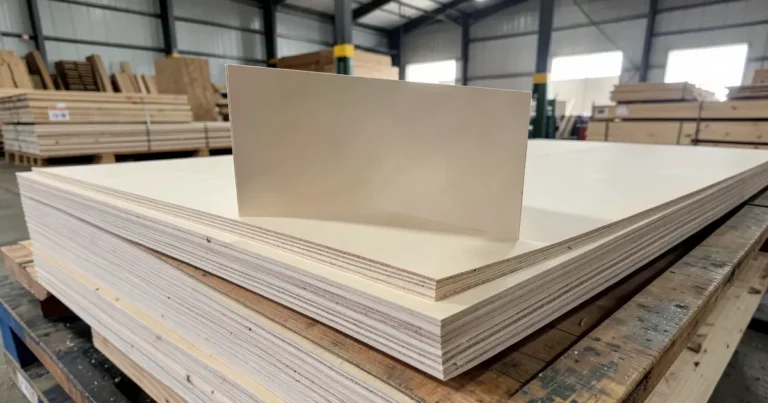
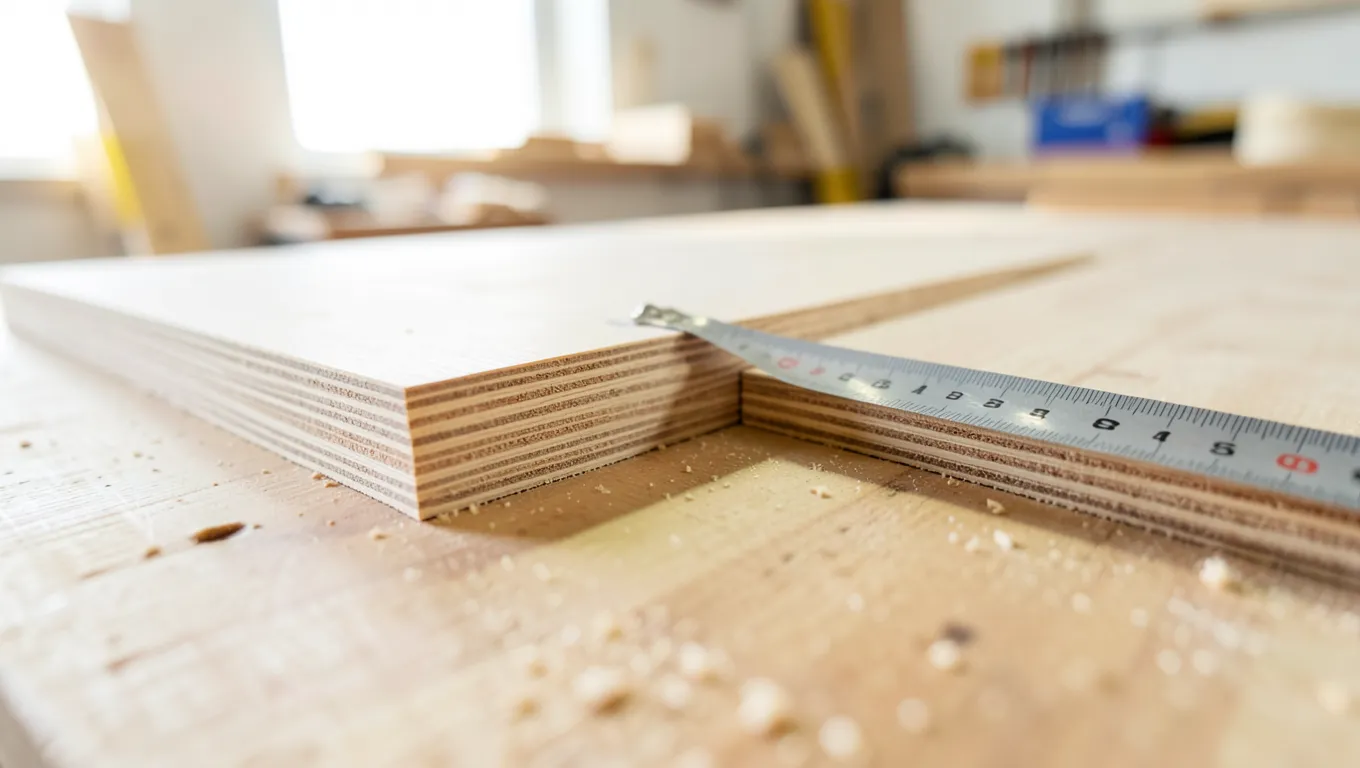
Plywood gets its strength from cross-graining: thin wood veneers (plies) are glued together with the grain of each layer running perpendicular to the one next to it, then pressed under heat. That perpendicular stacking is what keeps plywood from warping and splitting the way solid lumber does along the grain. A 1/2 inch panel typically has 3 to 5 plies; a 3/4 inch panel typically has 5 to 7. More plies means more glue lines resisting bending in both directions, which is the actual mechanical reason 3/4 inch plywood outperforms 1/2 inch by more than “50% more material” would suggest — the extra plies add stiffness disproportionately to the added thickness.
Nominal vs. Actual Thickness
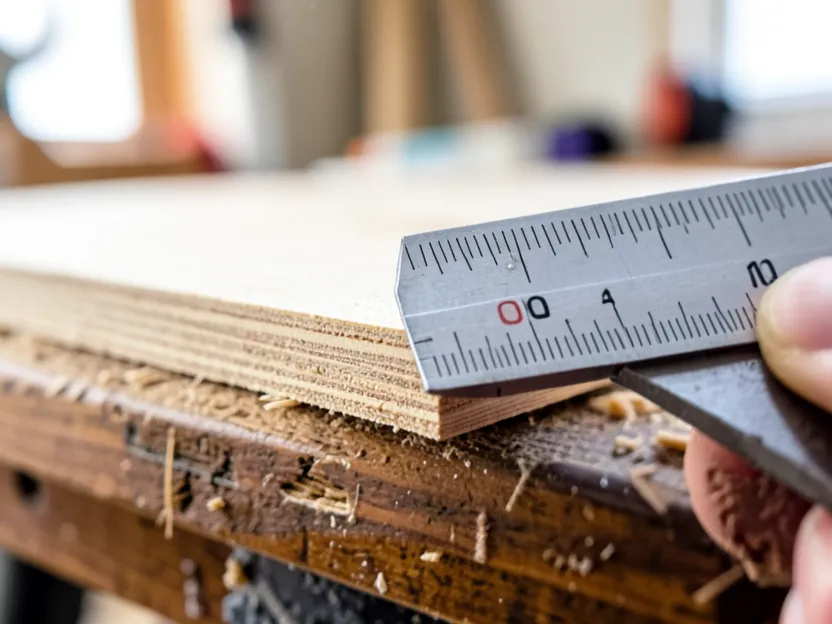
Here’s a detail most guides skip: “1/2 inch” and “3/4 inch” are nominal sizes, not the actual measured thickness. Sanded plywood is milled slightly undersized so it fits flush in dado joints and cabinet slots. A “1/2 inch” panel actually measures close to 15/32 inch, and a “3/4 inch” panel actually measures close to 23/32 inch. That 1/32-inch gap matters if you’re cutting dadoes to fit the panel exactly — size the groove to the real measured thickness of your specific sheet, not the nominal number on the price tag, since it can vary slightly by manufacturer.
APA Span Ratings: The Standard Behind the Thickness Number
Nominal thickness alone doesn’t tell you what a panel can actually span. The APA (The Engineered Wood Association) stamps every rated panel with a span rating in the format XX/YY — for example, 32/16 or 48/24. The first number is the maximum roof-rafter spacing in inches; the second is the maximum floor-joist spacing in inches. A typical 1/2 inch panel commonly carries a 32/16 rating, meaning it’s rated for 16-inch floor joist spacing at best. A 3/4 inch (actually 23/32 inch) panel commonly carries a 48/24 rating, meaning it can span all the way to 24-inch joist spacing.
The span rating also shifts with wood species, which is a detail plywood-thickness comparisons almost never mention. APA groups species by stiffness (Group 1 species like Douglas fir are stiffer; Group 4 species are softer), and a panel made from a Group 4 species needs to be thicker than a Group 1 panel to hit the same span rating. That’s why the actual authority is the grade stamp on the panel edge, not the nominal thickness by itself — always check the stamp before assuming a 1/2 inch sheet is rated for what you need.
| Nominal Thickness | Actual Thickness | Typical APA Span Rating | Max Floor Joist Spacing |
|---|---|---|---|
| 1/2 inch | ~15/32 inch | 32/16 | 16 inches o.c. |
| 5/8 inch | ~19/32 inch | 40/20 | 20 inches o.c. |
| 3/4 inch | ~23/32 inch | 48/24 | 24 inches o.c. |
These are typical ratings, not a substitute for the stamp on your specific sheet. For a full breakdown of thickness against joist spacing when you’re building a subfloor specifically, see our plywood flooring thickness guide, which covers the complete span chart and underlayment requirements in more depth than fits here.
When 1/2 Inch Plywood Is the Right Call
1/2 inch plywood is the right pick when weight and cost matter more than raw stiffness, and the panel isn’t carrying a structural load on its own.
- Cabinet backs and drawer bottoms: These panels sit in a groove and don’t bear direct weight, so 1/2 inch (or even 1/4 inch for drawer bottoms) is standard. See our guide on plywood for drawer bottoms for sizing specifics. Note that not every panel labeled “1/4 inch” actually measures a true quarter inch – see our 5mm vs 1/4 inch plywood thickness comparison if you’re working from a metric plan or Baltic birch stock.
- Light shelving under about 24 inches: Unsupported 1/2 inch shelving starts to visibly bow once the span passes roughly 18 to 24 inches under moderate load. Under that span, with end support, it holds up fine for books, folded linens, or closet storage.
- Cabinet doors and non-structural panels: Slab-style cabinet doors don’t need to resist bending the way a load-bearing shelf does. See our guide on slab plywood cabinet doors.
- Crafts, jigs, and templates: Where strength isn’t the point and you want to save weight and material cost.
When You Need 3/4 Inch Plywood
3/4 inch plywood is the standard any time the panel has to carry a real structural or hardware load.
- Subfloors: For standard 16-inch on-center joist spacing, 3/4 inch (23/32 inch actual) tongue-and-groove, Exposure 1 panels are the practical residential standard — it comfortably clears the 16-inch span requirement with margin, where a 1/2 inch panel is right at its 32/16 rating’s limit and more prone to squeaking and deflection over time.
- Countertop substrates: Quartz and granite counters are heavy, and a thin substrate will telegraph even slight sag into the stone over time. 3/4 inch plywood, often doubled up at the seams, is the standard base under solid-surface and stone counters.
- Load-bearing shelving and furniture: Bookshelves, workbenches, and anything holding real weight over a span longer than about 24 inches need 3/4 inch to resist sagging long-term. See our 5/8 vs 3/4 plywood subfloor comparison for the deflection tradeoffs at the next thickness down.
- Cabinet carcasses and anywhere hardware mounts: This is the detail most comparisons skip — European concealed hinges, shelf-pin bores, and adjustable shelf standards are all manufactured to mount into 3/4 inch stock. Try to bore a 35mm hinge cup or an edge-mounted shelf-pin line into 1/2 inch material and you’re left with almost no wall thickness on either face, which weakens the joint and limits your hardware options. If a cabinet box needs real hinges and adjustable shelves, build it from 3/4 inch, not 1/2.
Cost and Availability
3/4 inch plywood costs more per sheet than 1/2 inch of the same grade and species, since it takes more veneer to build. The gap in price is real but varies by species, grade, and where you’re buying, so check current Baltic birch plywood pricing before budgeting a project, since prices shift regionally and by season. Both thicknesses are stocked at most home centers and lumberyards; specialty panels like marine-grade or hardwood-veneer plywood may have thinner stock availability in one thickness over the other, so call ahead if you need a less common option.
Quick Reference by Project
| Project | Recommended Thickness | Why |
|---|---|---|
| Cabinet backs / drawer bottoms | 1/2 inch (or 1/4 inch for drawers) | Sits in a groove, no direct load |
| Cabinet doors (slab style) | 1/2 inch | No bending load, saves weight |
| Closet or craft shelving, <24″ span | 1/2 inch | Fine under moderate load with support |
| Bookshelves / load-bearing shelving | 3/4 inch | Resists long-term sag |
| Cabinet carcasses with hinges/shelf pins | 3/4 inch | Hardware is sized for 3/4″ stock |
| Subfloor, 16″ o.c. joists | 3/4 inch (23/32″ actual) | 48/24 span rating clears the spacing |
| Countertop substrate | 3/4 inch | Prevents stone/quartz sag over time |
FAQ: Frequently Asked Questions
Is 1/2 inch plywood strong enough for a bed frame?
For a bed frame’s support slats, 3/4 inch plywood is the safer choice since it resists sagging under sustained weight and daily use far better than 1/2 inch. 1/2 inch can work only if it’s fully supported across short spans with minimal gaps between supports.
What is the actual measured thickness of 3/4 inch plywood?
Sanded 3/4 inch plywood typically measures about 23/32 inch, not a true 3/4 inch. It’s milled slightly undersized so it fits flush in standard dado joints and cabinet construction.
Can I use 1/2 inch plywood for a subfloor?
It’s not the practical standard. A typical 1/2 inch panel’s 32/16 span rating puts it right at its limit for 16-inch joist spacing, which increases the risk of squeaking and deflection over time. 3/4 inch (23/32 inch) panels with a 48/24 rating clear that spacing with real margin and are the standard residential choice.
Why won’t cabinet hinges mount properly to 1/2 inch plywood?
Concealed European hinges and shelf-pin systems are manufactured to bore into 3/4 inch stock. Boring the same hinge cup or shelf-pin holes into 1/2 inch material leaves very little wall thickness on either face, which weakens the mounting point and limits hardware compatibility.
What’s the best way to cut plywood without splintering?
Use a fine-tooth blade made for plywood, keep the good face up when cutting with a circular saw (down when cutting with a table saw), and run the cut against a straight-edge guide clamped to the sheet so the blade doesn’t wander off the line.
Final Thoughts
The short version: 1/2 inch plywood is for panels that don’t carry a direct load — cabinet backs, drawer bottoms, doors, and light shelving under about 24 inches of span. 3/4 inch plywood is for anything structural — subfloors, countertop substrates, load-bearing shelving, and any cabinet carcass that needs to hold hinges or adjustable shelf hardware. When in doubt, check the APA span-rating stamp on the panel edge rather than assuming the nominal thickness tells the whole story — it’s the number that actually determines what the sheet can safely span.
Sponsored / affiliate links. As an Amazon Associate I earn from qualifying purchases. I may earn additional commission from eligible campaigns.