How Much Does a Cedar Closet Cost to Build?
A cedar closet typically costs about $600 to $3,500 to build, with full custom installations often running about $1,500 to $6,000+ depending on closet size, cedar coverage, and labor. Poor planning can leave you paying for cedar where scent and moisture control add little value. This guide breaks down material, labor, and design choices so you can compare full lining, partial lining, and lower-cost scent alternatives.
Cedar closet cost worksheet
This worksheet gives you a budgeting starting point before you choose a full lining, a partial lining, or a smaller scent-only upgrade. The ranges below are planning figures, not quotes. Square footage, board grade, and how much patching the closet needs before installation are the main cost drivers.
| Scenario | Estimated square footage to cover | Material estimate | Hardware and adhesive allowance | Labor range | Total project range |
|---|---|---|---|---|---|
| Small reach-in closet | 45 to 60 sq ft | About 60 to 75 board feet, or enough planks for wall coverage only | $40 to $90 | $250 to $700 | $600 to $1,400 |
| Standard walk-in closet | 90 to 140 sq ft | About 120 to 180 board feet, with extra for cuts and waste | $75 to $150 | $600 to $1,500 | $1,500 to $3,200 |
| Premium full-line closet | 150 to 220 sq ft | About 200 to 280 board feet, plus waste for corners and ceiling fit-up | $120 to $250 | $1,000 to $2,800 | $3,000 to $6,000+ |
These ranges assume solid cedar planks, basic fasteners, adhesive, and standard access. If the closet has built-ins, deep corners, uneven framing, or a ceiling lining, the labor and waste factor go up quickly.
Small reach-in closet scenario
A 3-by-5-foot reach-in closet with 8-foot walls usually needs about 45 to 60 square feet of coverage if you line the three walls and skip the ceiling. That is enough for a noticeable cedar smell and some clothing protection without turning the project into a full custom build.
For this size, the budget usually rises more from labor minimums than from material volume. If you hire the work out, setup time, cutting, and cleanup can cost more than the cedar itself.
Standard walk-in closet scenario
A typical walk-in with four walls often lands in the 90 to 140 square foot range once you subtract doors and shelving openings. This is the sweet spot where cedar can make sense if you want a dressed-up storage space and plan to use it long term.
This size often needs more careful layout because corners, shelving returns, and trim intersections create more cut edges. A partial line on the back wall and the most visible side walls can reduce cost while still giving you the aroma benefit.
Premium full-line closet scenario
A large custom closet lined on every wall and the ceiling can reach 150 to 220 square feet or more. At that point, the price jumps because you are paying for extra cedar, more cuts, more fasteners, and more time to keep the board pattern aligned.
Ceiling lining adds cost fast. It also increases the need for accurate layout so the side-wall and back-wall boards meet cleanly at the top.
How much does a cedar closet cost?
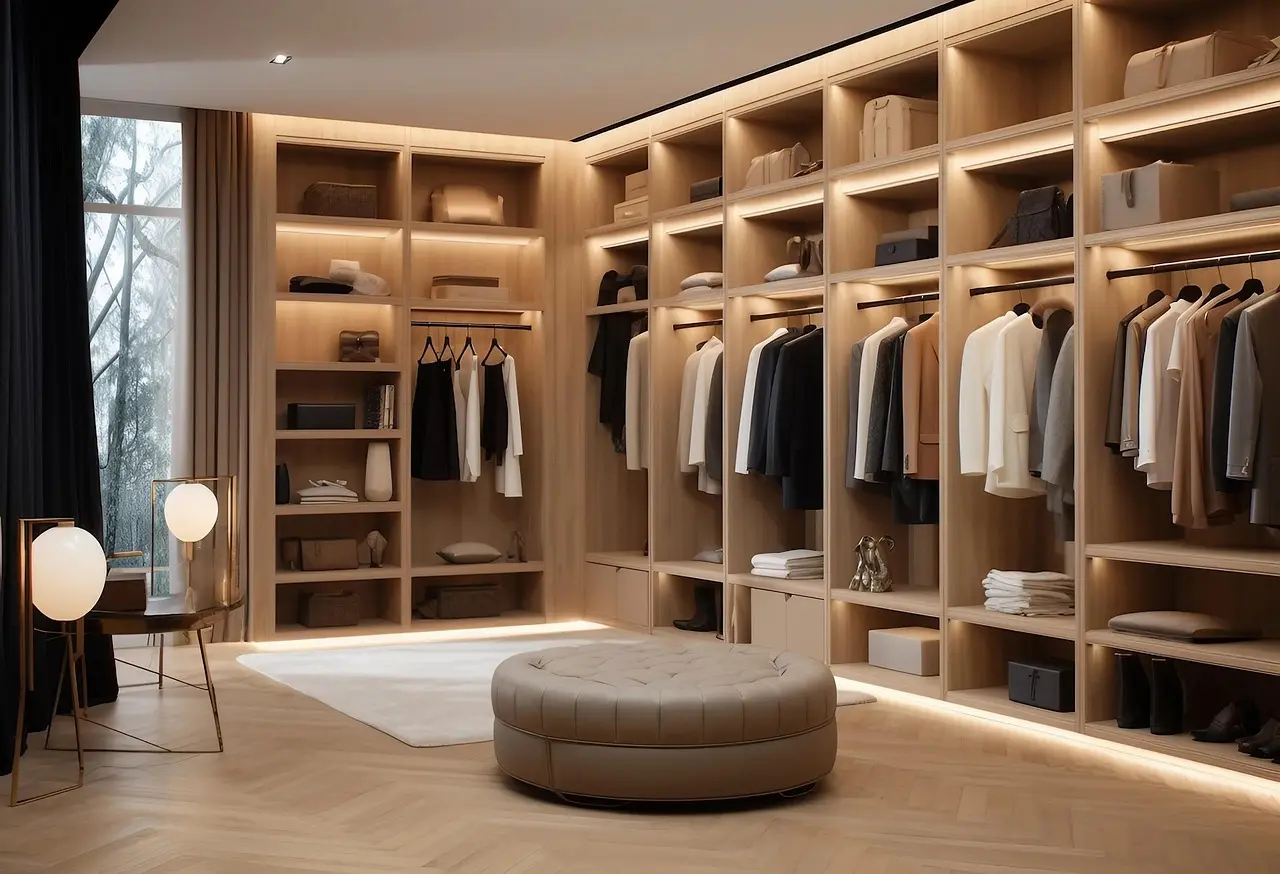
A cedar closet usually falls in the $600 to $3,500 range for a typical homeowner project, while larger or fully customized builds often reach $1,500 to $6,000+. The spread comes from closet size, whether you line all surfaces or only the visible walls, and whether you hire the install.
Typical budget ranges by closet size
Small closets often stay near the low end because the material list is short. Mid-size closets move into the middle of the range once you add more square footage and labor time. Large walk-ins and full custom layouts push cost up because every wall and corner adds pieces, cuts, and fastening time.
What usually drives the price up
Material quality matters, but labor is often the biggest swing after cedar itself. Demo, prep, layout, cutting, fastening, and cleanup can cost more than many people expect. Irregular shapes, built-ins, and ceiling coverage all raise the labor bill because they slow the install.
Another common budget surprise is waste. A closet with many corners or doors needs extra boards for trimming, matching, and mistakes.
Full lining versus partial lining
Full lining gives you cedar on every surface you choose to cover, but it is the most expensive option. Partial lining keeps costs down by using cedar where it matters most, such as the back wall, the most visible side walls, or a section near the hanging area.
Suppose a homeowner has a 6-by-8-foot walk-in but only wants the cedar smell and a better-looking back wall. A partial line can cut the material bill sharply while still giving the closet the look and aroma most people want.
What cedar is used for closets?
The cedar used to line closets is eastern red cedar. It contains an oil that helps repel insects, which is why people choose it for clothing storage and odor control. It can help reduce moth damage and slow mildew growth, though it should not be treated as a cure-all for storage problems.
Eastern red cedar and its aromatic oil
Eastern red cedar is the aromatic species most often associated with closet lining. Its scent is the main draw for many buyers, along with the added protection people want for stored clothing.
That scent is not permanent. Over time, it fades, and light sanding can renew the cedar scent after a few years.
Planks and tongue-and-groove boards versus panels
Solid cedar planks and tongue-and-groove boards are the preferred lining material. They cover the closet’s square footage directly and are easier to detail cleanly around corners than lower-grade sheet goods. Buy enough planks to cover the full area you plan to line.
Pressboard panels are available, but they are considered undesirable for closets. They do not give the same result as solid boards, and they are a poor fit when the goal is a lasting aromatic lining.
Why pressboard is a poor choice
Pressboard can be tempting because it looks cheaper on paper. In practice, it weakens the whole project if your goal is a true cedar closet rather than a cosmetic finish. Solid boards last longer, fasten better, and better support the scent and storage value people want from cedar.
How do you price cedar by square foot?
Price cedar by measuring the closet’s wall height and width, then multiplying those walls to get square footage. Add the ceiling only if you plan to line it. That total drives both material count and project cost, so measure every wall before you place an order.
Measure wall height and width
Measure each wall from floor to ceiling and then across its width. Multiply height by width for each wall, then add the walls together. If the closet has a sloped ceiling, built-ins, or framed openings, count only the areas you will actually cover.
Count walls, corners, and openings
Corners and openings do not always change square footage, but they do change waste and labor. Every corner means a cut, and every opening means more trim work. A closet with shelves, hooks, or a hanging system still needs prep before boards go up.
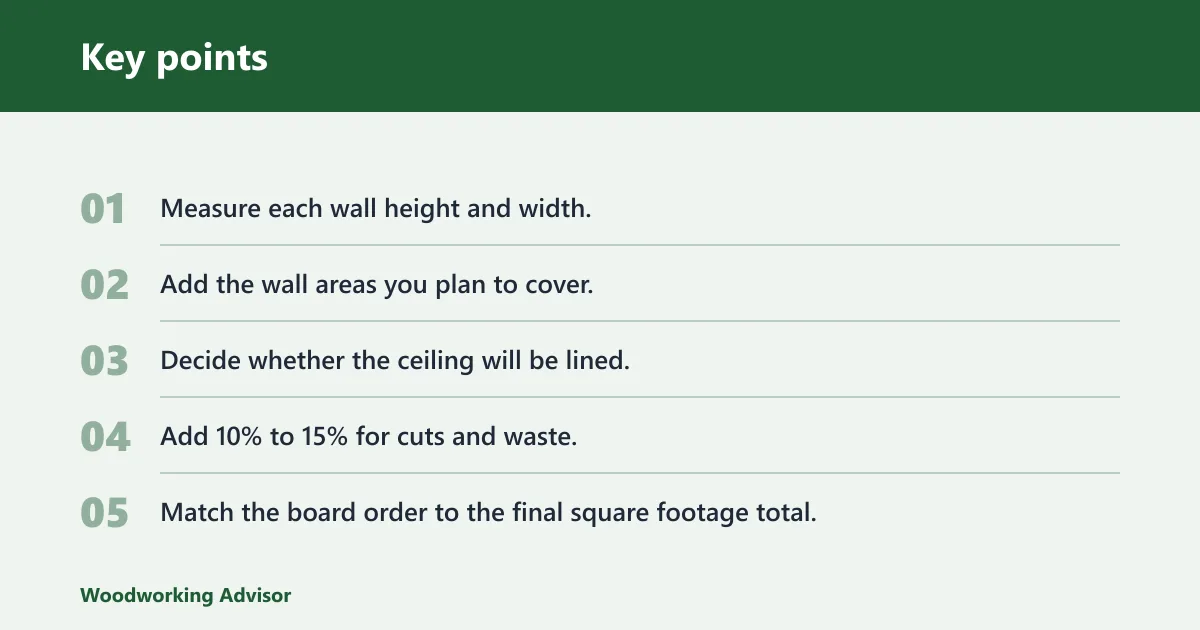
- Measure each wall height and width.
- Add the wall areas you plan to cover.
- Decide whether the ceiling will be lined.
- Add 10% to 15% for cuts and waste.
- Match the board order to the final square footage total.
Add ceiling area only if needed
Ceiling coverage is optional, but it changes the math quickly. If you include it, the square footage and board count rise, and the fit-up takes more time because the wall boards and ceiling boards must align cleanly at the top.
A common first-timer mistake is pricing only the walls, then adding the ceiling later. That can leave you short on material and force a second order for matching boards.
Labor and install costs
Labor often creates the biggest price swing after materials. DIY installation can keep the budget lower, but hired work adds cost for demolition, prep, layout, cutting, fastening, and cleanup. A simple closet may be manageable for a careful DIYer; an irregular or built-in-heavy closet usually is not.
DIY versus hired installation
DIY costs are mostly materials, tools, and your time. Hired installation bundles the project into a finished price, but that price reflects the full sequence of prep and install work. If the closet has tight corners or a ceiling line, a contractor’s labor charge rises for the extra layout and fitting.
Demo, prep, cutting, and fastening
Closet prep should come before any boards are fastened. Remove baseboard molding, shelves, and hooks, then locate studs before installation. Once the walls are open, the installer can cut boards to fit and fasten them cleanly.
The install usually uses construction glue behind each board, plus a pneumatic brad nailer for fastening. The boards are nailed through the tongue at a 45-degree angle, which keeps the face cleaner and helps hide the fasteners.
Why irregular closets cost more
Uneven walls, odd angles, and built-ins create more cutting and more waste. They also slow down the layout stage because the board pattern has to work around obstacles instead of running in straight lines. That extra labor is why two closets with the same floor size can cost very different amounts.
Extras that change the budget
Some add-ons are small on paper but matter in the final total. Fasteners, adhesive, and tool use are routine parts of the bill. Baseboard removal, stud location, ceiling lining, and built-in obstacles can each move the price upward if they take extra time or cause more material waste.
Fasteners, adhesive, and nailer use
Plan for construction glue, brads or finish nails, and tool setup. These items are usually not the most expensive line on the invoice, but they are necessary for a proper install. A small materials allowance keeps the budget realistic and avoids surprises at checkout.
Baseboard removal and stud location
Baseboards often need to come off before cedar boards can sit flat. Stud location matters too, because the boards need solid backing where they are fastened. Skipping that prep can lead to poor alignment or loose sections later.
Ceiling lining and built-in obstacles
Ceiling lining raises both square footage and fit-up complexity. Built-in drawers, shelves, and awkward returns can do the same. If the closet has these features, price in extra labor and some added board waste rather than assuming a simple wall-only install.
Are cedar closets worth it?
Cedar closets are worth it when you value the aroma, the clothing protection, and the finished look enough to pay for the material and labor premium. They are less compelling when you only want a faint scent or a modest storage upgrade. Partial lining or scent alternatives can often make more financial sense.
If you store wool coats, seasonal clothing, or heirloom textiles, cedar can be a sensible upgrade. Eastern red cedar’s natural oil is the reason many people choose it, and the odor can make the closet feel cleaner and more finished. That benefit is most useful when the closet sees regular use.
Lower-cost scent alternatives
If you mainly want cedar fragrance, cedar blocks, sachets, or smaller inserts can cost far less than lining every wall. They do not give the same visual effect or surface coverage, but they can satisfy the scent goal at a lower price point.
When partial lining is the better buy
Partial lining is often the best value for homeowners who want the cedar look without paying for full coverage. It makes sense in closets with limited wall space, in projects with budget limits, or in storage rooms where the smell matters more than full architectural finish.
Say your closet is a standard walk-in with one long back wall and two short sides. Lining only those visible surfaces can keep the budget down while still giving you most of the aroma and a cleaner appearance.
Frequently asked questions
How much does it cost to build a cedar closet?
The total depends on square footage, whether you line all walls or only part of the closet, and how much labor is needed for demolition, prep, cutting, and fastening.
How much does cedar cost per square foot?
The cedar material itself is only part of the answer, because pricing by square foot should include waste, fasteners, adhesive, and labor. A better budgeting method is to price the closet by its total covered area, then add a 10% to 15% waste allowance and a labor range for the install.
How many cedar blocks per closet?
There is no single block count for every closet, because the number depends on the closet’s size and whether you are using blocks, planks, or tongue-and-groove boards. For full lining, the practical starting point is the square footage of the surfaces you want to cover, then a waste allowance for cuts.
Is cedar expensive?
Compared with basic closet finishes, yes. Cedar costs more because you are paying for solid aromatic wood rather than a standard wall covering or shelf system. The price rises further if you choose full-wall coverage, ceiling lining, or installation in a closet that needs extra prep and careful fitting.
What does it cost to line a closet with cedar?
To line a closet with cedar, a small closet may cost about $600 to $1,400, a standard walk-in about $1,500 to $3,200, and a larger full-line closet about $3,000 to $6,000+. The exact total depends on wall area, ceiling coverage, and labor complexity.
Do cedar closets need ceiling coverage?
No. Ceiling lining is optional. It increases square footage, board count, and fit-up complexity, so many closets stop at the walls. Ceiling coverage makes sense when you want a fully wrapped look or when the top of the closet is part of the design plan.
What kind of cedar is used for closets?
The common aromatic species used for closets is eastern red cedar. It contains an oil that is a repellent, which is why it is chosen for moth and mildew resistance and for the fresh scent people expect from a cedar-lined closet.
Sponsored / affiliate links. As an Amazon Associate I earn from qualifying purchases. I may earn additional commission from eligible campaigns.