Cedar Wood Closet: Planking Types, Installation Steps & Cost
A cedar wood closet lines an enclosed space with aromatic Eastern red cedar planking to repel moths and control musty odor — but the effect only works if the closet is airtight, with cedar covering all six interior surfaces. Skip the vapor seal or use thin plywood, and the scent fades in months instead of the usual 3–5 years. This guide covers real planking costs, the nail-and-stud installation steps, and how to refresh cedar’s scent once it dulls.
What Makes a Cedar Closet Actually Work
The wood behind almost every “cedar closet” isn’t a true cedar (genus Cedrus) at all — it’s Eastern red cedar, Juniperus virginiana, a juniper that happens to share cedar’s name and scent. Its heartwood contains aromatic oils, mainly thujoplicins and cedrol, that adult moths avoid. That’s the entire mechanism: the oil repels egg-laying moths, it doesn’t fumigate larvae or eggs already hiding in a garment, which is why how effective cedar actually is against moths depends on starting with clean, pest-free clothes.
For the deeper history of why builders started lining closets with it in the first place, see the science behind why cedar repels moths. What matters for this guide is installation: an open, drafty closet lets the scent-carrying oils dissipate into the room instead of concentrating around your clothes.

Best Cedar Planking Pick
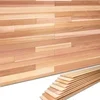 |
Baoyeewood Western Red Cedar Wall Panels (10.5 Sq Ft) – $69.99 Tongue-and-groove Canadian red cedar boards in 16–55 inch lengths — the same interlocking, blind-nail profile the installation steps below walk through, sized for a single closet wall.
|
As an Amazon Associate we earn from qualifying purchases.
Cedar Planking Types and What They Actually Cost
Solid tongue-and-groove cedar planking runs about $2 per square foot — a box covering 15 sq. ft. costs roughly $30, so a standard 4-ft. by 8-ft. closet with an 8-ft. ceiling needs about 12 boxes, or close to $360 in planking plus $25–$30 for trim, landing just under $400 total. Cedar plywood is the budget route: the same closet runs under $200 in sheet goods, about $230 with trim, but plywood must be face-nailed (no interlocking tongue-and-groove edge) and carries a noticeably milder scent than solid planking.
| Material | Approx. Cost (4×8 closet) | Scent Strength | Installation |
|---|---|---|---|
| Solid T&G cedar planking | ~$390–$400 | Strongest | Blind-nailed, interlocking edges |
| Cedar veneer plywood | ~$435 (2×6 closet) | Moderate | Face-nailed sheets |
| Cedar flakeboard | ~$270 (2×6 closet) | Mild | Face-nailed sheets |
| Cedar plywood (budget) | ~$230 | Mild | Face-nailed sheets |
If sheet goods fit your budget better, cedar plywood is a legitimate option we cover in more depth separately. For sizing a specific closet, our guide on how much cedar you’ll need walks through the math by wall, ceiling, and door area.

How to Install Cedar Closet Planking
Most closet lining planks run 3/8 to 1/2 inch thick, and horizontal installation is the easiest layout for a first-time DIYer. Here’s the sequence that avoids the two most common mistakes — nailing into drywall instead of studs, and starting an out-of-level first row.
- Strip the closet: Remove shelves, hanger rods, and moldings down to bare walls.
- Locate every stud: Use a stud finder and mark a center line at each one — standard framing is 16 inches on-center.
- Match the nail to the wall: Use 1-inch nails going straight into exposed studs, 1-1/2-inch panel nails through gypsum wallboard, and 2-inch nails in older plaster-and-lath walls. Anything thicker than 3/8 inch should be nailed into a stud or solid blocking, not just the wall surface.
- Set the first row level: Start in a bottom corner with the grooved edge down, and check it with a level before nailing — every row above copies whatever angle the first row sets.
- Work upward, interlocking each row: Blind-nail through the tongue of each board so the next row’s groove hides the nail heads. A pneumatic pin nailer (about $25/day to rent) is faster than a hammer and less likely to split the tongue.
- Trim around outlets and corners: Notch boards to clear outlets, switches, and any vents rather than removing them.
- Seal the box: Add weatherstripping to the closet door and cover any gaps at the baseboard or ceiling line — this is the step most tutorials skip, and it’s the one that determines whether the scent lasts years or months (more below).
The Airtight Requirement Most Guides Skip
Cedarwood oil qualifies as a minimum-risk pesticide under EPA 25(b), which exempts pure cedar products used to repel insects from federal registration — a sign regulators consider it low-hazard, not a sign it’s a permanent fix. The oils are volatile: they evaporate into open air just as easily as they evaporate into your closet. A closet that’s cedar-lined but still has a gap under the door, an unsealed baseboard, or exposed drywall behind the rod is essentially venting its own effectiveness outward.
Aromatic cedar is the trade name for kiln-dried Eastern red cedar heartwood sold specifically for closet lining. It differs from construction-grade cedar in that it’s cut to concentrate the fragrant heartwood, not the paler, less aromatic sapwood.
📊 Cedarwood oil is classified as a minimum-risk pesticide under EPA’s 25(b) exemption — Source: National Pesticide Information Center
“Skip the weatherstripping and even solid tongue-and-groove planking loses its punch within a season — the oils need a sealed box to concentrate in, not open airflow to escape into.”
Some people are also sensitive to the oils on direct skin contact, developing mild irritation, so wear gloves when sanding and ventilate the room while you work.
Maintaining and Refreshing the Scent
Cedar’s scent fades as the surface oils oxidize, typically over 3–7 years depending on how airtight the closet is — see how often to resand or replace cedar for the specifics by closet type. When it dulls, lightly sand the surface with 120–150 grit paper to expose fresh oil-bearing wood; never seal, paint, or varnish cedar planking, since a film finish locks the oils in the wood instead of letting them evaporate into the closet air.
Wipe dust with a dry or barely-damp cloth; avoid ammonia or oil-based cleaners, which strip the wood’s natural oils faster than normal fading. If you’re still deciding whether the material and labor are worth it before you commit, our breakdown of whether a cedar closet is worth the cost compares it against cedar balls, sachets, and moth crystals. And if you’d rather buy pre-cut planking than source it yourself, see our picks for the best cedar products for closets, blocks, and liners.
Frequently Asked Questions
Does cedar really repel moths, or just make clothes smell nice?
Yes, but only against adult moths looking for a place to lay eggs — the oils don’t kill larvae or eggs already on a garment. Store clean clothes only, since cedar can’t undo an existing infestation, and the repellent effect weakens as the surface oils dry out over a few years.
What type of cedar should I use for a closet?
Use aromatic cedar, which is Eastern red cedar (Juniperus virginiana) heartwood, not a true cedar of the genus Cedrus. It’s sold specifically as closet-lining planking, plywood, or flakeboard, and cut to concentrate the fragrant reddish heartwood rather than the paler sapwood.
Is cedar planking safe to install?
Cedarwood oil is classified as a minimum-risk pesticide under EPA 25(b) and isn’t considered hazardous when used as intended. A minority of people are sensitive to the oils and can develop skin or mild respiratory irritation from sawdust, so wear gloves and ventilate the room while cutting and sanding.
How long does a cedar closet’s scent last, and how do I refresh it?
Typically 3 to 7 years in a well-sealed closet before the surface oils oxidize and the scent fades noticeably. Refresh it by light sanding with 120–150 grit paper to expose fresh wood — never seal or paint cedar planking, since a film finish traps the oils instead of letting them evaporate.
Can I use cedar plywood instead of solid planking?
Yes — cedar plywood costs roughly half of solid tongue-and-groove planking (about $230 versus $400 for a standard closet) but has a noticeably milder scent and must be face-nailed in full sheets rather than blind-nailed with interlocking edges.
How much cedar planking do I need for a standard closet?
A typical 4-ft. by 8-ft. reach-in closet with an 8-ft. ceiling needs about 12 boxes of tongue-and-groove planking, covering roughly 180 square feet across the walls and ceiling. Use our sizing guide to calculate an exact figure for a non-standard closet before you order.
Conclusion
A cedar wood closet earns its cost when it’s built to actually hold the scent in: solid tongue-and-groove planking nailed into studs, seams sealed, and a weatherstripped door keeping the box airtight. Skip any of that and you’ve spent $230–$400 on wood that smells like a lumber yard for a few weeks and then just looks nice. Plan the planking type against your budget, follow the nail-and-stud sequence above, and resand every few years to keep the oils working.
Sponsored / affiliate links. As an Amazon Associate I earn from qualifying purchases. I may earn additional commission from eligible campaigns.