How to Attach Wood to a Lathe (4 Mounting Methods)
A wood lathe blank is attached one of four ways – between centers, with a screw chuck, on a faceplate, or with a scroll chuck – and the right choice depends on the blank’s size, not personal preference. Using the wrong method, like a screw chuck on a 12-inch bowl blank, can let the wood rip free at speed. This guide covers all four mounting methods, the screw sizes and thread depth that actually hold, and the mistakes that cause a blank to fly off mid-cut.
4 Ways to Mount Wood on a Lathe (Quick Comparison)
Before picking a method, match it to what you’re actually turning. A pen blank and a 14-inch bowl blank do not mount the same way, and using a small-blank method on a large one is the most common cause of a workpiece coming loose at speed.
| Method | Best Blank Size | Hardware Needed | Tailstock Required? |
|---|---|---|---|
| Between centers | Spindles, pens, table legs | Spur (drive) center + live center | Yes, always |
| Screw chuck | Small bowls, boxes, under ~6 in. | Screw chuck accessory | No, tailstock-free |
| Faceplate | Large or heavy bowl blanks, wet wood | Faceplate + #8 or #10 wood screws | Only during roughing |
| No-hardware alternatives | Light, small, low-speed work | Double-sided tape or glue block | Recommended for support |
Turning Between Centers (Spindle Turning)
Between centers is the default method for spindle work – table legs, pens, handles, and anything longer than it is wide. A four-prong spur (drive) center goes in the headstock and bites into the end grain, while a live center in the tailstock supports the opposite end and spins freely on bearings so it doesn’t burn the wood.
- Find center on both ends: draw two diagonal lines corner-to-corner on square stock, or center-find round stock, and mark the intersection.
- Seat the spur center: tap the drive center into the marked end with a mallet so the spurs bite in about 1/3-inch, or drive it in on the lathe itself at low speed.
- Bring up the tailstock: slide the tailstock down the bed until the live center meets the opposite mark, then lock the tailstock base.
- Advance and lock the quill: turn the handwheel until the live center seats firmly against the wood, then lock the quill so the blank can’t shift end-to-end.
Spin the blank by hand before turning the lathe on – it should rotate freely with no wobble. A spur center is also a deliberate safety feature: on a catch, the spurs slip in the wood instead of stalling the motor or breaking your tool rest.
Mounting with a Screw Chuck
A screw chuck holds a blank at one center point with a single coarse-threaded screw, giving you a tailstock-free, fully exposed face – ideal for small bowls, boxes, and bottle stoppers under about 6 inches across. It’s the fastest mounting method on this list, but it isn’t rated for large or heavy stock.
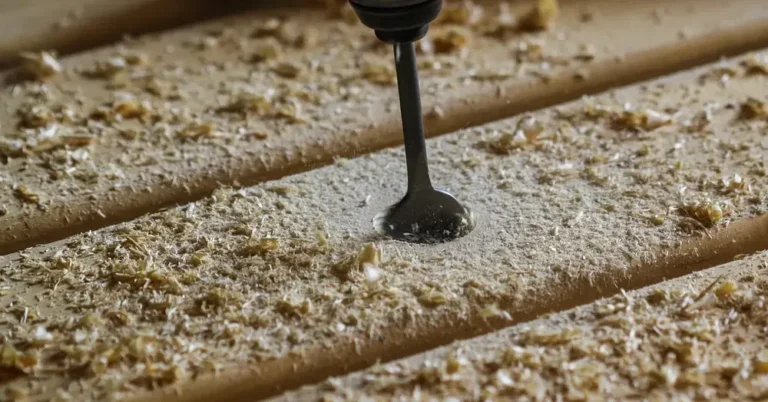
Find the center of the blank, drill a pilot hole sized to the screw chuck’s thread (check the chuck’s spec sheet – most take a 5/8-inch or 7/16-inch bit), and thread the blank on by hand until it’s snug against the chuck’s shoulder. As a working rule, get at least seven full threads engaged in solid wood before you turn the lathe on; fewer than that and the screw can strip out under a catch.
Screw chucks and faceplates both rely on the same wood screw sizing rules that apply to any load-bearing screw joint – thread engagement matters more than screw length alone.
Best Lathe Faceplate Pick
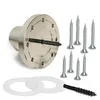 |
BMWOOD 3-Inch Lathe Faceplate with Screw Chuck – $19.95 Combines the faceplate and screw-chuck methods covered above in one accessory, with two nylon washers and mounting screws included – fits any 1-inch x 8TPI lathe spindle.
|
As an Amazon Associate we earn from qualifying purchases.
Mounting with a Faceplate
A faceplate is the strongest mounting option and the only one rated for large, heavy, or wet green-wood bowl blanks. Instead of one screw, it spreads the load across 4 to 8 screws driven into a flat-sawn face, so it can safely carry blanks a screw chuck can’t hold.
Flatten the mounting face first – a bandsaw or hand plane works – then center the faceplate and mark the screw holes. Use #8 or #10 wood screws long enough to get at least seven threads into solid wood, avoiding any pith or checked wood at the very center. Bring up the tailstock to support the blank while you rough it round, then back the tailstock off once the blank is balanced and you need access to the far face.
Securing the Workpiece with the Tailstock
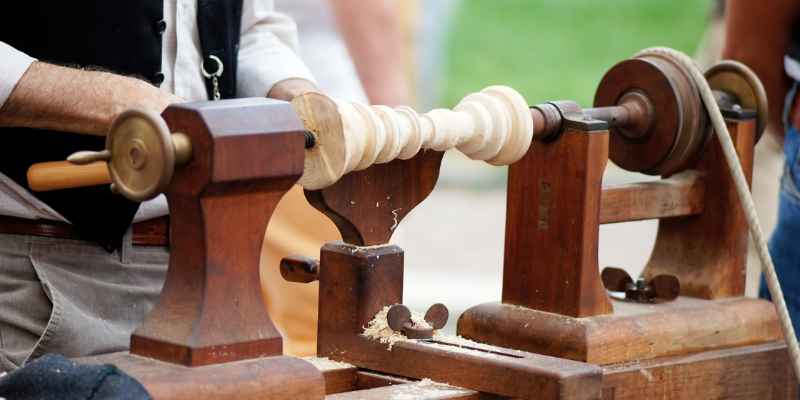
Whatever method holds the headstock end, the tailstock is what keeps a blank from walking off-axis while you’re roughing it round. Align the tailstock’s live center with the mark or drilled dimple at the free end, slide the tailstock up until it just contacts the wood, and lock the base to the bed.
Advance the quill by hand until the center seats firmly, then lock the quill handle. Check that the blank still spins freely by hand with no scraping before switching the lathe on – a blank that binds against the tool rest at this stage will do the same thing at speed, only much faster.
Alternative Mounting Methods (No Chuck Needed)
For small, light pieces, or when you don’t own a faceplate or screw chuck yet, a few no-hardware methods work at reduced speed:
- Double-sided tape: apply carpet-tape-grade double-sided tape between the blank and a sacrificial waste block, press firmly, and run the lathe at a slow speed – this only holds light, small pieces reliably.
- Glue block (paper joint): glue the blank to a waste block with a sheet of paper sandwiched in the glue line; once turning is done, a chisel driven into the paper joint splits the two apart cleanly.
- Jam chuck: for finishing the underside of a bowl after it’s parted from the faceplate, press-fit the piece into a recess turned in a waste block, supported lightly by the tailstock.
- DIY screw chuck: in a pinch, screw a wood block to your faceplate, drill and thread a hole in its center, and drive a single coarse screw through it into the blank.
“The paper-joint glue block trick has saved more bowl bottoms in our shop than any commercial jam chuck – the key is letting the glue cure fully overnight before you bring the tailstock up, or the joint lets go under load.”
Common Mistakes That Cause a Blank to Come Loose
- Too few threads engaged: a screw with fewer than about seven threads in solid wood can pull free under a catch – always check penetration before starting the lathe.
- Screwing into pith or checks: the center of a log is the weakest wood in the blank; center your screws or tenon outside it whenever the blank size allows.
- Running full speed on an unbalanced blank: start any new mounting at the lowest speed and bring it up gradually once the blank is round and balanced.
- Skipping the hand-spin check: always rotate a freshly mounted blank by hand to confirm it clears the tool rest and bed before switching the lathe on.
- Loose tailstock quill: a quill that isn’t locked can back off mid-cut, letting the far end drop – recheck it after the first few passes.
📊 Getting at least seven full threads engaged in solid wood is the general benchmark woodturners use for a screw chuck or faceplate screw to resist a catch – fewer threads means the screw can strip out of the wood under load rather than the wood failing first.
Frequently Asked Questions
How Is Wood Attached To A Lathe?
Wood is attached to a lathe one of four ways: between centers for spindle work, a screw chuck for small tailstock-free blanks, a faceplate for large or heavy blanks, or a scroll chuck gripping a pre-cut tenon. The method depends on the blank’s size and whether it’s spindle or bowl-style work.
How Do You Attach A Blank Wood To A Lathe?
Find the center of the blank, then mount it with a faceplate or screw chuck. Drill a pilot hole sized to the hardware, drive the screws or the chuck’s screw until snug, bring up the tailstock for support while roughing round, then remove the tailstock to finish the far face.
What Holds The Wood On A Lathe?
A faceplate, screw chuck, scroll chuck, or a spur-and-live-center pair holds wood on a lathe. A faceplate spreads the load across several screws for large blanks; a screw chuck uses one screw for small blanks; between centers uses a spur center and a live center for spindle work.
How To Secure A Piece In A Lathe?
Secure a piece by mounting the headstock end first (spur center, screw chuck, or faceplate), then bringing the tailstock’s live center up to the opposite end and locking both the tailstock base and the quill. Hand-spin the piece to confirm it clears the tool rest before turning the lathe on.
How Deep Should A Screw Go Into Wood On A Lathe?
Aim for at least seven full threads of the screw engaged in solid wood, avoiding the pith at dead center. For a typical #8 or #10 wood screw, that usually means roughly 3/4 to 1 inch of thread penetration, depending on the screw’s thread pitch – check that the blank has enough thickness before drilling.
Can You Turn Wood Without A Chuck?
Yes. Spindle work can be turned entirely between centers with no chuck at all, using only a spur center and a live center. Small, light bowl blanks can also be mounted with double-sided tape or a glued paper joint on a waste block, though both are limited to slow speeds and lighter stock.
Conclusion
Matching the mounting method to the blank is what actually keeps wood attached to a wood lathe safely: between centers for spindles, a screw chuck for small tailstock-free blanks, and a faceplate once the blank gets large, heavy, or wet. Check the lathe speed calculator for a safe starting RPM on your blank’s diameter, get at least seven threads of screw engaged, and always hand-spin a fresh mount before switching the lathe on.
Sponsored / affiliate links. As an Amazon Associate I earn from qualifying purchases. I may earn additional commission from eligible campaigns.