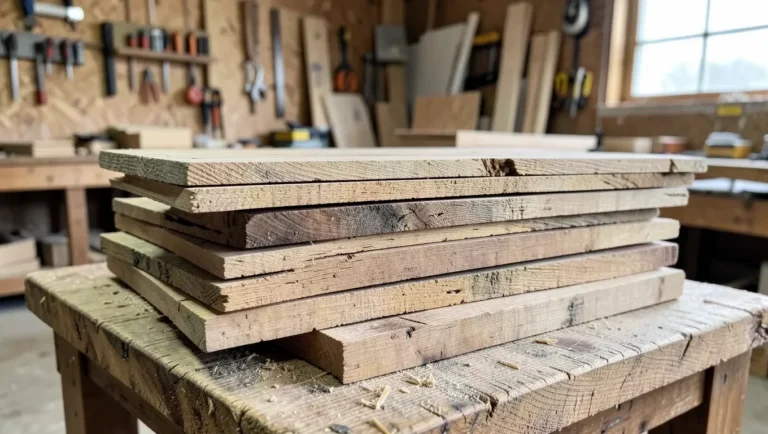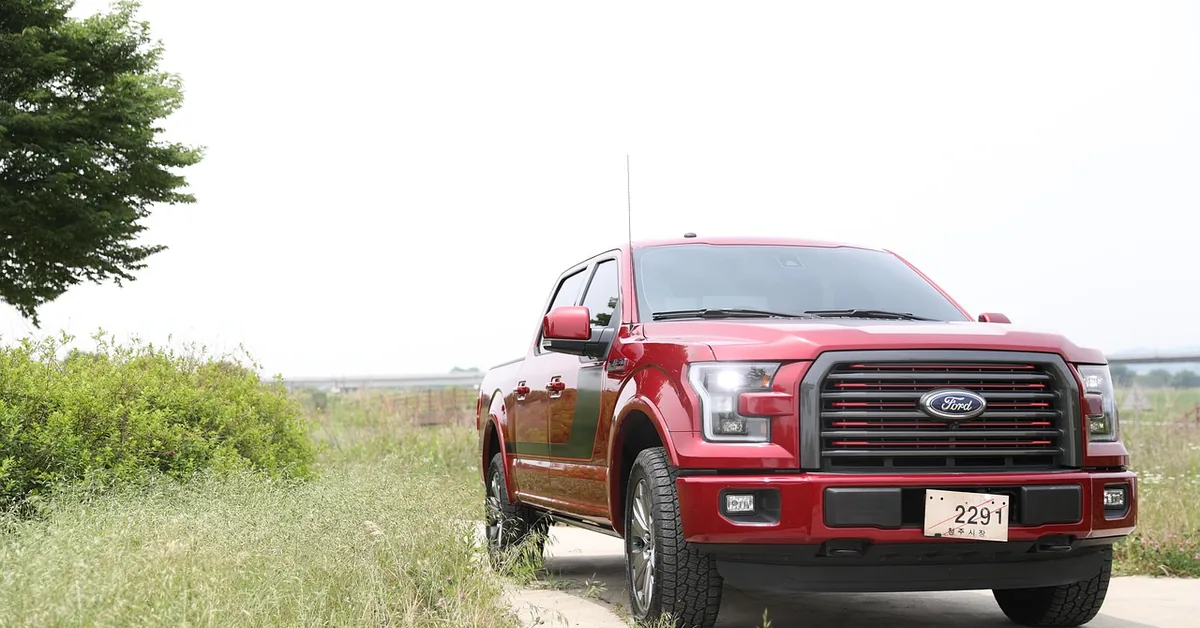
How to Haul 16 Ft Boards in a Truck (Flag & Overhang Rules)
A 16 ft board needs about 4 feet of tailgate overhang before a warning flag is legally required, a hitch-mount bed extender on any bed shorter than 6 feet, and two ratchet straps rated above the boards’ weight. Skip the flag past that mark and you’re violating 49 CFR §393.87 — risking a fine or a board through someone’s windshield. This guide covers extender setup, strap placement, exact flag rules, and what a long bed can carry alone.

Choosing The Right Truck Bed Length
Truck beds come in three common lengths: a short bed runs about 5.5 feet, a standard bed about 6.5 feet, and a long bed close to 8 feet. With the tailgate down, add roughly 2 feet to each. A long bed with the tailgate down gives you about 10 feet of support — still 6 feet short of a 16 ft board, which is exactly why an extender or a careful overhang plan matters no matter what you drive. If you don’t have a full-size truck at all, see how to transport 16 foot boards without a full-size truck for trailer and roof-rack alternatives.
If your truck already has a long bed and you want the exact math for your specific bed length and overhang, see how much bed you actually have by truck size. That breakdown is worth reading before you load anything if you’re unsure whether your bed alone — no extender — gets you close enough to a safe overhang.
Using A Hitch-Mount Bed Extender
A hitch-mount bed extender is a steel frame that slides into a 2-inch hitch receiver and adds 3–4 feet of support behind the tailgate. It’s the single biggest fix for a short or standard bed hauling 16 ft boards — it turns an unsupported 7–8 foot overhang into a properly supported load with far less flex over bumps.
- Fold the tailgate down so the boards rest flat across the bed floor, tailgate, and extender in one continuous line.
- Strap to the extender itself, not just the bed — most extenders include tie-down points built into the frame for exactly this.
- Check the load rating. Most consumer extenders top out around 300–500 lbs; a bundle of 16 ft 2x8s can weigh more than that, so split heavy loads into two trips if needed.
Best Bed Extender Pick
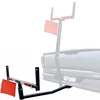 |
MaxxHaul 70231 Hitch Mount Bed Extender – $62.99 Slides into a 2-inch hitch receiver and adds about 3 feet of supported length behind the tailgate — the exact fix the bed-length math above points to for a short or standard bed.
|
As an Amazon Associate we earn from qualifying purchases.
📊 MaxxHaul rates its 70231 extender at 350 lbs and requires a 2-inch hitch receiver — Source: MaxxHaul product specification sheet, 2026.
Preparing And Loading Your Boards
Inspect every board before it goes in the truck. A large knot, crack, or visible rot near the middle of the span is exactly where flex concentrates stress on the drive — that’s the board that snaps on the highway, not the one with a clean, straight grain. Measure and mark cuts now if you need them; it’s far easier on a bench than after the board is strapped down.
Loading is a two-person job for anything over 10 feet. Lift with your legs, not your back, and walk the board to the truck together rather than dragging one end. Rest the front third of the board on the bed floor near the cab, letting the rest ride the tailgate and extender. If you’re loading several boards, stack them flat and offset the ends slightly so you can see daylight between layers — that airflow keeps damp boards from cupping on a long drive.
Securing The Load With Ratchet Straps
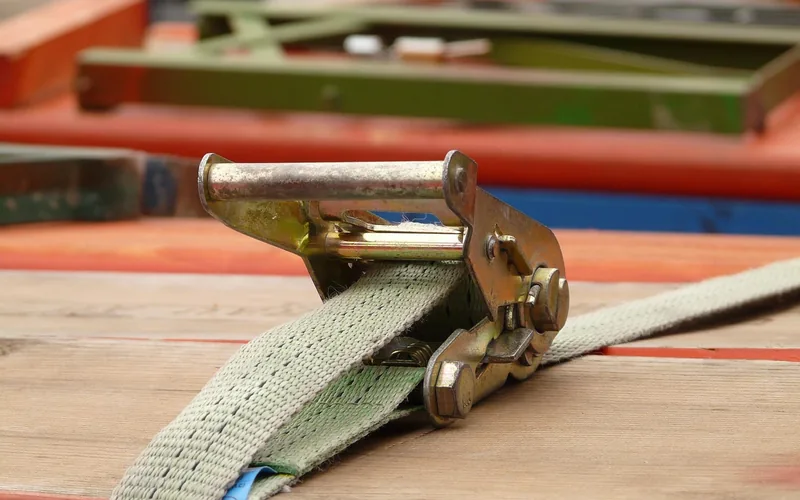
Skip the single strap across the middle — it’s the most common mistake and the reason boards shift on tight turns. Use three tie points instead: one near the cab, one at the tailgate hinge, and one near the rear of the overhang or the extender. Ratchet straps hold tension mechanically; rope and bungee cords stretch, slip, and aren’t rated for the repeated jolt of highway driving.
- Cross-strap in an X pattern across multiple boards to stop them spreading sideways, not just lifting.
- Recheck strap tension after the first 10–15 minutes of driving — straps seat and loosen slightly once the load settles.
- A cargo net over the whole load adds a second layer of security and stops small offcuts from working loose in the wind. For a deeper walkthrough of strap patterns and tie-down points, see how to secure lumber in a truck bed.
Federal And State Overhang And Red Flag Rules
The federal rule most articles cite — 49 CFR §393.87 — technically governs commercial motor vehicles, but most states apply an equivalent flagging requirement to personal trucks through their own vehicle code, and getting the details wrong is a real, citable mistake. Here’s exactly what the federal text requires, since a lot of guides round the numbers down.
| Overhang Condition | What The Rule Requires | Applies To |
|---|---|---|
| Load extends >4 ft past the rear | Red or orange warning flag, minimum 18 in square | 49 CFR §393.87 (commercial); most states mirror this for personal trucks |
| Load extends >4 in past either side | Warning flag marking the widest point | Federal rule; check your state’s exact side-overhang trigger |
| Overhanging load, after dark | Red light or reflector visible from 500 ft — a flag alone isn’t enough at night | Federal and nearly all state codes |
| Overhang wider than 2 ft at the trailing end | Two flags, one at each corner, instead of one centered flag | Federal rule; single flag is fine for a 2 ft or narrower end |
The practical takeaway: an 18-inch flag is the federal minimum, but several states allow a smaller 12-inch flag on non-commercial vehicles, and a few require permits above certain overhang lengths regardless of vehicle type. Since a 16 ft board on even a long bed with the tailgate down can still overhang 6–8 feet, always flag it and check your specific state’s DOT page before a long highway trip — the flag itself costs under $10 and the fine for skipping it does not.
Driving And Unloading Safely
Keep speeds moderate and avoid sudden acceleration or braking — an overhanging board acts like a lever, and quick movements amplify at the tip. Take turns wide and check mirrors often; a board that clears your own bumper can still swing into an adjacent lane on a sharp turn. Plan your route around low bridges, tight parking garages, and anywhere the extra length could catch on something you wouldn’t clear in a normal-length vehicle.
To unload, park on level ground, clear the path of obstacles, and release straps slowly — a tensioned board can spring slightly once the load is off. Carry boards one at a time with a helper for anything over 10 feet, and inspect each one for new cracks or splits from the drive before you store them flat in a dry area.
Frequently Asked Questions
How can I transport 16 ft boards in a truck?
Support the board on the bed floor, tailgate, and a hitch-mount bed extender if your bed is under 6 feet. Use at least two ratchet straps at different points along the board, and flag any overhang past 4 feet with an 18-inch red or orange flag.
Do I need a permit to haul 16-foot boards?
No permit is needed for a personal pickup load in most states as long as the overhang is properly flagged and within your state’s length limits. Some states do require a permit for loads that extend more than 10–12 feet past the vehicle, so check your state DOT page if your overhang is unusually long.
How far can a board legally hang out of a truck bed?
Most states allow up to 4 feet of rear overhang before a warning flag is required, matching the federal threshold in 49 CFR §393.87. Beyond that, you need a visible flag by day and a red light or reflector visible from 500 feet after dark.
What size flag do I need for an overhanging load?
The federal minimum is 18 inches square, red or orange. Several states permit a smaller 12-inch flag on personal, non-commercial trucks, so an 18-inch flag is the safer default if you’re unsure which rule applies to your vehicle.
Can a short-bed truck haul 16-foot boards without an extender?
Yes, but a short bed (about 5.5 feet) with the tailgate down only supports around 7.5 feet, leaving roughly 8.5 feet unsupported — more flex and a longer overhang to flag and manage. A bed extender or a second support point (like a padded sawhorse near the tailgate) meaningfully reduces that risk.
Conclusion
Hauling a 16 ft board comes down to three things: enough supported length (bed alone, or bed plus an extender), straps at three points instead of one across the middle, and a properly sized flag on any overhang past 4 feet. Get those right and the length of the board stops being the problem — it’s just another delivery.
Sponsored / affiliate links. As an Amazon Associate I earn from qualifying purchases. I may earn additional commission from eligible campaigns.