Boeshield T-9 vs WD-40 for Tool Rust Protection
Boeshield T-9 is the stronger long-term rust barrier for cast iron, hand tools, and damp storage; WD-40 for Tool Rust Protection is better for quick moisture displacement and short-term wipe-downs. Pick the wrong one, and bare steel can flash-rust, tighten tolerances, or send you back to re-cleaning tools after every humid day. This guide compares both products for cast iron, hand tools, and humid-shop storage, with practical selection rules.
Boeshield T-9 vs WD-40 specs for workshop storage
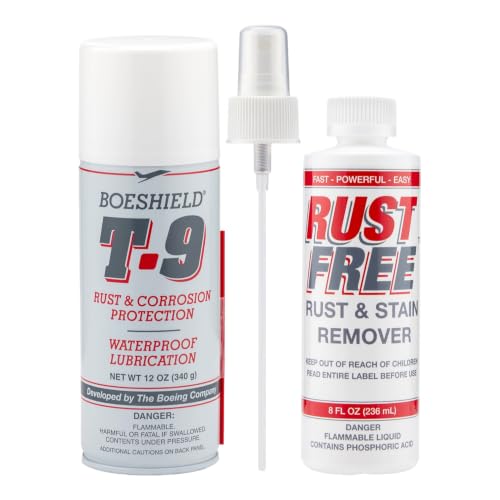
The job is clearer once you separate the task from the label. Boeshield T-9 is a paraffin wax-based waterproof lubricant and rust/corrosion protector developed by Boeing for aviation use, while regular WD-40 is mainly a moisture-displacing spray for short-term rust control and freeing stuck parts.
For woodworking tools, that difference matters on clean cast iron, on handled steel, and in damp storage. Boeshield T-9 is reported to dry to a hard, slightly tacky film that can resist dust better than oily films, but it may also require more careful wipe-off. Regular WD-40 is faster to apply and useful when the moisture is immediate.
Both products are aerosol sprays, so the propellant and the coating matter. Keep them away from open flames, sparks, pilot lights, and hot motors, and use ventilation because the sprayed mist is flammable before it fully flashes off. In marine environments, the longer-lasting film of Boeshield T-9 is generally the better fit for salt-prone steel, while regular WD-40 is more of a rinse-and-dry helper after water intrusion than a true exposure barrier.
| Factor | Boeshield T-9 | WD-40 for Tool Rust Protection | Winner |
|---|---|---|---|
| Rust barrier duration | Hard drying film built for longer-term protection on clean metal | Short-term moisture displacement and short-lived rust control | Boeshield T-9 |
| Film feel and dust pickup | Hard, slightly tacky film; dust-resistant compared with oily films | Oily residue feel; more likely to hold dust if left in place | Boeshield T-9 |
| Wipe-off effort and surface glide | Needs more wipe-off; leaves a slippery protective layer | Easier immediate wipe-down; less durable glide protection | Boeshield T-9 |
| Humidity tolerance and reapplication | Better fit for damp storage and longer intervals between coats | Best after cleaning or freeing parts; more frequent renewal needed | Boeshield T-9 |
Rust barrier duration
Boeshield T-9 wins when the metal needs a barrier that stays put after the solvent flashes off. It was developed by Boeing for aviation use, and that background matches its job: leave behind a protective film on clean metal, not a temporary wetting layer.
Regular WD-40 still has a place, but it is not the better answer for a table saw top left idle through a humid week. It works better when you need to push water off a surface, then move on.
Film feel and dust pickup
Boeshield T-9 dries to a hard, slightly tacky film. Practical use notes often describe that as a tradeoff: less oily feel than many sprays, but still not a bare-metal finish.
That matters on woodworking machinery because dust pickup is its own problem. A greasy film can hold fines, which then transfer to wood or build up at fences and rails.
Wipe-off effort and surface glide
Boeshield T-9 usually asks for a cleaner, more deliberate wipe than a simple water-displacing spray. In return, it leaves a slippery surface that suits stationary metal such as cast iron tops, jointer beds, and drill press columns.
Regular WD-40 wipes off more quickly, but that convenience is not the same as lasting glide protection. If the goal is smoother feed without leaving a wet oily layer, Boeshield T-9 is the better fit.
Humidity tolerance and reapplication
Boeshield T-9 is the better choice when a shop stays damp, especially in a garage or shed that sees condensation. The film is meant to hold up better than a quick spray-down.
Regular WD-40 is better treated as a short-cycle product. Use it when moisture is the immediate issue, then expect to reapply after cleaning, abrasion, or a fresh damp spell.
How long does Boeshield T-9 last on workshop tools?
Boeshield T-9 lasts longer than regular WD-40 on workshop tools because it leaves a drying protective film rather than a mostly oily wipe-on layer. That makes it the better fit for stationary metal and seasonal storage, but it still needs renewal after cleaning, heavy handling, or abrasion.
Practical Sailor’s saltwater test may help explain why users reach for it in harsh conditions. In that test, a dozen corrosion products were compared on mild steel coupons, most test panels were reported as significantly rusty after a few days, and the fresh-water panel stayed rust-free after about a week. Practical Sailor also described Boeshield T-9 as heavy and slightly tacky.
Where long-term storage favors T-9
Stored table saw tops, jointer beds, and drill press columns are strong candidates for Boeshield T-9. Those surfaces sit exposed, so they benefit from a film that stays in place after the solvent evaporates.
Say your table saw lives in a garage that swings from dry afternoons to damp nights. A thin, clean coat of Boeshield T-9 gives the top a better chance of staying rust-free than a quick wipe of regular WD-40.
When reapplication becomes necessary
Reapplication becomes necessary after the film is scrubbed away, abraded by use, or contaminated with grime. Active condensation is also a failure case; no spray performs well if moisture is still collecting on the steel.
A common first-timer mistake is spraying over dust or fingerprints and expecting a clean film to form underneath. That traps contamination and reduces the value of the coating.
Can WD-40 protect cast iron tops?
Regular WD-40 can help for a short period, but it is not the best answer for cast iron tops that need low-friction, non-greasy protection. For a table saw top or jointer bed, it works more as a moisture-displacing stopgap than a stable rust barrier.
WD-40 Specialist Corrosion Inhibitor is the closer fit for anti-rust work on handled tools and mixed-metal joints than regular WD-40. It is a different product, and that distinction matters because the standard spray is commonly used to free rusted parts rather than protect cast iron over time.
Regular WD-40 on table saw and jointer surfaces
Regular WD-40 can clean off moisture and give a brief slip, but it is not the right finish for a machine top that you touch, slide stock over, and leave exposed. The residue is short-lived, and the product is not designed as a long-term corrosion film.
Use it when the surface is wet or needs to free a fastener, then dry and protect the metal with a better rust preventative if the tool will sit unused.
Why WD-40 Specialist is the closer fit for anti-rust work
WD-40 Specialist Corrosion Inhibitor is positioned as the more suitable anti-rust spray for mixed-metal joints and handled tools. It is the middle ground between regular WD-40’s moisture-displacing job and Boeshield T-9’s more durable barrier.
It still carries a caution familiar to shop work: if you leave a sprayed surface untouched, it can attract dust, and abrasion may call for reapplication. That makes it useful, but not maintenance-free.
Glide, residue, and dust pickup on cast iron
Cast iron surfaces need protection that does not turn oily or grab fines. That is why drying film coatings matter: they reduce dust pickup compared with wet films, though they can take more effort to apply and wipe clean.
Picture a 52-inch fence rail with a light film of airborne dust. A greasy coating turns that dust into paste; a drying film keeps the surface cleaner and easier to wipe before the next cut.
What should you use on hand tools?
For hand tools, the answer depends on how often you touch the steel. Boeshield T-9 suits stored tools and light-use tools that need a longer rust barrier, while WD-40 for Tool Rust Protection suits quick cleanup, freeing stuck parts, and immediate moisture removal.
WD-40 Specialist Corrosion Inhibitor sits between them for handled tools that need corrosion resistance without the same level of long-term film as Boeshield. On mixed-metal joints, that middle option often makes more sense than regular WD-40.
Handled steel tools and mixed-metal joints
Hand planes, chisels, clamps, and combination tools are handled often, so residue matters. If the tool is going back into a drawer or rack, a drying film is usually better than a wet, oily spray that transfers to hands or wood.
Boeshield T-9 fits that role best when the tool is stored, while WD-40 Specialist Corrosion Inhibitor is the more practical choice for some mixed-metal assemblies that need protection without a heavy film.
Freeing rusted parts versus preventing rust
Regular WD-40 is the one to reach for when a screw, chuck, or hinge is stuck. That is a different job from prevention.
Do not treat a freed fastener as protected for the season. If the part will remain in service, dry it, then choose a product based on how long the metal will sit exposed.
Wipe-down habits for tools you touch often
Tools that are handled every day need a lighter touch than machine castings. Wipe away excess spray so the surface does not transfer residue to wood, leather, or your hands.
Suppose a box of clamps sits above a sink line in a damp basement shop. A quick spray of regular WD-40 may stop immediate flash rust, but a drying film or the Specialist Corrosion Inhibitor will usually make more sense for storage between uses.
Rust protection decision matrix
| Shop-use criterion | Boeshield T-9 | WD-40 for Tool Rust Protection | WD-40 Specialist Corrosion Inhibitor | Winner |
|---|---|---|---|---|
| Rust barrier duration | Longest-lasting of the three for clean stored metal; often suitable for 2-4 weeks indoors and up to 6 months in sealed storage | Short-term moisture control, typically best for same-day use or 24-72 hours before another wipe-down | Moderate, better than regular WD-40; often useful for 1-4 weeks on handled tools | Boeshield T-9 |
| Film feel | Hard, slightly tacky drying film | Oily, temporary feel | Less oily than regular WD-40, but still a spray film | Boeshield T-9 |
| Dust attraction | Lower than oily sprays once dry | Higher if left wet | Can attract dust if not wiped down | Boeshield T-9 |
| Wipe-off effort | More effort up front | Easiest quick wipe | Moderate wipe-off | WD-40 for Tool Rust Protection |
| Cast-iron glide | Good for stationary surfaces | Temporary slip only | Acceptable for light anti-rust use | Boeshield T-9 |
| Moving-part lubrication | Works, but is not the quickest freeing spray | Best for freeing rusted parts | Useful, but more of a protectant than a penetrant | WD-40 for Tool Rust Protection |
| Reapplication frequency | Lower for stored metal | Higher | Moderate | Boeshield T-9 |
| Humidity tolerance | Best for damp storage and salt-prone exposure | Weakest for long storage | Better than regular WD-40 for handled tools | Boeshield T-9 |
Decision matrix takeaways
Boeshield T-9 wins the protection-heavy categories because it is built for a longer-lasting drying film. That makes it the better fit for machine tops, fence rails, and tools that sit between uses.
WD-40 for Tool Rust Protection wins the quick-use categories because it is the faster moisture-displacing spray and the better choice when you are freeing fasteners or doing a short wipe-down before storage. WD-40 Specialist Corrosion Inhibitor fits the middle ground, especially for handled tools and mixed-metal joints.
Choose Boeshield T-9 if… / Choose WD-40 for Tool Rust Protection if…

Choose Boeshield T-9 if…
You are protecting cast iron tops, jointer beds, drill press columns, or other stationary metal; the shop is damp or subject to condensation; you want a drying film that resists dust better than oily spray; or the tool will sit unused for 2-4 weeks indoors or as long as 6 months in sealed storage. It is the stronger long-term barrier.
Choose WD-40 for tool rust protection if…
You need to displace moisture right now; you are freeing a stuck screw, hinge, or chuck; the part will be cleaned and used again soon; or you need a fast wipe-down rather than a storage coating. It is the better short-cycle product, especially when the metal will be back in service within hours or a few days.
Choose WD-40 specialist corrosion inhibitor if…
The tool is handled often and is not a cast iron machine surface, so a middle-ground protectant makes more sense. It fits mixed-metal joints and frequently touched steel better than regular WD-40, provided you wipe away excess and expect reapplication after wear, cleaning, or repeated contact.
Final recommendation
If the goal is rust prevention on stationary shop metal, Boeshield T-9 is usually the better purchase. If the job is quick moisture removal or freeing a stuck part, regular WD-40 still earns a place on the bench. For many handled tools, the Specialist Corrosion Inhibitor sits between them.

Frequently asked questions
Is Boeshield T-9 better than WD-40 for preventing tool rust?
Yes, for longer-term prevention on clean workshop metal. Boeshield T-9 leaves a drying protective film that is better suited to cast iron, steel tops, and humid storage. Regular WD-40 is mainly a moisture displacer, so it helps briefly but is not the stronger storage coating.
Can I use WD-40 on cast iron table saw tops?
You can, but it is better as a short-term moisture fix than a full rust barrier. On cast iron table saw tops, regular WD-40 is useful after cleaning or wet conditions, while Boeshield T-9 is the better choice if the surface will sit unused and exposed.
Does Boeshield T-9 leave a sticky residue on tools?
It dries to a hard, slightly tacky film rather than a wet oily residue. That finish is intentional and helps the coating stay on the metal longer. It can feel different from bare steel, but it usually resists dust better than many oily sprays once fully dry.
Is WD-40 Specialist Corrosion Inhibitor different from regular WD-40?
Yes. Regular WD-40 is mainly a moisture-displacing spray used for short-term rust control and freeing rusted parts. WD-40 Specialist Corrosion Inhibitor is the more suitable anti-rust spray for handled tools and mixed-metal joints when you want protection rather than a quick penetrant.
What should I use on tools stored in a humid garage?
Boeshield T-9 is usually the strongest choice because it leaves a longer-lasting film on clean metal. If the tools are handled often, the WD-40 Specialist Corrosion Inhibitor is the better middle ground, while regular WD-40 is best reserved for short-term moisture displacement.
Will rust preventative sprays attract dust on woodworking tools?
They can, especially if left too wet or applied too heavily. Drying film coatings reduce dust pickup compared with oily films, but they still need proper wipe-downs. Boeshield T-9 has the best dust-resistance profile of the three once the coating is dry.
Is Boeshield T-9 safe around paint, rubber, plastic, and vinyl?
According to specifications, yes. It is listed as safe around paint, rubber, fiberglass, plastic, and vinyl. It is still flammable and a skin irritant, so keep it away from sparks and open flames, and use ventilation and normal skin-contact precautions during application.
Sponsored / affiliate links. As an Amazon Associate I earn from qualifying purchases. I may earn additional commission from eligible campaigns.