How to Build a Music Stand Out of Wood: DIY Mastery
To build a music stand out of wood, make a tripod base from three splayed legs, a 1-inch dowel pole around 40 inches tall drilled for a height-adjustment bolt, and a tilting tray about 14 by 10 inches with a bottom lip so sheet music doesn’t slide off. A carriage bolt through the pole with a wing knob locks both the height and the tray’s tilt angle.
Creating your own wooden music stand is a genuinely approachable weekend project – it’s mostly straight cuts and one pivot joint, no complex joinery required. The plan below gives real dimensions and an actual adjustment mechanism instead of vague “make it adjustable” instructions, so you end up with a stand that actually works at the piano bench and standing up.
Introduction To DIY Woodworking For Musicians
Height-Lock Hardware
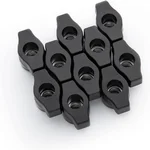 |
DuBois 1/4″-20 Wing Knobs (10-Pack) – $8.49 The same tool-free clamping knob woodworkers use on T-track jigs works perfectly as the height-lock and tilt-lock on a shop-built stand.
|
Beyond satisfaction, a shop-built stand solves a real problem with most folding metal stands: the tray is too small for two open pages of sheet music, and the friction-only height lock slips over time. Building your own lets you size the tray to your actual music and use a real mechanical lock instead of friction alone.
Tools needed: a saw (miter or hand saw both work for these cuts), a drill with bits sized to your dowel and bolt, a spade or Forstner bit for the pole socket, sandpaper (120 then 220 grit), and clamps. Materials: a 1-inch hardwood dowel (maple, oak, or birch all work well – avoid pine here, it’s too soft for the load-bearing pole), a piece of 3/4-inch plywood or solid wood for the base and tray, wood glue, and the hardware above.
Choosing The Right Wood
The pole is the one part where wood choice actually matters structurally – it’s a tall, narrow column that has to resist tipping and shouldn’t flex under a heavy binder of sheet music. The tray and base see far less stress, so appearance and cost matter more there than strength.
| Wood | Best Use On This Build | Why |
|---|---|---|
| Maple | Pole | Dense and stiff for its size, resists flexing in a tall thin column, takes a smooth finish |
| Oak | Base or tray | Strong and visually striking grain, but heavier – fine for a base since weight there adds stability |
| Birch | Pole or tray | Hard and stable, less expensive than maple, plainer grain |
| Pine | Tray only | Easy to cut and finish, but too soft and flexible for the load-bearing pole |
Designing Your Music Stand
This plan uses a tripod base, a single adjustable pole, and a tilting tray – the same basic layout as most commercial wood stands, because it genuinely is the most stable configuration for the least material. Rough dimensions: three legs about 15 inches long splayed outward at roughly 15-20 degrees from the pole, a pole that telescopes from about 30 to 50 inches to cover seated and standing use, and a tray around 14 inches wide by 10 inches deep – large enough for a standard sheet music page with a little overhang.
| Part | Rough Size | Notes |
|---|---|---|
| Legs (x3) | 15″ long | Splayed 15-20° from the pole for a stable footprint |
| Pole (lower) | 1″ dowel, ~26″ | Fixed into the tripod hub |
| Pole (upper, sliding) | 3/4″ dowel, ~24″ | Slides inside the lower pole for height adjustment |
| Tray | 14″ x 10″ | Add a 1/2″ lip along the bottom front edge |
Preparing The Wood
Measure and mark every piece before cutting anything – it’s easy to end up with legs of three different lengths if you cut, measure, cut, measure instead of marking the full cut list up front. Cut the three legs, both pole sections, and the tray blank to size, then dry-fit everything before any glue goes on, since fixing a bad angle after glue-up is far harder than adjusting a dry fit.
Sand progressively: 120-grit to remove saw marks and knock down any splinters, then 220-grit for a smooth final surface, especially anywhere hands will grip the pole or turn the wing knobs.
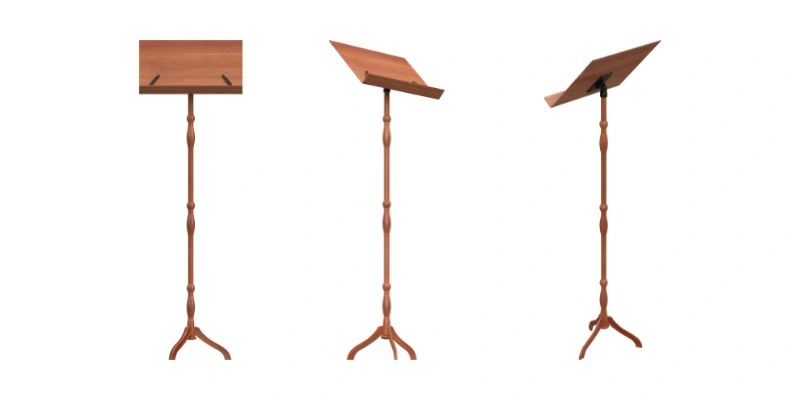
Assembling The Base
Drill three angled holes into the base hub – a wood block or thick disk about 4 inches across – at your chosen splay angle (15-20 degrees off vertical works well) using a drill guide or an angled jig if you have one, since eyeballing three matching angles freehand is the easiest place for this build to go visibly crooked. Glue each leg into its hole and clamp until dry. Drill a fourth hole in the center of the hub, straight up, sized to your 1-inch pole dowel.
Glue the lower pole section into the center hole and let it cure fully before moving on – this joint carries the entire weight of the stand and everything on the tray, so don’t rush the clamp time here even if the rest of the build goes faster.
Crafting The Stand And Rest
Cut the tray to size and glue or screw a thin strip (about 1/2 inch tall) along the bottom front edge – this lip is what actually keeps sheet music from sliding off when the tray is tilted back, and it’s the detail most generic plans skip. Drill a single hole through the back edge of the tray and a matching hole through the top of the upper pole section so a carriage bolt can pass through both – this becomes the tilt pivot.
Assemble the pivot with a carriage bolt through both holes, a washer on each side, and one of the wing knobs on the end. Tightened, it locks the tray at whatever angle you’ve set (10-20 degrees back from vertical is comfortable for most reading distances); loosened, it tilts freely to adjust.
Adding Adjustable Components
For height adjustment, drill a series of holes every 2 inches down the length of the lower pole section, sized to a second carriage bolt. Slide the upper pole section (with the tray already attached) down inside the lower pole, line up a hole, and pass a bolt through with a wing knob on the end – pull the bolt to slide to a new height, then re-insert it at the hole that matches. This gives discrete height steps rather than infinite adjustment, but it’s far more reliable long-term than a friction-only telescoping joint, which is exactly the part that wears out and slips on cheap folding stands.
Finishing Touches
Stain and seal after assembly, not before – glue doesn’t bond well to a finished surface, so any joint you plan to glue needs to stay bare wood until after glue-up. Two to three coats of a wipe-on poly or similar clear sealant protects the wood from the handling a stand gets during regular use, with a light sanding between coats for a smooth final feel.
Final Assembly And Testing
Before calling it done, run it through the conditions it’ll actually face: extend it to full height and check it doesn’t wobble, collapse it to the lowest setting and check the same, tilt the tray to its steepest angle and load it with a full binder of sheet music to confirm the lip holds everything in place, and tighten every wing knob fully to make sure nothing shifts under normal playing vibration (a foot tapping the floor near the stand is a reasonable stress test).
Care And Maintenance Tips
Wipe down with a dry or barely-damp cloth – the sealed finish handles normal dust without issue, but standing water at the base of the pole or in the leg joints can work into end grain over time. Check the wing knobs periodically; if a bolt hole has worn enough that the knob won’t hold tension anymore, a slightly larger carriage bolt and a fresh hole solves it in a few minutes. Store it somewhere it won’t get knocked over – the tripod base is stable standing upright but not resistant to being kicked or bumped repeatedly.
Frequently Asked Questions
How Do I Choose Wood For A Music Stand?
Match the wood to the part: use a dense hardwood like maple or birch for the pole, since it’s the load-bearing column and needs to resist flexing. The tray and base can be a softer, cheaper wood like pine if you’re prioritizing budget over durability, since they don’t carry the same structural load.
What Tools Do I Need To Build A Music Stand?
A saw for the straight cuts, a drill with bits matched to your dowel and bolt sizes, sandpaper in 120 and 220 grit, clamps for the glue-ups, and a way to drill consistent angled holes for the tripod legs – a simple angled jig or drill guide makes the three leg angles match much more reliably than eyeballing them.
Can I Customize My Wooden Music Stand?
Yes – the tray size, leg length, and pole height range in this plan are all easy to adjust for your specific instrument stand or reading distance. A larger tray (up to about 16 by 12 inches) suits full orchestral scores, while a smaller one keeps the stand lighter for a solo instrument’s single sheet.
What Is The Best Design For A Music Stand?
A tripod base with a single center pole, like the plan above, balances stability and material cost better than a four-legged or flat-panel base. The two features that matter most for actual use are a mechanical height lock (not just friction) and a tray lip to stop pages sliding off when tilted – both are easy to skip in a simple build and both cause real annoyance if left out.
Conclusion
A shop-built music stand comes down to three simple assemblies: a splayed tripod base, a telescoping pole locked with a wing-knob bolt instead of friction, and a tilting tray with a lip to hold sheet music in place. None of the joinery is complicated – it’s straight cuts, drilled holes, and glue – but the real dimensions and the mechanical locks above are what separate a stand that actually holds its height under use from one that slowly droops the way a lot of first-attempt builds do.
Sponsored / affiliate links. As an Amazon Associate I earn from qualifying purchases. I may earn additional commission from eligible campaigns.