How to Cut a Deep Slot in Wood (Router, Saw, and Chisel Methods)
The fastest reliable way to cut a deep slot in wood is with a plunge router and a spiral up-cut bit, removing the waste in several shallow passes instead of one deep plunge. That last part is the piece most guides skip — and it’s the difference between a clean slot and a burned, wandering mess or a snapped bit. A router isn’t the only option either: a table saw with a dado stack handles wide straight slots faster, and a drill plus a chisel will cut a clean mortise with no power router at all.
Below are all three methods, the actual depth-per-pass numbers that keep the cut from burning or wandering, and fixes for the problems that show up specifically on deep cuts — tearout, blade/bit wander, and scorch marks — that don’t happen on shallow grooves.
Router Method: Best for Mortises, Housings, and Curved Slots
Best Router Bit for Deep Slots
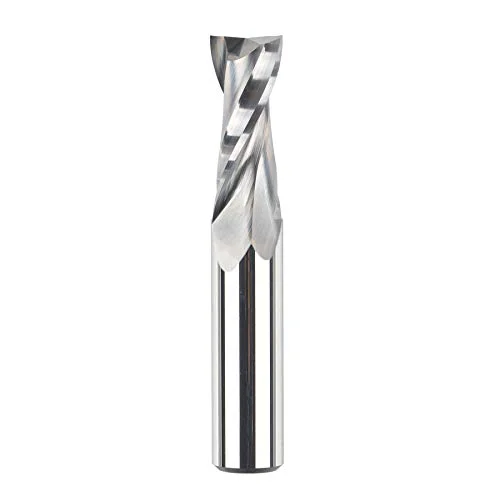 |
SpeTool 1/2" Upcut Spiral Router Bit – $62.99 This is the bit style recommended in the router method above: solid-carbide up-cut spiral flutes clear chips upward as you cut, instead of packing at the bottom of a deep slot.
|
Clamp the workpiece down and clamp a straightedge or use an edge guide to keep the router on line — freehand plunging drifts on anything deeper than about 1/4 inch. Set the bit to your first-pass depth, plunge, and rout the full length of the slot in one pass before going deeper. Repeat, resetting the depth stop each time, until you reach full depth.
Bit Choice: Why Up-Cut Beats a Plain Straight Bit for Deep Cuts
A basic straight bit works fine for shallow grooves, but once you’re past roughly an inch deep, chip evacuation becomes the real problem, not cutting ability. A spiral up-cut bit pulls waste up and out of the slot as it cuts, which keeps the flutes from packing with chips, reduces heat buildup, and lowers the odds of the bit burning the wood or snapping mid-cut. The tradeoff is that up-cut bits can chip the top edge of the slot slightly on the exit side. If the top edge will show, score along both cut lines with a marking knife and a straightedge before routing — that single step prevents most tearout regardless of which bit you use. A down-cut spiral bit gives a cleaner top edge but packs chips at the bottom on deep cuts, so save it for slots under about 3/4 inch deep.
The Depth-Per-Pass Rule (Why “Just Plunge to Depth” Is Bad Advice)
Plunging straight to full depth in one motion — the advice you’ll still find on plenty of pages — is exactly how bits snap and how you get a scorched, wandering slot instead of a straight one. The bit has to clear all the waste through the same narrow channel it just cut, and in hardwood that channel packs with chips fast, which is what causes the burning. Keep each pass to roughly a third of the bit’s diameter in hardwood (maple, oak, walnut) and up to half the diameter in softer woods like pine or poplar. For a 1/2-inch bit, that’s about 3/16 inch per pass in hardwood. On a slot deeper than an inch, that means three to five passes, not one. It takes longer, but it’s the difference between a bit that lasts for years and one that overheats and dulls on its first deep cut.
Table Saw Method: Best for Wide, Straight Slots
For a slot that runs straight across a board’s full width — a shelf-support dado or a drawer-bottom groove, for example — a table saw fitted with a dado blade stack is faster than a router and doesn’t require clamping a straightedge for every cut. Build the stack to slightly under your target width using chipper blades and shims, make a test cut in scrap, and sneak up on the exact width with thin shims rather than guessing on the first pass in your actual workpiece.
Set the blade height for the first pass at roughly a third of the final depth, clamp a stop block to the fence if the slot doesn’t run the full length of the board, and run the workpiece through with a push block. Raise the blade in similar increments for each following pass rather than jumping straight to full depth — the same overheating and burning risk applies to a dado stack as it does to a router bit, just with a wider cut clearing more waste per pass. If you’re not sure what dado blade size fits your saw, check that before you buy a stack, since not every 10-inch saw accepts the same maximum stack width.
No Router or Table Saw? Drill-and-Chisel Method
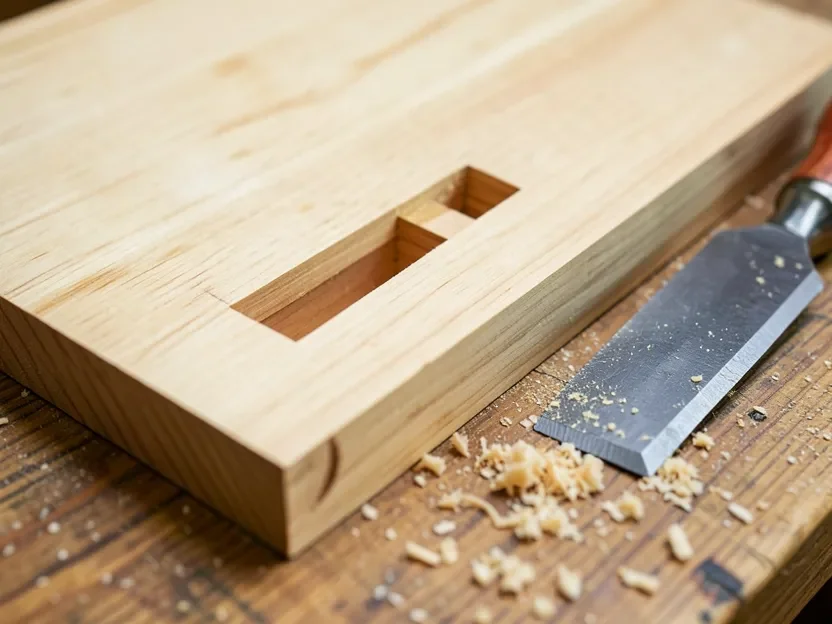
This is the traditional way to cut a mortise by hand, and it’s still the right call for a single slot when you don’t want to set up a router or a dado stack for one cut. Mark both cut lines, then drill a series of overlapping holes down the center of the slot with a Forstner or brad-point bit, staying about 1/16 inch inside your lines. Clear the waste between the holes with a bevel-edged chisel, working from both ends toward the middle in light passes rather than trying to pop out the whole waste section at once.
Once the bulk is out, pare the walls flat and square by holding the chisel vertical against a clamped guide block and working down in thin shavings. A band saw or jigsaw can rough out a wide slot faster than a chisel alone if you’re starting from a drilled or bored-out channel, then finish the walls the same way.
Fixing Tearout, Wandering Cuts, and Burn Marks
Tearout Along the Top Edge
Score both cut lines with a marking knife and a straightedge before you rout or saw. The knife line severs the wood fibers cleanly so the bit or blade can’t tear past it. Skipping this step is the single most common cause of ragged edges on an otherwise well-cut slot.
The Bit or Blade Wandering Off Line
Wandering almost always means the tool is being asked to remove too much material in one pass, or there’s nothing physically guiding it. Add a clamped straightedge or edge guide if you’re routing freehand, and drop back to a lighter depth-per-pass. A dull bit or blade makes wandering worse because it’s cutting less efficiently and pushing sideways into the wood instead of through it.
Burn Marks on the Slot Walls
Burning is friction and packed chips, not just a dull bit. Keep the pass depth conservative, keep the tool moving at a steady feed rate instead of pausing mid-cut, and clear chips out of the slot between passes on a deep cut rather than routing through an already-packed channel. If a bit is scorching wood even at a light depth-per-pass, it’s telling you it’s dull — sharpen or replace it before continuing.
Finishing the Slot
Once the slot is at full depth, square up the corners with a chisel if the piece it’s joining has square shoulders — a router bit always leaves round corners. Lightly sand the walls with sandpaper wrapped around a thin dowel or a folded scrap, working in the direction of the grain, then wipe out the dust before test-fitting. If the slot will stay visible (a decorative groove or an inlay channel), seal it with the same finish as the rest of the piece so it doesn’t absorb moisture at a different rate than the surrounding wood and telegraph a line through the finish later.
Frequently Asked Questions
How deep can you cut in one pass with a router?
Keep each pass to about a third of the bit’s diameter in hardwood and up to half the diameter in softwood. For a 1/2-inch bit, that’s roughly 3/16 inch per pass in hardwood, so a 1-inch-deep slot needs three to five passes rather than one.
What’s the best router bit for cutting deep slots in wood?
A spiral up-cut bit is the best default for deep slots because it pulls chips up and out of the cut instead of letting them pack at the bottom, which keeps the bit cooler and reduces the risk of burning. Score the top edge with a marking knife first if tearout on the top surface is a concern.
Can you cut a deep slot without a router?
Yes. A table saw with a dado blade stack cuts wide, straight slots faster than a router. For a single mortise or a one-off slot, drilling a series of overlapping holes with a Forstner bit and paring the waste out with a chisel works with no power tool beyond a drill.
Conclusion
Pick the method that fits the slot: a router with an up-cut bit for mortises and curved or stopped slots, a dado stack for wide straight cuts across a board, or a drill and chisel when you don’t want to set up a power tool for one cut. Whichever tool you use, the depth-per-pass rule is what actually determines whether the slot comes out clean or burned and wandering — score your lines first, take it in light passes, and let the tool clear the waste instead of forcing it.
Sponsored / affiliate links. As an Amazon Associate I earn from qualifying purchases. I may earn additional commission from eligible campaigns.