Can You Cut POLYWOOD? Warranty Rules and HDPE Cutting Tips
POLYWOOD is not wood. It is HDPE plastic lumber that the company uses only inside its finished furniture, so you usually cannot buy POLYWOOD boards to cut, and the maker says modifying furniture can void the warranty. If what you actually have is generic plastic lumber, it cuts well with a sharp carbide blade that has few, widely spaced teeth and a slow, steady feed.
That is the opposite of the advice many guides give for this material. A fine-tooth blade is the classic choice for smooth wood cuts, but for plastic lumber it packs chips, builds heat, and smears the edge. This guide separates the three situations people usually mean by “cut Polywood”: modifying furniture you own, sourcing boards for a project, and cutting generic HDPE lumber, with the manufacturer’s own words where they exist.
What POLYWOOD Is and Why You Cannot Buy It by the Board
Best Few-Tooth Blade Pick
 |
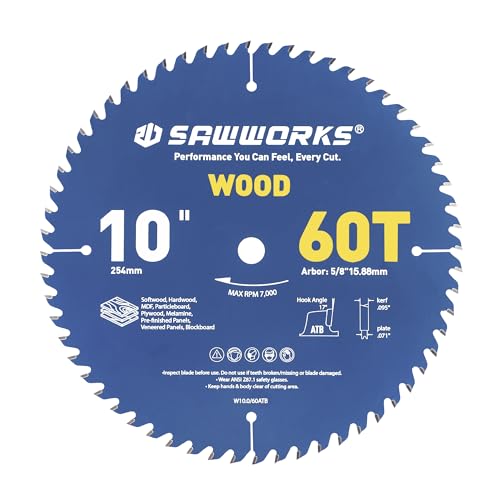
DEWALT 7-1/4 Inch 24-Tooth Carbide Circular Saw Blade (DWA171424), $9.98 Plastic lumber makers say wider tooth spacing and carbide teeth cut cleanest, and this 24-tooth carbide blade fits a standard circular saw.
|
As an Amazon Associate we earn from qualifying purchases.
POLYWOOD lumber is made from high-density polyethylene (HDPE), with recycled plastic content and UV inhibitors and pigments blended through the whole board rather than coated on the surface. There is no wood in it. Its own material page says the company sends 99 percent of production scraps back to be remade into new lumber.
The catch for anyone wanting to cut it: POLYWOOD’s help center states that it does not sell its lumber as raw or dimensional material for personal or commercial projects. It also separates its brand from the generic category. “Poly lumber” can mean any plastic lumber, while POLYWOOD is a registered brand name for the material used only in its own furniture and accessories. The company also says it does not make custom or one-off products and does not produce decking, window shutters or privacy fences.
So a request to cut a POLYWOOD board usually means one of three things: you own a POLYWOOD chair or table and want to change it, you have an offcut or a damaged piece, or you bought generic plastic lumber and the name got mixed up. Each has a different answer.
| Your situation | Can you cut it? | What to do instead |
|---|---|---|
| Finished POLYWOOD furniture you own | Not recommended. POLYWOOD lists structural changes as warranty-voiding | Ask POLYWOOD about replacement lumber parts through its help center |
| You want POLYWOOD boards for a project | Not available. POLYWOOD does not sell raw lumber | Buy generic HDPE plastic lumber and follow the cutting steps below |
| You have generic HDPE plastic lumber | Yes, with standard saws | Carbide blade, few teeth, slow feed, pre-drill screws |
| Bolting POLYWOOD furniture to a deck (commercial use) | Supported under the commercial warranty with proper technique | Stainless steel hardware and pilot holes, per POLYWOOD |
What POLYWOOD Says About Modifying Its Lumber
I read POLYWOOD’s help center article on modifying POLYWOOD furniture. It says the lumber is designed to be low maintenance and does not need painting, sanding or refinishing, and that those modifications void the warranty. It explains that HDPE is a non-porous plastic that does not hold paint or stain well, so any applied finish will eventually chip or peel, and that sanding can damage the wood-like texture.
On structural changes it is direct: drilling holes or adding wheels can make furniture unsafe and will void the warranty. The article does not include a step-by-step for cutting, and I found no POLYWOOD page that recommends cutting finished furniture. Treat any cut, notch or new hole in your own furniture as something the company does not support.
For care, the company recommends mild soap, water and a soft-bristle brush every few months. If you are weighing what else you can do to the finish, see our guides on sanding POLYWOOD and painting POLYWOOD.
The Myth to Drop: Fine-Tooth Blades Are Not Better for Plastic Lumber
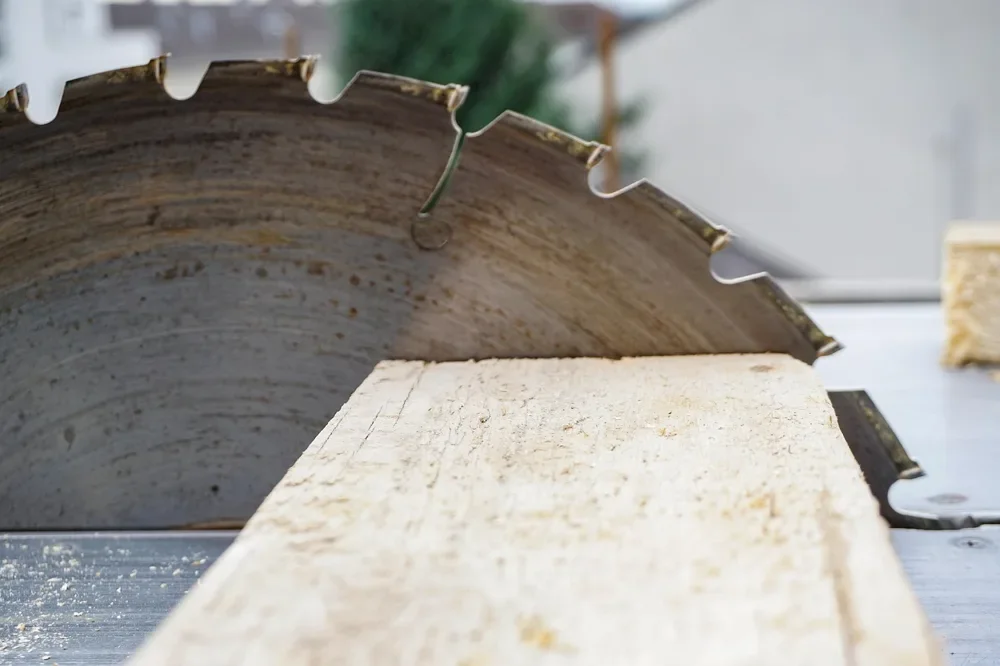
The old version of this page said to use a fine-tooth blade for a smooth finish. For plastic lumber, manufacturers say the reverse. Resco Plastics, which makes recycled HDPE lumber, says in its FAQ that wider tooth spacing (fewer teeth per inch) works better because there is less heat build-up with power tools, and that any standard wood or metal cutting saw gives good results. The same rule applies to hand saws.
HDPE softens and smears far more easily than wood. A blade with many closely spaced teeth cuts small chips, and small chips do not clear the kerf. The teeth then rub instead of shear, friction turns to heat, and the plastic can gum up on the blade and fuse to the edge.
How to Cut Generic HDPE Plastic Lumber Step by Step
These steps combine Resco’s published guidance (MAXiTUF plastic lumber FAQ) with standard saw-safety practice. Apply them to generic plastic lumber, not to POLYWOOD furniture.
- Let the boards reach one temperature. Plastic lumber expands and contracts with heat. Resco describes a deck job where boards from the sunny top of a stack were cut warm, then ended up 3/16 inch shorter than the rest as they cooled. Keep the stack in shade or under a tarp so every board is the same temperature when you measure.
- Mark the cut with a square and a pencil or marker. Clamp the board so it cannot creep, with the cut line hanging past the support.
- Fit a sharp carbide blade with few teeth. A 24-tooth ripping or framing blade is a typical choice. Carbide, Resco notes, gives longer blade life and clean, crisp cuts on fast-turning saws.
- Start with a slow feed and work up. If plastic builds up on the sides of the blade, Resco’s advice is to reduce the feed rate.
- Let the saw reach full speed before it touches the board, then push at a steady pace without stopping mid-cut. Pausing with the blade spinning in the kerf is what melts and welds the plastic.
- Clean the edge. Resco says its lumber can be sanded and machined. If your board came from a different maker, check that maker’s instructions first.
Resco also notes that band saws, table saws, radial saws and reciprocating saws all work on plastic lumber. For curves, a jigsaw with a coarse blade is a reasonable choice, but I did not find a manufacturer source for a specific jigsaw blade, so test on scrap first.
Fastening and Drilling After the Cut
Cutting is only half the job on a plastic lumber project. Resco says screws are used extensively and give excellent results, but pre-drilling is a must. To pick the drill size, measure the root diameter of the screw and choose a bit of the same diameter. It prefers square-drive screws over Phillips, and suggests a tiny drop of mineral oil on long screws to cut friction. If you are working on composite decking specifically, our guide to composite decking fasteners covers hardware in more detail.
If your project involves joining HDPE with adhesive rather than screws, read can you glue HDPE first, because polyethylene resists most glues.
Safety While Cutting Plastic Lumber
- Wear safety glasses and a dust mask. Plastic cutting produces chips, stringy shavings and fine dust.
- Use hearing protection with a circular saw or table saw.
- Keep hands clear of the blade path and clamp the work rather than holding it.
- Watch for smoke or the smell of hot plastic. If you see or smell it, stop, let the blade cool, and reduce the feed rate. Check the safety data sheet from your lumber’s maker for its specific guidance.
- Cut outdoors or in a ventilated space, and sweep up chips so they do not become a slip hazard.
Frequently Asked Questions
Can you cut POLYWOOD furniture?
Technically a saw will go through it, but POLYWOOD lists structural changes such as drilling holes or adding wheels as modifications that can make furniture unsafe and void the warranty. Cutting a piece of finished furniture is a structural change too, so contact POLYWOOD about replacement lumber parts instead of cutting.
Can you buy POLYWOOD lumber to cut for a project?
No. POLYWOOD says it does not sell its lumber as raw or dimensional material for personal or commercial projects. It is made only for its own finished furniture. For a project, buy generic HDPE plastic lumber instead.
What blade should you use to cut plastic lumber?
Use a sharp carbide-tipped blade with wide tooth spacing (fewer teeth). Plastic lumber makers report less heat build-up with fewer teeth per inch, and a slower feed rate if plastic starts to build up on the sides of the blade.
Is it safe to cut HDPE plastic lumber indoors?
Wear eye protection and a dust mask, cut in a ventilated space, and keep the blade moving so it shears the plastic rather than melting it. If you see smoke or smell hot plastic, stop and let the blade cool. Check the safety data sheet from your lumber’s maker for its specific guidance.
Can you sand the edges after cutting?
POLYWOOD says its own lumber should not be sanded because it scratches the surface and voids the warranty. Resco, a generic plastic lumber maker, says its product can be sanded, but other brands may differ, so check your maker’s instructions.
Conclusion
Cutting POLYWOOD is mostly a question about what you actually have. Finished POLYWOOD furniture is not something the company wants cut, drilled or sanded, and it does not sell raw boards. Generic HDPE plastic lumber is a different story: it cuts with standard saws, but only if you use sharp carbide teeth, a wide tooth spacing and a slow, steady feed. Get the material and the blade right before you make the first cut.
Sponsored / affiliate links. As an Amazon Associate I earn from qualifying purchases. I may earn additional commission from eligible campaigns.