How to Secure Lumber in a Truck Bed (So It Doesn’t Become Road Debris)
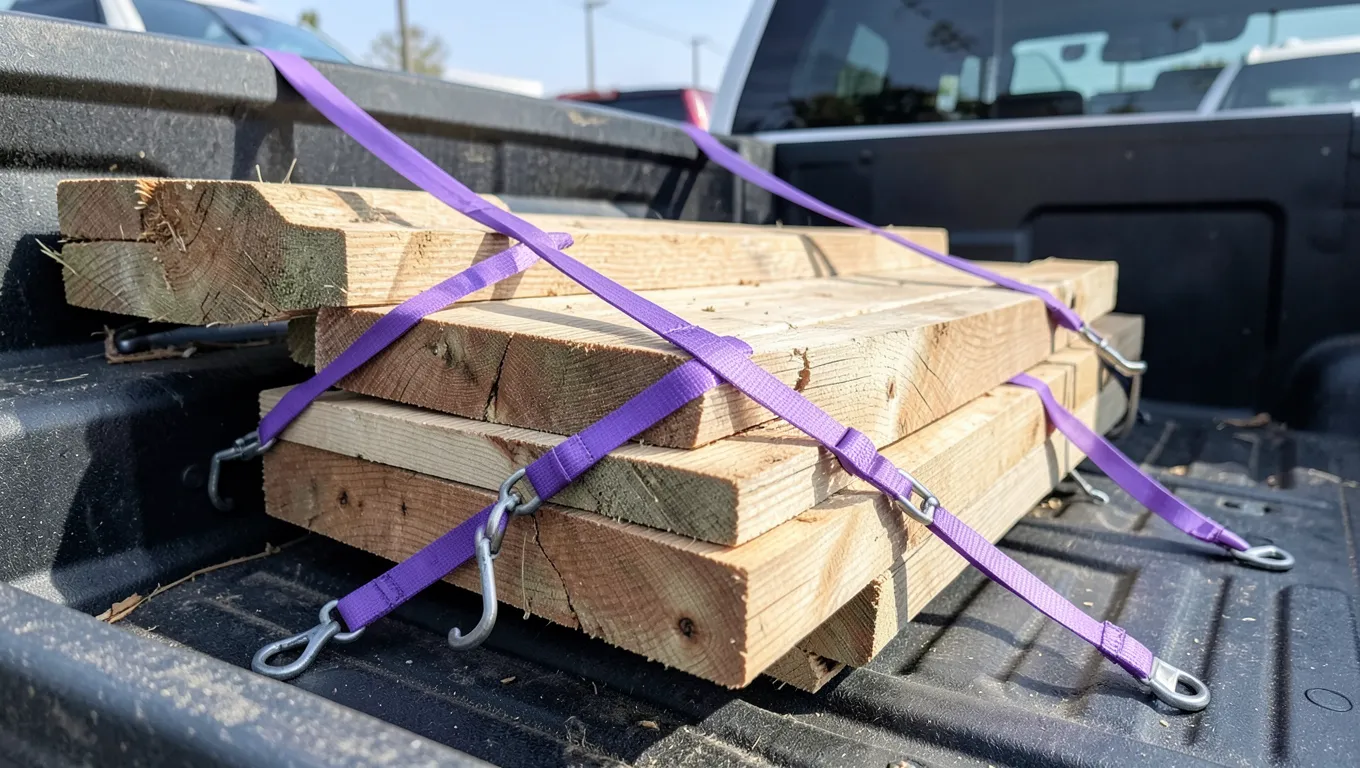
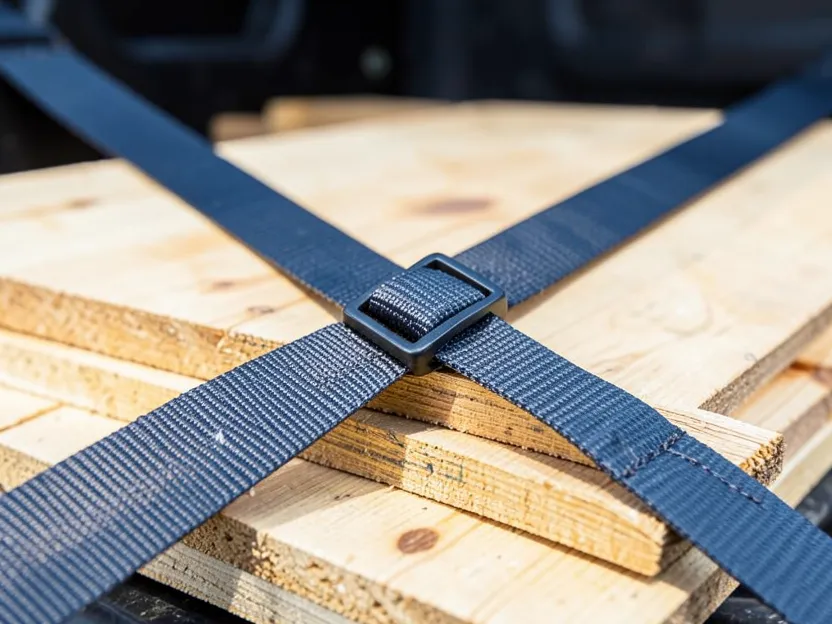
Use ratchet straps, not rope or bungee cords, in an X pattern over the load, with the heaviest boards on the bottom and the load’s weight centered over or just ahead of the rear axle. Bungee cords stretch under load and let lumber bounce with every bump; ratchet webbing only stretches about 2-3% once tightened, so it actually holds the stack still.
That matters more than most drivers assume. AAA’s crash-data research found road debris was a factor in roughly 53,000 crashes a year in the U.S. between 2018 and 2023, and about two-thirds of those came from unsecured cargo or improper maintenance, not blown tires or vehicle parts. Every state requires a secured load by law, and a citation for an unsecured load that causes a crash can run anywhere from a small fine to $2,500 and, in some states, jail time. A 2×10 that comes off a truck bed at 55 mph isn’t a minor inconvenience for the driver behind you.
Pick Straps Over Rope or Bungees
Best Ratchet Straps for Lumber
 |
National Standard Ratchet Tie-Down Straps (4-Pack, 12 ft) – $36.99 Four straps rated well past what a stack of lumber needs, enough to run a proper X pattern with a spare pair left over.
|
All three “hold the load down” in theory, but they fail differently. Rope needs the right knot (a trucker’s hitch is the only one that actually lets you tension it) and it loosens as fibers relax, so a rope-tied load that felt tight in the driveway is often noticeably looser after 20 highway miles. Bungee cords are the worst choice for lumber specifically: their entire design is elastic give, which means the load can shift a few inches with every pothole, and a hook that slips off under tension snaps back hard enough to cause a real eye injury.
A ratchet strap rated well above your load’s total weight solves both problems at once. Look at the strap’s working load limit (WLL), not its “break strength” – the WLL is usually rated around a third of the break strength and is the number that actually matters for safety margin. A bundle of ten 8-foot 2x4s weighs around 130 lbs; a pair of straps rated 500 lbs WLL each gives you a wide safety margin even before accounting for the loading you get from sudden braking.
Load and Strap It in an X Pattern
Put the heaviest, longest boards on the bottom of the stack and shorter or lighter pieces on top – this keeps the load’s center of gravity low and stops top pieces from becoming projectiles if a strap does loosen. Run at least two straps crossed diagonally over the stack (an X, not two parallel lines), anchoring each end to a bed-mounted tie-down point or the truck’s frame rail, never to a tailgate hinge or a plastic bed rail cap. The X pattern resists both forward-shift under braking and side-shift on turns, which a single straight-over strap doesn’t do nearly as well.
Anything longer than about 8 feet gets a third strap near the far end of the load, and anything under about 4 feet in total lumber length can usually get by on two straps if the stack is tight and low. Snug each ratchet down until the strap stops flexing when you push on it – over-tightening thin boards can actually crack them, so stop at “solid, no give” rather than cranking as hard as the ratchet allows.
Sheet Goods Need a Different Approach
Plywood, MDF, and other flat sheet goods behave nothing like a bundle of boards once you’re moving. A stack of 2x4s presents almost no flat surface to the wind; a 4×8 sheet lying flat is a sail, and at highway speed the lift generated under the leading edge can be enough to work a loosely strapped sheet right out from under its straps. If you’re hauling sheet goods specifically, see our guide on securing plywood in a truck bed for the strap placement that actually accounts for that lift, rather than treating it like a stack of dimensional lumber.
Keep the Weight Over the Axle
Where the load sits in the bed changes how the truck handles, not just whether the lumber stays put. Weight stacked too far back, hanging well past the tailgate, lifts weight off the front axle and can make steering feel vague or the truck wander at speed; weight jammed hard against the cab can overload the front axle and make the truck feel nose-heavy under braking. Centering the load’s weight over or just ahead of the rear axle keeps the truck’s handling close to normal and keeps tongue-style leverage off the tailgate.
If any part of the load extends past the bed, most states require a red flag on the overhang during daylight and a red light at night once you clear roughly 4 feet past the bumper, with a hard cutoff around 8-12 feet total overhang depending on the state’s own vehicle code. If you’re specifically hauling long stock like a 16-foot board that has to extend past the tailgate, our guide on carrying 16-foot boards in a pickup covers the flagging rules and legal overhang limits in detail – it’s a different problem than simply keeping a shorter load from sliding around.
Recheck the Straps After the First Few Miles
New webbing seats itself under load – a strap that was rock-solid in the driveway will almost always have a little slack after the first 10-15 minutes of driving, as the ratchet mechanism and stitching settle. Pull over once, early in the trip, and give every strap a hand-check; re-ratchet anything that’s gone soft. On a longer haul, a second check after an hour of highway driving is worth the two minutes it takes, especially in hot weather, when webbing can stretch slightly more than it does in cool conditions.
Frequently Asked Questions
How do I secure lumber in my truck bed?
Use ratchet straps, not rope or bungee cords, crossed in an X pattern over the load and anchored to the bed’s tie-down points or frame rails. Put the heaviest boards on the bottom, keep the load centered over the rear axle, and recheck the straps after the first few miles of driving.
Can I use bungee cords instead of ratchet straps?
Not for lumber. Bungee cords stretch under load, which lets the stack bounce and shift with every bump, and a hook that slips off under tension can snap back hard enough to cause an eye injury. Ratchet straps hold their tension and only stretch about 2-3%, which is what actually keeps a stack of boards from moving.
Do I need to cover lumber in the truck bed?
It’s not required for safety the way strapping is, but a tarp protects the wood from rain and road grime on longer hauls. It doesn’t replace straps – a tarp alone does nothing to stop the load from shifting or sliding out.
How much overhang past the tailgate is legal?
It varies by state, but most require a red flag on any load extending about 4 feet or more past the rear bumper during the day (a red light at night), with an absolute overhang limit typically between 8 and 12 feet total. Check your specific state’s vehicle code before hauling anything that extends well past the tailgate.
Bottom Line
Ratchet straps rated for the load, crossed in an X pattern, anchored to real tie-down points, with the weight centered over the rear axle – that combination handles the vast majority of truck-bed lumber hauls safely. Sheet goods and loads that overhang the tailgate are the two situations that need extra care beyond the basics above, so check the linked guides for those specific cases before you head out.
Sponsored / affiliate links. As an Amazon Associate I earn from qualifying purchases. I may earn additional commission from eligible campaigns.