How to Carry 16-Foot Boards in a Pickup (Bed Length & Legal Overhang)
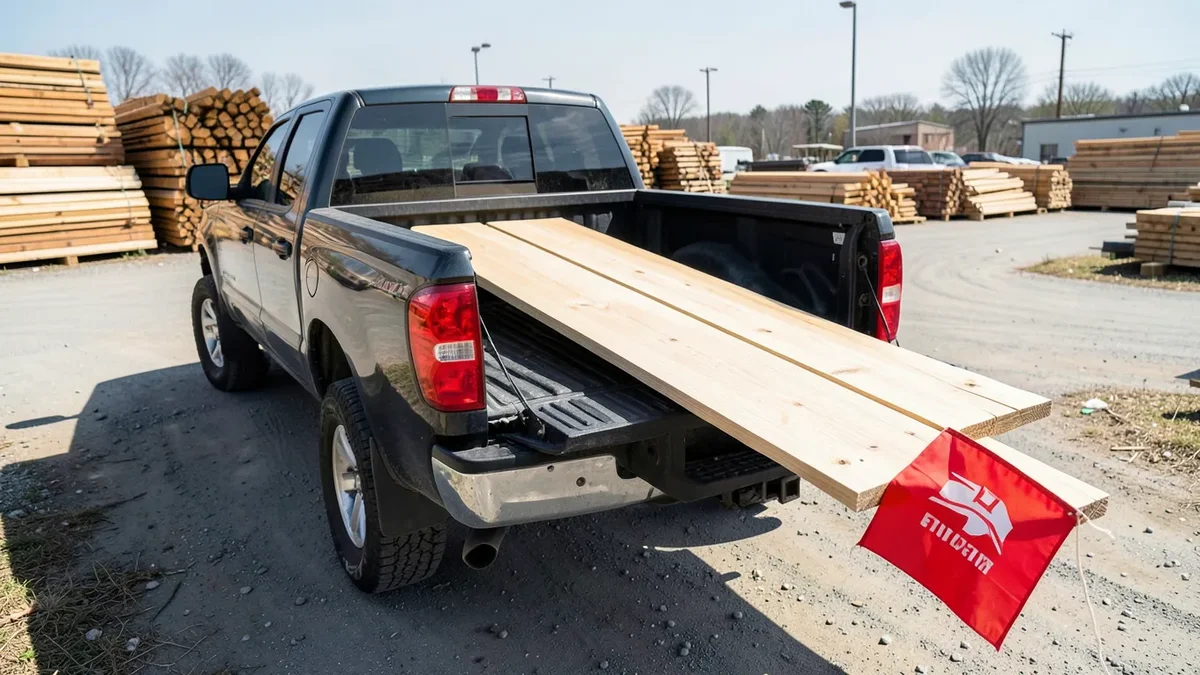
Yes, a standard pickup can carry 16-foot boards — even a short-bed truck — but the board will overhang far enough past the tailgate that most states legally require a red flag by day and a red light or reflector by night. The real question isn’t whether it fits; it’s how much sticks out, how you support that overhang so the board doesn’t whip or snap, and what the law says about flagging it.
Do the math up front and this stops being intimidating. A standard 6.5-foot bed with the tailgate down gives you roughly 8.5 feet of support. Subtract that from a 16-foot board and you’ve got about 7.5 feet hanging past the tailgate — well beyond the 3–4 foot overhang that triggers a flagging requirement in most states. That’s not a reason to avoid the trip; it’s just the number you need to plan around.
How Much Bed You Actually Have (By Truck Size)
Best Tie-Down Straps For Long Loads
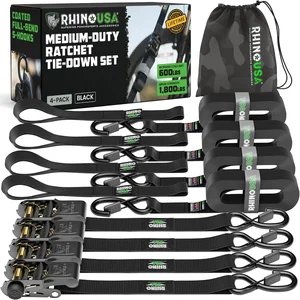 |
Rhino USA Ratchet Tie Down Straps (4-Pack) – $36.90 Four 15-ft ratchet straps with soft-loop ends, rated well past what a stack of boards weighs — enough for the three-point tie-down pattern this article recommends.
|
| Bed Length | Typical Trucks | Support With Tailgate Down | Overhang With a 16-ft Board |
|---|---|---|---|
| Short bed (~5.5 ft) | Crew cab F-150, Silverado, Ram 1500 | ~7.5 ft | ~8.5 ft |
| Standard bed (~6.5 ft) | Most extended/double cab half-tons | ~8.5 ft | ~7.5 ft |
| Long bed (~8 ft) | Regular cab work trucks, some 3/4-ton models | ~10 ft | ~6 ft |
Every one of these puts you past the point where flagging matters — even a long bed. The difference is really about stability, not legality: less support under the board means more flex and bounce over bumps, which is the actual mechanism behind boards snapping or sliding out mid-drive.
Loading And Tying Down The Right Way
Skip the single strap across the middle — it’s the most common mistake and the reason boards shift on tight turns. Use three tie points instead: one near the cab where the board rests on the bed floor or a hitch-mount bed extender, one at the tailgate hinge point, and one near the rear tip of the overhang. A ratchet strap at each point beats rope or bungee cords, which stretch, slip, and aren’t rated for the repeated jolt of highway driving.
- Inspect the boards first. Skip anything with a large knot, crack, or visible rot near the middle — that’s exactly where flex concentrates stress and boards fail mid-transport.
- Support the overhang, don’t just anchor the front. A bed extender or a sturdy sawhorse clamped near the tailgate keeps the unsupported length from bouncing violently over bumps.
- Cross-strap, don’t just loop. Running a strap in an X pattern across multiple boards keeps them from spreading sideways, not just lifting up.
- Tug-test every strap before you pull out of the driveway, and again after the first five minutes of driving — straps settle and loosen as the load shifts slightly.
- Attach the flag or reflector at the absolute rearmost point of the overhang, not partway back — that’s the point drivers behind you need to see.
Driving With The Load
A 7–8 foot unsupported overhang acts like a diving board at highway speed — it flexes with every seam and pothole. Keep speeds moderate, add extra following distance since braking distance increases with a rear-heavy load, and take turns wider and slower than feels necessary. Crosswinds matter more than most people expect with long boards; a gust catching the exposed length can tug the truck sideways enough to notice, so ease off the throttle in open, windy stretches.
If Your Truck Genuinely Can’t Handle It
Not every pickup is the right tool for a 16-foot haul, especially a short-bed truck already stacked with other cargo. If the overhang, the weight, or the wind exposure feels like too much, a utility trailer or roof rack setup spreads the load more evenly and cuts the unsupported overhang dramatically — worth considering for a regular hauling need rather than a one-time trip. Our guide on securing lumber in a truck bed covers strap patterns and tie-down hardware in more depth if you want to dial in the technique further. No full-size truck at all? Our guide on transporting 16-foot boards without one covers hitch-mount bed extenders, roof racks, and when delivery is just the better call.
Frequently Asked Questions
How Do You Transport Long Boards In A Pickup?
Lower the tailgate for extra support length, tie the boards down at three points with ratchet straps rather than rope, and attach a red flag or reflector at the rearmost point of the overhang since it will almost always exceed your state’s flagging threshold.
Can A Pickup Carry 16-Foot Boards?
Yes — any standard pickup bed, short or long, can carry a 16-foot board. The board will overhang the tailgate by roughly 6 to 8.5 feet depending on your bed length, so a flag or reflector on the rear tip is required in most states.
What Tools Help Secure Long Boards?
Ratchet straps at three points, a bed extender or sawhorse to support the overhang, and a visible red flag or reflector for the overhanging end. Bungee cords and rope alone aren’t rated for the vibration and load shift of highway driving.
Is It Legal To Drive With Boards Sticking Out That Far?
Yes, as long as you flag or light the overhang per your state’s rule — typically required once the load extends 3 to 4 feet past the rear bumper. Since a 16-foot board clears that threshold in any pickup, plan on flagging it every time rather than checking case by case.
Bottom Line
A 16-foot board will overhang any pickup bed by 6 to 8.5 feet, so the job isn’t fitting it — it’s supporting that overhang with real tie-down points and flagging it so you’re both legal and visible to traffic behind you. Get those two things right and the length stops being a problem.
Sponsored / affiliate links. As an Amazon Associate I earn from qualifying purchases. I may earn additional commission from eligible campaigns.