How to Make a Texas Star Out of Wood: DIY Mastery
A traditional Texas star isn’t cut from one board — it’s built from five identical wood strips overlapped in a pinwheel pattern, then glued and screwed where they cross. That lapped-board method is what gives a barn star its dimensional, woven look, and it’s genuinely easier than trying to cut a five-point star from a single solid panel.
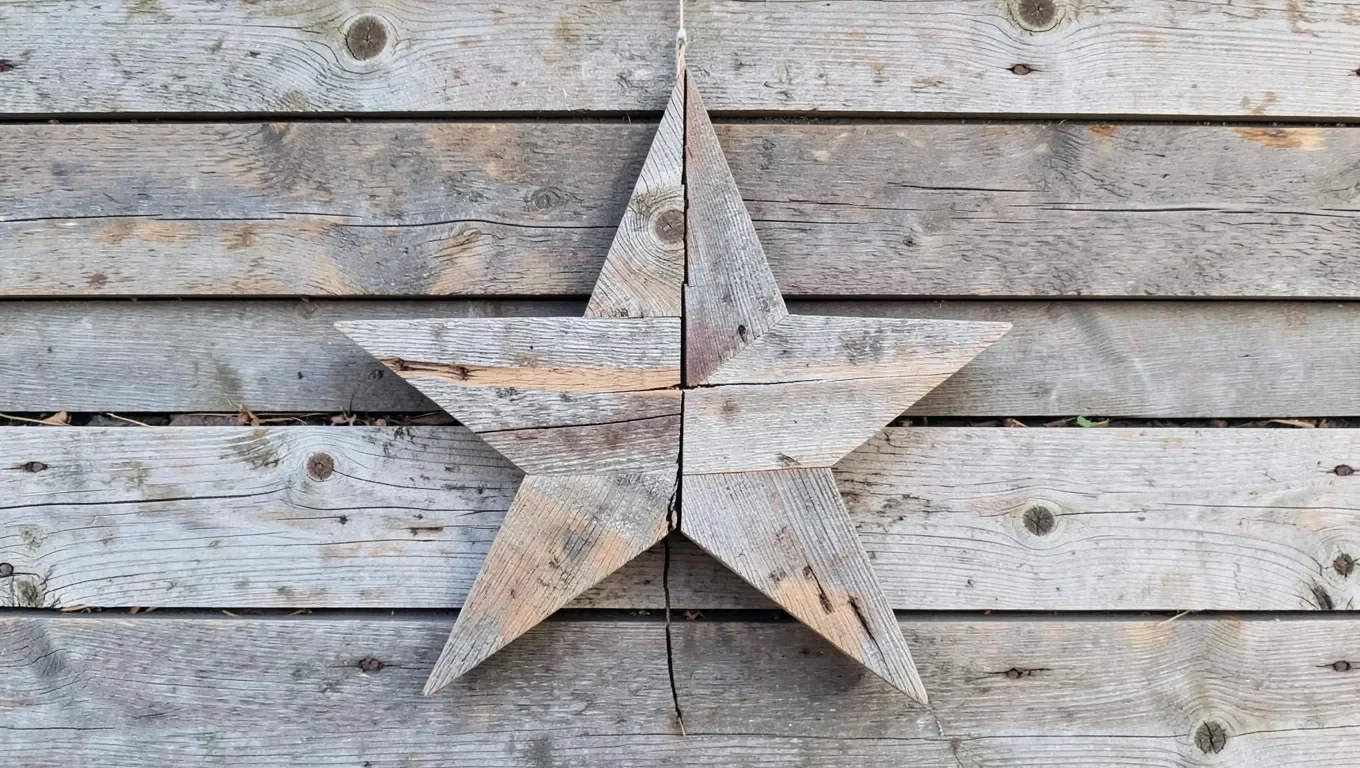
Materials And Tools You’ll Need
Best For Clean Star-Point Cuts
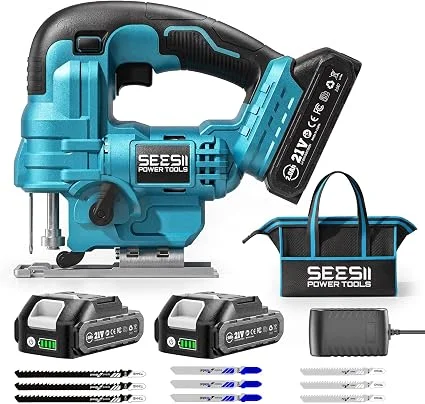 |
SEESII Cordless Jigsaw Kit – $69.98 Variable-speed cutting with a bevel function makes it easy to angle-cut the point ends of each star strip cleanly.
|
You’ll need five identical wood strips (1×4 or 1×6 works well for a wall-hung star, roughly 24-30 inches long for a 2-foot star), wood glue, exterior-rated screws, a saw for cutting the strips and their angled points, a speed square, a tape measure, and sandpaper. Pine keeps the project affordable and easy to cut; cedar costs more but resists outdoor rot better if the star will hang outside.
Cutting The Strips
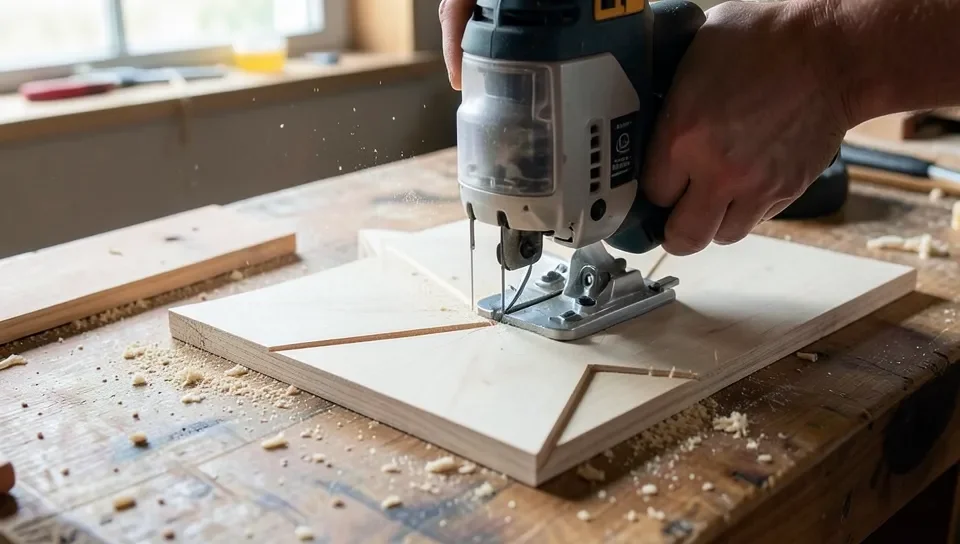
Cut all five strips to the exact same length — any variation shows immediately once they’re arranged into a star, since the points won’t line up evenly. Each strip’s two ends get cut to a point: mark the center of the strip’s width at each end, then cut two angled lines meeting at that center point (roughly a 22-24 degree angle from the strip’s edge works for a standard 5-point layout). Clamp the strip securely and cut slowly — a jigsaw’s blade can wander on angled cuts if the material isn’t held firmly.
Arranging The Pinwheel Pattern
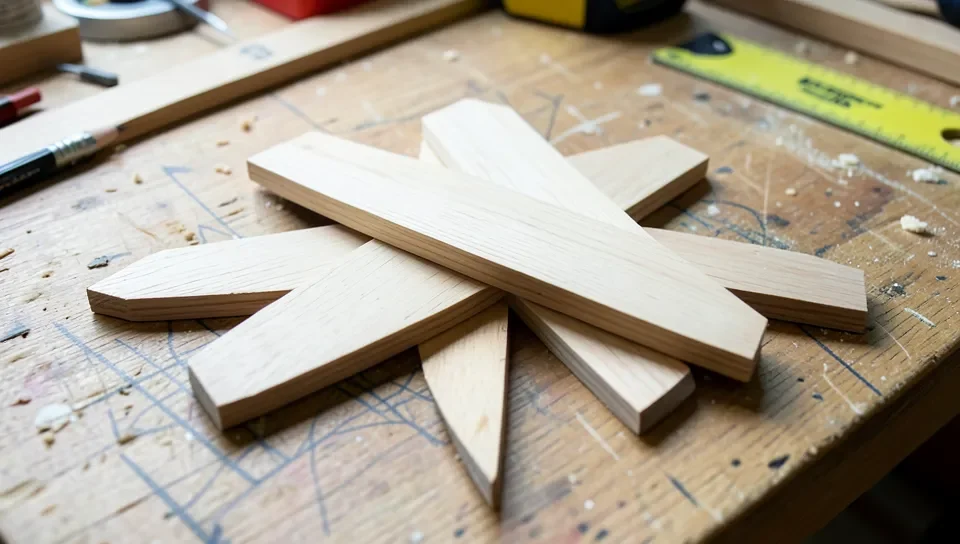
Lay the five strips on a flat surface and overlap them one at a time in the same rotational direction — each strip crosses over the next, like a pinwheel, until the fifth strip closes the loop back under the first. This overlapping is what forms the five points and the small pentagon shape in the center. Adjust each strip until the points are evenly spaced and the same length before committing to glue — it’s much easier to nudge a dry-laid strip than to redo a glued joint.
Gluing And Fastening The Joints
- Once the pinwheel layout looks even, lift each overlap slightly and apply wood glue to the contact points.
- Press the joints back together and clamp them, or weigh them down flat, while the glue sets (check your glue’s label for clamp time — most need 30-60 minutes).
- Once the glue has set, drive one or two exterior-rated screws through each overlap from the back side, so the fasteners stay hidden on the display side.
- Let the glue fully cure (usually 24 hours) before sanding or moving the star, even though it feels solid sooner.
Sanding And Finishing
Sand all edges and the point tips with fine-grit sandpaper, working in the direction of the grain to avoid visible scratches. From here you have three realistic finish options: leave it raw for the classic weathered-barn look (pine will gray naturally outdoors over time), apply a wood stain to deepen the existing grain color, or paint it — primer first, then thin coats rather than one thick one to avoid drips and hide less of the wood texture. A clear exterior sealant on top of any of these three options adds real weather resistance if the star will live outside.
Mounting And Displaying Your Star
Attach a sawtooth hanger or a picture-hanging bracket to the back of one point before finishing, so the hardware is already in place. For outdoor mounting, use exterior-rated screws or hooks rated for the star’s actual weight, and check the mount after any major storm — wind load on a flat panel like this is higher than it looks, especially somewhere exposed like a gable end or fence line.
Maintenance And Care
Dust with a soft cloth or brush attachment regularly. For an outdoor star, reapply exterior sealant every couple of years, since UV and moisture exposure break it down over time even on cedar. Check the glued joints periodically for any separation — catching a loose joint early means a quick re-glue instead of a full rebuild.
Frequently Asked Questions
How Do I Start Making A Texas Star?
Cut five identical wood strips with pointed ends, then dry-fit them in an overlapping pinwheel pattern before gluing. This lapped-board method, not cutting a star from one solid board, is how a real Texas barn star gets its dimensional look.
What Wood Is Best For A Texas Star?
Pine is affordable and easy to cut for an indoor star. Cedar costs more but resists rot and weathering far better, which matters if the star will hang outdoors. Both take paint or stain well.
How Do I Hang A Wooden Texas Star?
Attach a sawtooth hanger or bracket to the back of one point before finishing. For outdoor display, use exterior-rated hardware sized for the star’s actual weight, and re-check the mount after major storms.
Can I Customize My Texas Star Design?
Yes — strip width and length change the star’s size and point proportions, and the finish (raw, stained, or painted) changes the whole look. The lapped-board method scales up or down without changing the basic technique.
Conclusion
A Texas star is one of the more forgiving woodworking projects to build well: five matching strips, a careful pinwheel layout, glue and hidden screws at the joints. Getting the strip lengths and point angles consistent matters more than any tool you use — get that right and the star holds together and looks intentional, whether it ends up raw, stained, or painted.
Sponsored / affiliate links. As an Amazon Associate I earn from qualifying purchases. I may earn additional commission from eligible campaigns.