What Size Wood for a Cutting Board? (Thickness & Size Chart)
Cutting board wood needs to be at least 3/4 inch thick for an edge-grain board and 1.25 to 2.25 inches for end-grain — anything thinner warps within a season of dishwashing and moisture swings. A board under 3/4 inch also cannot survive repeated sanding once knife marks build up. This guide covers exact thickness by grain type, standard length-and-width sizes, and how much rough lumber to buy for your blank — for material selection itself, see our full comparison of cutting board top materials.
Insert your Affiliate Disclosure reusable block here.
Quick Answer
Use hardwood at least 3/4 inch thick for an edge-grain board, or 1.25–2.25 inches for end-grain. A 12×18-inch board covers most home kitchens; go 18×24 or larger for meal-prep-heavy households. Maple, walnut, and cherry are the three most reliable species.

How Thick Should Cutting Board Wood Be, by Grain Type?
Best Cutting Board Wood Pick
John Boos Chop-N-Slice Maple Cutting Board
Edge-grain hard maple at a thickness that meets the 3/4-to-1.25-inch range this guide recommends for everyday use.
- Best for: Home cooks who want a pre-built board sized right the first time
- Why we picked it: Reputable maple-specialist brand, correct edge-grain thickness for daily use
- Main drawback: Heavier than face-grain boards; needs two hands to move
Compare more cutting board wood options
 Option 1 THETCHRY Walnut End-Grain Board
|
 Option 2 CONSDAN USA-Grown Maple Board
|
 Option 3 Sonder LA Winsome Maple, 17x13x1.5”
|
As an Amazon Associate we earn from qualifying purchases.
Thickness requirements depend on how the board is built, not just personal preference. Face-grain, edge-grain, and end-grain boards each have a different minimum before they start to cup, crack, or flex under a knife.
| Grain Type | Minimum Thickness | Best For |
|---|---|---|
| Face grain | 3/4 inch | Lightweight serving boards, display pieces |
| Edge grain | 3/4 to 1.25 inches | Everyday prep boards, most home kitchens |
| End grain | 1.25 to 2.25 inches | Heavy chopping, butcher-block style boards |
Face-grain boards (cut from the flat side of a plank) are the thinnest and lightest, but they show knife scars fastest and are the most likely to bow if left wet on one side. Edge-grain boards (glued up from strips standing on edge) split the difference — 3/4 inch works for light use, but 1 to 1.25 inches resists warping better under daily washing. End-grain boards (the wood-block checkerboard pattern, cut across the growth rings) are self-healing under a knife but need the extra mass — drop below 1.25 inches and the end-grain blocks can pop loose from the glue joints over time.
Can a cutting board be too thick? Past 2.25 inches, added thickness stops helping and just adds weight and lumber cost — most commercial end-grain blocks top out at 2 inches for exactly this reason.
Standard Cutting Board Sizes (Length x Width Chart)
Board footprint should match the job, not just the counter space. A board sized for slicing a lime is the wrong tool for breaking down a chicken.
| Size Class | Typical Dimensions | Best Use |
|---|---|---|
| Small | 6×8 to 8×10 in | Citrus, garlic, quick snacks |
| Medium (most popular) | 12×18 in | Everyday vegetable and protein prep |
| Large | 18×24 in | Breaking down poultry, high-volume chopping |
| Extra-large | 24×36 in | Butchery, dough rolling, holiday prep |
| Round | 10–16 in diameter | Serving, charcuterie, display |
The 12×18-inch board remains the default recommendation for a first cutting board — it fits most dish racks and drying stands, still stores flat in a standard cabinet, and gives enough room for a whole chicken breast or a full bunch of herbs without crowding the blade. Households that cook in batches or prep for more than four people typically outgrow it and move up to 18×24.
How Much Wood to Buy: Board-Foot Math for Your Blank
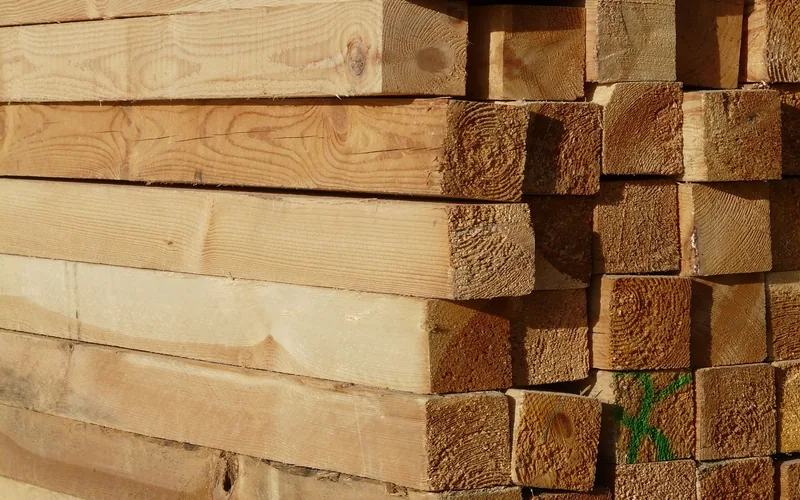
Rough lumber is sold by the board foot — one board foot equals a piece 12 inches long by 12 inches wide by 1 inch thick, or 144 cubic inches. To size your purchase: multiply length (inches) by width (inches) by thickness (inches), then divide by 144.
- Worked example: An 18×12-inch edge-grain board at 1.25 inches thick needs (18 × 12 × 1.25) ÷ 144 = 1.875 board feet of finished stock.
- Buy extra for milling loss: Rough lumber loses roughly 1/8 to 1/4 inch of thickness to jointing and planing on each face. Buy 4/4 (1-inch nominal) stock to net about 3/4 inch finished, or 5/4 stock to net roughly 1 to 1.125 inches finished.
- Add a waste margin: Add 15–20% to the board-foot total for defects, knots, and glue-up trimming — so the 1.875 board-foot example above becomes roughly 2.2 to 2.25 board feet to actually purchase.
- End-grain needs more: End-grain blanks are cut into strips, rotated 90 degrees, and re-glued, which uses more raw material per finished square inch than edge-grain — budget 25–30% extra stock over the simple board-foot formula for an end-grain blank.
📊 Janka hardness for common cutting board woods: Hard maple 1,450 lbf, teak 1,155 lbf, black walnut 1,010 lbf, black cherry 995 lbf. The ideal range for a cutting board is roughly 900–1,500 lbf — hard enough to resist gouging, soft enough not to dull a knife edge. — Source: USDA Forest Products Laboratory Janka ratings.
Types of Wood Best Suited for Cutting Boards
Hardwood is the right family for a cutting board, but not every hardwood belongs on one. Closed-grain hardwoods — wood with tight, small pores — resist absorbing moisture and bacteria better than open-grain species. Maple, walnut, cherry, and beech are the standard picks; oak and ash, despite being hardwoods, have open pores that trap moisture and are usually avoided for food-contact boards.
Which Wood Is Too Soft for a Cutting Board?
Pine, cedar, and other softwoods score under 900 on the Janka scale, which is too soft for repeated knife contact. They dent under normal chopping pressure, and those dents trap moisture and food residue that plain washing does not remove. Softwoods are fine for a decorative cedar wood board or a wall-hung display piece, but not for daily food prep.
Grain Orientation and Its Impact on Durability
Grain orientation changes how a board wears, not just how it looks. Face grain boards are cut from the broad flat side of a plank — they show the most figure and are the lightest, but knife marks cut across open grain and stay visible. Edge grain boards are glued from strips standing on their edge, so the knife meets a tighter grain pattern that hides marks better and resists warping across the width. End grain boards are built from short blocks turned so the knife strikes the end of the wood fibers — the fibers part and close back around the blade, which is easiest on knife edges and self-heals shallow cuts over time.
Maintenance Tips by Size and Wood Type
Wash by hand with warm soapy water and dry immediately — never soak, and never run a wood board through the dishwasher. Oil food-safe mineral oil into the surface monthly (weekly for a new board), and let it fully absorb before use. Larger and thicker boards hold moisture longer between uses, so give an 18×24 end-grain board more drying time on edge than a thin 12×18 board needs. For a full care routine, see our wooden cutting board cleaning guide.
Buying Pre-Sized Stock vs. Milling Your Own Blank
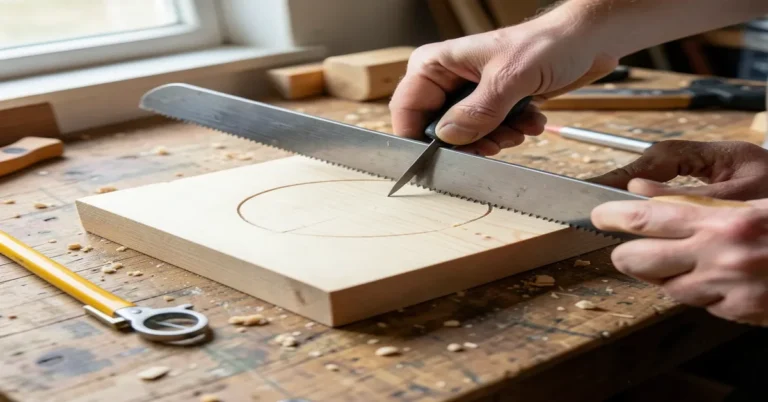
Home centers and hardwood specialty suppliers both sell surfaced 4/4 and 5/4 maple, walnut, and cherry boards already planed to standard thicknesses — the fastest route to the sizes in the charts above. If you are milling your own blank from rough lumber, see our woodworking calculators guide for board-foot and shrinkage tools, and check our wood cutting hub for cut-to-size options if you do not own a jointer or planer. Prefer a finished board over milling your own? Our top-picks roundup and walnut vs. maple comparison cover ready-made options in the sizes discussed here. If portability matters more than mass, a handled cutting board trades some thickness for an easier carry.
“In my own shop, anything under 1 inch thick in maple has warped within a year once it starts seeing regular water exposure at the sink. I do not go below 1.25 inches on any board that is actually going to get used daily, not just displayed.”
Frequently Asked Questions
What Wood Is Best for a Cutting Board?
Maple, walnut, and cherry are the top choices — all three fall in the 900–1,500 Janka hardness range that resists knife gouging without dulling the blade. Maple (1,450 Janka) is the toughest and most common in professional kitchens; walnut (1,010) and cherry (995) are softer on knives but still durable enough for daily use.
How Thick Should a Cutting Board Be?
3/4 to 1.25 inches for edge-grain and face-grain boards, and 1.25 to 2.25 inches for end-grain. Thinner boards warp faster under repeated washing; going past 2.25 inches adds weight and cost without added durability.
What Size Is a Standard Cutting Board?
12×18 inches is the most common size for home kitchens, striking a balance between counter space and storage. Households that cook in volume typically move up to 18×24 inches or larger.
How Much Lumber Do I Need for a Cutting Board?
Multiply length by width by thickness in inches and divide by 144 to get board feet, then add 15–20% for milling waste (25–30% for end-grain blanks, since strips get re-glued). An 18×12-inch, 1.25-inch-thick board needs roughly 2.2 board feet of stock after that margin.
Can a Cutting Board Be Too Thick?
Yes — past 2.25 inches, extra thickness stops adding durability and just adds weight and lumber cost. Most commercial end-grain blocks cap out at 2 inches for that reason.
Conclusion
Match thickness to grain type first — 3/4 to 1.25 inches for edge or face grain, 1.25 to 2.25 inches for end grain — then size the footprint to how you actually cook, not just what fits the counter. A 12×18-inch maple or walnut board covers most kitchens; go bigger and thicker only when the extra weight and storage space are worth the added stability.
Sponsored / affiliate links. As an Amazon Associate I earn from qualifying purchases. I may earn additional commission from eligible campaigns.