How to Make Wood Fireproof: Fire-Retardant Methods That Actually Work
Wood cannot actually be made “fireproof” — no wood-based building material is immune to fire. What you can do is make wood fire-retardant, which slows ignition and flame spread using pressure-impregnated chemical treatments (like Dricon), intumescent coatings that expand into an insulating char when heated, or borate-based solutions.
That distinction matters more than it sounds. Every year, homeowners buy a spray bottle expecting it to stop a house fire, or mix up a borax solution from an old forum post assuming it will “fireproof” a deck or a fireplace mantel. Neither does what the word “fireproof” promises. This guide covers what fire-retardant treatment for wood can realistically do, the methods with real testing and code recognition behind them, and why some of the homemade recipes still circulating online don’t hold up.
Why Wood Can’t Actually Be “Fireproof” — Only Fire-Retardant
Wood is an organic, combustible material. Any claim that a spray, paint, or soak makes it fully immune to fire is inaccurate and, in a real fire, dangerous to rely on. What legitimate products do is change how wood burns, not whether it can burn at all.
Commercial fire-retardant treatments work in one of two ways. Chemical fire retardants (like the borate and phosphate-based compounds used in pressure-treated lumber) interfere with the combustion process at a molecular level — they promote char formation instead of flaming combustion and release water vapor that dilutes the fuel gases feeding a flame. Intumescent coatings take a different approach: they sit inert on the surface until exposed to heat, then expand dramatically (often 20 to 50 times their dry thickness) into a thick, insulating char layer that slows heat transfer into the wood underneath.
Both approaches raise the wood’s resistance to ignition and slow how fast flame spreads across its surface. Independent testing bodies score this with a flame spread index under standards like ASTM E84 (the tunnel test) — a Class A / Class 1 rating is the best rating wood can achieve with treatment, not a “won’t burn” rating. Under sustained, high-heat exposure, treated wood will still combust. Treatment buys time: time for occupants to get out and for a fire department to respond. It does not remove the risk.
NFPA 703 CLASS A RATED PICK
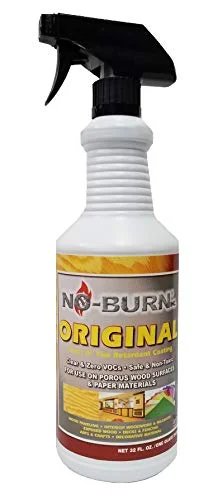 |
No-Burn Original Fire Retardant, 32 oz – $35.52 A ready-to-use spray for interior, unfinished architectural woodwork — the kind of real, code-recognized product this guide is actually about, not a homemade mixture.
|
4 Real Ways to Make Wood Fire-Retardant
These are the methods with actual fire-testing standards, code recognition, or documented performance behind them — in order of how much protection they add.
1. Pressure-impregnated FRT lumber. Products like Dricon and similar factory treatments force fire-retardant chemicals deep into the wood cells under pressure, not just onto the surface. This is what building codes mean by “fire-retardant-treated wood” (FRT wood), and it’s the only method rated for use in fire-rated wall and roof assemblies, draft-stopping, and similar structural applications. It has to be done by a licensed treating plant — it isn’t a DIY process.
2. Intumescent paints and coatings. Applied like a primer or topcoat, these stay thin and inert until heat triggers the expansion reaction described above. They’re commonly used on exposed structural timber, trusses, and paneling where FRT lumber wasn’t used from the start, and on finished/painted surfaces where a pressure treatment isn’t practical. Brands like Contego and Flame Control are tested to ASTM E84 and sold specifically for this purpose.
3. Borate-based treatments. Borate solutions (sodium borate / boric acid compounds) penetrate raw, unfinished wood and provide a real, measurable increase in fire resistance, with the added benefit of also protecting against termites and wood-decay fungi. They’re most effective on bare wood that can absorb the solution, and are commonly used in crawl spaces, sill plates, and other pest-prone framing members.
4. Mineral and fire-resistant board cladding. For the highest level of protection, code-compliant construction often skips treating the wood at all and instead covers it with a non-combustible layer — Type X fire-rated gypsum board, cement board, or mineral wool — between the wood framing and the fire source. This is how most fire-rated wall assemblies actually achieve their rating in practice, combined with FRT lumber for the framing itself.
Do DIY Fireproofing Mixtures Actually Work?
A lot of older wood-safety content (including an earlier version of this article) recommends homemade mixtures like borax-and-water or ammonium-phosphate-and-water sprayed on with a bottle. Here’s an honest look at that claim.
Borax and water, mixed and sprayed at home, is not a tested or code-recognized fire-retardant treatment. Borate compounds are real and legitimate — they’re the active ingredient in several professional treatments — but a kitchen-strength borax-water solution isn’t the same concentration, isn’t pressure-impregnated into the wood, and hasn’t been tested to any flame-spread standard. It will not reliably reduce how fast a fire spreads across that wood, and presenting it as a “fire-resistant barrier” overstates what it actually does.
The same problem applies to homemade ammonium phosphate mixtures. Ammonium phosphate is a real fire-retardant chemical family (it’s related to the retardants used in wildland firefighting), but mixing it yourself at an untested ratio and brushing it on doesn’t reproduce what a certified product delivers, and it comes with real handling risks — concentrated phosphate solutions can irritate skin, eyes, and lungs, which is exactly why tested commercial products specify exact concentrations and safety data sheets.
If fire safety is the actual goal — not just a home-improvement project — use a product that’s been tested to ASTM E84 / NFPA 703 and sold specifically as a fire retardant, or have lumber pressure-treated by a certified plant. A homemade mixture might make the wood slightly less willing to catch a stray spark, but it is not a substitute for tested, code-recognized fire-retardant treatment, and it should never be relied on where actual fire-rated construction is required.
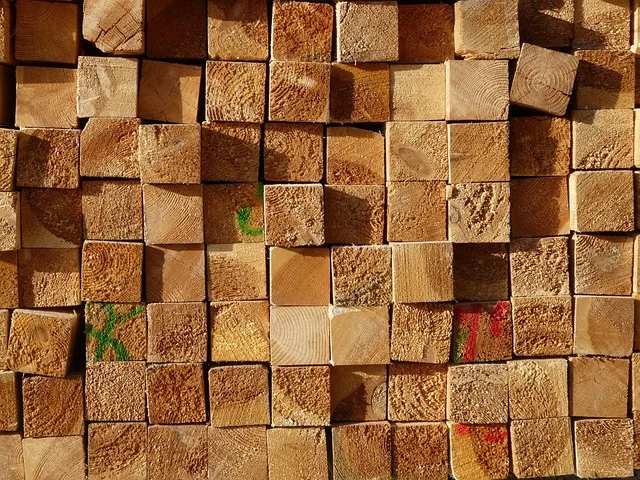
Fire Resistance by Wood Species (Before Any Treatment)
Even untreated, not all wood burns the same way. Density, resin/oil content, and moisture level all affect how readily a species ignites and how fast flame moves across it. This is baseline behavior before any fire-retardant treatment is applied — treatment improves on whatever a species starts with, it doesn’t erase these differences entirely.
| Wood Species | Density | Natural Fire Resistance (Untreated) |
|---|---|---|
| Oak | High | Better than average — dense hardwood, slower to ignite |
| Redwood & Cedar | Low-Medium | Char layer forms relatively quickly, which can slow further flame penetration despite lower density — but both are still classified as combustible, not fire-resistant, building materials |
| Pine (Southern Yellow Pine, etc.) | Medium | Higher resin content makes it more flammable than most hardwoods |
| Fir / Spruce (common framing lumber) | Medium | Average — typical baseline for FRT treatment in framing applications |
This is also why the species used in pressure-treated lumber matters for how well an FRT treatment ultimately performs — the treatment and the wood’s own density work together, not as substitutes for each other.
Interior vs. Exterior Fire-Retardant Treatment
Interior and exterior applications need different products because they face different conditions.
Interior wood (framing, trim, exposed beams, paneling) is generally easier to treat — there’s no rain or UV to break the treatment down, so a well-applied intumescent coating or borate treatment can last for years with minimal reapplication. This is where most spray-on retardants, including the pick above, are designed to be used.
Exterior wood (decks, siding, fences) faces a harder problem: any fire-retardant coating also has to survive weather, moisture cycling, and UV exposure, or it degrades long before its “fire protection” does anything useful. Look specifically for products labeled for exterior use and reapply on the manufacturer’s schedule, not “whenever it looks worn” — a degraded retardant coating can look fine while providing little real protection. For indoor applications, sticking to interior-rated products avoids off-gassing concerns that some exterior-formulated retardants carry.
Maintaining Fire-Retardant Treated Wood
Fire-retardant treatments are not permanent. Surface coatings wear, get painted over (which can block the intumescent reaction if the wrong topcoat is used), or get sanded down during other work. Inspect treated wood periodically for cracking, peeling, or physical damage to the coating, and follow the specific manufacturer’s reapplication interval — this varies significantly by product, from a couple of years for some exterior coatings to much longer for pressure-impregnated FRT lumber, which doesn’t wear off the way a surface spray can.
Avoid harsh solvents or abrasive cleaning on treated surfaces, since these can strip a surface-applied retardant without it being obvious to the eye. When in doubt about whether treatment is still effective, check with the product manufacturer rather than assuming a visual inspection tells the whole story.
Building Codes and Fire-Rating Requirements
If this project is for anything beyond general home fire-safety peace of mind — a fire-rated wall, a required draft stop, a commercial build-out, anything a building inspector will sign off on — a store-bought spray or a DIY mixture is not the answer. Fire-rated construction has specific, tested assembly requirements (a rated wall isn’t just “wood plus some retardant,” it’s a whole tested assembly of specific materials and fasteners), and only certified FRT lumber or listed products applied per their tested specifications will satisfy a local fire code.
Always check with your local building department before assuming any fire-retardant product meets a code requirement, and keep documentation (the FRT lumber’s stamp, or the coating manufacturer’s listing) on hand for inspection. Fire-retardant treatment reduces risk. It does not eliminate it, and it does not override what your local fire code actually requires for rated construction.
Frequently Asked Questions
Can Wood Actually Be Made Fireproof?
No. Wood is a combustible, organic material, and no treatment makes it immune to fire. What treatment does is make it fire-retardant — slower to ignite and slower to spread flame — through methods like pressure-impregnated chemical treatment, intumescent coatings, or borate solutions. Treated wood will still burn under sustained, high-heat exposure; the goal is buying time, not eliminating risk.
What Are the Real Ways to Make Wood Fire-Retardant?
The four methods with real testing and code recognition behind them are: pressure-impregnated FRT lumber (like Dricon) for structural framing, intumescent coatings that expand into an insulating char when heated, borate-based treatments for raw wood (which also resist pests), and covering wood with non-combustible cladding like fire-rated gypsum board. Each is tested to standards like ASTM E84 or NFPA 703, unlike homemade mixtures.
Do DIY Homemade Fireproofing Mixtures Work?
Not reliably. Homemade borax-and-water or ammonium-phosphate-and-water sprays use real fire-retardant chemical families, but at untested concentrations and without pressure impregnation, so they haven’t been shown to meet any flame-spread standard. They shouldn’t be relied on as an actual fire-safety measure or presented as equivalent to a tested, code-recognized fire-retardant product.
How Long Does Fire-Retardant Treatment Last?
It depends heavily on the method. Pressure-impregnated FRT lumber doesn’t wear off the way a surface coating does, since the chemicals are driven deep into the wood at the factory. Surface-applied intumescent coatings and borate treatments are more exposure-dependent — interior applications can last years, while exterior coatings facing weather and UV need more frequent reapplication per the specific manufacturer’s schedule.
Conclusion
Wood can’t be made fireproof, but it can be made meaningfully more fire-resistant through real, tested fire-retardant treatment — pressure-impregnated FRT lumber, intumescent coatings, borate solutions, or non-combustible cladding, depending on what the project actually needs. Skip the homemade mixtures if fire safety is the real goal, choose a product tested to ASTM E84 or NFPA 703, and always check local fire code before assuming any treatment satisfies a fire-rating requirement. Treatment reduces risk; it’s never a replacement for smoke detectors, a fire escape plan, and following your local fire code.
Sponsored / affiliate links. As an Amazon Associate I earn from qualifying purchases. I may earn additional commission from eligible campaigns.