How to Make Wooden Windows: Plans, Sash Joints & Glass Rules
To make a wooden window, mill decay-resistant stock into a sash, cut mortise-and-tenon corners, rabbet the glass seat, then bed the pane in glazing compound and hold it with glazier points. The risky part is the glass: the IRC requires safety glazing for large, low panes and panes near doors. This guide gives a worked 24 x 36 in. cut list, glazing steps, sill slope, and the glass and egress checks.
Wood Window Plans: A Worked Cut List for a 24 x 36 in. Sash
Best Window Glazing Compound Pick |
|
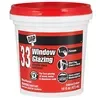 |
DAP ’33’ Window Glazing, White, 16 oz, $9.99 The glazing step below beds each pane in compound and finishes with a face bead. A 24 x 36 in. sash uses only a small amount, so a 16 oz tub is plenty for one window.
|
As an Amazon Associate we earn from qualifying purchases.
Most window plans hand you sizes with no reasoning, so a changed opening breaks them. The cut list below shows the arithmetic so you can rerun it for your own window. The sash is a fixed 24 x 36 in. frame built from 1-3/8 in. thick stock with 2-1/4 in. wide stiles and rails. Those are design choices for this example, not code numbers, so adjust them to your opening.
| Part | Math | Result |
|---|---|---|
| Stiles (2) | Full sash height | 36 in. long |
| Rails (2) | 24 minus (2 x 2-1/4) = 19-1/2 between stiles, plus 2 x 1-1/4 tenon | 22 in. long, tenons included |
| Sightline (visible glass) | 24 minus 4-1/2 wide, 36 minus 4-1/2 tall | 19-1/2 x 31-1/2 in. |
| Glass opening | Sightline + 2 x 3/8 in. rabbet ledge each way | 20-1/4 x 32-1/4 in. |
| Glass to order | Opening minus 1/8 in. each way | 20-1/8 x 32-1/8 in. |
| Pane area | 20.125 x 32.125 = 646.5 sq in. / 144 | about 4.5 sq ft |
Two numbers from that table matter later. The pane is about 4.5 sq ft, which is half the 9 sq ft safety-glass threshold. At roughly 1.6 lb per sq ft for 1/8 in. glass (3.175 mm x 2.5 kg per sq m per mm), it also weighs only about 7 lb, so the sash needs no special hardware to carry it.
Choosing Wood for a Window Sash
A sash lives in rain and sun, so grain and decay resistance matter more than looks. A traditional window maker writing on the Valley Woodworker blog says to use a wood species that is straight-grained and decay-resistant, and notes that old sashes used tight-grained old-growth pine or larch rather than today’s fast-grown pine. Pick clear, dry, straight boards and mill them a little oversize before the final pass.
We cover species traits and the haunched mortise-and-tenon corner in more depth in our guide to making exterior wood doors. Window sashes use the same stile-and-rail idea, but with a glass rabbet in place of a raised panel, so this page sticks to what is different for windows.
Cutting the Sash Joints and the Glass Rabbet
Mortise-and-tenon corners are the traditional choice. The Valley Woodworker author describes the window-sash joint as a drawbored or dovetailed mortise and tenon, often pinned, and says old sashes avoided glue because the glue of that era failed outdoors. A builder on the Fine Homebuilding forum drills a 5/16 in. hole through the joint and drives a 3/8 in. square peg of a harder wood. A common rule of thumb is a tenon about one-third of the stock thickness, which for 1-3/8 in. stock is 0.46 in., so a 7/16 in. tenon. Our mortise and tenon sizing guide shows how to size one.
- Mill the stock: Plane all four parts to the same 1-3/8 in. thickness and 2-1/4 in. width so shoulders line up.
- Mark the inside faces: Cut the rabbet on the same face of every part, which will be the exterior side.
- Cut mortises in the stiles: Chop or rout them to match the 7/16 in. tenon, keeping all four on one reference face.
- Cut tenons on the rails: Test each on a scrap before cutting the final pair, since the shoulder-to-shoulder length is 19-1/2 in. and any error shows at the glass.
- Rout or saw the rabbet: A table saw dado set or a straight bit on a router table both work; plan the ledge at 3/8 in. and a depth that holds the glass plus compound, and note that builders quote other sizes such as about 1/4 x 9/16 in.
- Dry fit and square: Compare the two diagonals of the sash, which must match, before you glue or pin anything.

Glazing the Sash: Bedding, Glazier Points and Putty
Prime bare wood before the glass goes in. A Fine Homebuilding sash-restoration guide recommends oil-based primer before glazing, and its putty article describes a bed coat of putty in the rabbet, the glass pressed in, glazier points tapped in every 6 in. to 8 in., then a beveled face bead.
- Prime the rabbet: Let the primer dry fully so it does not pull oil out of the putty.
- Lay a thin bed: Press a thin bead of compound into the rabbet and set the pane on it.
- Set the points: Tap glazier points every 6 to 8 in. with a flat-sided hammer. Our 32-1/8 in. sides take about 4 to 5 each (32.1 / 8 = 4.0, 32.1 / 6 = 5.4) and the 20-1/8 in. sides take 3 each, about 14 to 16 in all.
- Face-glaze: Press compound against the glass and wood, then pull a putty knife along it to a bevel.
- Keep the line hidden: Stop the interior edge just inside the rabbet so it cannot be seen from the room.
| Source | Wait before painting putty | Why it differs |
|---|---|---|
| Fine Homebuilding, traditional putty article | 5 to 7 days for conventional products | Linseed-oil paint can go on right away |
| Fine Homebuilding, sash restoration guide | About 2 weeks | Author’s own practice |
| DAP 33 Amazon listing | Sets within 3 weeks | Depends on temperature, humidity and bead size |
The honest answer is that no single number is right: product, bead size and weather decide it. A skin that feels dry is not full cure, so follow your tub label. If a pane cracks later, our guide to replacing a window pane in a wooden frame covers the reglazing steps.
Safety Glass: When the IRC Requires Tempered or Laminated Glazing
This is the section most window-building pages skip. A window pane is a hazardous location under IRC R308.4.3 when it meets all four conditions at once. The same four conditions appear in the model code text on UpCodes (IBC 2021, section 2406.4.3).
| Condition (all four must apply) | Threshold |
|---|---|
| Exposed area of one pane | More than 9 sq ft |
| Bottom edge above the floor | Less than 18 in. |
| Top edge above the floor | More than 36 in. |
| Walking surface near the glass | Within 36 in. horizontally |
Run your numbers. Our 4.5 sq ft pane fails the first test, so it is not a hazardous location by that rule. Nine sq ft is 1,296 sq in., so a pane 30 in. wide trips the area test above 43.2 in. tall (1,296 / 30), and a 36 x 36 in. pane sits exactly at 9 sq ft, which is not more than 9. The rule applies to the exposed area of an individual pane, so each lite in a muntin-divided sash is measured on its own.
The other hazardous locations do not depend on area. The model code also lists glazing in doors, glazing within a 24 in. arc of a door edge with its bottom edge under 60 in. above the floor, glazing around tubs, showers, spas and pools, and glazing next to stairs and ramps, with exceptions such as decorative glazing. If your window falls in any of these, order tempered or laminated glass cut to size, with the permanent safety-glazing label left in place. Tempered glass cannot be cut after it is made, so get exact dimensions first.
Check your own jurisdiction. The adopted code edition and local amendments vary, so confirm with your building department before you order glass.
Four conditions, all required: more than 9 sq ft, bottom edge under 18 in., top edge over 36 in., walking surface within 36 in. Source: UpCodes, glazing in windows (IBC 2021 2406.4.3)
Egress and Energy: Two Checks Before You Build
If the window is for a bedroom or basement, it may also have to serve as an emergency escape opening. The IRC lists 5.7 sq ft of net clear opening (5 sq ft at grade floor), at least 24 in. clear height, at least 20 in. clear width, and a sill no higher than 44 in. above the floor. The net clear size is the open sash, not the frame. At a 20 in. width you need at least 41 in. of height to reach 5.7 sq ft (820.8 sq in. / 20 = 41.04), and at a 24 in. height you need at least 34.2 in. of width. A fixed 24 x 36 in. sash like our example gives no opening at all, so it is for light only.
On energy, ENERGY STAR Version 6.0 set a Northern-zone U-factor limit of 0.27, and the newer Version 7.0 is stricter. Those ratings come from NFRC-certified products, and a site-built sash with a single pane carries no NFRC label. If the room is heated, think about ordering an insulating glass unit, which is thicker than single glass, so check its thickness before you cut the rabbet.
Sill Slope, Drip Kerf and Weatherstripping
Water management is what ends most wood windows. Sill slope in the sources we read runs from about 4 to 14 degrees in measured examples, with 10 to 15 degrees recommended for drainage, and a 3-in-12 slope equals 14 degrees (the arctangent of 3/12). On a 5-1/2 in. deep sill that is a rise of about 0.97 in. at 10 degrees and 1.37 in. at 14 degrees. A Fine Woodworking forum contributor advises cutting a saw kerf along the underside of the sill 1/4 to 1/2 in. in from the front edge so water drips off rather than running back to the wall. The same thread cautions that wood sills swell and shrink, which makes caulked joints hard to keep sealed.
For an operable sash, pick the weatherstripping first, then plane the sash to leave room for it, and test fit with the primer and paint already applied since the coats add thickness. A fixed sash needs no weatherstripping but does need a sealed bead of exterior caulk at the frame joint.
For older wood that has already started to rot, our guide to repairing an old wood window frame covers what can be saved.
Common Window-Building Mistakes
- Cutting the rabbet on different faces of different parts.
- Ordering glass to the sightline instead of the rabbet opening.
- Skipping primer before glazing, so the wood pulls oil from the compound.
- Painting over compound before it has set.
- Ignoring the 9 sq ft safety-glass rule on a large low pane or a pane beside a door.
- Flat sills with no slope or drip kerf.
- Counting a fixed sash toward an egress opening.
Wooden Window FAQ
Do homemade windows need tempered glass?
Only in hazardous locations. Under the IRC, a pane needs safety glazing when it is in a door, near a door or tub, or when it meets all four window conditions: more than 9 sq ft, bottom edge under 18 in. from the floor, top edge over 36 in., and a walking surface within 36 in. Check your local code edition.
What size glass do I order for a wooden window sash?
Measure the glass opening from rabbet shoulder to rabbet shoulder, then order the pane about 1/8 in. smaller in width and height. In the 24 x 36 in. example, the opening is 20-1/4 x 32-1/4 in., so the glass is 20-1/8 x 32-1/8 in. Confirm the clearance with your glass supplier.
How long should glazing putty cure before painting?
Sources disagree because products differ. Fine Homebuilding notes conventional putty usually needs five to seven days, a sash-restoration guide there says about two weeks, and the DAP listing says up to three weeks. Follow the label on your compound and the weather.
What is the best wood for making windows?
Use straight-grained, decay-resistant stock, since a sash sees rain, sun and swelling. Cedar and mahogany are the usual choices, and a painted reproduction sash can also be built from poplar if it is kept well sealed. Avoid knotty or twisted boards, which can rack the sash.
Can I build a fixed window to meet egress rules?
No. An emergency escape opening must be openable, with at least 5.7 sq ft of net clear opening (5 sq ft at grade floor), 24 in. clear height, 20 in. clear width, and a sill no higher than 44 in. A fixed sash gives no clear opening, so it cannot count.
Conclusion
Build the sash from straight, decay-resistant stock, size the glass from the rabbet opening rather than the sightline, bed and point the pane, and give the sill a slope and drip kerf. Before ordering glass, run the 9 sq ft, 18 in., 36 in. and 36 in. check and your local rules.
Sponsored / affiliate links. As an Amazon Associate I earn from qualifying purchases. I may earn additional commission from eligible campaigns.