How to Protect Wooden Legs from Water: Ultimate Tips
To protect wooden legs from water, apply a high-quality waterproof sealant. Regularly check for wear and reapply as needed.
Wooden furniture legs are prone to damage from moisture. Water can cause warping, cracking, and mold growth, leading to costly repairs. Protecting these wooden components is essential for maintaining their appearance and durability. Simple preventive measures can significantly extend the life of your furniture.
Using the right sealants and maintenance practices can create a barrier against water damage. Regular inspections help catch potential issues early, ensuring your wooden legs remain in excellent condition. This guide will outline effective strategies to safeguard your wooden furniture legs from water, so you can enjoy them for years to come.
The Risks Of Water Damage
Water damage can be very harmful to wooden legs. Many risks come from water exposure. Common causes include spills, humidity, and rain. Furniture near windows is often affected. Leaky roofs can also cause damage.
Long-term effects of water damage are serious. Wood can warp or crack over time. This can lead to structural weakness. Mold and mildew may also grow in damp areas. These issues can ruin the appearance of wooden legs.
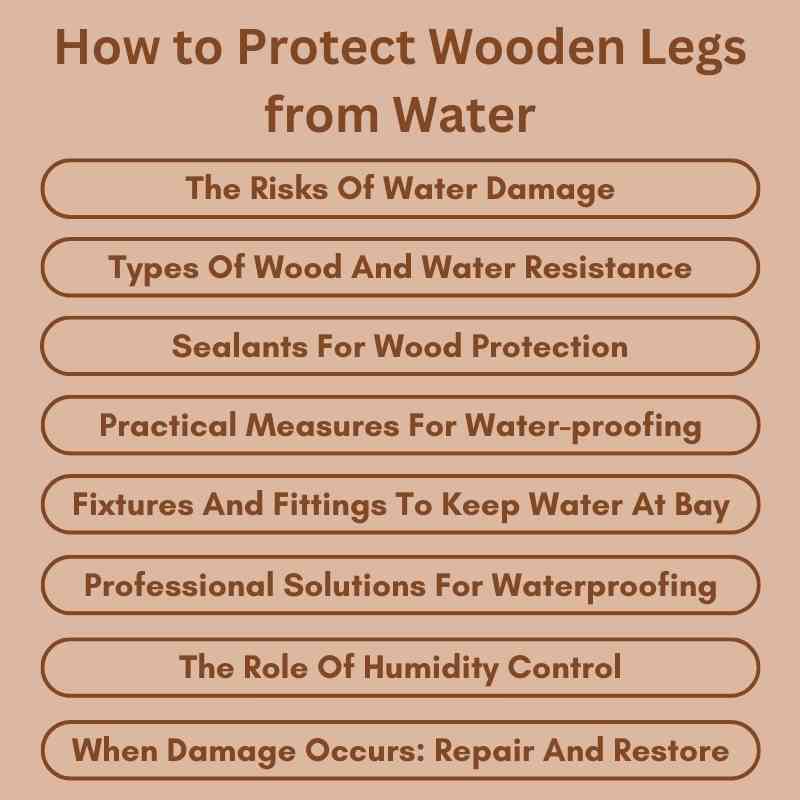
Types Of Wood And Water Resistance
Hardwoods are generally more resistant to water than softwoods. They come from trees like oak, maple, and cherry. These woods have a dense structure. This makes them less absorbent.
Softwoods, such as pine and cedar, are easier to damage. They absorb water quickly. This can lead to swelling and warping over time.
Some woods naturally resist water. Cedar and <strong.redwood< strong=””> have natural oils that protect them. These oils help keep water out.</strong.redwood<>
Choosing the right wood is important. Always consider the environment where the wood will be used. Proper treatment can further enhance water resistance.
Sealants For Wood Protection
Polyurethane coatings are a popular choice for wood protection. They provide a strong barrier against moisture. This helps to prevent water damage.
These coatings come in both water-based and oil-based options. Water-based polyurethane dries quickly and has low odor. Oil-based sealants offer a rich finish and are more durable.
| Type | Advantages |
|---|---|
| Water-Based | Quick drying, low odor, easy cleanup |
| Oil-Based | Durable, rich finish, better water resistance |
Applying these sealants correctly ensures long-lasting protection. Always follow the manufacturer’s instructions for the best results.
Practical Measures For Water-proofing
Elevating furniture keeps wooden legs away from water. Use coasters or small risers to lift the legs. This simple step prevents moisture damage.
Using protective boots is a smart choice. These boots fit over wooden legs and act as a barrier. Look for water-resistant materials to ensure long-lasting protection. Regularly check the boots for wear and tear.
Choose stylish options that match your decor. This way, you protect your furniture without sacrificing appearance.
Maintenance Tips To Prevent Water Damage
Regularly clean wooden legs to keep them safe from water. Use a soft cloth to wipe them down. Avoid using too much water while cleaning. A damp cloth works best.
If a spill occurs, act quickly. Blot the area with a dry cloth immediately. Do not rub the surface, as this can cause more damage. After blotting, let the area dry completely.
Consider applying a water-resistant finish to protect the wood. This can help prevent future water damage. Reapply the finish as needed to maintain protection.
Fixtures And Fittings To Keep Water At Bay
Rubber stoppers are great for protecting wooden legs. They create a seal that blocks water. Placing these stoppers under furniture keeps moisture away. This helps in maintaining the wood’s integrity.
Water-repellent metal caps are another good option. These caps fit snugly over the wooden legs. They prevent water from seeping in. Metal caps also add a stylish touch to your furniture.
| Item | Benefit |
|---|---|
| Rubber Stoppers | Blocks moisture and protects wood |
| Metal Caps | Prevents water damage and looks good |
Professional Solutions For Waterproofing
Hiring a professional woodworker is a smart choice for waterproofing wooden legs. These experts have the right tools and knowledge to protect your furniture effectively.
They can apply a high-quality sealant that creates a strong barrier against moisture. This process extends the life of your furniture significantly.
Custom solutions are available for unique furniture pieces. Professionals can tailor their techniques to fit your specific needs.
Using specialized coatings will enhance the wood’s natural beauty while keeping it safe from water damage. Trusting a professional ensures your furniture remains in great shape.
The Role Of Humidity Control
Humidity control is very important for protecting wooden legs. High humidity can cause wood to swell and warp. Using dehumidifiers helps to lower moisture levels in the air.
These devices remove excess water vapor. Place them in areas with wooden furniture. This keeps the humidity level at a safe range.
Monitoring indoor humidity levels is also essential. Aim for a range between 30% and 50%. Use a hygrometer to check humidity regularly. Adjust the dehumidifier settings as needed.
Keeping wooden legs dry will extend their life. Proper care helps maintain their beauty and strength.
When Damage Occurs: Repair And Restore
Wooden legs can suffer from water damage. Repairing them can bring back their beauty. Start with sanding the affected areas. This process removes the damaged wood layer. Use fine-grit sandpaper for best results.
After sanding, apply a high-quality wood finish. This protects the wood from future damage. Choose a finish that suits your furniture style. Allow it to dry completely before using the furniture again.
Seeking professional restoration can be a wise choice. Experts have the right tools and skills. They can provide a thorough inspection and restoration.
Future-proofing Your Wooden Furniture
Protecting wooden legs from water is very important. Many new products can help. These items are designed to create a barrier against moisture.
Some innovative solutions include water-resistant coatings. These coatings can keep wood safe for longer. Special sealants can also be applied to wooden legs.
Using furniture pads can prevent water damage too. They lift furniture off damp surfaces. It’s smart to check for drips and spills regularly.
Investing in furniture covers is another great option. Covers keep wood safe during cleaning or bad weather. Regular maintenance will also help extend the life of your furniture.
Frequently Asked Questions
How Can I Waterproof Wooden Legs?
To waterproof wooden legs, apply a high-quality sealant or varnish. These products create a protective barrier against moisture. Make sure to clean and sand the wood before application for better adhesion. Regular reapplication will ensure lasting protection and maintain the wood’s appearance.
What Materials Protect Wooden Furniture From Water?
Materials like polyurethane, marine varnish, or tung oil effectively protect wooden furniture. These coatings create a durable, water-resistant layer. Choose a product based on your furniture’s use and exposure to water. Regular maintenance is crucial to keep these protective layers intact and effective.
How Often Should I Treat Wooden Legs?
Treat wooden legs every 6 to 12 months for optimal protection. Environmental factors like humidity and exposure to water may require more frequent treatments. Always check for signs of wear or damage before applying a new coat. Regular upkeep ensures longevity and maintains the wood’s integrity.
Can I Use Wax On Wooden Legs?
Yes, you can use wax on wooden legs for added protection. Wax provides a moisture barrier and enhances the wood’s natural beauty. However, it may not be as durable as sealants or varnishes. Consider reapplying wax every few months to maintain effectiveness and appearance.
Conclusion
Protecting wooden legs from water damage is essential for longevity. Use sealants, avoid direct exposure, and regularly check for wear. Simple maintenance can save you time and money in the long run. By following these tips, you’ll keep your wooden furniture looking great and standing strong for years to come.