How To Seal A Wooden Chopping Board The Best Proven Way
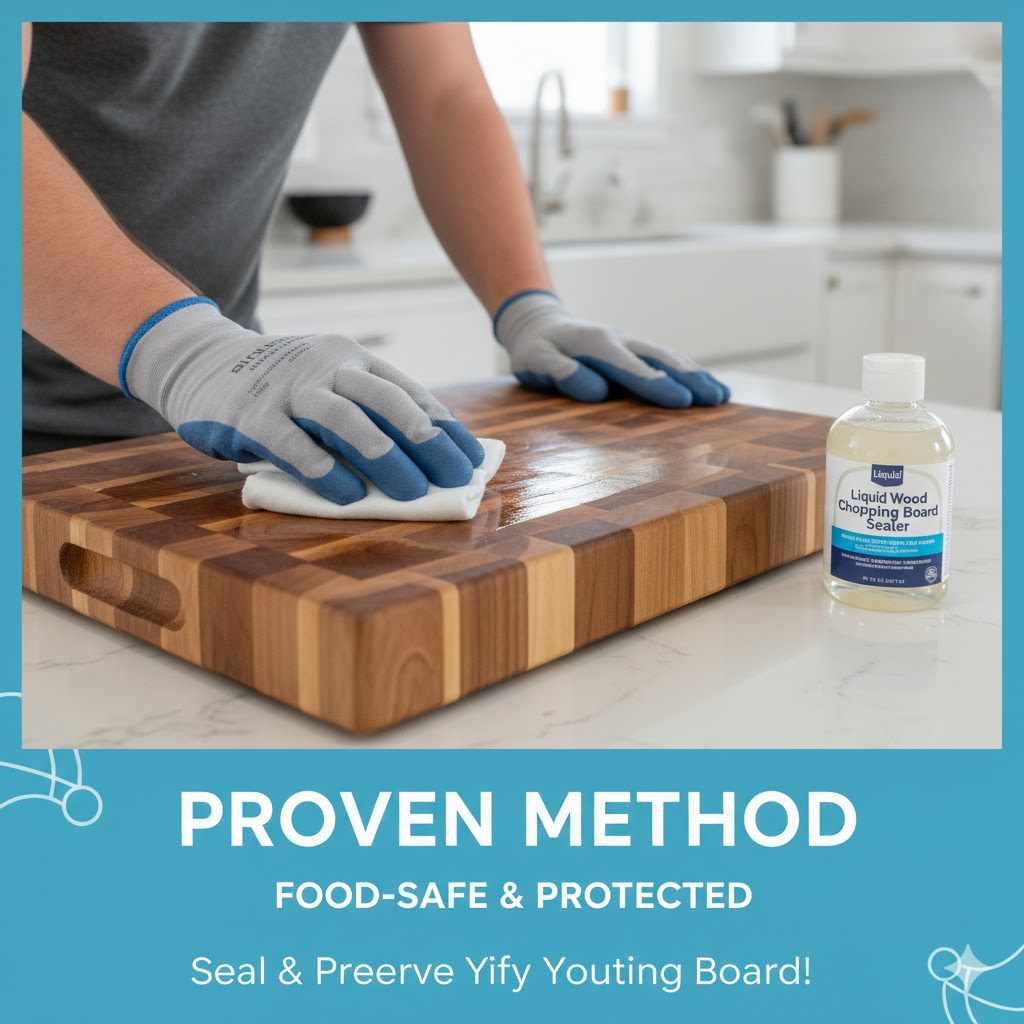
The best proven way to seal a wooden chopping board is to apply a generous coat of food-grade mineral oil, let it soak in for several hours or overnight, and then wipe off the excess with a clean, lint-free cloth. For extra water resistance, follow up with a board cream or a blend of mineral oil and beeswax.
Hello there! Md Meraj here, your friendly guide in the world of woodworking. I’ve spent countless hours in my workshop, and one of the questions I get most often is about caring for something we all use every day: the wooden chopping board. It’s a true kitchen workhorse, but without a little love, it can dry out, crack, or even harbor germs. You might feel a little unsure about how to protect it properly, especially when it comes to food safety.
Don’t you worry one bit. Taking care of your board is one of the simplest and most satisfying tasks you can do. There’s no fancy equipment needed, and the results are immediate. In this guide, I’m going to walk you through the exact steps to seal your wooden board the right way. We’ll turn that dull, thirsty wood into a beautiful, safe, and long-lasting kitchen tool. Let’s get started!
Why Sealing Your Wooden Chopping Board Is So Important
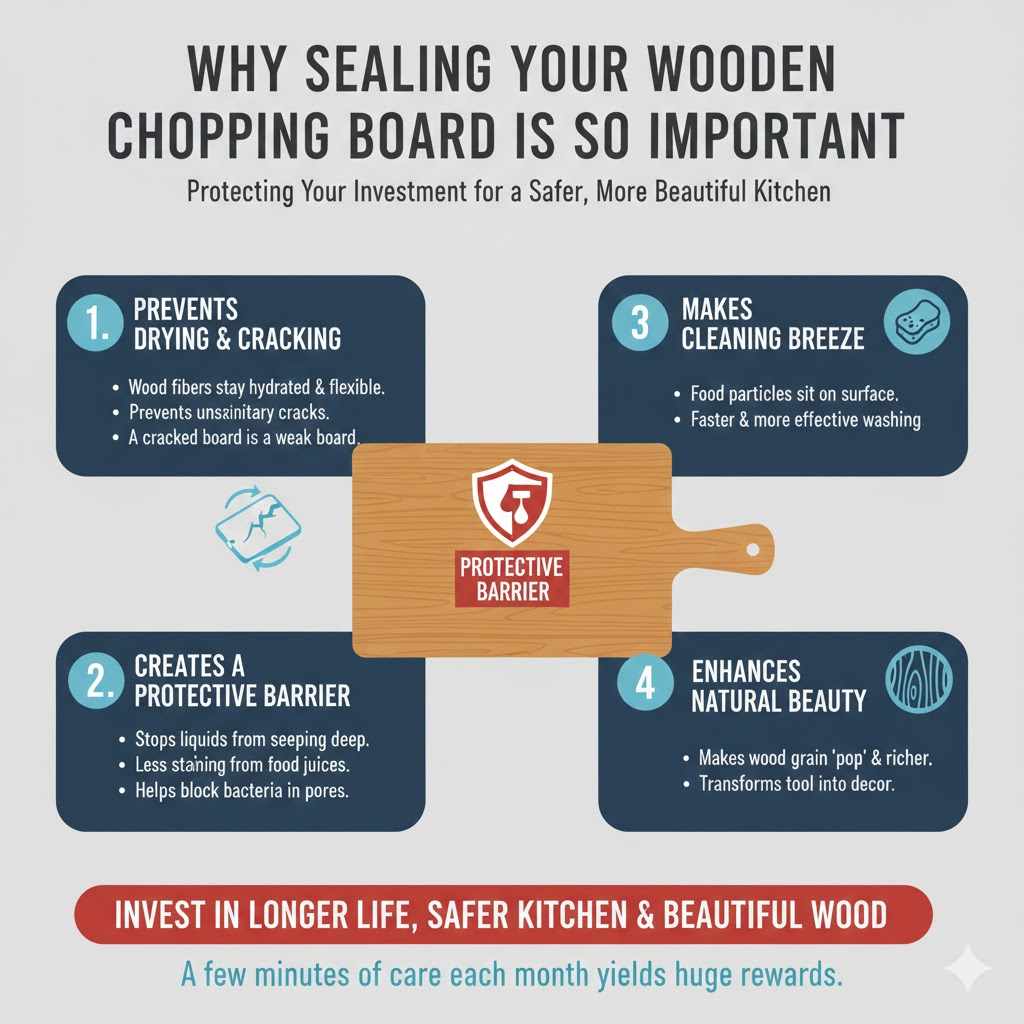
Before we roll up our sleeves, let’s talk about the “why.” Understanding the reason behind a task makes it so much more meaningful. A wooden chopping board is made of natural fibers. Think of it like your own skin—without moisture, it gets dry and can crack. Sealing your board is like applying a high-quality moisturizer.
Here’s what a good seal does for your board:
- It Prevents Drying and Cracking: Wood constantly expands and contracts with changes in moisture. Regular oiling keeps the wood fibers hydrated and flexible, preventing ugly and unsanitary cracks from forming. A cracked board is a weak board.
- It Creates a Protective Barrier: A proper seal stops liquids from seeping deep into the wood. This means less staining from things like beet juice or berries. More importantly, it helps block bacteria from finding a home in the wood pores. A well-oiled board is a more hygienic board.
- It Makes Cleaning a Breeze: When your board is sealed, food particles and juices tend to sit on the surface instead of soaking in. This makes washing it much faster and more effective.
- It Enhances the Wood’s Natural Beauty: This might be my favorite part. Applying oil makes the grain of the wood “pop.” The colors become richer and deeper, transforming your board from a simple tool into a beautiful piece of kitchen decor.
Essentially, a few minutes of care each month protects your investment, keeps your kitchen safer, and makes your chopping board look fantastic. It’s a small task with huge rewards.
Choosing the Right Finish: Food-Safe is Everything
This is the most critical decision you’ll make. You’re going to be preparing food directly on this surface, so whatever you use must be 100% food-safe. The term “food-safe” means it’s non-toxic and won’t harm you if it comes into contact with your food. The U.S. Food and Drug Administration (FDA) has clear guidelines on materials that are safe for food contact.
Forget the hardware store wood finishes like varnishes, lacquers, or polyurethane. Those are for furniture, not for your food. Here’s a simple breakdown of the best (and worst) choices for your kitchen companion.
The Absolute Best Choices for Sealing Your Board
There are only a couple of options you should ever consider. They are simple, affordable, and proven to work.
- Food-Grade Mineral Oil: This is the undisputed champion for wooden cutting boards. It’s clear, odorless, tasteless, and completely inert, meaning it won’t spoil. It penetrates deep into the wood to hydrate the fibers from the inside out. Always look for “food-grade” or “USP-grade” mineral oil, which you can find in most pharmacies (it’s often sold as a laxative) or supermarkets.
- Board Cream (Mineral Oil and Beeswax/Carnauba Wax Blend): This is my personal favorite for the final touch. These products, often sold as “cutting board conditioner” or “board cream,” combine mineral oil with a natural wax. The mineral oil soaks in, while the wax stays on the surface, creating an excellent water-repellent barrier. It gives the board a lovely, silky finish.
Finishes You Must Avoid
Using the wrong oil can ruin your board and even be a health risk. Please avoid these at all costs:
- Cooking Oils: Never use oils like olive, vegetable, canola, or corn oil. These are organic oils that will go rancid over time. This means they will start to smell bad and can transfer that awful taste to your food.
- Non-Drying Nut Oils: While some nut oils (like Tung oil) can be used, many are not food-safe or can cause issues for people with nut allergies. It’s best to stick to the proven options.
- Varnish, Lacquer, Polyurethane: As mentioned, these are toxic film finishes. They will chip and flake off into your food as you chop. These are strictly for furniture, not food surfaces.
To make it even clearer, here’s a simple table to help you remember.
| The Good Stuff (Use These!) | Why It Works | The Bad Stuff (Avoid These!) | Why It’s Bad |
|---|---|---|---|
| Food-Grade Mineral Oil | Penetrates deep, non-toxic, won’t go rancid. | Cooking Oils (Olive, Canola, etc.) | Spoils and goes rancid over time. |
| Board Cream / Wax Blends | Adds a water-resistant topcoat for extra protection. | Varnish / Polyurethane | Not food-safe, will chip into your food. |
| Fractionated Coconut Oil | Stays liquid and won’t go rancid (unlike regular coconut oil). | Regular Coconut Oil | Can spoil over time and impart a flavor. |
Gather Your Simple Supplies
You’ll be happy to know you don’t need a workshop full of tools for this. It’s a simple kitchen-table job. Here is everything you will need:
- Your Wooden Chopping Board: Of course! Make sure it’s completely clean and dry to start.
- Food-Grade Mineral Oil: The star of the show. A single bottle will last you a very long time.
- Clean, Lint-Free Cloths: An old, clean cotton t-shirt, flour sack towels, or a pack of microfiber cloths works perfectly. You’ll need at least two: one for applying the oil and one for buffing off the excess.
- Optional: Fine-Grit Sandpaper: A small piece of 220-grit or 320-grit sandpaper. This is not essential, but it will give your board an incredibly smooth, like-new finish.
- Optional: Board Cream/Conditioner: If you want that extra layer of water protection and a beautiful sheen.
That’s it! No power tools, no complicated chemicals. Just a few simple items.
How To Seal A Wooden Chopping Board: The Step-by-Step Guide
Alright, let’s get to the fun part. Follow these steps carefully, and I promise you’ll have a beautifully sealed board in no time. Be patient and enjoy the process. It’s quite relaxing!
Step 1: Start with a Squeaky Clean and Bone-Dry Board
You can’t seal in dirt, so your first step is a thorough cleaning. Wash your board with a little mild dish soap and hot water. Use a sponge or brush to scrub away any stuck-on food particles. Rinse it well under hot water.
Now, this next part is vital: your board must be completely dry. Water trapped under the oil can lead to mold or can damage the wood. After washing, wipe the board down with a towel and then stand it on its edge to air dry. Leaning it against a wall or putting it in a dish rack works great. This allows air to circulate around all sides. Let it dry for several hours, or even better, overnight. Do not proceed until you’re certain it’s dry to the touch.
Step 2: Smooth the Surface (The Pro-Touch Optional Step)
Is your board feeling a little fuzzy or rough after washing? This happens because water can raise the grain of the wood. For an ultra-smooth finish, this is your moment to shine. Take your fine-grit sandpaper (220-grit or higher) and lightly sand the entire surface of the board, including the sides. Always sand in the direction of the wood grain.
You don’t need a lot of pressure. Just a few light passes are enough to knock down those raised fibers. When you’re done, wipe away all the sanding dust with a clean, dry cloth. Your board should feel silky smooth.
Step 3: Apply the Mineral Oil Generously
Place your clean, dry board on a towel or some newspaper to protect your countertop. Pour a generous amount of food-grade mineral oil directly onto the surface of the wood. Don’t be shy here! A new or very dry board is incredibly thirsty and will soak it up.
Take your first clean, lint-free cloth and begin spreading the oil over the entire surface. Use a circular motion to work it into the wood. Make sure to cover every single part of the board: the top, the bottom, and all the sides and edges. The end grain (the short ends of the board) is especially absorbent, so give it some extra attention.
Step 4: Let the Board Drink It In
This is where patience pays off. Once the board is coated in a glistening layer of oil, you need to let it sit and absorb. The oil needs time to penetrate deep into the wood fibers. I recommend letting it sit for at least 4-6 hours.
For the best possible results, especially on a new or neglected board, let it soak overnight. Just leave it on the counter and let it do its thing. You might notice some spots look dry after a while; that’s just the wood soaking up the oil. You can even add a little more oil to those thirsty spots.
Step 5: Buff Away the Excess
After the board has had its long drink, you’ll see a thin film of oil left on the surface. This is the excess oil that the wood couldn’t absorb. Take your second clean, dry cloth and wipe down the entire board. Buff the surface until it no longer feels wet or greasy. The goal is a board that feels nourished and has a soft, satin sheen, but isn’t oily to the touch.
Step 6: Add the Wax for a Water-Resistant Top Coat (Highly Recommended)
If you have a board cream or conditioner, now is the time to use it. This step adds a final layer of protection that repels water beautifully.
Scoop a small amount of the cream out with your fingers or a clean cloth. Apply it to the board in a circular motion, covering all surfaces just like you did with the oil. You don’t need a thick layer; a little goes a long way. Let the wax sit and haze over for about 15-20 minutes.
Then, take a fresh, clean cloth and buff the wax off vigorously. Use a circular motion and some elbow grease. You’ll feel the surface transform from slightly tacky to incredibly smooth and slick. This waxy layer is what will make water bead up on the surface.
How to Maintain Your Perfectly Sealed Chopping Board
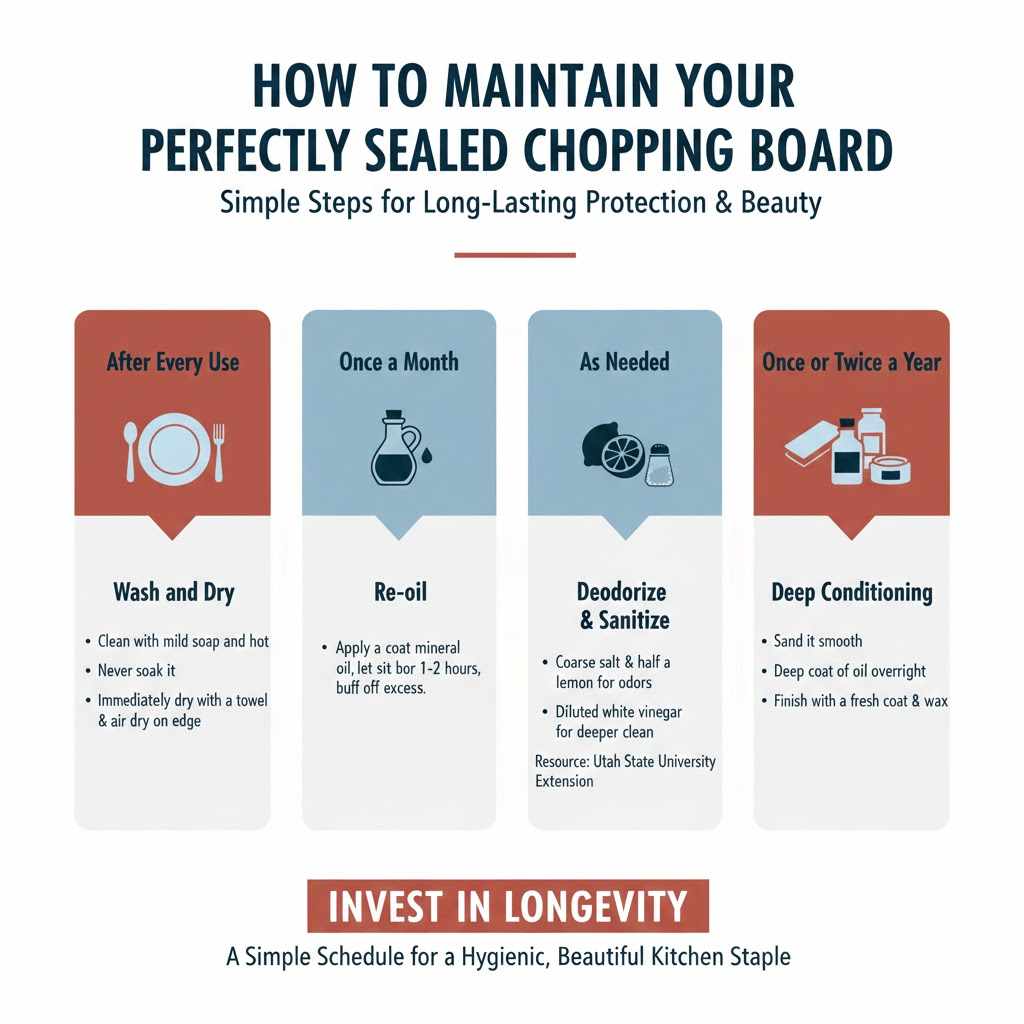
Great job! Your board is now sealed, protected, and beautiful. But the work doesn’t stop here. Maintenance is key to keeping it that way. Luckily, it’s even easier than the initial sealing.
Here’s a simple maintenance schedule you can follow:
| Frequency | Task | Instructions |
|---|---|---|
| After Every Use | Wash and Dry | Clean with mild soap and hot water. Never soak it. Immediately dry with a towel and let it air dry standing on its edge. |
| Once a Month | Re-oil | Perform a quick oiling. You likely won’t need to let it soak overnight. Just apply a coat of mineral oil, let it sit for an hour or two, and buff off the excess. |
| As Needed | Deodorize & Sanitize | To remove strong odors like garlic, sprinkle the board with coarse salt and scrub with half a lemon. For a deeper clean, a solution of diluted white vinegar can help sanitize the surface. A resource from Utah State University Extension offers great tips on board sanitation. |
| Once or Twice a Year | Deep Conditioning | Give your board a full spa treatment: sand it smooth, apply a deep coat of oil overnight, and finish with a fresh coat of wax. |
Frequently Asked Questions (FAQ)
1. How do I know when my chopping board needs to be re-oiled?
The easiest way to tell is the water test. Sprinkle a few drops of water on the board. If the water beads up, your seal is still strong. If the water spreads out and soaks in, leaving a dark spot, your board is thirsty and ready for a fresh coat of oil. You can also tell by its appearance—if it looks dull, pale, or dry, it’s time.
2. Can I really use coconut oil to seal my board?
You can, but only a specific kind: fractionated coconut oil. Regular, solid-at-room-temperature coconut oil can go rancid just like other cooking oils. Fractionated coconut oil has had the long-chain fatty acids removed, which makes it stay liquid and keeps it from spoiling. It is a good, though often more expensive, alternative to mineral oil.
3. What’s the difference between mineral oil and board cream?
Mineral oil is a pure oil that soaks deep into the wood to hydrate it from within. Board cream is a mix of mineral oil and a wax (like beeswax or carnauba wax). The oil component does the hydrating, while the wax component creates a moisture-resistant barrier on the surface. Think of it as a 2-in-1 moisturizer and sealant. You can use mineral oil alone, but using a cream on top gives better results.
4. Help! How do I get strong smells like onion or garlic out of my board?
This is a classic problem with a simple, classic solution! Sprinkle the board liberally with coarse salt (like kosher salt). Then, take half a lemon and use the cut side to scrub the salt into the board. The salt acts as an abrasive, and the acidic lemon juice neutralizes the odors. Let it sit for a few minutes, then rinse it clean and dry it thoroughly.
5. Can I put my wooden chopping board in the dishwasher?
Please, never do this! This is the fastest way to destroy a wooden board. The intense heat and prolonged exposure to water will cause the wood to warp, swell, and crack, often splitting the glue seams. Always wash your wooden boards by hand.
6. Is food-grade mineral oil really safe?
Yes, absolutely. Food-grade mineral oil is highly refined and purified. It passes right through the body without being digested. It is colorless, odorless, and tasteless, and it will not affect your food in any way. It’s the safest and most recommended product for the job.
7. My new board feels a bit rough after the first wash. Did I do something wrong?
Nope, you did everything right! This is perfectly normal and is called “raised grain.” When wood fibers get wet, they can swell and stand up, making the surface feel fuzzy. This is why the optional sanding step (Step 2) is so helpful. After a few cycles of washing and oiling, the grain will stop raising as much, and your board will stay smooth.
Bringing It All Together
There you have it—a simple, proven method to keep your wooden chopping board in peak condition. It’s not just about maintenance; it’s about craftsmanship and care. By spending just a little time each month nurturing the wood, you are ensuring it will serve you faithfully in your kitchen for years, or even decades, to come.
You’ve learned why sealing is so important, how to choose the perfect food-safe finish, and the exact steps to get a beautiful, durable result. This is one of those small DIY tasks that brings a huge amount of satisfaction. Every time you use your beautifully sealed board, you’ll be reminded of the care you put into it.
So go ahead, grab your board and a bottle of mineral oil, and give it the attention it deserves. Happy woodworking, and happy cooking!