How to Speed Up Stain Drying Time
Speed up stain drying with thin coats, air around 65–75°F, roughly 40–50% relative humidity, and moving air. Water-based stains usually dry fastest, while oil-based stains often need 8–24 hours before recoating. Rush it and you can trap solvent, leave blotches, or soften the color. This guide gives a safe plan for different stain types, room conditions, and failure risks.
What you’ll need
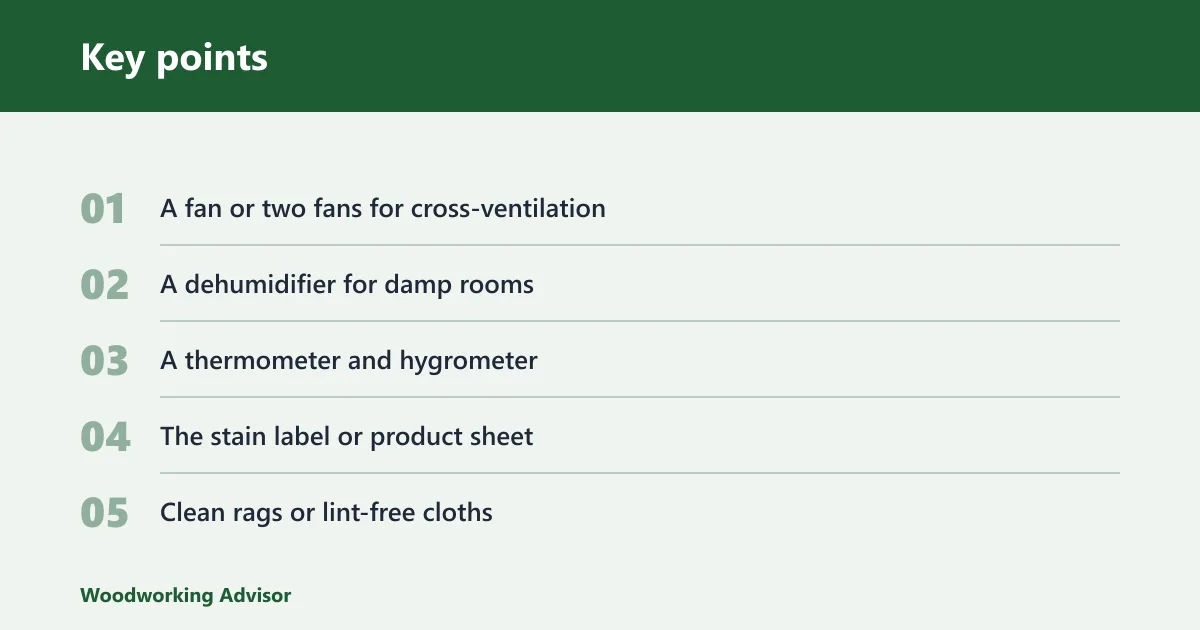


- A fan or two fans for cross-ventilation
- A dehumidifier for damp rooms
- A thermometer and hygrometer
- The stain label or product sheet
- Clean rags or lint-free cloths
- Dust control supplies, such as plastic sheeting or a clean barrier for the drying area
- A hair dryer only if the label allows gentle heat
- Personal protection suitable for solvent fumes and dust
The safest fast move is simple. Remove excess stain, keep the coat thin, and move dry air across the surface before adding heat. Oil-based stains usually respond best to airflow and warmth; water-based stains usually benefit more from ventilation and thin coats; gel stain needs gentler airflow because heavy heat can skin the surface too soon.
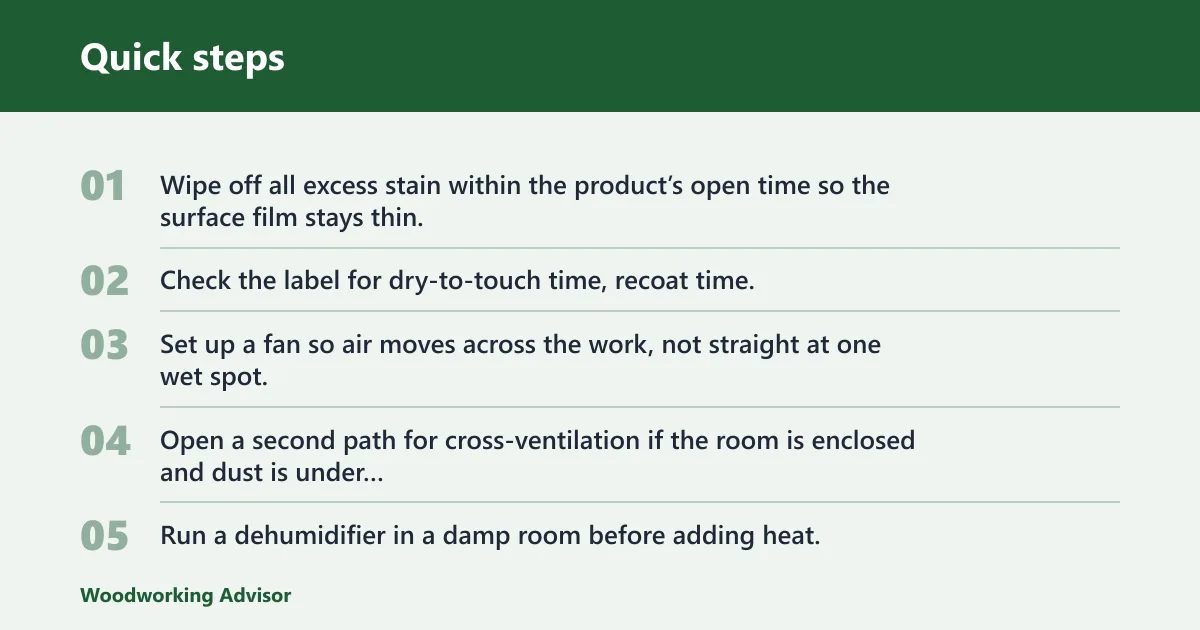
- Wipe off all excess stain within the product’s open time so the surface film stays thin.
- Check the label for dry-to-touch time, recoat time, and topcoat time before you change the drying setup.
- Set up a fan so air moves across the work, not straight at one wet spot.
- Open a second path for cross-ventilation if the room is enclosed and dust is under control.
- Run a dehumidifier in a damp room before adding heat; dry air speeds evaporation better than warmth alone.
- Use gentle heat only when the label permits it, and stop if the stain starts to skin, streak, or tack up unevenly.
- Recheck the surface after about 15 minutes, then again after about 30 minutes, instead of topcoating on a guess.
Say a pine panel was stained with a water-based product in a closed basement after a rainy day. Moving a fan into the room may help, but the bigger gain often comes from lowering humidity first, because damp air slows evaporation even when the room feels warm.
Suppose a dining table got a heavy coat of gel stain on one apron. Strong heat can harden the top film while the layer underneath stays soft, which leaves a sticky surface that looks dry but resists sanding or topcoating.
Why stain is still tacky
Sticky stain usually means the surface film dried faster than the layer underneath, or the room is holding too much moisture for the product type. It can also mean the coat was too heavy, the wrong thinner was used, or the wood absorbed unevenly and left glossy patches.
Drying time versus dry-to-touch
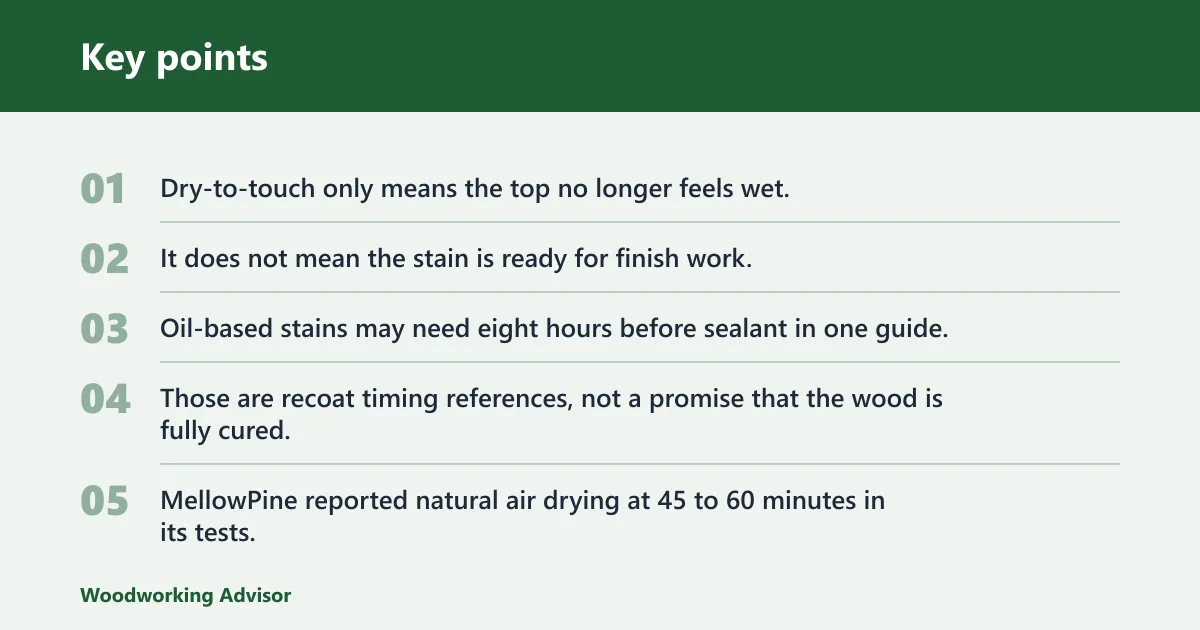
Dry-to-touch only means the top no longer feels wet. It does not mean the stain is ready for finish work. Oil-based stains may need eight hours before sealant in one guide, while water-based stains are often left for 24 hours. Those are recoat timing references, not a promise that the wood is fully cured.
MellowPine reported natural air drying at 45 to 60 minutes in its tests, forced air drying at 15 to 20 minutes, and heat drying at 2 to 5 minutes. Treat those figures as a best-case drying comparison, not a universal topcoat schedule.
Room conditions that slow drying
High humidity slows drying because the air already carries more moisture. Cold rooms also slow evaporation, even though cold air does not “hold” more moisture in a simple sense. A dry day beats a damp day, and a warmer, drier room usually helps more than a hotter one with stagnant air.
Signs the stain needs more time
If the surface feels grabby after a light finger touch, leaves a fingerprint after 30 seconds, or smears color onto a clean cloth, it needs more time. If the grain still looks glossy in patches, those areas are still shedding solvent or water.
Oil-based wood stain usually dries slower than water-based stain, so the safest speed-up is warm air plus steady airflow, not direct overheating. Mineral spirits or lacquer thinner, but compatibility matters and product directions come first. Overheating can leave uneven drying, lap marks, or a sticky skin.
Use warm air, not direct overheating
MellowPine lists oil-based stain safe drying temperature as 120 to 140°F, but that should not be read as a universal target for every project. Use the gentlest heat that the product label permits, and keep the air moving so the surface does not flash-dry in one spot.
Keep airflow moving across the panel
A fan helps solvent evaporate. Cross-ventilation helps more than a single blast of air because it carries vapor away from the work area instead of recirculating it. Keep the fan far enough back to avoid blowing dust into the wet film.
Check product guidance before any thinner
If the label allows a compatible reducer, follow the stated ratio exactly. Do not substitute a stronger solvent because it can alter color, soften the binder, or leave residue. If the stain is already gummy, adding more solvent usually makes the problem worse unless the manufacturer says otherwise.
Gel stain has more body than standard stain, so it tends to dry more slowly and can skin over if heated aggressively. Careful airflow is the safer tool. Thin application matters more than heat because a thick gel layer traps solvent under the surface.
Thin the application, not the chemistry
Spread gel stain in a very thin, even coat and wipe excess before the film starts to set. A heavy coat creates a soft underlayer that can stay tacky long after the top looks dull.
Use gentle airflow
Move air across the piece with a fan, but keep the blast indirect. Strong heat can harden the surface too fast and lock in softness underneath. If the piece sits in a closed shop, open the room for ventilation before reaching for heat.
Avoid blasting the surface with heat
Hair dryers, heat guns, and close lamps raise surface temperature quickly. That may help in a narrow spot, but it also increases the risk of skinning, blotching, and a finish that feels dry but remains unstable under pressure.
Stain drying method table
| Stain type | Humidity level | Temperature range | Safest speed-up method | Expected benefit | Finish-risk warning |
|---|---|---|---|---|---|
| Oil-based stain | Low to moderate | Warm room, not overheated | Thin coat plus moving air | Speeds evaporation without forcing the surface | Too much heat can dry the top unevenly and trap solvent below |
| Oil-based stain | High | Warm room with dehumidifier running | Reduce humidity first, then use gentle airflow | Usually better than heat alone in damp air | Heat by itself can overwork the film and still leave it tacky |
| Water-based stain | Low to moderate | Warm room | Ventilation plus thin coats | Usually the fastest safe option | Strong heat can leave lap marks or uneven color |
| Water-based stain | High | Warm room with dry air | Dehumidifier, then airflow | Improves drying more reliably than extra heat | Damp air can hold the stain in a long tacky stage |
| Gel stain | Any damp room | Moderate warmth only | Careful airflow and a very thin coat | Helps the exposed film release solvent | Aggressive heat can skin the surface before the body is set |
Common mistakes
These mistakes turn a drying problem into a finish problem fast.
- Using too much heat too soon, which can flash-dry the surface and leave the layer below soft
- Topcoating before the stain is ready, which can trap solvent and dull the finish
- Leaving heavy coats on the wood instead of wiping back excess
- Pointing a strong fan at the surface and blowing dust into wet stain
- Using mineral spirits, lacquer thinner, or alcohol-based drying aids without product-specific approval
Picture a small cabinet door stained in a damp garage during winter. A space heater may warm the room, but if the humidity stays high, the stain can still drag and stay tacky. A dehumidifier plus indirect airflow usually does more than heat alone in that setup.
If that didn’t work: wipe any glossy or gummy spots with a clean rag dampened only with the reducer listed by the stain maker, then reapply a thinner coat after the wood is fully dry. If the label gives no rework step, let the piece sit longer and test a hidden edge before changing the finish.
Frequently asked questions
Why is my stain taking so long to dry?
Most slow-drying cases come from heavy coats, high humidity, low airflow, or a stain type that releases solvent slowly. Oil-based products often need the longest wait before sealant, while water-based products usually dry faster. Check whether the surface is still wet, just tacky, or only soft under pressure.
Can you speed up stain drying time?
Yes, but only within the stain chemistry and label instructions. Thin the coat, lower humidity, and keep air moving. High temperature with less humidity is better for faster drying, but temperature should stay moderate enough to avoid skinning, streaking, or a sticky residue.
Sponsored / affiliate links. As an Amazon Associate I earn from qualifying purchases. I may earn additional commission from eligible campaigns.