Deck Stain Drying Time: How Long Before Rain or Frost
Wait at least 24 hours before rain for most deck stains. Avoid staining if frost is expected within about 48 hours. Too little cure time can leave a blotchy finish, weak adhesion, and a coating that washes off or turns milky in cold weather. This guide gives weather-based rules for rain, frost, temperature, and recoat timing so you can decide whether to stain now or wait.
This guide is part of our Cold Weather Wood Finishing: What Works Below 50°F series.
Deck stain drying time basics
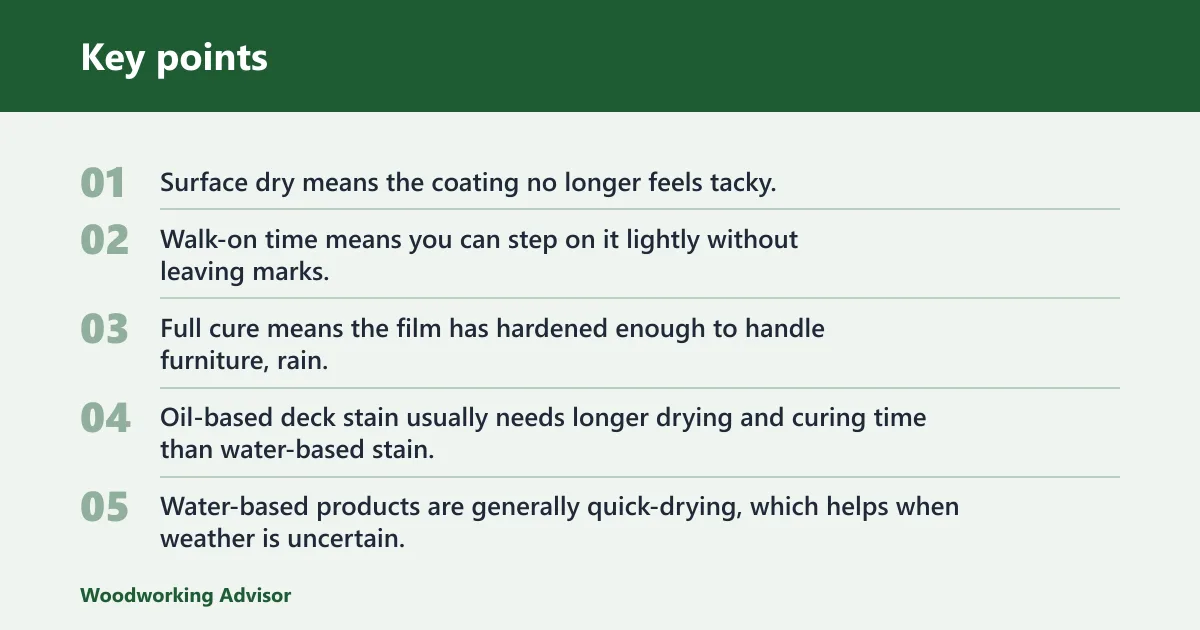


Deck stain drying time is not one clock. Surface dry means the coating no longer feels tacky. Walk-on time means you can step on it lightly without leaving marks. Full cure means the film has hardened enough to handle furniture, rain, and temperature swings with less risk of damage.
Oil-based deck stain usually needs longer drying and curing time than water-based stain. Water-based products are generally quick-drying, which helps when weather is uncertain. Transparent, semi-transparent, and solid stains also dry at different rates because film thickness and pigment load change how fast solvent or water leaves the coating.
The safest way to judge timing is to separate the weather into three questions: can the stain dry on the surface, can it survive a surprise shower, and will it cure before a cold night or frost? Those are not the same thing.
Surface dry vs walk-on time vs full cure
Surface dry is the earliest stage, and it is not enough for bad weather. Walk-on time is the point when the deck can take light traffic, but furniture and planters can still leave impressions if the film is soft. Full cure takes longer and is the stage that matters most before rain, dew, or frost.
A common first-timer mistake is to treat “dry to the touch” as “weatherproof.” That is risky on cool or damp days, especially with oil-based stain or a heavier solid finish.
How oil-based and water-based stains differ
Oil-based stain generally dries and cures more slowly, so it needs a wider weather margin. Water-based stain dries faster, but faster does not mean instant protection. If the forecast turns wet or cold, a quick-drying product still needs enough time for the film to set before the deck gets dew, rain, or freezing air.
For a forecast call, chemistry matters. Oil-based products deserve the more conservative choice when the next 24 to 48 hours are borderline. Water-based products can tolerate a narrower window, but only if temperature, humidity, and surface dryness all line up.
Why transparent, semi-transparent, and solid stains do not dry at the same rate
Transparent and semi-transparent stains are often applied thinner and may dry sooner than a solid stain. Solid stain lays down more pigment and more film, so it often needs extra time before rain or frost. That extra thickness can also make lap marks more likely if you work too slowly in bad weather.
If the deck is large, break the job into sections. Work one board run or a small bay at a time, then keep moving so each section stays inside the same weather window and does not lap over partly skinned stain.
How long before rain?
Wait at least 24 hours before rain for most deck stains, and add more time if the weather is cool, humid, or overcast. Water-based stain can sometimes tolerate a tighter window than oil-based stain, but a thin rain-safe margin is still the better call when the forecast is changing fast.
24-hour rain window: when to proceed and when to stop
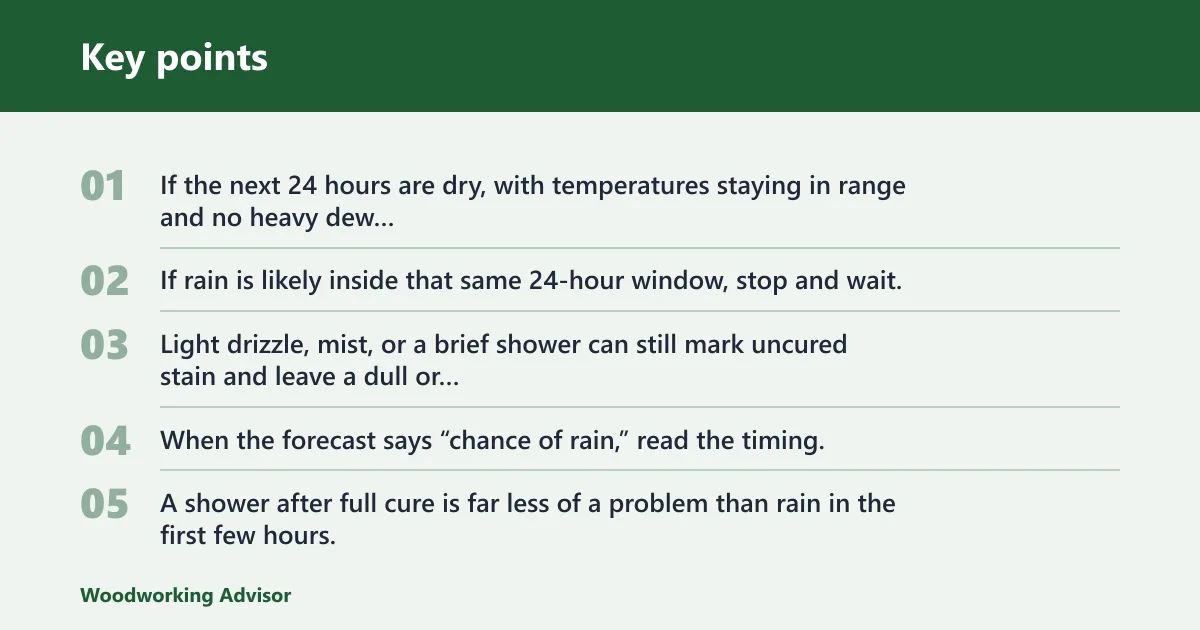
If the next 24 hours are dry, with temperatures staying in range and no heavy dew expected overnight, staining is usually workable. If rain is likely inside that same 24-hour window, stop and wait. Light drizzle, mist, or a brief shower can still mark uncured stain and leave a dull or blotchy finish.
When the forecast says “chance of rain,” read the timing. A shower after full cure is far less of a problem than rain in the first few hours. If the stain type is oil-based, treat that uncertainty as a warning sign. If it is water-based and the deck is already cool and damp, the margin is still thin.
48-hour forecast: how much margin you need in cool or damp weather
A dry stretch of about 48 hours gives a safer buffer, especially for oil-based stain and solid colors. That buffer matters more if the deck is in shade, the air is humid, or temperatures fall at night. Those conditions slow drying and push the deck closer to a failure point if rain arrives early.
Picture a west-facing deck that bakes in afternoon sun but cools fast after sunset. The surface may dry quickly, then fall into a damp evening with dew before the film has set. In that case, a 48-hour window is worth more than a hotter but shorter dry spell.
What to do if light rain is expected before full cure
If light rain is forecast before the stain reaches full cure, stop applying stain and wait. Do not assume that “light” rain is safe. Even a short shower can cause spotting, streaking, or a cloudy finish if the coating has not stabilized.
If rain hits after the stain has skinned but before full cure, let the deck dry fully before judging the damage. If the surface turns milky, blotchy, or uneven, the fix depends on the product and how much wash-off occurred. Some areas may need cleaning and a new coat after the deck dries again.
How long before frost?
Avoid staining if frost is expected within 48 hours, and be even more cautious when overnight lows are dropping fast. Frost is not just cool air. It can deposit moisture on a coating that has not cured, which raises the risk of whitening, poor adhesion, and a weak finish.
Overnight low temperature cutoff
Best results come from staining when surface temperatures stay between 50°F and 85°F, and many manufacturers work from a 50°F minimum application zone. If the overnight low is near that floor, drying slows sharply after sunset. If the deck is likely to cool below that point, wait for a better window.
Some guides also use a dry-day application range of 50–80 °F, which is a tighter target for safer curing. That lower top end matters when the forecast is unstable, because warmth in the afternoon does not cancel a cold night.
Freeze-before-cure risk on coated deck boards
Freeze-before-cure is a different problem from simple cool weather. A coating that has not cured can trap moisture or turn cloudy when temperatures dip and the surface freezes. That risk is highest on shaded boards, rail caps, and other surfaces that lose heat quickly after sunset.
If frost is likely, the safest choice is to postpone staining until the deck can dry through the night without freezing. A deck that survives the afternoon can still fail after midnight.
Why frost risk is different from simple cool weather
Cool weather slows drying. Frost can disrupt it. That difference matters because a deck may still look fine at dusk and then fail by dawn. When the forecast shows a low near freezing, treat it as a curing problem, not just a comfort problem.
Weather limits that matter
Temperature is only part of the decision. Humidity, surface heat, and dew point can make the same day either workable or risky. Air temperature alone does not tell you enough to decide whether a stain will dry before nightfall.
Ambient temperature and the 50°F minimum zone
Use 50°F as the common floor for application planning. If the day starts colder than that and never rises much above it, drying slows and the finish has less room to recover before evening. Many manufacturers also work in a 50°F to 85°F range, which gives a practical frame for day-of staining.
Competitor advice often stops at “pick a mild day,” but that is too vague. For this job, the forecast should show enough warmth to keep the film moving and enough daylight to let it set before dew or dark.
Surface temperature, sun exposure, and overheated boards
Surface temperature can run hotter than air temperature, especially in direct sun. Direct sunlight can push wood surface temperatures above 100°F, which can make stain flash too fast and leave lap marks or blotching. Hot boards can also trick you into thinking the deck is ready when the coating is still unstable underneath.
Shade and time of day matter. Early morning gives a longer application window, while late afternoon work should finish at least 2–3 hours before sunset.
Humidity, dew point, and why below 70% humidity helps
Humidity above the ideal target slows drying because moisture leaves the coating more slowly. The ideal humidity target mentioned for staining is below 70%. That gives the film a better chance to dry before evening dew forms.
Dew point is the temperature at which moisture starts to condense. If the wood cools to that level after sunset, morning moisture can return to the surface. Start only after dew has evaporated, or you may trap wetness under the stain and extend drying time again.
When to start and stop staining
Start after dew evaporates, and stop early enough to avoid trapping fresh stain in cooling air. Early morning is recommended because it gives a longer application window. Late afternoon can work too, but only if you finish before the deck starts losing heat fast.
Start after dew evaporates
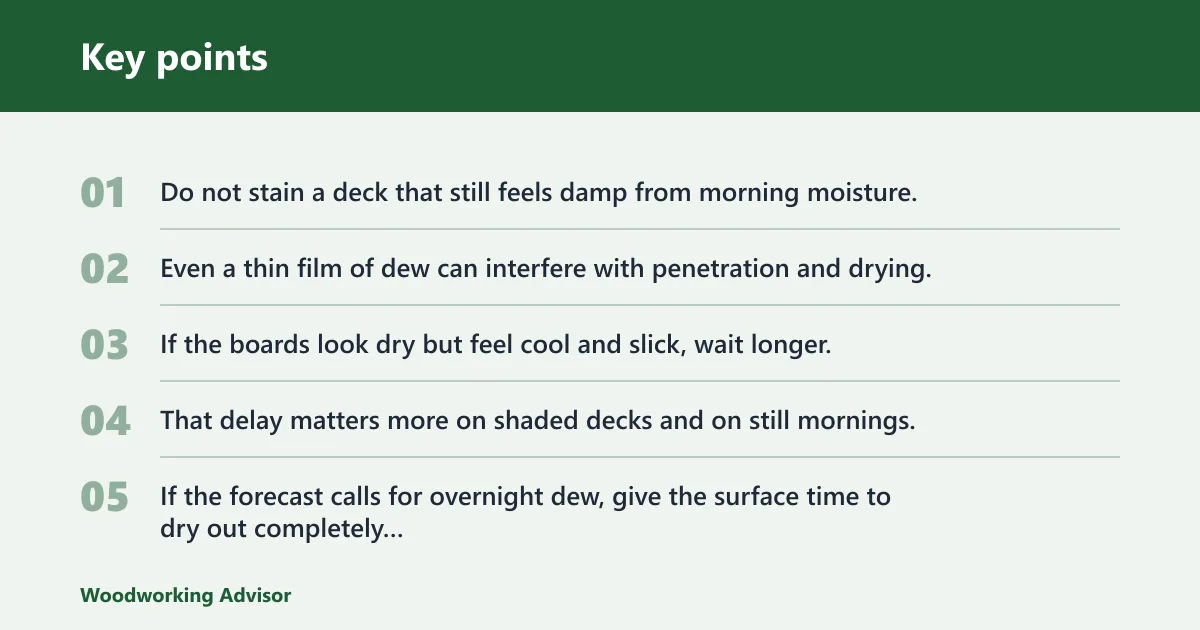
Do not stain a deck that still feels damp from morning moisture. Even a thin film of dew can interfere with penetration and drying. If the boards look dry but feel cool and slick, wait longer.
That delay matters more on shaded decks and on still mornings. If the forecast calls for overnight dew, give the surface time to dry out completely before you open the can.
Best timing in early morning or late afternoon
Early morning is often the better choice because you get more daylight to finish and more time before evening cooling. Late afternoon can work if the boards are already dry and the weather stays stable. Do not begin late in the day and hope the coating will outrun darkness.
Suppose a homeowner plans to stain a small 120-square-foot landing. If the job starts at 4 p.m. and sunset is near, the film may still be open when temperatures drop. That is a poor trade, even if the air feels warm at the start.
Why you should stop 2 to 3 hours before sunset
Late afternoon staining should finish at least 2–3 hours before sunset. That buffer gives the coating time to set before the surface cools, dew forms, and airflow drops. If you are still brushing by that point, stop and resume on a better day.
Rain-or-frost go/no-go chart
This chart turns the next 24 to 48 hours into a stain decision. Treat it as a field rule, not a guarantee. If your deck is shaded, humid, or already cool, choose the more conservative call.
| Forecast window | Minimum dry window | Oil-based stain | Water-based stain | Risk level | Stop application when… |
|---|---|---|---|---|---|
| 24 hours | At least 24 hours with no rain and no frost risk | Go only if temperatures stay in range, humidity is below 70%, and the deck is already fully dry | Go if the deck is dry, weather is stable, and overnight low stays safely above frost risk | Moderate if the day is warm; high if temperatures fall after sunset | Rain is possible, dew is likely, or the overnight low is near freezing |
| 48 hours | At least 48 hours for cooler, damp, or shaded decks | Best choice for a safer cure window before rain or frost | Usually workable if the deck is dry and the forecast stays mild | Low to moderate if the forecast is steady; high if the low drops fast | Nighttime temperatures are falling, humidity stays high, or rain moves in early |
Use the table this way: if the 24-hour row looks shaky, move to the 48-hour row or wait. If either row shows frost risk, do not stain. If rain is only a few hours away, the deck is not ready, no matter how good the afternoon looks.
How long after cleaning before staining?
After washing or brightening, a deck may need 24–48 hours to dry before staining. That is the minimum prep window most readers should plan around. Cool air, shaded boards, or a damp forecast can push that wait longer.
Dry time after washing or brightening
The deck must be dry through the boards, not just on the surface. Water left in the grain can dilute stain, slow adhesion, and create uneven color. If you cleaned heavily, assume the longer end of the 24–48 hour range unless the weather is warm, breezy, and dry.
Signs the deck is dry enough to stain
The surface should look uniformly dry, feel dry to the touch, and show no dark patches from trapped moisture. If the boards still look cooler or darker in shaded areas, those spots may need more time. Pay special attention to end grain and knots, which hold water longer.
What changes the wait time in cool or damp weather
High humidity, low temperatures, and poor airflow all stretch the wait. A deck that dries in 24 hours on a warm dry day may need the full 48 hours, or more, when the forecast is damp. If the weather turns after cleaning, delay staining rather than forcing it into a weak window.
Frequently asked questions
How long does deck stain need to dry before rain?
Wait at least 24 hours before rain for most deck stains, and longer if the product is oil-based, the day is humid, or temperatures fall after sunset. Water-based stain can dry faster, but it still needs enough time to set before moisture, dew, or a brief shower reaches the surface.
How long before frost can I stain a deck?
Avoid staining if frost is expected within 48 hours. Frost can hit a coating before it cures, which raises the risk of cloudiness, weak adhesion, and a finish that fails early. If overnight lows are near freezing, wait for a warmer stretch with a wider dry window.
What temperature is too cold for deck stain to cure?
Best results come from staining when surface temperatures stay between 50°F and 85°F. Below that range, drying slows and the finish has less time to stabilize before nightfall. If the deck is near 50°F and the forecast is cooling, stop and wait for a better window.
Can I stain a deck if rain is in the forecast tomorrow?
Only if the forecast gives you a full dry window and the stain has enough time to set before rain arrives. If the rain chance is high or the timing is unclear, do not stain. One short shower can leave spots, dull patches, or wash-off on an uncured finish.
How many hours before sunset should I stop staining?
Stop 2–3 hours before sunset. That buffer gives the stain time to set before the deck cools, dew forms, and airflow drops. If you are working close to dusk, finish the section you are on and save the rest for another day with more daylight.
Does humidity change deck stain drying time?
Yes. High humidity slows drying, and the ideal target mentioned for better results is below 70%. If humidity is high, extend the dry window and be more conservative with rain or frost risk. A stain that would be fine on a dry day may need extra time in damp weather.
Sponsored / affiliate links. As an Amazon Associate I earn from qualifying purchases. I may earn additional commission from eligible campaigns.