Sikkens SRD Stain Drying Time and Application Temperature
Sikkens SRD goes on only when air and surface temperatures stay within the label range, usually 50°F to 95°F, and when the coating can stay dry through the next 24 hours. Skip the surface temperature, overnight low, or rain window, and the stain can dry slowly, spot unevenly, or wash out. This guide covers the practical weather cutoff for SRD, plus drying time, recoat timing, and the risks of staining in cold or uncertain conditions.
Sikkens SRD weather limits
PPG ProLuxe Cetol SRD is a semi-transparent oil-based exterior wood stain with a one-coat finish. It is used on decks, siding, rails, boat docks, logs, and fences. You can apply it by brush, roller, or spray, with natural bristle brushing preferred.
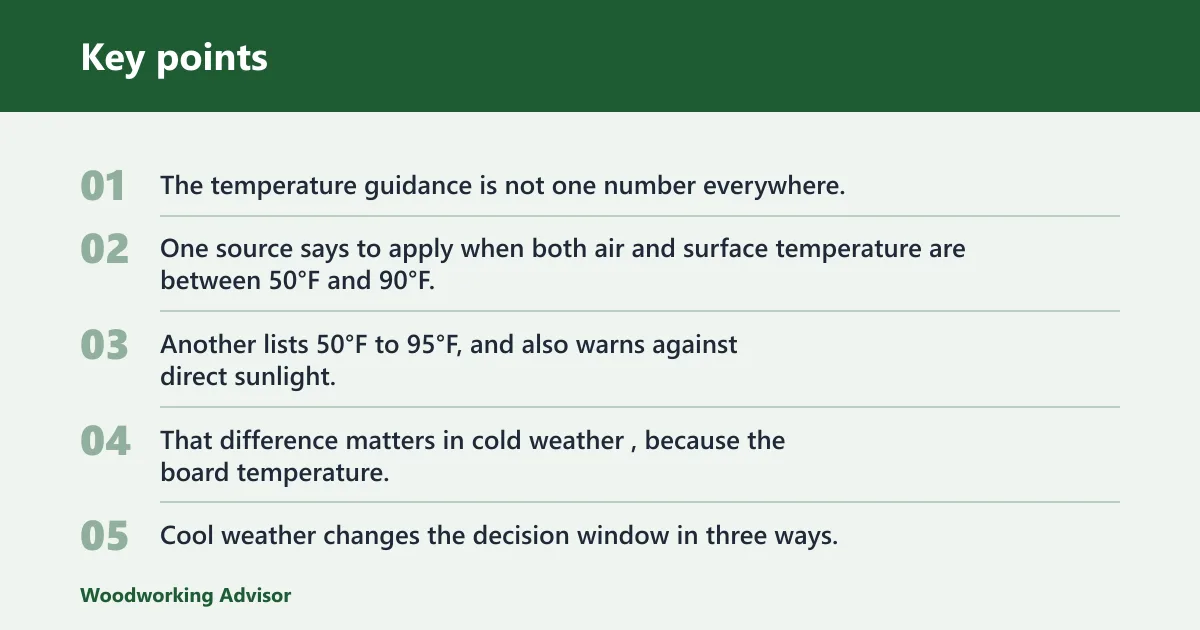
The temperature guidance is not one number everywhere. To apply when both air and surface temperature are between 50°F and 90°F. Another lists 50°F to 95°F, and also warns against direct sunlight. That difference matters in cold weather, because the board temperature, not just the air reading, controls how the stain wets out and cures.
Cool weather changes the decision window in three ways. Drying slows, the overnight low can pull the coating below its safe range after application, and cold boards may hold moisture or stay damp longer after dew. A stain can be “within range” at midday and still be a poor choice if the deck turns cold before the film sets.
What the product is and where it is used
This finish is meant for exposed exterior wood. The one-coat format is useful, but it does not remove the need for good weather. Clean, dry wood and a steady forecast matter as much as the stain itself.
Application range and surface-temperature caution
Use the air range as a starting point, not the only test. If the sun has heated the boards well above the air temperature, the surface can flash the finish too quickly. If the boards are colder than the air, the coating can stay tacky longer and accept moisture before it sets.
Why cool weather changes the decision
Cold weather narrows the margin for error. Low sun angle, higher humidity, and a dropping evening temperature can stretch dry time past the point where rain or dew becomes a problem. That is why the go/no-go call should include the surface, the overnight low, and the forecast.
Can you apply Sikkens SRD below 50°F?
No. Below 50°F is outside the stated application range, so the safer choice is to wait. Even if the afternoon air reaches the minimum, a cold surface or falling overnight low can leave the stain soft, slow to dry, or vulnerable to moisture before it cures enough to resist weather.
Air temperature versus surface temperature
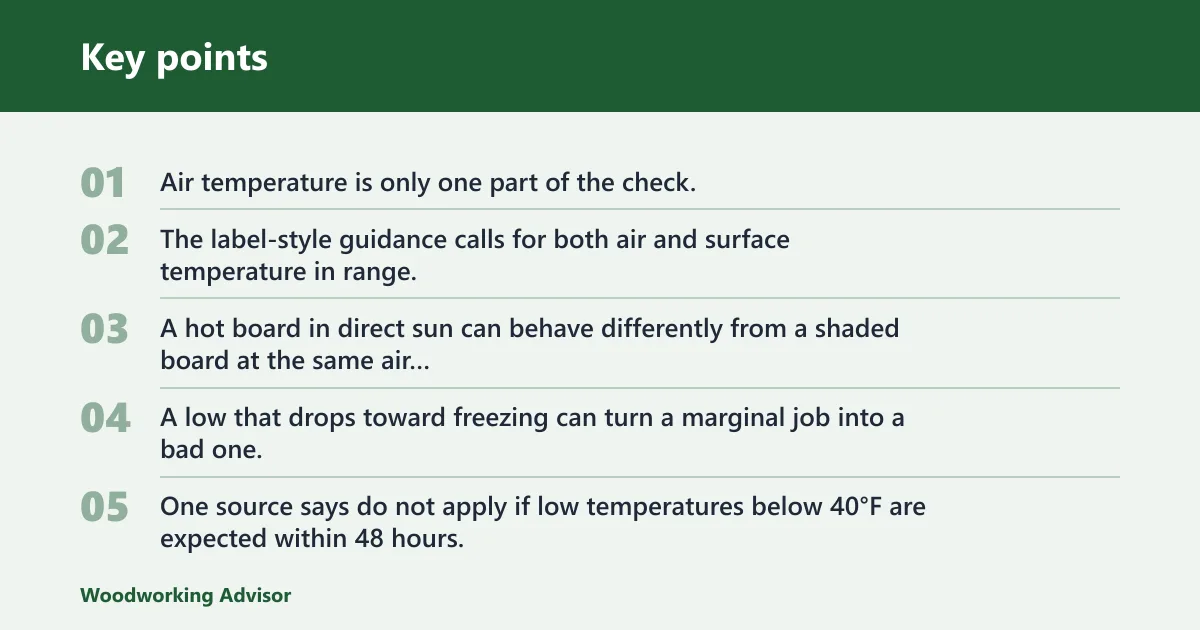
Air temperature is only one part of the check. The label-style guidance calls for both air and surface temperature in range, and one source also says to avoid direct sunlight. A hot board in direct sun can behave differently from a shaded board at the same air reading.
Overnight low and frost risk
A low that drops toward freezing can turn a marginal job into a bad one. Do not apply if low temperatures below 40°F are expected within 48 hours. The same source says not to apply when rain, dew, or frost are forecast within five hours. Follow the stricter practical rule.
When to wait instead of staining
If the forecast includes a cold night, heavy dew, or a wet front moving in, wait. A same-day air reading above 50°F does not override a board that will chill quickly after sunset. The project is safer when the coating has a full dry window before moisture returns.
Say your deck boards read 58°F in late afternoon, but the overnight low is forecast near 37°F with frost possible before sunrise. That is not a good stain day, even though the afternoon air met the range. The stain may still be soft when the surface temperature falls and condensation forms.
How long does Sikkens SRD take to dry?
At standard conditions, Sikkens SRD is listed as dry to the touch in about 6 hours and at a minimum dry time of 24 hours at 68°F and 65% relative humidity. Light foot traffic is allowed after 24 to 48 hours, and furniture use is recommended after 72 hours.
Touch-dry timing at standard conditions
Touch-dry is not the same as ready for use. A surface may feel dry long before the film has enough body to take foot traffic or furniture load. At the stated standard condition, about 6 hours gets you to touch-dry, not full service.
Walk-on timing in cool weather
Light foot traffic after 24 to 48 hours is the useful benchmark for decks and similar surfaces. In cool weather, expect the longer end of that window. Higher humidity and colder boards both extend the time before the film is ready for people, chairs, or planters.
Recoat and full-dry timing
This product is marketed as a one-coat finish, so the usual question is not a second coat the same day. If you are comparing timing for top use, think in terms of touch-dry, light traffic, and full service. Furniture use after 72 hours is a better sign of full readiness than touch-dry alone.
Picture a 12-by-16-foot deck that was stained on a cool afternoon after a damp morning. The surface may feel dry the next day, yet chair legs can still mark it if the film has not finished curing. That is why furniture timing matters separately from touch-dry timing.
How humidity and rain change drying
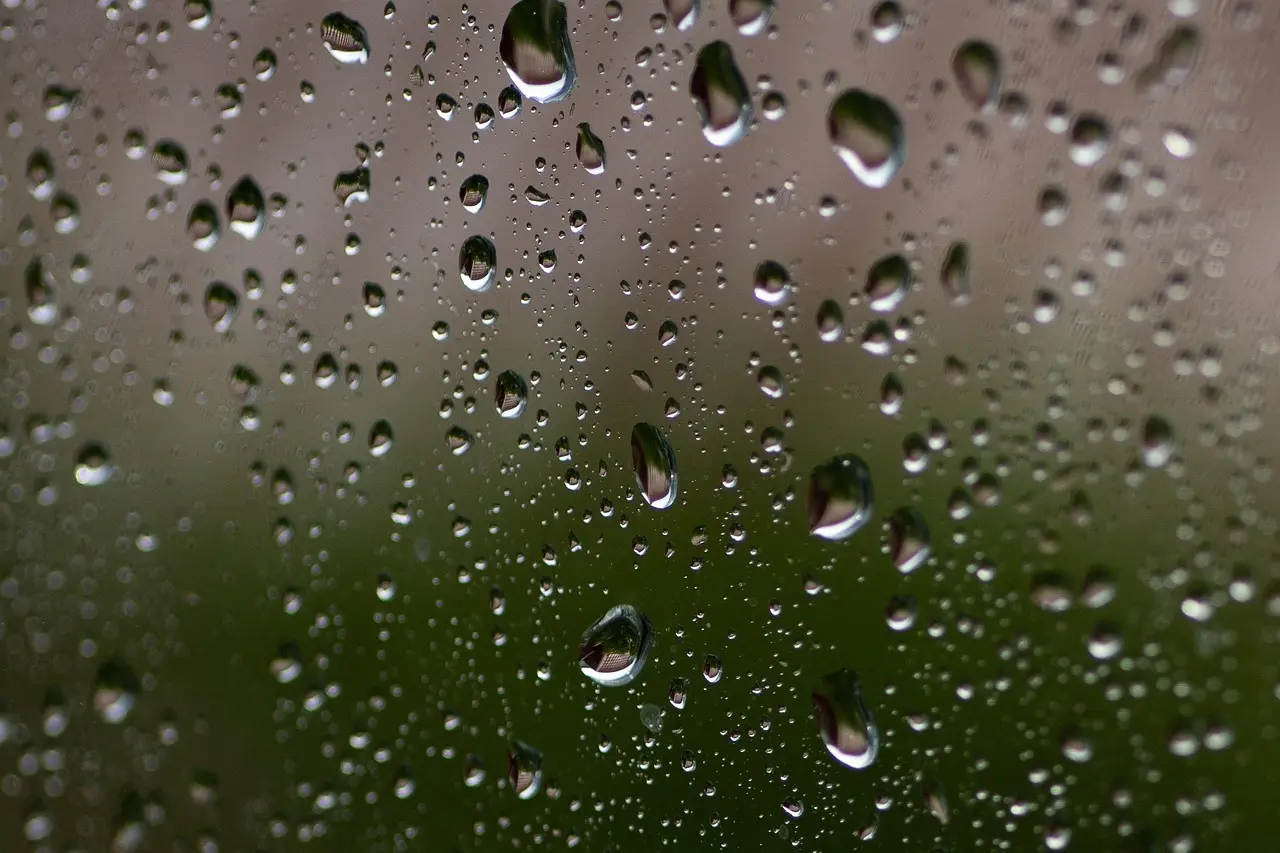
High humidity slows drying. The label-style benchmark tied to dry time is 65% relative humidity, and that is already not a low-moisture setting. When humidity rises above that, the coating usually holds solvent longer and needs more time before rain, dew, or traffic.
Relative humidity and the 65% benchmark
Use 65% RH as the reference point, not as a comfort zone. If the day is humid, the stain can stay open longer and attract dust, pollen, or leaf debris. That delay matters most when the forecast turns wet after sunset or overnight.
Rain, dew, and frost warning windows
The weather warning is more than a single rule. Do not apply if rain, snow, heavy dew, or low temperatures below 40°F are expected within 48 hours. The same source says do not apply when rain, dew, or frost are forecast within five hours. Follow the stricter no-moisture window when conditions are uncertain.
That means the job should be postponed if any wet event is near enough to threaten the first drying stage. A short shower five hours out is a clear no-go. So is a quiet-looking evening that ends with heavy dew before the film has set.
What to do if weather changes after application
If unexpected rain hits after application, stop all traffic and let the finish dry undisturbed. If the rain was light and the coating had already reached a firm stage, the result may be acceptable after full drying. If water marks, dull patches, or sticky spots remain, the surface may need more cleanup before any recoat.
Sikkens SRD cold-weather go/no-go table
This decision table separates the main weather checks. Use it before you open the can. When more than one row points to risk, do not force the job through.
| Air temperature | Surface temperature | Relative humidity | Forecast rain/frost window | Wood moisture content | Recommended action |
|---|---|---|---|---|---|
| 50°F to 90°F | 50°F to 90°F and stable | Near or below 65% RH | No rain, dew, or frost within at least 24 to 48 hours | 21% or less; wood is clean and dry | Apply |
| 50°F to 95°F | Within range, but not in hot sun | High but not extreme | No rain, dew, or frost within five hours, with a dry overnight forecast | 21% or less | Apply with caution and keep the forecast under review |
| Near 50°F but falling | Cool boards, shaded boards, or boards that will chill after sunset | Above 65% RH | Rain, dew, frost, or a cold night within 48 hours | Unknown or near the limit | Wait |
| Below 50°F | Below 50°F or cooling fast | Any level | Any wet window or frost risk | Any reading above 21% | Wait |
| Any air temperature | Hot surface in direct sun | Any level | Dry forecast does not cancel surface heat risk | 21% or less | Monitor until the board cools or move to shade |
Prep, coverage, and application method
Wood should be clean, dry, and within the listed moisture limit before coating. The substrate moisture content should not exceed 21% during application. Coverage also changes with the surface, which affects how much product you need and how long the project takes to complete.
Brush, roller, or spray application
Brush, roller, and spray are all listed application methods. If you spray, back-brush the stain so it works into the wood surface and evens out lap marks. Natural bristle brushing is preferred, especially on open-grain lumber and weathered boards that need more controlled wetting.
Coverage rate on rough versus smooth wood
Coverage on rough and weathered surfaces is 150 to 250 sq. ft. per gallon. On smooth surfaces or hardwoods, coverage is 300 to 400 sq. ft. per gallon. That difference matters because rough wood uses more material and usually leaves less margin for a rushed second coat or touch-up.
Maintenance and reapplication
Some test results indicate full stripping may be required before reapplication. Other guidance points to annual cleaning as a practical maintenance step. Those two ideas fit together: if the coating is left to age unevenly, cleaning may not be enough to restore a good base for the next coat.
A common first-timer mistake is to estimate coverage from a smooth-wood figure and then run short halfway through a rough deck. If a 200 sq. ft. deck is weathered and open-grained, the actual gallon use can land much closer to the rough-surface range than the smooth-surface range.
Frequently asked questions
How long does Sikkens SRD take to dry before rain?
Use the stricter weather window, not just touch-dry time. Do not apply if rain, snow, heavy dew, or low temperatures below 40°F are expected within 48 hours, and another says do not apply when rain, dew, or frost are forecast within five hours. If rain is near, wait.
What temperature can you apply Sikkens SRD stain?
The common guidance is 50°F to 90°F for both air and surface temperature, and one source lists 50°F to 95°F. The practical limit is the board surface, not just the air. Avoid direct sunlight and hot boards, because they can change how the stain penetrates and dries.
Can you use Sikkens SRD below 50°F?
No. Below 50°F is outside the stated application range, so the safer call is to wait. Cold boards, a dropping overnight low, or frost risk can leave the film soft for too long. That creates a higher chance of tackiness, dull spots, and moisture damage before cure.
How long before you can walk on Sikkens SRD?
Light foot traffic is allowed after 24 to 48 hours. Cooler weather pushes that timing toward the longer end. Do not confuse touch-dry with walk-on readiness. A surface can feel dry in about 6 hours and still mark easily under shoes, chairs, or planters.
What humidity slows Sikkens SRD drying?
High humidity slows drying, and the quoted benchmark tied to standard dry time is 65% relative humidity. Above that level, the coating usually needs more time to shed solvent and firm up. That matters most if evening dew, rain, or frost may arrive before the film has set.
Do you have to brush Sikkens SRD on?
No, it can be brushed, rolled, or sprayed. Still, natural bristle brushing is preferred, and back-brushing after spray application helps even out the coat and push the stain into the wood. On weathered or rough lumber, brushing gives you more control over lap marks and penetration.
How long should Sikkens SRD dry before a topcoat?
This is a one-coat finish, so a second coat is usually not the normal path. For use and handling, the meaningful stages are touch-dry at about 6 hours, minimum dry time at 24 hours under standard conditions, light foot traffic after 24 to 48 hours, and furniture use after 72 hours.
What happens if it rains after applying Sikkens SRD?
If rain hits too soon, the finish can dry unevenly, wash out, or leave dull and sticky areas. The outcome depends on how far the film had set before the rain. If the weather changed inside the no-rain window, let it dry fully and inspect for blotchy or soft spots before any recoat.
Sponsored / affiliate links. As an Amazon Associate I earn from qualifying purchases. I may earn additional commission from eligible campaigns.