Should You Screw Down Bed Slats? Yes
Yes, in most cases you should screw down bed slats. Fixed slats stop the shifting and squeaking that loose slats cause, and they keep the mattress evenly supported instead of sagging into gaps that open up as slats slide out of position over time. The main exception is a bed designed for tool-free plastic slat holders instead of screws – in that case, the holders do the same job without putting fasteners into the frame.
Types of Bed Slats
The No-Screw Alternative
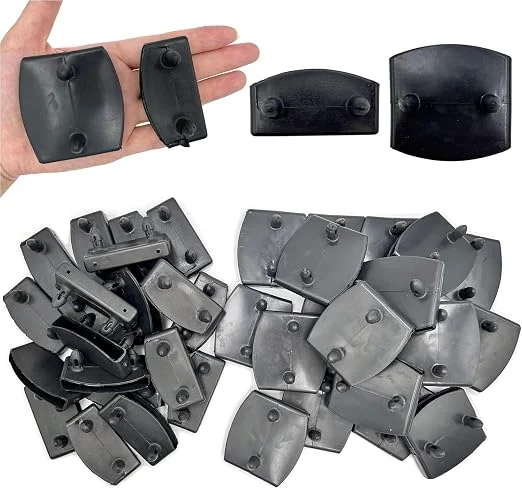 |
Replacement Bed Slat Centre & End Cap Holders If your frame originally used plastic holders rather than screws, replacing a cracked or missing one restores the original design instead of drilling new holes.
|
Solid slats are strong, don’t flex, and are usually straightforward to cut and install – the tradeoff is a firmer overall feel since there’s no give under the mattress. Sprung slats (usually curved beech) flex slightly under weight, which softens the feel and reduces pressure points, but they’re more involved to install and typically aren’t meant to be screwed rigidly in place, since screwing down the curve defeats their flex. Check which type your bed uses before deciding on screws versus another fastening method. Slat count and spacing matter too: most queen and king frames use 12-17 slats spaced 2-3 inches apart, and a gap wider than about 3 inches can let a mattress sag between slats over time regardless of whether the slats are screwed down or not, so check spacing before assuming a squeak is a fastening problem.
Why Screwing Slats Down Helps
Most of the complaints people search for – a bed that creaks with every roll-over, a mattress that feels lumpy in one specific spot, a frame that seems to be slowly working itself apart – trace back to slats that were never fixed in place. The fix is usually this simple:
- Stops shifting and squeaking. Slats that can slide against the frame or each other are the most common source of bed noise.
- Keeps the mattress evenly supported. A slat that’s worked loose creates a gap the mattress can sag into, which shows up as an uneven sleeping surface over time.
- Reduces wear on the mattress. Consistent, even support reduces the localized stress that leads to premature sagging in a mattress.
- Simplifies moving and storage. A frame with fixed slats can be lifted or carried as one unit without slats sliding off and scattering, which matters more than it sounds like the first time it happens on a staircase.
Where Screwing Slats Down Can Cause Problems
Screws aren’t the right call for every bed. Sprung slats, as mentioned, are designed to flex, and rigidly screwing them down can crack the slat or defeat the sprung effect entirely. Some platform beds are engineered for slats to sit in molded holders that allow slight movement for weight distribution – forcing screws into a design like that can void a warranty or actually reduce support rather than improve it. And if slats are packed edge-to-edge with no gap at all, screwing them down removes the small amount of airflow that gap normally provides under the mattress, which can be a factor in moisture buildup over time on beds without a separate foundation or box spring. It’s also worth checking the manufacturer’s own instructions before drilling into any part of a frame still under warranty – some brands specifically void coverage for structural modifications, even a fastening change as small as a few screws.
Tools and Materials Needed
- Drill with a pilot-hole bit sized for the screws being used
- Wood screws (length matched to slat and frame rail thickness combined, with room to spare)
- Tape measure and pencil for marking screw locations
- Screwdriver bit or driver for final tightening
- Safety glasses
- Wood slats, if building the set from scratch rather than reusing an existing set (see our DIY bed slats build guide for cutting and spacing)
Screw Size and Spacing Guidelines
A #8 or #10 wood screw, roughly 1.25 to 1.5 inches long, is the standard size for slat-to-rail fastening on most frames – long enough to bite into the rail without punching all the way through it. Two screws per slat-to-rail contact point (one on each side of the slat where it crosses the rail) hold better than a single center screw, since a single screw lets the slat pivot slightly around it over time.
Step-by-Step: Screwing Down Bed Slats
- Remove the mattress and set it aside, then inspect the frame for any damage or loose joints and fix those first.
- Clean dust and debris off the frame rails so the slats sit flush and screws don’t slip on grit.
- Lay the slats evenly across the frame, spaced according to the manufacturer’s original spacing if the bed came with slats, or roughly 2-3 inches apart for a DIY setup.
- Mark screw locations at each point where a slat crosses a frame rail.
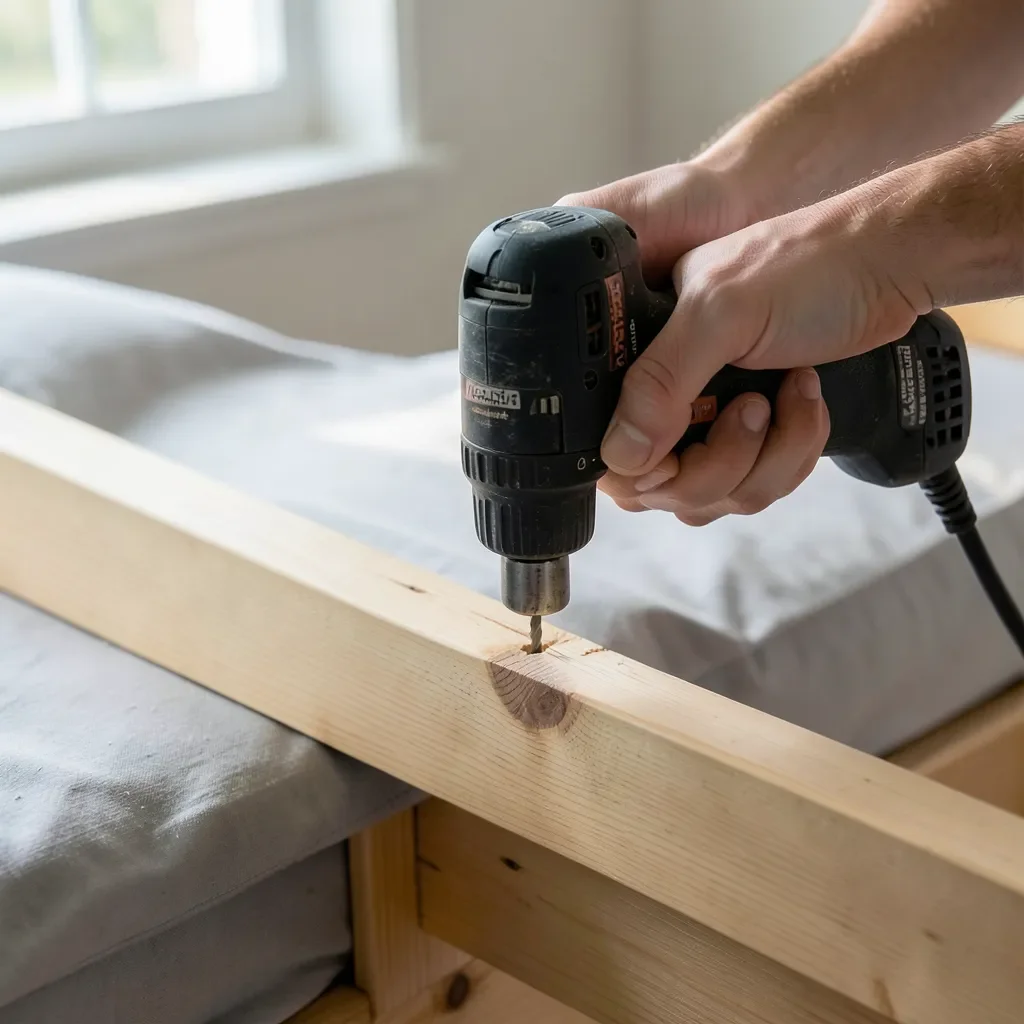
- Drill a pilot hole at each mark – this is the step most people skip, and skipping it is the main reason a slat splits when the screw goes in.
- Drive each screw until snug, not over-tightened; over-tightening can crack the slat or strip the pilot hole so the screw no longer holds.
- Check every slat for movement once all screws are in before replacing the mattress.
If a rail feels soft or a screw won’t hold snug even after a couple of tries, that’s usually a sign of moisture damage or split wood in the rail itself rather than a screw problem – patching the rail (a wood filler for a minor split, a full rail replacement for anything worse) before re-driving the screw gets a lasting fix instead of a screw that works loose again in a month.
Alternatives to Screws
Plastic slat holders (centre caps and end caps, like the ones shown above) are the standard alternative on beds designed for them – they clip the slat in place without any drilling, and they’re the correct fix if a bed originally used this system and a cap has cracked or gone missing. Heavy-duty hook-and-loop straps wrapped around the slat and frame rail are another no-drill option, though they’re less secure than either screws or purpose-made holders and are better suited as a temporary fix than a permanent one.
Sprung Slats: A Different Fastening Approach
Sprung slats are usually pre-attached to plastic end caps that sit in molded holders on the frame rail rather than sitting loose like solid slats. If one of these caps has cracked, replacing the individual cap (rather than screwing the slat down directly) keeps the intended flex intact. Screwing straight through a sprung slat’s curve locks it flat, which removes the cushioning effect the design is built around and can also crack the beech under repeated flexing stress against a rigid screw point.
Maintenance
Check screwed-down slats every few months, or sooner if the bed starts creaking again – wood expands and contracts with humidity changes, which can gradually loosen a screw over a season even if nothing was wrong with the original installation – a bed frame in a humid basement or a room without climate control will typically need re-checking more often than one in a stable, air-conditioned bedroom. Tighten any loose screw with a screwdriver, but stop at snug; continuing to tighten a screw that’s already seated can strip the hole rather than improve the hold, at which point the fix is a slightly larger screw or a dab of wood glue in the hole before re-driving the original.
Frequently Asked Questions
Should bed slats be screwed down?
Yes, in most cases – it stops shifting and squeaking and keeps the mattress evenly supported. The exception is beds designed for tool-free plastic holders or sprung slats meant to flex, where screws aren’t the right fastening method.
What screws are best for bed slats?
Standard wood screws sized to the combined thickness of the slat and frame rail, with a pilot hole drilled first to prevent splitting.
Can loose bed slats cause problems?
Yes. Loose or shifted slats create gaps the mattress can sag into, leading to uneven support and, over time, premature mattress wear.
How often should you check bed slats?
Every few months is a reasonable routine check, and any time the bed starts creaking again is a sign to check sooner.
Conclusion
Solid slats, sprung slats, and holder-clip systems all solve the same underlying problem – keeping the mattress evenly supported – in three different ways, and matching the fix to the system already on your frame matters more than defaulting to whichever method is fastest. For most solid-slat beds, screwing the slats to the frame is the right call – it’s a quick fix that stops noise and keeps the mattress supported evenly for longer. Check whether your specific bed uses sprung slats or tool-free holders first, since those two setups call for a different approach than screws.
Sponsored / affiliate links. As an Amazon Associate I earn from qualifying purchases. I may earn additional commission from eligible campaigns.