Howard Feed-N-Wax vs Restor-A-Finish: Which Should You Use?
Use Restor-A-Finish on finished wood with light scratches, dull spots, and faded color. Use Howard Feed-N-Wax after that, or by itself, when the finish is sound and you want wax protection plus a cleaner sheen. Pick the wrong product and you can end up with sticky buildup, muddy color, or a surface that still looks tired. This guide compares both products by finish type, damage level, and the result you want from the repair.
This guide is part of our Which Wood Finish to Use: Polyurethane, Oil, Wax or Varnish and How to Apply It series.
| Factor | Howard Feed-N-Wax | Restor-A-Finish | Winner |
|---|---|---|---|
| Best job | Wax-and-oil maintenance on sound finished wood | Color blending and finish revival on worn existing finishes | Depends on goal |
| Damage it can address | Dryness, dullness, and a tired-looking surface | Faded color, light scratches, water rings, and some deeper finish defects | Restor-A-Finish |
| Surface type fit | Dining tables, furniture, antiques, cabinets, and doors | Lacquer and shellac; some other existing finishes | Restor-A-Finish |
| Food-prep use | Not intended for food-preparation surfaces | Not the right choice for food-contact work either when the goal is conditioning a cutting surface | Neither |
| Maintenance role | Repeat upkeep after a finish is already in good shape | One-time or occasional restoration, then wax if needed | Feed-N-Wax for upkeep |
| Hard film finishes | Can leave residue on a sealed, intact film | May not penetrate harder plastic-like finishes, including some polyurethane finishes | Neither |
What each Howard product does
Howard Feed-N-Wax and Restor-A-Finish solve different problems. Feed-N-Wax is a maintenance coating made from beeswax, carnauba wax, mineral oil, and orange oil, while Restor-A-Finish is a color-and-solvent product that blends into an existing finish and helps reduce the look of wear.
Restor-A-Finish: color blending and finish revival
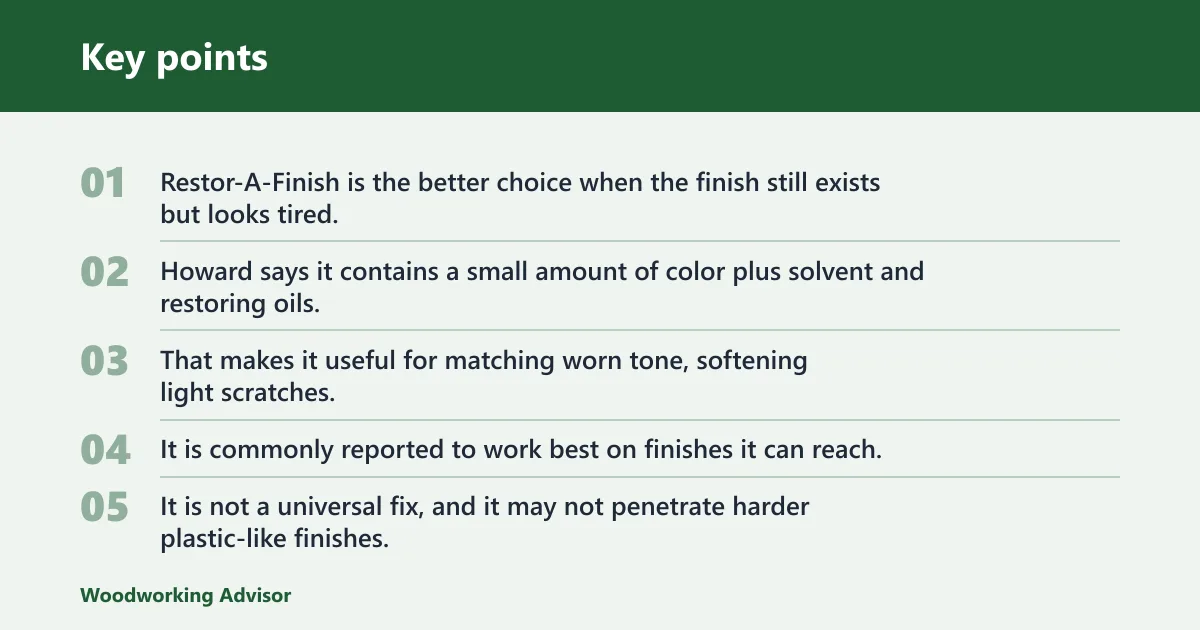
Restor-A-Finish is the better choice when the finish still exists but looks tired. Howard says it contains a small amount of color plus solvent and restoring oils, and it comes in eight colors. That makes it useful for matching worn tone, softening light scratches, and improving faded patches without stripping the piece.
It is commonly reported to work best on finishes it can reach, especially lacquer and shellac. It is not a universal fix, and it may not penetrate harder plastic-like finishes, including some polyurethane finishes.
Feed-N-Wax: wax-and-oil maintenance coating
Feed-N-Wax is for finished wood that needs a better sheen and a refreshed surface, not a repair. Howard lists it for dining tables, furniture, antiques, cabinets, and doors. It should sit for about 20 minutes before you wipe off the excess, and it is commonly said to contain no silicone or linseed oil.
Use it for routine upkeep once the finish is sound. Do not treat it as a scratch remover, water-ring repair, or color restorer.
Side-by-side use in real repairs
A common first-timer mistake is reaching for Feed-N-Wax when a table top has pale rings and fine scratches. That usually leaves the damage visible, only slightly glossier. Restor-A-Finish is the better first step because it can blend the finish around the defect and reduce how obvious the wear looks.
Suppose an oak buffet still feels smooth but looks flat after years in a dining room. Restor-A-Finish can revive the tone if the finish is compatible, then Feed-N-Wax can be added later as a maintenance step. If the buffet already has an intact film finish and only needs routine sheen, skip the restorer and use wax alone.
Finish decision matrix
This matrix answers the fastest question: what finish do you have, what is wrong with it, and which Howard product fits that problem. The right pick changes with the surface, not just the brand name on the bottle.
| Finish type | Visible problem | Best Howard product | Reason to choose it | Do not use |
|---|---|---|---|---|
| Lacquer or shellac | Fading, dullness, light scratches | Restor-A-Finish | It is designed to blend into existing finishes and works on these finishes well | Feed-N-Wax as the first fix for finish damage |
| Waxed wood | Dry surface, weak sheen | Feed-N-Wax | It refreshes the waxed surface and adds a maintenance layer | Restor-A-Finish if the goal is only routine upkeep |
| Dry dull wood | Flat look, tired color | Restor-A-Finish, then Feed-N-Wax | First restore the color and appearance, then add wax protection after the finish settles | Feed-N-Wax alone if the color has faded |
| Water rings | White spot or cloudy ring | Restor-A-Finish with 0000 super-fine steel wool | Howard suggests steel wool for larger finish damage after a test on an inconspicuous area | Feed-N-Wax as a repair product |
| Light scratches | Fine surface marks | Restor-A-Finish with 0000 super-fine steel wool if needed | It can blend and reduce the look of the marks better than wax alone | Feed-N-Wax as the only treatment |
| Hard polyurethane or other factory film finishes | Dull but sealed, plastic-like surface | Neither, unless a test shows the restorer can actually penetrate | Restor-A-Finish may not penetrate these finishes, so results are often poor or uneven | Assuming either product will fix a failed film finish |
Lacquer and shellac
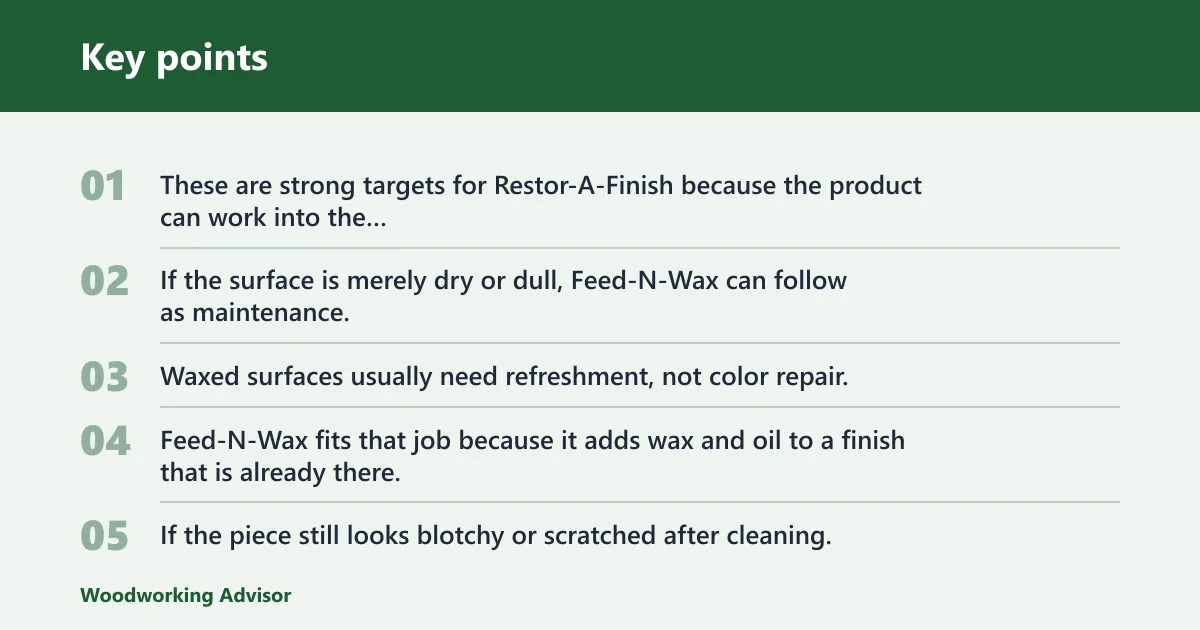
These are strong targets for Restor-A-Finish because the product can work into the existing finish and blend wear. If the surface is merely dry or dull, Feed-N-Wax can follow as maintenance, but it should not be the first move when the real issue is lost color or finish wear.
Waxed wood
Waxed surfaces usually need refreshment, not color repair. Feed-N-Wax fits that job because it adds wax and oil to a finish that is already there. If the piece still looks blotchy or scratched after cleaning, that is a clue that the issue is deeper than simple upkeep.
Dry dull wood
Dry-looking wood can mean two different things: the finish is intact but flat, or the finish has worn enough that color is gone. Restor-A-Finish addresses the second case. Feed-N-Wax is the better maintenance step once the surface is back in shape.
Water rings and light scratches
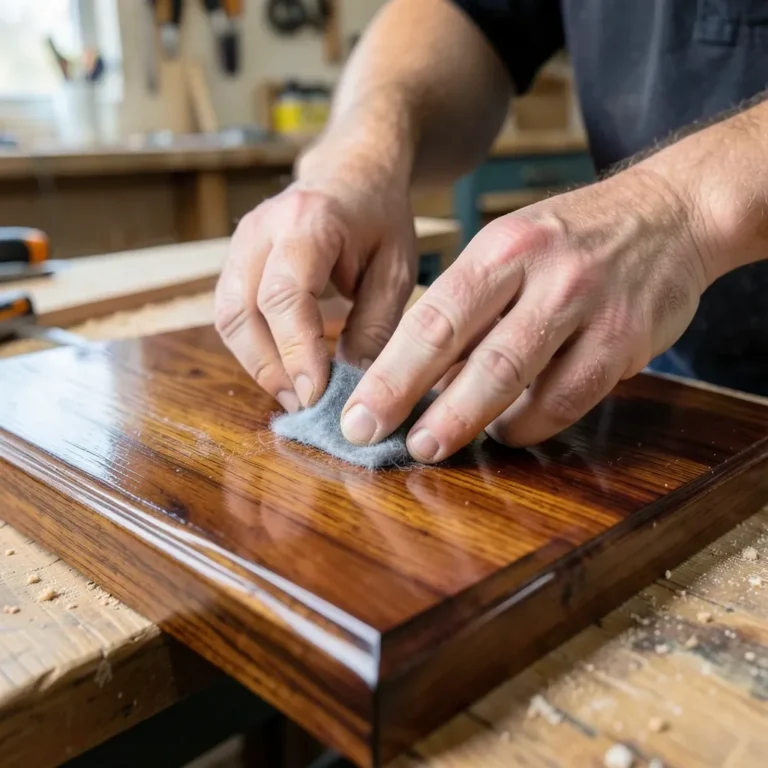
Howard recommends 0000 super-fine steel wool with Restor-A-Finish for larger finish damage. That makes sense for water rings and light scratches because the steel wool helps the restorer work the affected area more evenly. Always test on a small inconspicuous area first, since finish reactions can vary.
Hard polyurethane and other film finishes
Sealed polyurethane, conversion varnish, and similar factory film finishes can resist Restor-A-Finish because the product may not penetrate them. If the surface is intact but dull, wax may give a temporary sheen, but it will not repair a failed film. When the coating is missing, cracked, or flaking, stripping and refinishing is often the better path.
Can you use Restor-A-Finish on polyurethane finish?
Usually, not as a reliable fix. Restor-A-Finish may not penetrate harder plastic-like finishes, including some polyurethane finishes, so the result can be weak or patchy instead of blended. If the finish is a sealed film and still intact, a restorer is the wrong tool for the job.
Why sealed polyurethane is a weak target
Polyurethane forms a tougher surface film than lacquer or shellac, so a color-and-solvent restorer has less chance to move into the finish. That matters because Restor-A-Finish depends on blending into what is already there. If it cannot bite into the surface, it cannot correct the wear evenly.
What happens on conversion varnish and factory film finishes
Conversion varnish and many factory-applied film finishes behave like polyurethane in this context. They may look dull from age or cleaning, but the film itself blocks the kind of penetration Restor-A-Finish needs. The product may improve the look in small areas, yet it is not dependable enough to count on.
What to do instead when the finish is intact but dull
If the film is sound and the issue is only a tired sheen, clean the surface and use Feed-N-Wax as a maintenance product. If the film is failed, patchy, or missing, neither Howard product replaces proper stripping and refinishing.
Should Restor-A-Finish come before Feed-N-Wax?
Yes. If you plan to use both, Restor-A-Finish comes first because it addresses color loss and finish wear before any wax layer goes on top. Howard recommends waiting 30 minutes before applying Feed-N-Wax after Restor-A-Finish.
The correct order for restoration
Start with the restorer on a clean, test area if the finish is compatible and the piece has scratches, rings, or faded color. After the surface has been treated and the excess removed, let it sit, then add Feed-N-Wax only if you want extra sheen and routine protection. Wax first makes later blending harder.
Why Restor-A-Finish needs time before waxing
Restor-A-Finish needs that waiting period so its solvents and restoring oils can do their work without being trapped under wax too early. Adding wax too soon can muddy the finish, soften the visual result, or leave residue where you want a clean blend.
How long to wait before adding Feed-N-Wax
Howard recommends waiting 30 minutes before applying Feed-N-Wax after Restor-A-Finish. Feed-N-Wax itself should then sit at least 20 minutes before excess is wiped off.
When should you choose wax instead of a restorer?
Choose wax when the finish is already sound and you want maintenance, not repair. Feed-N-Wax is the better answer for routine upkeep on finished furniture, cabinets, and doors when the surface is dry-looking but not visibly damaged.
Maintenance on sound finished wood
If the wood is still evenly colored and the only complaint is a flat look, wax is usually enough. Feed-N-Wax adds a maintenance coating without trying to recolor the surface. That makes it appropriate for ongoing care, not rescue work.
When sheen matters more than color repair
Some pieces need only a cleaner, more even sheen. In that case, wax is the simpler choice because it supports the existing finish rather than trying to alter it. Restor-A-Finish is for when the finish itself looks worn, faded, or scratched.
Why Feed-N-Wax is the wrong choice for damage repair
Feed-N-Wax does not repair scratches, water rings, or faded color on its own. If those defects are visible, the finish needs a restorer or a refinishing plan. Wax can make the surface feel better, but it will not solve the visual problem.
Choose Howard Feed-N-Wax if… / Choose Restor-A-Finish if…
Choose Howard Feed-N-Wax if the finish is sound, you want routine upkeep, and you are aiming for a cleaner sheen rather than a color correction. Choose Restor-A-Finish if the wood shows dull spots, light scratches, water rings, or faded color and the finish is one it can actually penetrate.
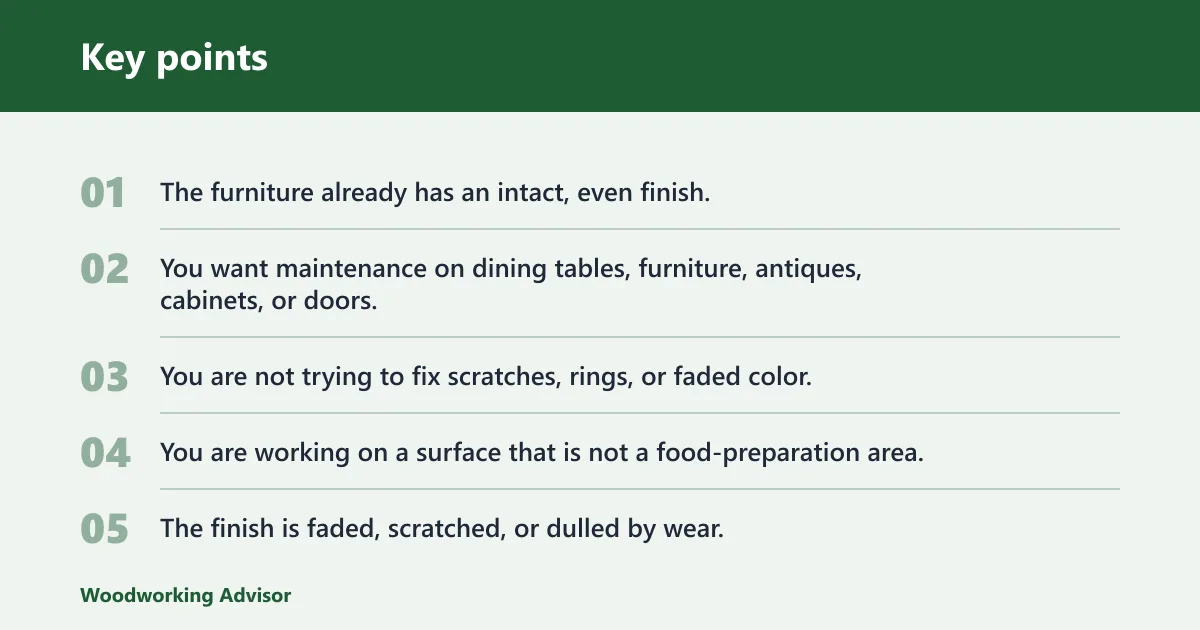
Choose howard feed-N-Wax if…
- The furniture already has an intact, even finish.
- You want maintenance on dining tables, furniture, antiques, cabinets, or doors.
- You are not trying to fix scratches, rings, or faded color.
- You are working on a surface that is not a food-preparation area.
Choose Restor-A-Finish if…
- The finish is faded, scratched, or dulled by wear.
- The piece is lacquer, shellac, or another existing finish that can take a restorer.
- You want to improve appearance before adding wax later.
- You are willing to test a small inconspicuous area first.
Do not choose either product if…
- The finish is failing, missing, or peeling and needs stripping or refinishing.
- The surface is hard polyurethane or a similar film finish that resists penetration.
- The job is a food-prep surface that needs a food-safe conditioner instead.

Food-surface and UV alternatives
Howard has separate products for surfaces that do not fit Feed-N-Wax. Use the food-surface products on prep areas, and use the UV product when the wood sits in sunlight.
Butcher Block Conditioner for butcher block counters
Howard says to use Butcher Block Conditioner on butcher block counters instead of Feed-N-Wax. That keeps the recommendation aligned with food-preparation use and avoids treating a prep surface like a furniture finish.
Cutting Board Oil for cutting boards
Howard says to use Cutting Board Oil on cutting boards instead of Feed-N-Wax. That is the correct branch when the wood is meant for food contact and you want a dedicated treatment for that task.
SunShield for sun-exposed wood
Howard SunShield is the UV-protection product in this group. Use it on wood that gets sun exposure, where fading and UV wear are part of the problem rather than simple dryness or finish dulling.
Frequently asked questions
What is the difference between Howard Feed-N-Wax and Restor-A-Finish?
Howard Feed-N-Wax is a wax-and-oil maintenance product for sound finished wood, while Restor-A-Finish is a color-and-solvent restorer for dull, scratched, or faded finishes. Feed-N-Wax adds sheen and upkeep. Restor-A-Finish changes the look of the existing finish by blending wear and color loss.
Should I use Restor-A-Finish before Feed-N-Wax?
Yes, if you plan to use both. Restor-A-Finish comes first so it can work into the existing finish, and Howard recommends waiting 30 minutes before applying Feed-N-Wax. Putting wax on first can interfere with the restorer’s ability to blend the finish properly.
Is Feed-N-Wax food safe?
Howard says Feed-N-Wax is not intended for food-preparation surfaces, so you should not treat it as a food-safe finish for prep areas. It is meant for furniture, cabinets, doors, antiques, and similar finished wood, not for surfaces that contact food during use.
Can I use Feed-N-Wax on butcher block or cutting boards?
No. Howard recommends Butcher Block Conditioner for butcher block counters and Cutting Board Oil for cutting boards instead. Those are the correct alternatives for food-contact wood, while Feed-N-Wax is for non-prep furniture and similar surfaces.
How long should Restor-A-Finish dry before applying Feed-N-Wax?
Howard recommends waiting 30 minutes before applying Feed-N-Wax after Restor-A-Finish. That pause gives the restorer time to settle before you add wax. After the wax goes on, wait at least 20 minutes before wiping off the excess.
What color Restor-A-Finish should I use?
Choose the closest match to the wood tone you are trying to blend, then test first on a small inconspicuous area. Restor-A-Finish comes in eight colors, but it is still a match-and-blend product, not a full refinish. The wrong shade can muddy the result instead of helping it.
Will Feed-N-Wax fix dry, faded wood?
Not by itself. Feed-N-Wax can improve sheen and add a maintenance layer, but it does not repair color loss or finish wear the way Restor-A-Finish can. If the wood looks dry because the finish has faded, the restorer is the better first step.
Does Restor-A-Finish remove water rings and white spots?
It can improve them, especially when the ring is part of broader finish wear. Howard suggests 0000 super-fine steel wool for larger finish damage, and a test on an inconspicuous area first is important. If the film is badly damaged or missing, a restorer will not fully solve it.
Sponsored / affiliate links. As an Amazon Associate I earn from qualifying purchases. I may earn additional commission from eligible campaigns.