What Is a Shop Vacuum? CFM, Gallon Sizes & How to Choose One
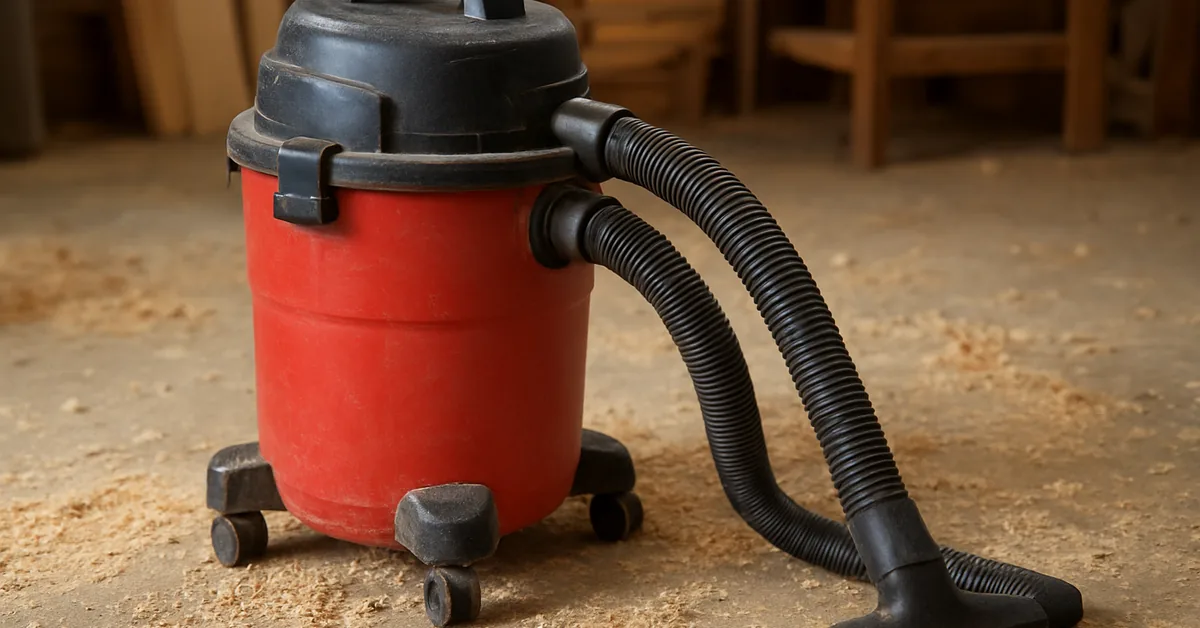
A shop vacuum is a wet/dry vacuum built for heavy debris and liquid spills that a household vacuum can’t handle safely — wood chips, standing water, drywall dust, and shop cleanup. It’s rated by CFM (airflow) and gallon tank capacity rather than the watts a household vacuum advertises. This guide covers what CFM and tank size you actually need, how a shop vacuum differs from a dust collector, and whether HEPA filtration matters for wood dust.
Quick Answer
A shop vacuum is a wet/dry vacuum rated by CFM and gallon capacity rather than watts. A 10–12 gallon, 100–150 CFM model covers most home workshops. It’s not a substitute for a dust collector on stationary power tools — the two solve different airflow problems.
What Is a Shop Vacuum?
Best Shop Vacuum Pick
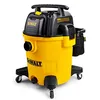
DEWALT 12-Gallon 5.5HP Wet/Dry Shop Vac – $119.00
The 12-gallon sweet-spot size this guide recommends for general garage and workshop use.
- Best for: General garage/workshop cleanup
- Why we picked it: 12-gallon tank matches this guide’s recommended sweet-spot size
- Main drawback: No HEPA filtration included stock
A shop vacuum is a portable wet/dry vacuum designed for heavy-duty cleanup — wood chips, sawdust, liquid spills, and construction debris — that would damage or clog a household vacuum. “Shop-Vac” is also a specific brand (founded 1953 in Williamsport, Pennsylvania) that became generic shorthand for the category, the same way “Kleenex” refers to tissues generally.
What Is a Shop Vacuum Used For?
In a woodworking shop, a shop vacuum handles the jobs a broom or household vacuum can’t: clearing wood chips and shavings from around stationary tools, vacuuming fine sanding dust off a workbench, picking up a spilled finish or glue-water mix, and clearing gutters or a flooded basement when it’s not in shop use. Attached to a handheld sander or router with a dust port, it also doubles as basic point-of-tool dust extraction on tools too small to justify a full dust collector hookup.
How Is a Shop Vacuum Different From a Regular Vacuum?
A shop vacuum handles liquids and heavy debris that would damage a household vacuum’s motor and bag; a household vacuum is built for carpet and light dust in a finished living space, not a workshop floor.
| Factor | Shop Vacuum | Household Vacuum |
|---|---|---|
| Wet pickup | Yes, built for it | No, motor damage risk |
| Tank size | 1–20+ gallons | Small bag/canister |
| Heavy debris (chips, screws, gravel) | Yes | Clogs or damages brush roll |
| Noise | Louder, motor-driven suction | Quieter, carpet-optimized |
| Typical use | Garage, job site, workshop | Carpet, upholstery, finished floors |
How Is a Shop Vacuum Different From a Dust Collector?
A shop vacuum uses a narrow 1¼–2½ inch hose to generate high suction at low airflow, which is right for picking debris up off a floor or bench. A dust collector uses a wide 4–6 inch port to move high airflow at lower suction, which is what’s needed to capture fine dust directly at a stationary power tool while it’s cutting. Many shops run both — a dust collector plumbed to the table saw and planer, and a shop vacuum for general cleanup and handheld tools. Neither one replaces the other. See our full breakdown of choosing a dust collector for your home shop if you’re deciding between the two or need both.
What CFM Do You Need in a Shop Vacuum?
Light cleanup around benchtop tools needs roughly 50–100 CFM; heavier jobs like clearing sheet-good offcuts or a flooded area benefit from 100–180 CFM. Buy on CFM, not horsepower.
Why Is Peak HP Not a Reliable Power Rating?
Peak horsepower is a marketing figure measured under a locked-rotor test condition the motor never actually runs at — it does not reflect real-world suction. CFM (airflow) and water lift (suction in inches) are the specs that predict actual cleaning performance; compare those numbers across models instead of the peak-HP figure printed on the box. See what peak HP actually means on a shop vac for the full breakdown, including the real numbers behind a 2019 class-action settlement over inflated peak-HP claims.

What Size (Gallons) Shop Vacuum Do You Need?
Tank size should match how often you’re willing to stop and empty it, not just the size of your shop.
| Tank size | Best for |
|---|---|
| 1–3 gallons | Portable/handheld cleanup, small spaces |
| 5–6 gallons | Benchtop tools, light shop use |
| 10–12 gallons | Garage/home workshop sweet spot |
| 14–20 gallons | Heavy contractor or job-site use |
Compare more shop vacuum options
 Option 1 WEN VC4710 HEPA Wet/Dry Shop Vacuum – $64.01
|  Option 2 Milwaukee M18 Cordless Wet/Dry Vac – $129.99
|  Option 3 CRAFTSMAN 12-Gallon 6.0 Peak HP Shop Vac – $129.99
|
As an Amazon Associate we earn from qualifying purchases.
Does a Shop Vacuum Need a HEPA Filter for Wood Dust?
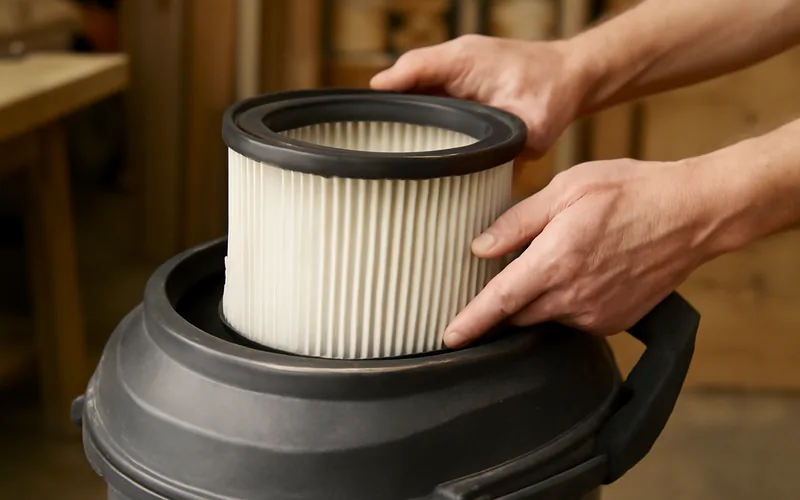
For fine sanding dust and MDF dust, yes — a standard foam sleeve filter (for wet pickup) or basic cartridge filter (for dry debris) doesn’t capture the smallest particles, which pass through and re-enter the air. A HEPA cartridge filter captures those fine particles, which matters because wood dust is a genuine respiratory hazard, not just a cleanliness issue. According to OSHA’s wood dust hazard guidance, the permissible exposure limit is 15 mg/m³ total dust (5 mg/m³ respirable fraction) as an 8-hour time-weighted average, and several hardwood dusts are linked to nasal irritation and long-term respiratory effects — see our full breakdown of whether sawdust is actually bad for you for the complete health picture.
Corded or Cordless Shop Vacuum — Which Is Better for a Woodworking Shop?
Corded models hold sustained suction with no runtime limit, which matters for a long cleanup session or wet pickup. Cordless models trade some CFM and runtime for the ability to move freely around a shop or job site without dragging a cord — workable for quick spot cleanup, but worth checking the CFM spec closely since battery-powered units generally run lower than corded equivalents at the same price point.
How Do You Use a Shop Vacuum Safely?
Never use a standard shop vacuum on lead-paint dust or other hazardous material dust — that requires a certified HEPA vacuum rated for the specific hazard, not a general-purpose shop vac. Plug into a GFCI-protected outlet any time you’re doing wet pickup. Empty and dry the tank before switching from wet to dry use, since residual moisture clumps dry debris and can clog the filter.
What is a shop vacuum used for?
A shop vacuum handles wet spills, wood chips, sanding dust, and construction debris that would damage a household vacuum. In a woodworking shop it’s used for general cleanup, wet pickup, and basic dust extraction on handheld tools.
What’s the difference between a shop vac and a regular vacuum?
A shop vac is built to pick up liquids and heavy debris without damaging its motor, and has a much larger tank than a household vacuum, which is designed for carpet and light dust in a finished living space.
What’s the difference between a shop vac and a dust collector?
A shop vac generates high suction through a narrow hose for floor and bench cleanup. A dust collector moves high airflow through a wide port to capture fine dust directly at a stationary power tool while it’s cutting. They solve different problems and most shops eventually use both.
How many CFM do I need for a woodworking shop vac?
Roughly 50–100 CFM covers light cleanup around benchtop tools; 100–180 CFM handles heavier jobs like sheet-good offcuts or wet pickup. Prioritize CFM over the peak-HP number printed on the box.
Does a shop vac need a HEPA filter for wood dust?
For fine sanding or MDF dust, yes. A standard foam or cartridge filter doesn’t capture the smallest particles, which pass through and re-enter shop air. A HEPA cartridge filter captures the fine dust that OSHA’s exposure guidance flags as a respiratory concern.
Buy on CFM and gallon capacity, not the peak-HP number on the box, and treat a shop vac and a dust collector as two different tools rather than substitutes for each other. For general workshop tool selection, see our woodworking tools and saws guide.
Sponsored / affiliate links. As an Amazon Associate I earn from qualifying purchases. I may earn additional commission from eligible campaigns.


![How To Mount A Woodworking Vice [Quick Guide]](https://cdn.woodworkingadvisor.com/2022/11/How-To-Mount-A-Woodworking-Vice-768x384.webp)