Is Sassafras a Hardwood? Yes, but Only 630 lbf Soft
Sassafras is a hardwood, and it is also one of the softest hardwoods you can buy. The Wood Database lists its Janka hardness at 630 lbf, which is only about 66 percent harder than eastern white pine, a softwood. That gap between the label and the feel is what confuses most woodworkers, and it is the reason a sassafras board dents under a thumbnail while a red oak board does not.
Is Sassafras a Hardwood? The Short Answer
Best Sassafras Dust Respirator
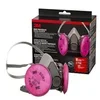 |
3M P100 Half Facepiece Respirator with 2097 Filters, Medium ($29.07) Wood Database lists sassafras as a reported sensitizer, and any fine sawdust is worth keeping out of your lungs. This kit includes the facepiece and two pairs of P100 particulate filters, so it works out of the box.
|
Yes, sassafras (Sassafras albidum) is a hardwood. In woodworking, “hardwood” and “softwood” describe the type of tree, not how hard the timber is. Hardwoods come from broadleaf flowering trees and softwoods come from conifers. Sassafras is a broadleaf tree, so it is a hardwood. Its 630 lbf Janka rating puts it near the soft end of that group, so expect easy cutting, easy dents and a pleasant aroma when you machine it.
The myth: hardwood means hard
Many articles claim hardwoods are harder than softwoods. The numbers do not support that. Balsa is botanically a hardwood, and The Wood Database gives it a Janka rating of just 67 lbf. European yew is a softwood, and the same source rates it at 1,520 lbf, harder than northern red oak. Sassafras sits in the middle of this overlap. The same mix-up shows up with other trees, and our guide on whether mulberry is a hardwood covers another case.
Where Sassafras Sits on the Janka Scale
The Janka test measures the force needed to embed a .444 inch steel ball halfway into a sample at 12 percent moisture content. Here is where sassafras lands against woods you may already know, using figures from The Wood Database species pages.
| Wood | Classification | Janka hardness |
|---|---|---|
| Balsa | Hardwood | 67 lbf |
| Eastern white pine | Softwood | 380 lbf |
| Basswood | Hardwood | 410 lbf |
| Yellow poplar | Hardwood | 540 lbf |
| Sassafras | Hardwood | 630 lbf |
| Black walnut | Hardwood | 1,010 lbf |
| Northern red oak | Hardwood | 1,220 lbf |
| European yew | Softwood | 1,520 lbf |
Read the table by the last column, not the middle one. Sassafras is about 17 percent harder than yellow poplar (630 versus 540 lbf) and roughly 66 percent harder than white pine (630 versus 380). Northern red oak is about 1.9 times as hard as sassafras. If you already work poplar, our guide to poplar for cabinets tells you what to expect, because sassafras dents in a similar way.
Sassafras Wood Properties at a Glance
These are the published figures for sassafras from The Wood Database. Weights and strengths are measured at 12 percent moisture content, and the shrinkage numbers are green to oven-dry.
| Property | Value |
|---|---|
| Janka hardness | 630 lbf (2,800 N) |
| Specific gravity (basic, 12% MC) | 0.42, 0.5 |
| Average dried weight | 31.0 lb/ft3 (495 kg/m3) |
| Modulus of rupture | 9,000 lbf/in2 (62.1 MPa) |
| Elastic modulus | 1,120,000 lbf/in2 (7.72 GPa) |
| Crushing strength | 6,600 lbf/in2 (45.5 MPa) |
| Shrinkage: radial / tangential / volumetric | 4% / 6.2% / 10.3% |
| T/R shrinkage ratio | 1.6 |
| Rot resistance (heartwood) | Durable to very durable |
The T/R ratio of 1.6 is the number to notice. A lower ratio means the wood shrinks more evenly across and along the growth rings, which fits The Wood Database description of good dimensional stability once dry. As a worked example, a 10 inch wide flatsawn board that dried all the way from green to oven-dry would shrink about 0.62 inch across its width (10 x 0.062). Shop-dry lumber never gets that far, so real seasonal movement is a fraction of that, but it shows how to estimate movement from the tangential figure.
What Sassafras Looks Like and How It Works
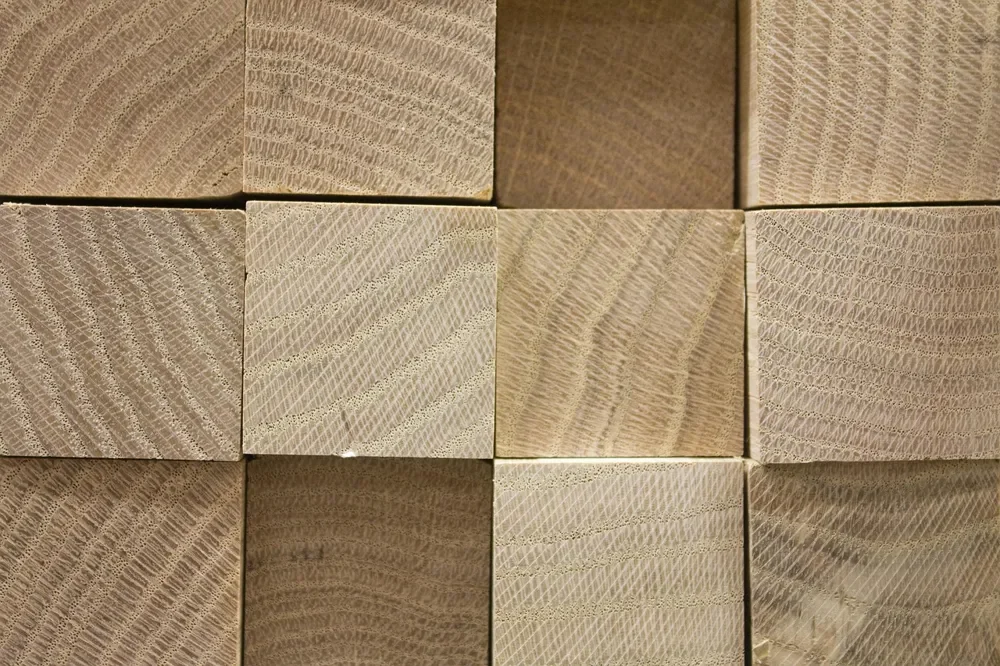
The Wood Database describes the heartwood as medium to light brown with orange or olive hues, with paler yellowish brown sapwood. It calls the wood easy to work with hand and machine tools. With a density near 31 lb/ft3, it cuts, planes and turns readily. The same softness works against you in two ways.
- Dents and dings: at 630 lbf, a dropped chisel or a heavy pot leaves a mark. Use it where wear is light, such as boxes, turned pieces, shelving and trim.
- Tear-out risk: soft, lightweight woods can fuzz under dull edges, so keep planes and scrapers sharp and take light final passes.
- Fasteners: soft woods hold screws less firmly than dense ones, so pre-drill near board ends to avoid splitting.
The Wood Database lists utility lumber, fence posts, boatbuilding and furniture among the common uses, and says limited quantities of lumber and turning blanks are available at a modest price. Because supply is limited, check with local sawmills rather than expecting to find it at a big-box store. If you like aromatic woods in general, our roundup of the best-smelling woods puts it in context.
Sassafras Safety: Dust, Oil and What Not to Do
Sassafras needs more caution than most domestic hardwoods. The Wood Database reports it as a sensitizer, with nausea and respiratory effects as the most common reactions, and notes that oil extracted from the roots and wood has been shown to be toxic and weakly carcinogenic if ingested. That warning is about ingesting extracted oil, not about handling a finished bowl, but it points to sensible shop habits.
- Control dust: use dust collection and wear a P100 respirator when sanding, sawing or turning. A basic paper dust mask is a weaker choice for fine dust; see our guide to the best dust masks for woodworking for options.
- Do not eat or brew it: do not chew shavings, make tea from scraps, or use sassafras wood for cooking utensils or food smoke. That is our precaution based on the toxicity note above, not a legal ruling.
- Check regulations: food rules on sassafras oil and safrole are set by regulators such as the FDA, and we did not verify the current wording for this article, so look it up before using any part of the tree in food.
- Stop if symptoms appear: if you get headaches, nausea or breathing irritation while working it, stop, ventilate and consider skipping the species.
Is Sassafras Wood Rot Resistant?
The Wood Database rates sassafras heartwood as durable to very durable, which fits its history as fence-post timber. The catch is the sapwood, which does not carry the same protection. We cover the heartwood versus sapwood question, and what it means for decks and posts, in our guide on whether sassafras is rot resistant.
Should You Use Sassafras for Your Project?
- Turning, boxes and small furniture: a good fit. It is easy to work, stable once dry and pleasant to look at.
- Tabletops and workbenches: not ideal. Choose a harder wood such as red oak (1,220 lbf) if the surface will take abuse.
- Outdoor posts: heartwood only, and read the rot resistance guide first.
- Anything that touches food: pick another species. Our overview of wood types can help you compare options.
In short, call sassafras a soft hardwood: botanically correct, mechanically gentle, and worth respecting in the dust cloud.
Frequently Asked Questions
Is sassafras a hardwood or a softwood?
Sassafras is a hardwood. Hardwood is a botanical label for wood from broadleaf flowering trees, and sassafras is one. It is a soft hardwood, though: The Wood Database lists its Janka hardness at 630 lbf.
How hard is sassafras on the Janka scale?
The Wood Database lists sassafras at 630 lbf (2,800 N). That is harder than eastern white pine at 380 lbf and yellow poplar at 540 lbf, but well below black walnut at 1,010 lbf and northern red oak at 1,220 lbf.
Is sassafras wood easy to work?
Yes. The Wood Database describes it as easy to work with both hand and machine tools, with good dimensional stability once dry. Its low density means it dents easily, so it suits turning, boxes and utility lumber better than tabletops.
Is sassafras wood safe to use?
Treat the dust with care. The Wood Database reports sassafras as a sensitizer, with nausea and respiratory effects the most common reactions, and says oil extracted from the roots and wood has been shown to be toxic and weakly carcinogenic if ingested. Wear a P100 respirator when sanding or cutting, and do not eat, chew or brew shavings or sawdust.
Is sassafras wood rot resistant?
The Wood Database rates the heartwood durable to very durable, which is why it has been used for fence posts. The pale sapwood does not share that protection, so see our full guide on sassafras rot resistance before building anything outdoors.
Sponsored / affiliate links. As an Amazon Associate I earn from qualifying purchases. I may earn additional commission from eligible campaigns.