Is Mulberry a Hardwood? Yes, and Harder Than Red Oak
Yes, mulberry is a hardwood, and unlike many woods that carry the label, it is genuinely hard. The Wood Database lists mulberry (Morus species) at 1,680 lbf on the Janka scale, which beats red oak at 1,220 lbf and hard maple at 1,450 lbf. This page covers the numbers, the mistakes older articles make about this wood, and what it is realistically good for.
Is Mulberry a Hardwood? The Short Answer
Best Mulberry Slab Sample Pick
 |
Project Ready Mulberry Slab Set for 12×16 Projects Cutting Boards: $69.99 Mulberry lumber is rarely sold in the usual lumberyard sizes, so a small ready-cut slab set is the practical way to try the wood and check its color and grain in person.
|
As an Amazon Associate we earn from qualifying purchases.
In the lumber trade, hardwood means wood from a broadleaf, flowering tree, and softwood means wood from a conifer. Mulberry trees are broadleaf and deciduous, so the wood is a hardwood by botany. That label says nothing about density: balsa is a hardwood at just 67 lbf, and European yew is a softwood at 1,520 lbf, both according to The Wood Database. Mulberry earns the label twice, because it is a hardwood botanically and also dense and hard when you measure it.
That matters because a lot of the text written about mulberry treats the two ideas as one, and some of it contradicts itself. The previous version of this page called mulberry “not a traditional hardwood” and “less durable” than other hardwoods, which the measured data does not support. The figures below come from the Wood Database entry for mulberry.
Mulberry Hardness Compared With Other Woods
All values are Janka ratings from The Wood Database, so every wood is measured the same way. Mulberry lands near the top of the common North American hardwoods, just under black locust.
| Wood | Type | Janka hardness (lbf) |
|---|---|---|
| Eastern white pine | Softwood | 380 |
| Black cherry | Hardwood | 950 |
| Black walnut | Hardwood | 1,010 |
| Red oak | Hardwood | 1,220 |
| Hard maple | Hardwood | 1,450 |
| European yew | Softwood | 1,520 |
| Mulberry | Hardwood | 1,680 |
| Black locust | Hardwood | 1,700 |
| Osage orange | Hardwood | 2,620 |
Mulberry is about 38 percent harder than red oak (1,680 divided by 1,220). In practice that means it resists dents better than walnut or cherry and is a sound choice for a cutting board, a bowl or a chair part. It also means sharper tools and more patience when hand planing than with a soft wood like pine. For how these ratings are measured, see our wood hardness scale, and for a related hardwood-label surprise see is sycamore a hardwood.
Mulberry Wood Properties
These averages are from The Wood Database at 12 percent moisture content. Individual boards vary, and the entry covers several species (Morus alba, M. nigra and M. rubra, the red mulberry native to eastern North America), so treat the numbers as a reference point, not a guarantee for one board.
| Property | Mulberry |
|---|---|
| Scientific name | Morus spp. (M. alba, M. nigra, M. rubra) |
| Tree size | 30 to 50 ft tall, 1 to 1.5 ft trunk diameter |
| Average dried weight | 43 lb/ft3 (690 kg/m3) |
| Specific gravity (12% moisture) | 0.55 to 0.69 |
| Janka hardness | 1,680 lbf (7,470 N) |
| Modulus of rupture (bending strength) | 11,680 lbf/in2 (80.6 MPa) |
| Elastic modulus (stiffness) | 1,352,000 lbf/in2 (9.32 GPa) |
| Crushing strength | 6,990 lbf/in2 (48.2 MPa) |
| Shrinkage, radial / tangential / volumetric | 3.3% / 6.6% / 10.3% |
| Tangential to radial shrinkage ratio | 2.0 |
| Rot resistance | Very durable, good insect resistance and weathering |
Color, grain and texture
Heartwood is golden brown when fresh and darkens to a medium, reddish brown with age, while the sapwood is pale yellowish white. The grain is straight and the texture is uniform and medium, with a good natural luster. That combination finishes well and makes an attractive, quiet figure for furniture and turned pieces.
Does mulberry warp?
One claim on older pages is that mulberry resists warping and splitting. The data is less flattering. Its 10.3 percent volumetric shrinkage is fairly high and the 2.0 tangential to radial ratio means it moves more across the growth rings than along them, which is what drives cupping. Mulberry is workable and stable enough for careful builders, but it is not immune to movement. Dry it slowly, seal the end grain of thick slabs and let boards acclimate to your shop before milling to final size.
Is Mulberry Good for Outdoor Use and Fence Posts?
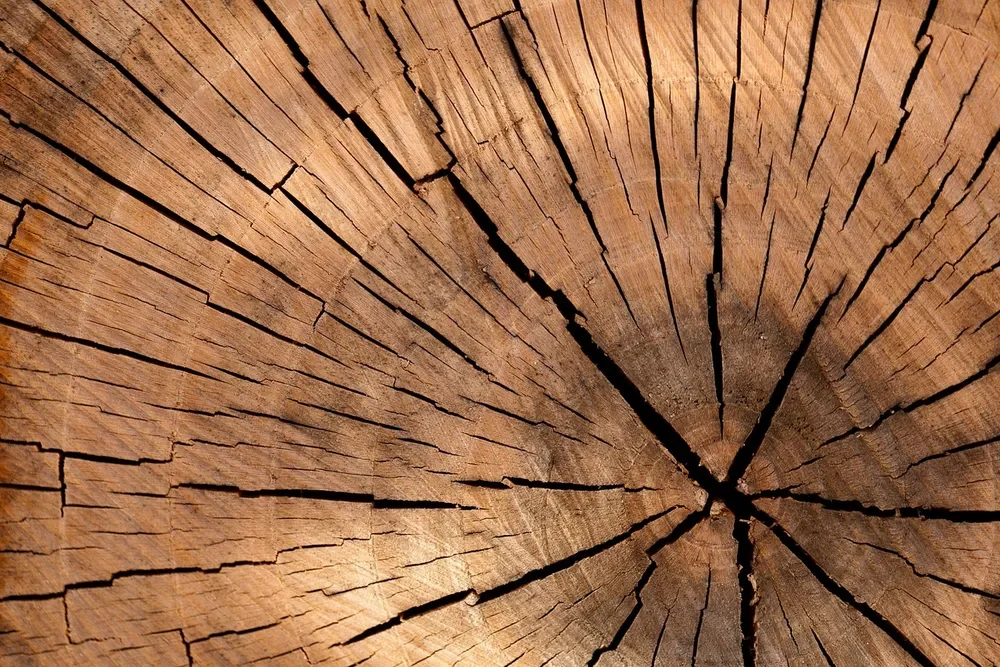
This is where mulberry surprises people who assume a hardwood is automatically rot resistant. Decay resistance is separate from hardness, and The Wood Database rates mulberry very durable with good insect resistance and weathering properties, listing fence posts as a common use. The same source rates red oak, a far more common hardwood, as non-durable to perishable. So for ground contact, mulberry heartwood is a better bet than oak, and it sits in the same rot rating as black locust (rated very durable with good weathering) and eastern red cedar (excellent resistance to decay and insects, and widely used for fence posts in direct ground contact).
| Wood | Janka (lbf) | Rot resistance (Wood Database) |
|---|---|---|
| Red oak | 1,220 | Non-durable to perishable |
| Eastern red cedar | 900 | Excellent resistance to decay and insects |
| Mulberry | 1,680 | Very durable, good insect resistance |
| Black locust | 1,700 | Very durable, good weathering |
Two cautions apply. Durability ratings describe heartwood, and the pale sapwood of most species decays much faster, so choose posts and outdoor parts that are mostly heartwood. And real-world life depends on soil, climate and whether the wood stays wet. If you want the science of how quickly wood breaks down in the ground, our guide to how long wood takes to decompose underground covers the factors.
How Mulberry Works in the Shop
The Wood Database reports that mulberry responds well to both hand and machine tools, and that it turns, glues and finishes well. No characteristic odor is reported, and it lists no health effects beyond the standard risks of any wood dust. With that in mind:
- Use sharp carbide or high speed steel and take light passes. At 1,680 lbf it dulls edges faster than poplar or pine.
- Wear a dust mask and use dust collection when sanding, as with any hardwood.
- Expect an easy finish. Straight grain and even texture take oil, wax or film finishes cleanly, and the golden brown darkens with age and light.
- Glue-ups are straightforward with ordinary wood glue, according to the Wood Database.
What Is Mulberry Wood Used For?
The Wood Database lists fence posts, furniture and turned objects as the main uses. In practice most small-shop mulberry becomes bowls, spindles, cutting boards and small furniture parts, because it usually comes from a single removed tree rather than from a lumber yard. The Wood Database notes that it is seldom if ever harvested commercially for lumber, that small pieces are sometimes available locally, and that you should expect high prices.
If mulberry is not available near you, our types of wood guide compares the common alternatives, and the piece on heartwood versus sapwood explains why the golden heartwood and pale sapwood behave so differently.
Should You Choose Mulberry?
| If you need | Mulberry fits? | Why |
|---|---|---|
| A hard, dent-resistant board for cutting boards or furniture | Yes | 1,680 lbf, harder than red oak and hard maple |
| A wood for turning bowls and spindles | Yes | Turns well, uniform medium texture |
| Outdoor parts or fence posts | Yes, heartwood | Rated very durable with good insect resistance |
| Lumber in standard sizes from a big-box store | Unlikely | Seldom harvested commercially, expect high prices |
| A wood that will not move with humidity | No | 10.3% volumetric shrinkage, T/R ratio 2.0 |
Frequently Asked Questions
Is mulberry a hardwood or a softwood?
Mulberry is a hardwood. It comes from broadleaf, deciduous trees in the genus Morus, and that is what the hardwood label means. It is also physically hard: The Wood Database lists a Janka hardness of 1,680 lbf for mulberry, higher than red oak at 1,220 lbf.
How hard is mulberry wood?
The Wood Database gives mulberry a Janka hardness of 1,680 lbf (7,470 N), with an average dried weight of 43 lb/ft3. That is harder than hard maple at 1,450 lbf and close to black locust at 1,700 lbf.
Is mulberry wood good for outdoor use?
Yes, in many cases. The Wood Database rates mulberry as very durable with good insect resistance and weathering properties, and lists fence posts among its common uses. Red oak, by comparison, is rated non-durable to perishable.
Is mulberry wood easy to work?
Generally yes. The Wood Database reports that mulberry responds well to both hand and machine tools and that it turns, glues and finishes well. It has straight grain and a uniform, medium texture.
Can you buy mulberry lumber?
Not easily. The Wood Database says mulberry is seldom if ever harvested commercially for lumber, smaller pieces are sometimes available locally, and you should expect high prices. Most woodworkers get it from fallen or removed trees, local sawyers or small slab sets.
Bottom Line
Mulberry is a hardwood by botany and a truly hard wood by measurement, at 1,680 lbf. It works well, finishes well, stands up outdoors as heartwood, and is hard to buy as commercial lumber. Judge it by the numbers, not by the old idea that hardwood and hardness mean the same thing, and plan for its seasonal movement.
Sponsored / affiliate links. As an Amazon Associate I earn from qualifying purchases. I may earn additional commission from eligible campaigns.