Is Water Based Polyurethane Food Safe? The Real FDA Answer
Once fully cured (about 30 days), water-based polyurethane is chemically inert and considered safe for incidental food contact by most finish manufacturers and woodworkers — but it is not on the FDA’s specific list of approved food-contact substances the way mineral oil is (mineral oil is explicitly listed under 21 CFR 178.3620). That distinction matters: “generally regarded as safe once cured” and “FDA-approved for food contact” are not the same claim, and a lot of articles on this topic use them interchangeably or flatly contradict themselves within the same page.
Practically, this means: a cured water-based polyurethane finish on a countertop or the underside of a cutting board is very unlikely to cause harm, but it isn’t the finish to reach for if you want a regulatory-backed guarantee, or if food will be in direct, repeated contact with the actual cutting surface (a knife will eventually cut through the film, exposing bare wood underneath a coating that can’t be safely reapplied to a food-contact surface the way oil can be). For a cutting board’s actual working surface, food-grade mineral oil or a beeswax/mineral-oil blend is the simpler, unambiguous choice.
Finishes Made For Food-contact Surfaces
FDA-listed, No Ambiguity
 |
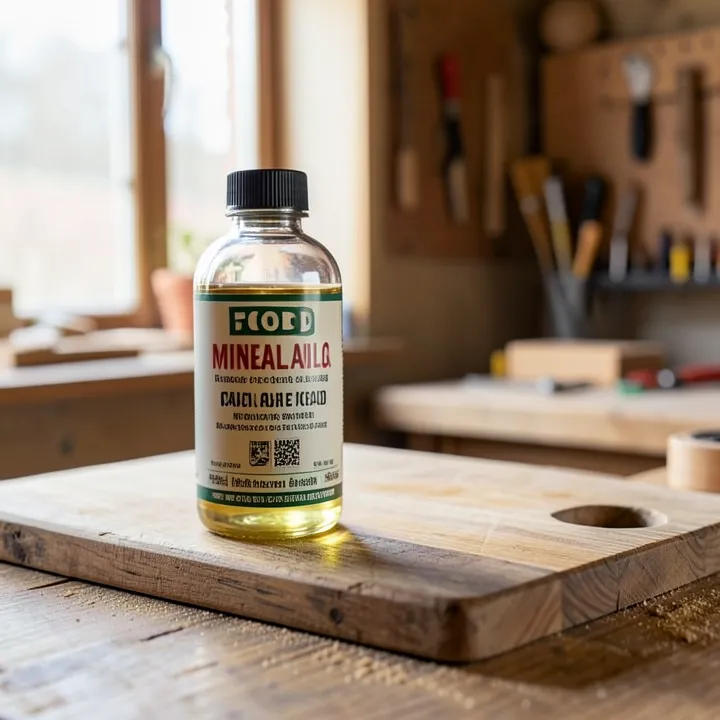
Howard Products Food Grade Mineral Oil, 12 oz – $8.95 Mineral oil is FDA-listed for food contact (21 CFR 178.3620), unlike cured polyurethane, and can be reapplied directly to a knife-cut working surface.
|
Where Water-based Polyurethane Actually Fits
Polyurethane still has a legitimate place in a kitchen: sealing the top and edges of a wood countertop that food sits on top of (not gets cut on), the outside of a bread box, or shelving inside a pantry. It’s durable, water-resistant, and once cured presents minimal practical risk for that kind of incidental contact. It’s the actual cutting surface of a board — where a blade repeatedly exposes fresh wood under the finish — where oil-based, reapplicable, explicitly food-listed products are the safer and more practical choice.
The Curing Timeline
Water-based polyurethane feels dry to the touch within hours, but “dry” and “cured” are different things. Curing — the point where the film has fully hardened and off-gassed — typically takes about 30 days at normal room temperature and humidity, longer in cold or humid conditions. Avoid food contact with the surface until it’s fully cured, not just dry.
Water-based Vs. Oil-based Polyurethane
| Water-Based Polyurethane | Oil-Based Polyurethane |
|---|---|
| Low odor, dries clear | Strong odor, tends to amber/yellow over time |
| Cleans up with water | Requires mineral spirits for cleanup |
| Faster recoat time | Slower to dry between coats |
| Same food-contact caveats as oil-based once cured | Same food-contact caveats as water-based once cured |
Frequently Asked Questions
How Long Until Polyurethane Is Food Safe?
Allow about 30 days at room temperature for water-based polyurethane to fully cure before regular food contact. It will feel dry much sooner, but full curing (and off-gassing of remaining solvents) takes longer than surface dryness suggests.
Can You Use Polyurethane On Cutting Boards?
You can use it on the underside or non-cutting edges once fully cured, but it’s not recommended for the actual cutting surface — a blade will eventually cut through the film, and unlike oil, polyurethane can’t be safely reapplied to a scarred food-contact surface.
What Can I Seal Wood With That Is Explicitly Food Safe?
Food-grade mineral oil (FDA-listed under 21 CFR 178.3620) is the most unambiguous choice, followed by beeswax/mineral-oil blends, walnut oil, and tung oil labeled food-safe. These can also be reapplied indefinitely as a cutting surface wears.
Is Water-based Polyurethane Fda-approved For Food Contact?
Not in the specific way mineral oil is FDA-listed as a food-contact substance. Cured water-based polyurethane is widely regarded as safe for incidental contact by manufacturers and woodworkers, but it doesn’t carry the same explicit regulatory listing, so it’s not the finish to choose if you need a certified guarantee.
Bottom Line
Cured water-based polyurethane is unlikely to hurt you on a countertop or shelf, but it isn’t officially food-approved the way mineral oil is, and it’s the wrong choice for an actual cutting surface. If certainty matters more than convenience, use a finish explicitly labeled and regulated for food contact instead.
Sponsored / affiliate links. As an Amazon Associate I earn from qualifying purchases. I may earn additional commission from eligible campaigns.