Benchtop Planer vs Hand Plane: Which Do You Need?
Choose a benchtop planer if you need fast, repeatable thicknessing on boards wider than about 6 inches. Choose a hand plane if you need quiet stock cleanup, fitting, flattening, or fine surface correction, especially for boards wider than about 6 inches. For most shops, owning both makes the work easier. Pick the wrong tool and you waste time, buy unnecessary grit or lumber, and end up sanding more than needed. This guide compares the jobs each tool does best and tells you when both belong on the bench.
| Factor | Benchtop Planer | Hand Plane | Winner |
|---|---|---|---|
| Thicknessing larger boards | Motorized rollers pull stock through for repeatable thicknessing. | Possible, but slow and dependent on skill. | Benchtop Planer |
| Small parts and edge fitting | Less practical on short or narrow pieces. | Best for small pieces, edges, and fine control. | Hand Plane |
| Setup time | Needs infeed/outfeed support, height setup, and chip control. | Quick to pick up once tuned. | Hand Plane |
| Physical effort | Low during cutting, higher for lifting and feeding stock. | Higher because you power every stroke. | Benchtop Planer |
| Cost to start | Higher tool and space cost. | Lower entry cost. | Hand Plane |
| Tear-out risk | Lower with shallow cuts and sharp knives, but still present. | Lower for local correction, higher on difficult grain if technique slips. | Tie |
What each tool does
A benchtop planer is the better choice for fast, repeatable thicknessing of boards. A hand plane is better for smaller work, edge fitting, flattening local spots, and final surface correction where you want direct control and quiet cleanup. They overlap, but they do not do the same job equally well.
Benchtop planer
A benchtop planer is designed to be securely mounted to a table or workbench, and it uses motorized feed rollers to pull wood through the cutterhead. Tool Buyer Hub describes it as the tool for surfacing and thinning whole boards to final thickness. That makes it a machine for stock removal at scale.
Hand plane
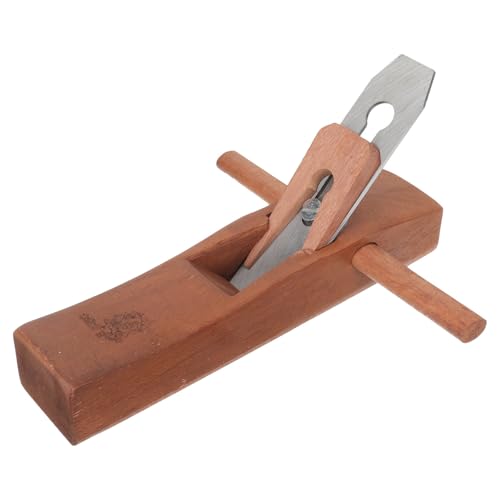
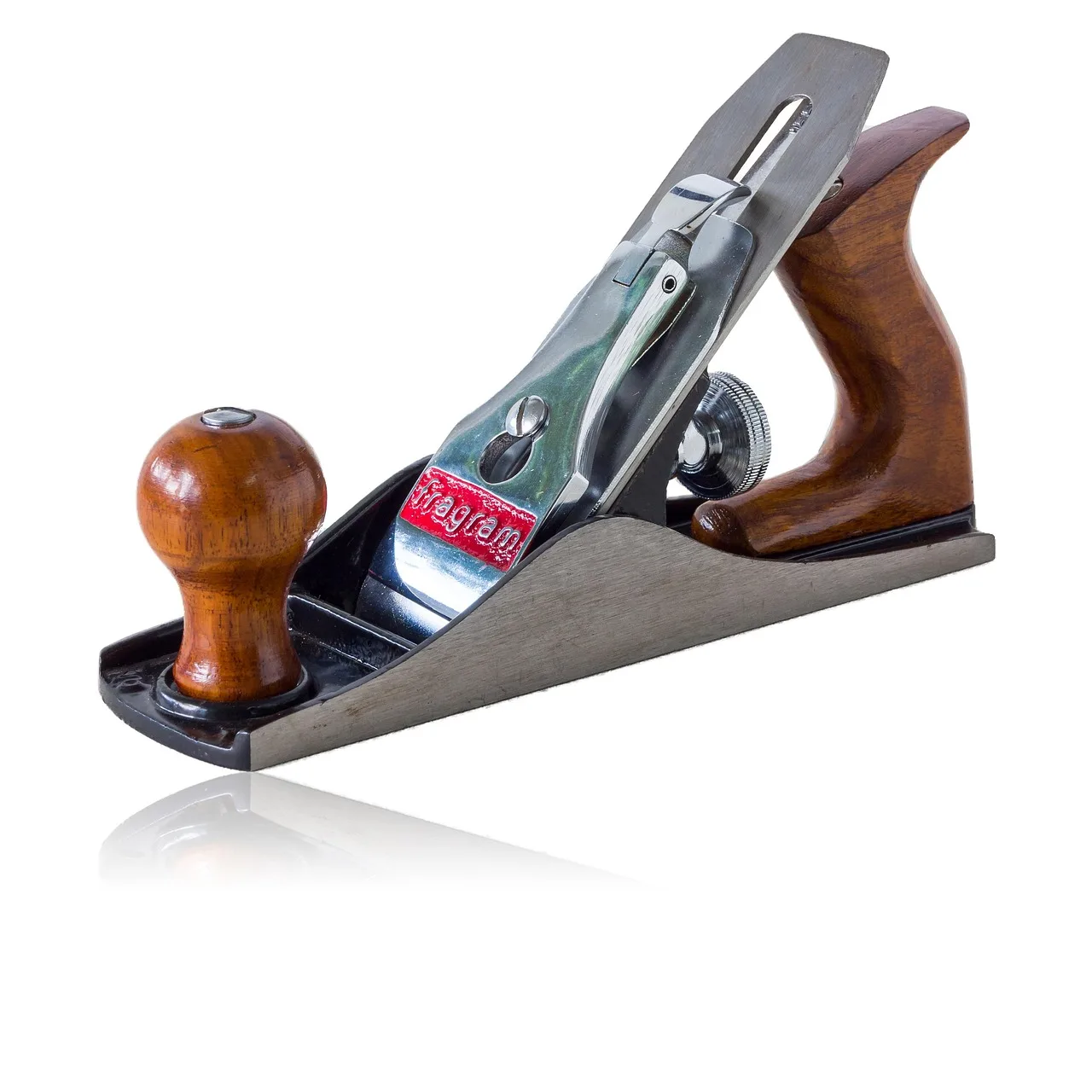
A hand plane is a small, portable, handheld woodworking tool that shaves off small layers of wood from larger pieces. Family Handyman notes that a hand planer is muscle-powered, and the blade must be sharp and tuned for clean results. It is the better fit when the work needs finesse more than throughput.
Manual, electric, and machine versions
A manual hand plane is the low-cost entry point and the best choice for careful fitting and detailed work. An electric hand planer is the powered version; it can spin blades up to 20,000 RPM, so it removes material faster, but it gives up some of the fine control that a manual plane offers. The benchtop planer sits further toward speed and volume.
Planing decision matrix
Use the job, not the tool name, to choose. Flattening, thicknessing, edge fitting, and finish smoothing are separate tasks, and the better tool changes with board size, setup time, and how much correction you need. For a small one-off part, the slower tool can still be the right one.
| Job | Board size | Precision needed | Setup time | Physical effort | Cost | Risk of tear-out | Better tool |
|---|---|---|---|---|---|---|---|
| Flatten a door stile | Narrow, long piece | High | Low | Moderate | Low with hand plane | Moderate | Hand Plane |
| Thickness 8/4 rough lumber for cabinet parts | Several feet long and wider stock | Medium | Moderate | Low during cutting | Higher upfront | Moderate if cuts are too deep | Benchtop Planer |
| Fit a cabinet door edge | Small to medium | Very high | Low | Low to moderate | Low | Low | Hand Plane |
| Remove machine marks before finish | Medium panels | High | Low | Moderate | Low | Low if the plane is sharp | Hand Plane |
| Process a pile of rough boards | Large batch | Medium | Moderate | Low | Higher tool cost, lower labor cost | Moderate | Benchtop Planer |
| Buy first | Beginners | High control on small work | Low | Moderate | Lowest entry cost | Low | Hand Plane |
| Buy first | Small-shop owners | Repeatable output | Moderate | Low | Space-sensitive | Moderate | Benchtop Planer |
| Buy first | Fine-furniture woodworkers | Highest | Low | Low to moderate | Depends on workflow | Low with proper prep | Hand Plane |
Say your board is 5 inches wide and you need to fit a cabinet door edge by a few thousandths. A hand plane is the cleaner choice because you can stop as soon as the fit is right. A benchtop planer can remove thickness, but it is awkward for edge-only correction.
Suppose you have eight rough maple boards at 48 inches long. The benchtop planer wins because repeated passes are faster than hand-planing each face to a consistent thickness. You still need a flatter reference face first if the board is twisted or cupped badly.
When does a hand plane win?
A hand plane wins when the task is small, local, or highly visual. It is the better option for edge fitting, small parts, trimming a proud joint, and finish smoothing where you want to stop exactly at the mark. A manual plane is the most controlled version; an electric hand planer is faster, but less precise for delicate work.
Small parts and edge fitting
Tool Buyer Hub identifies handheld planers as useful for edges, chamfers, and door fitting. That is where a hand plane beats a benchtop planer by a wide margin. The benchtop machine needs enough length and feed support to work safely, while a hand plane can work a short stile, a cabinet edge, or a small repair patch.
Manual hand plane vs electric hand planer
A manual hand plane is best when control matters more than speed. An electric hand planer can remove material faster, but the wider sole and spinning cutter make fine end-point control harder. For detailed fitting, that trade favors the manual tool.
Where sharpening and tuning matter most
Hand planes depend on blade sharpness, blade projection, and sole setup. A dull edge tears fibers instead of shaving them cleanly, and poor tuning leaves tracks or chatter. A thicker blade helps resist chatter, which is why blade quality matters more here than many buyers expect.
When does a benchtop planer win?
A benchtop planer wins when you need to thickness a lot of stock, keep parts consistent, or move quickly across larger boards. It is built for bigger projects where heavy-duty equipment is needed. If you are processing several boards to the same final thickness, the machine saves a lot of repetitive strokes.
What board sizes justify the machine
Benchtop planers can handle wood stock several feet long and up to a foot or more in width, but that does not mean every board is easy. Cutter width, feed length, and stock support still matter. The machine is strongest when the board is long enough to ride the rollers and wide enough to justify the setup.
How depth of cut changes the result
Shallow depth settings usually improve surface quality and lower tear-out risk. Aggressive cuts move faster, but they can leave rougher surfaces, chatter, or inconsistent thickness if the stock is twisted or the knives are dull. The machine is fast, not magical.
Cutting width, blades, and dust collection
Cutting width limits what each tool can cover in one pass. Common handheld widths often include about 2-1/8 inches and 3-1/4 inches, which is generally enough for edges and spot work, but not for full-board surfacing. Benchtop planers cover much wider stock, and their chip handling matters just as much as their motor size.
Blade and cutterhead choices
Straight knife cutterheads are common and usually cheaper to maintain, but they depend on frequent sharp blades. Spiral or helical cutterheads tend to reduce tear-out and make the cut quieter. For buyers who plane figured grain often, that trade can be worth it.
Chip ports and dust chutes
Benchtop planers usually need active chip evacuation through a dust chute or port. Without that, chips pile up, mark the work, and make cleanup tedious. A hand plane leaves shavings on the bench, which is easier to manage for small jobs and far more pleasant indoors.
Tear-out, snipe, and other failure cases
Each tool has a failure mode, and those failures matter. Hand planes can leave tear-out on difficult grain if the blade is dull or the cut is too heavy. Benchtop planers can create snipe at the ends of boards, and chatter or inconsistent thickness if setup, knives, or infeed support are off.
Tear-out
Tear-out is a grain-direction problem first, not a tool-brand problem. A shallow cut, sharp edge, and careful grain reading lower the risk on both tools. On a hand plane, a dull blade makes the problem obvious quickly. On a machine, tear-out can show up across a whole board before you notice.
Snipe and chatter
Snipe happens when the board tilts as it enters or exits the planer. Good support, proper feed technique, and light cuts reduce it. Chatter usually points to blade condition, cutterhead issues, or too aggressive a pass, and it shows up as repeating marks on the surface.
Choose Benchtop Planer if… / Choose Hand Plane if…
Choose a benchtop planer if your work starts with rough lumber, repeated thicknessing, or several boards that need the same final dimension. Choose a hand plane if your work is smaller, more detailed, or mostly about fit and finish. If your shop does both kinds of jobs, the smartest order is often hand plane first, benchtop planer second.
- Choose Benchtop Planer if you process rough stock in batches, need repeatable thickness, or want to reduce sanding after surfacing wide boards.
- Choose Benchtop Planer if your projects are large enough that hand-planing every face would consume too much time.
- Choose Hand Plane if you build smaller pieces, fit doors and drawers, or need precise edge correction.
- Choose Hand Plane if you want the lowest-cost entry point and the least space demand.
- Choose both if you mill lumber regularly and still need fine control for joinery and final surface correction.
For beginners, a hand plane usually makes the first lessons cheaper and clearer. For small-shop owners who mill rough lumber often, a benchtop planer usually pays back in time and consistency. For fine-furniture woodworkers, a hand plane remains the precision tool, while the planer handles stock prep.
Frequently asked questions
Do I need a benchtop planer or a hand plane?
If you need thicknessing of rough boards, choose a benchtop planer. If you need quiet cleanup, edge fitting, or fine control on smaller work, choose a hand plane. Most shops eventually use both because the jobs are different.
What is the difference between a hand plane and a benchtop planer?
A hand plane is pushed by hand and removes thin shavings under direct control. A benchtop planer uses motorized feed rollers to pull stock through the cutterhead and thickness boards faster. One favors control; the other favors repeatable throughput.
Can a hand plane replace a benchtop planer?
Only for small or occasional work. A hand plane can flatten, fit, and smooth, but it becomes impractical when board count rises or when you need multiple boards to end at the same thickness. At that point, the machine saves too much time to ignore.
Is a benchtop planer worth it for a small shop?
Yes, if you regularly process rough lumber or need consistent thickness on more than a few boards at a time. It is less compelling if you mostly make small parts, trim edges, or buy pre-milled stock. Space, dust control, and feed support all matter in a small shop.
When should I use a hand plane instead of a planer?
Use a hand plane for edge fitting, small patches, fine flattening, and final surface correction. It is also the better choice when you want to avoid setting up a machine for one quick adjustment. If the board is short or the cut must stop exactly at a mark, the hand plane wins.
Can a benchtop planer flatten rough lumber?
It can help with thicknessing rough lumber, but it does not fully replace flattening a twisted board without prep. You usually need at least one flatter reference face first. Otherwise, the machine can copy the twist rather than remove it cleanly.
Sponsored / affiliate links. As an Amazon Associate I earn from qualifying purchases. I may earn additional commission from eligible campaigns.