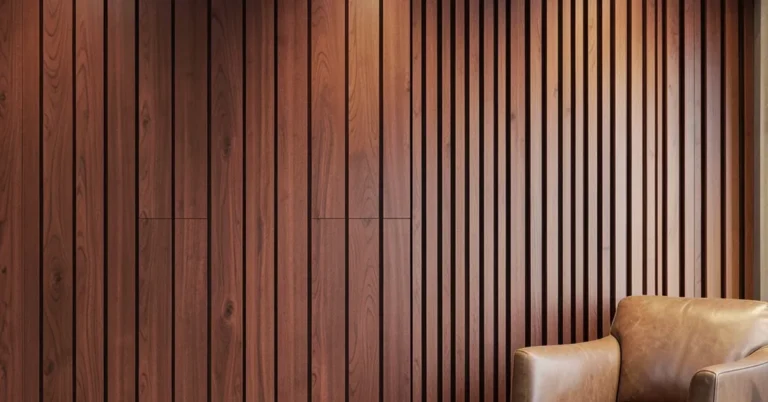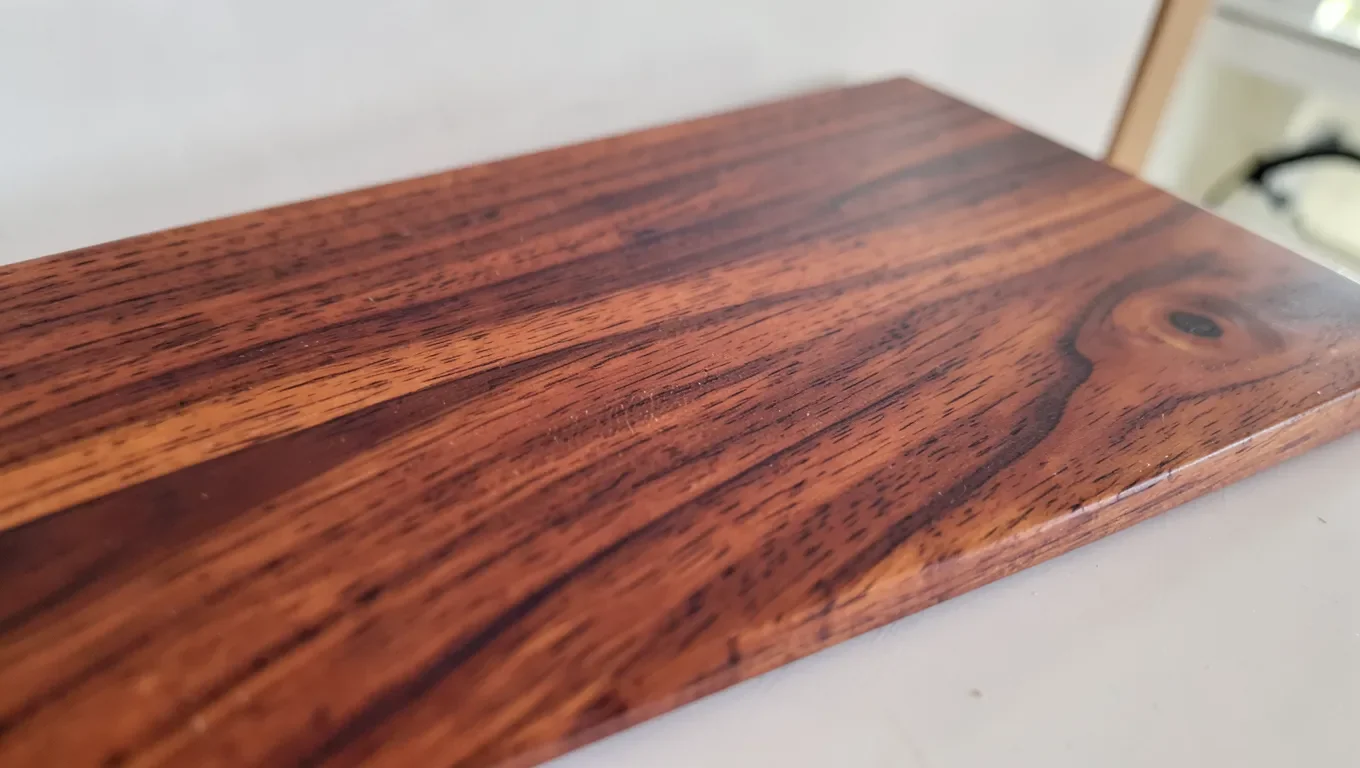
What Is Genuine Mahogany? Swietenia Species, Not Just Any Reddish Wood
“Genuine mahogany” has a real, specific botanical meaning: wood from the Swietenia genus, primarily Swietenia macrophylla (Honduran/Big-leaf mahogany) or the now-scarce Swietenia mahagoni (Cuban/West Indies mahogany). A lot of reddish-brown wood gets called “mahogany” in casual use or marketing, but only these species are genuine mahogany in the strict, historical sense — everything else is a related or substitute wood trading on the name.
This guide focuses specifically on species authenticity — the botanical and CITES facts that let you verify a listing before you buy. For a full side-by-side comparison of every commercial mahogany type, see our guide to types of mahogany wood. To physically tell genuine mahogany apart from a look-alike in hand, see our mahogany identification guide.
The Real Species Behind The Name
Verified Genuine Species, Not A Substitute
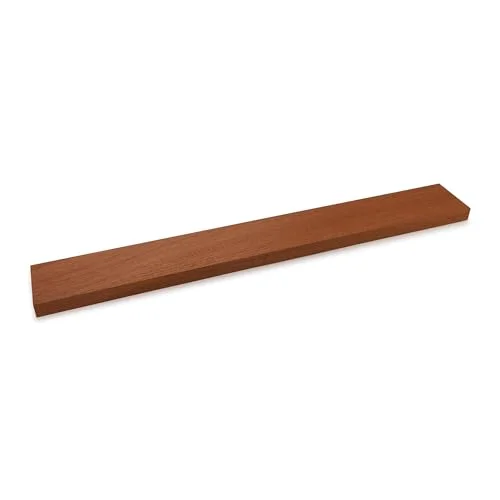 |
Woodcraft Genuine Honduran Mahogany, 3/4″ x 3″ x 24″ – $27.98 Explicitly labeled by species (Swietenia macrophylla), not a generic “mahogany-look” board — the real thing this article is about.
|
Swietenia macrophylla, native to Central and South America, is the mahogany that built the wood’s historical reputation in 18th-century furniture and shipbuilding — a deep reddish-brown color, fine straight grain, and genuine rot resistance from natural oils. Swietenia mahagoni, the original “Cuban mahogany” that first made the wood famous in Europe, is now commercially rare due to centuries of overharvesting. Since 2003, all Swietenia species have been listed under CITES Appendix II, which restricts and documents international trade — a real regulatory fact that shapes availability and price today, not a marketing detail.
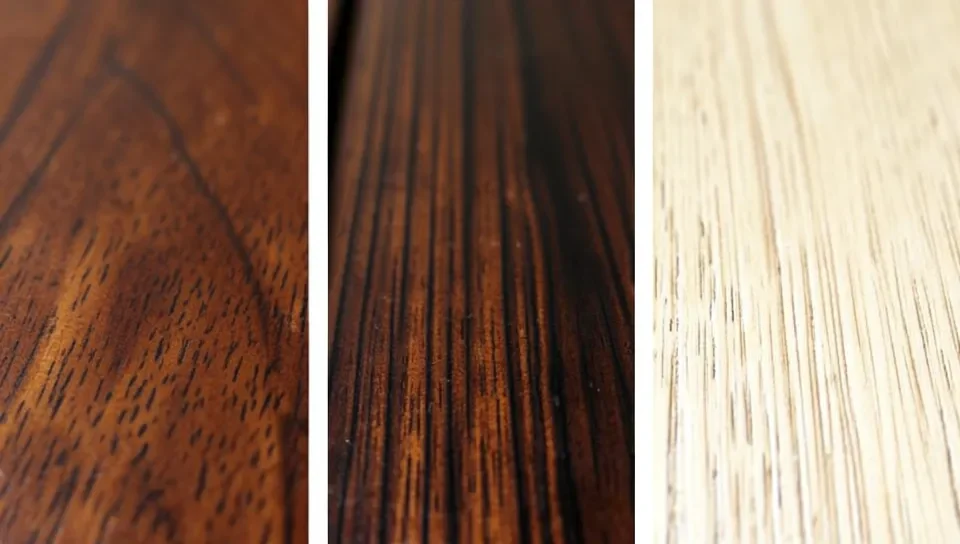
What Isn’t Genuine Mahogany (Even Though It’s Sold As “Mahogany”)
- African mahogany (Khaya species): a true relative in the same broader family, not the Swietenia genus — a legitimate, more available substitute, not a fake, but not “genuine” in the strict historical sense.
- Philippine mahogany (Shorea species, also called lauan or meranti): a completely different genus, traded under the mahogany name for similar color and price, not related to true mahogany at all.
- “Mahogany-finish” or “mahogany-stained” products: often pine, rubberwood, or MDF colored to resemble mahogany — the name in the product title refers to the color, not the species.
How To Actually Verify It Before Buying
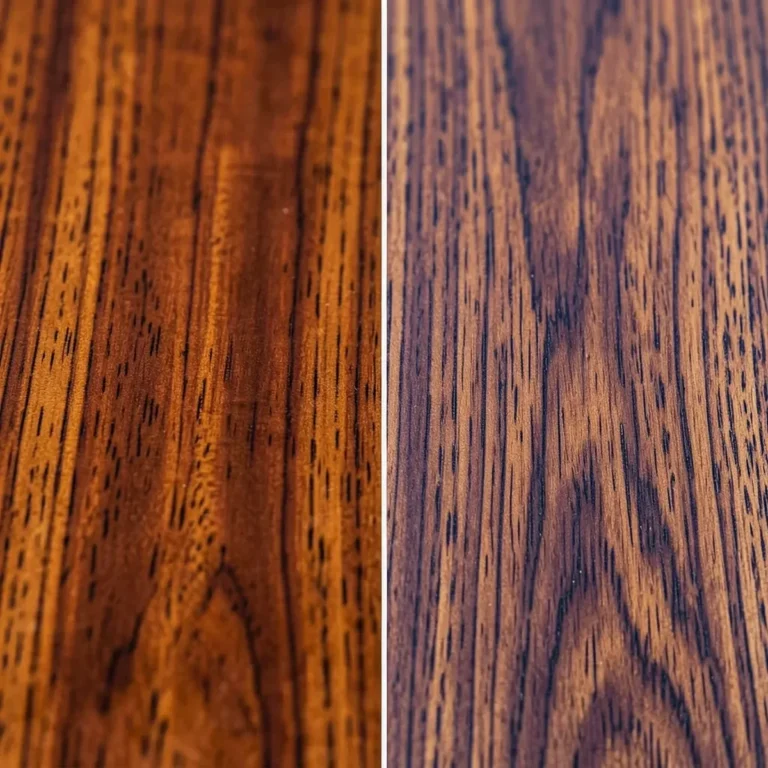
Check the listing or supplier for the actual species name (Swietenia macrophylla or S. mahagoni), not just the word “mahogany” or a color description. A reputable supplier of genuine mahogany can typically speak to sourcing given the CITES documentation requirements — a substitute wood colored to match has no such paper trail because it doesn’t need one. Visually, genuine mahogany shows a fine, straight, slightly interlocked grain and a consistent reddish-brown color that deepens with age; a stained substitute often shows blotchy stain absorption or visible pale sapwood streaks the stain didn’t fully cover.

Why The Distinction Actually Matters
Genuine mahogany’s real advantages — rot resistance, dimensional stability, workability with hand tools — are the reasons it commanded a premium for centuries in furniture, boat trim, and musical instruments. African mahogany shares much of that real performance at a lower price, which is why it’s become the practical default for most commercial applications today; it’s a reasonable substitution, not a downgrade. A stained pine or MDF product, by contrast, gets none of the real durability benefit — you’re paying for a look, not the wood’s actual properties, and knowing the difference is what lets you match the product to what you’re actually trying to achieve.
Genuine Mahogany vs. Its Common Substitutes: A Real Comparison
The numbers below come from published wood-density data (Janka hardness scale) and CITES/USDA trade records — not marketing copy. One correction worth flagging up front: genuine mahogany is actually a moderately soft hardwood, not a premium-hard one. At roughly 800–900 lbf on the Janka scale, it’s noticeably softer than red oak (about 1,290 lbf) or hard maple (about 1,450 lbf) — mahogany’s reputation comes from workability, stability, and rot resistance, not raw hardness.
| Wood | Genus / Species | Janka Hardness | CITES Status | Typical Role |
|---|---|---|---|---|
| Genuine (Honduran) Mahogany | Swietenia macrophylla | ~800–900 lbf | Appendix II (since 2003) | Fine furniture, boat trim, guitar tonewood |
| Genuine (Cuban) Mahogany | Swietenia mahagoni | ~800–900 lbf | Appendix II (since 2003) | Historical antiques; commercially scarce today |
| African Mahogany | Khaya spp. | ~830–1,070 lbf (varies by species) | Not CITES-restricted | Legitimate lower-cost substitute, cabinetry |
| Philippine “Mahogany” | Shorea spp. | ~700–1,060 lbf (varies by species) | Not CITES-restricted | Plywood, trim — not a true mahogany at all |
| Stained Pine/MDF “Mahogany-Finish” | N/A — different wood entirely | Varies by base material | N/A | Budget furniture sold on color alone |
Real Historical And Modern Uses
Genuine mahogany’s reputation isn’t recent marketing — it has a documented track record. Thomas Chippendale’s furniture workshop popularized mahogany in English furniture starting around 1754, and the wood’s stability and fine grain made it the standard for high-end case pieces for the next century. In the 20th century, Chris-Craft and other classic boatbuilders used genuine mahogany for hull and deck trim specifically because of its rot resistance and dimensional stability in wet conditions — a real functional reason, not just an aesthetic one. It’s also a long-established tonewood: guitar backs, sides, and necks made from genuine or African mahogany are valued for a warm, midrange-forward tone, which is why the wood shows up on instrument spec sheets rather than just furniture catalogs.
Today, genuine Swietenia lumber mostly shows up in small-scale, high-value applications — inlay work, instrument parts, restoration of existing antiques, and small furniture components like the board referenced above — rather than full furniture-grade production runs, largely because CITES documentation and reduced supply have pushed genuine material toward a specialty price tier. African mahogany has absorbed most of the volume furniture and cabinetry market that genuine mahogany historically served.
What Genuine Mahogany Actually Costs, And Why
Price is the fastest practical tell that separates genuine mahogany from its substitutes, and the reason isn’t arbitrary markup — it traces directly back to the CITES Appendix II listing. Every international shipment of Swietenia lumber requires export permits and documentation proving legal, sustainable harvest, which adds real cost and limits supply compared to unrestricted species. A small board like the one referenced above running around $28 for a 3/4″ x 3″ x 24″ piece reflects that reality: genuine mahogany in furniture-grade dimensions frequently runs several times the per-board-foot price of African mahogany, and many times the price of a stained substitute. If a “mahogany” product is priced in line with basic pine or poplar, that price alone is a strong signal it isn’t genuine Swietenia lumber, regardless of what the listing title says.
This also explains why most retailers selling genuine mahogany focus on small components — inlay strips, instrument parts, restoration patches — rather than large dimensional lumber. A specialty woodworking supplier can justify sourcing and documenting a small, high-margin board; stocking full sheets or furniture-grade planks of a CITES-restricted species at volume is a different, much costlier undertaking that most general lumber suppliers don’t take on.
Related Mahogany Guides On This Site
Genuine mahogany connects to several other topics covered in more depth elsewhere on this site — each takes a distinct angle rather than repeating this authenticity-verification guide:
- Types of Mahogany Wood — full side-by-side comparison of genuine, African, Philippine, and Cuban mahogany.
- Mahogany Wood Identification — the 8-step visual test for telling genuine mahogany from look-alikes by grain and color.
- Mahogany Wood Properties — verified hardness, workability, and finishing data for genuine versus substitute species.
- Mahogany Furniture History — why mahogany replaced walnut in 18th-century cabinetmaking, and how to spot genuine mahogany furniture.
- Mahogany Wood Unstained — what genuine mahogany looks like in its natural, unfinished state.
Frequently Asked Questions
What species counts as genuine mahogany?
Swietenia macrophylla (Honduran/Big-leaf mahogany) and Swietenia mahagoni (Cuban/West Indies mahogany, now commercially rare). Both are CITES Appendix II-restricted since 2003.
Is African mahogany genuine mahogany?
Not in the strict botanical sense — it’s from the Khaya genus, a close relative, not Swietenia. It’s a legitimate, widely used substitute with similar real properties, not a fake, just a different genus than “genuine” historically refers to.
How can I tell if a product is genuine mahogany or a stained substitute?
Check the listing for the actual species name, not just the word “mahogany.” Genuine mahogany also shows fine, consistent grain and color; a stained substitute often shows blotchy absorption or visible pale streaks underneath the stain.
Conclusion
Genuine mahogany has a real, narrow botanical definition — Swietenia macrophylla or S. mahagoni specifically — and a lot of what’s sold under the mahogany name today is a legitimate relative (African), an unrelated substitute (Philippine/Shorea), or simply a stain job. Checking the species name before buying is the difference between getting the real historical wood and getting something that only looks like it.
Sponsored / affiliate links. As an Amazon Associate I earn from qualifying purchases. I may earn additional commission from eligible campaigns.