Wood Finish Stain Marker: How It Works & How to Match It
A wood finish stain marker is a felt-tip pen filled with oil-based wood stain, built to recolor a scratch, nick, or worn spot on stained wood without refinishing the whole piece. It only replaces color — it doesn’t fill missing wood, seal the surface, or work over a fully cured clear coat without prep. Used correctly, one marker and a clean cloth fix most surface scratches on furniture, cabinets, and floors in under ten minutes.
Quick Answer
A wood finish stain marker (Minwax’s name for the product; Varathane, General Finishes, and Rejuvenate sell equivalents) is an oil- or water-based stain in a felt-tip pen. It recolors surface scratches by soaking dye into exposed wood grain, dries in 4–6 hours, and does not protect or seal — high-touch surfaces like tabletops and floors still need a wipe-on topcoat afterward for the repair to hold up.
What Is a Wood Finish Stain Marker?
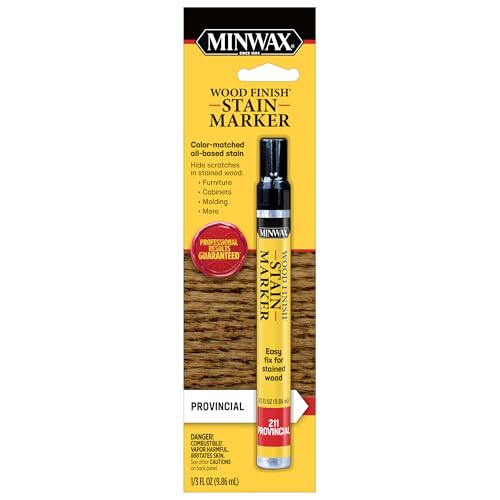
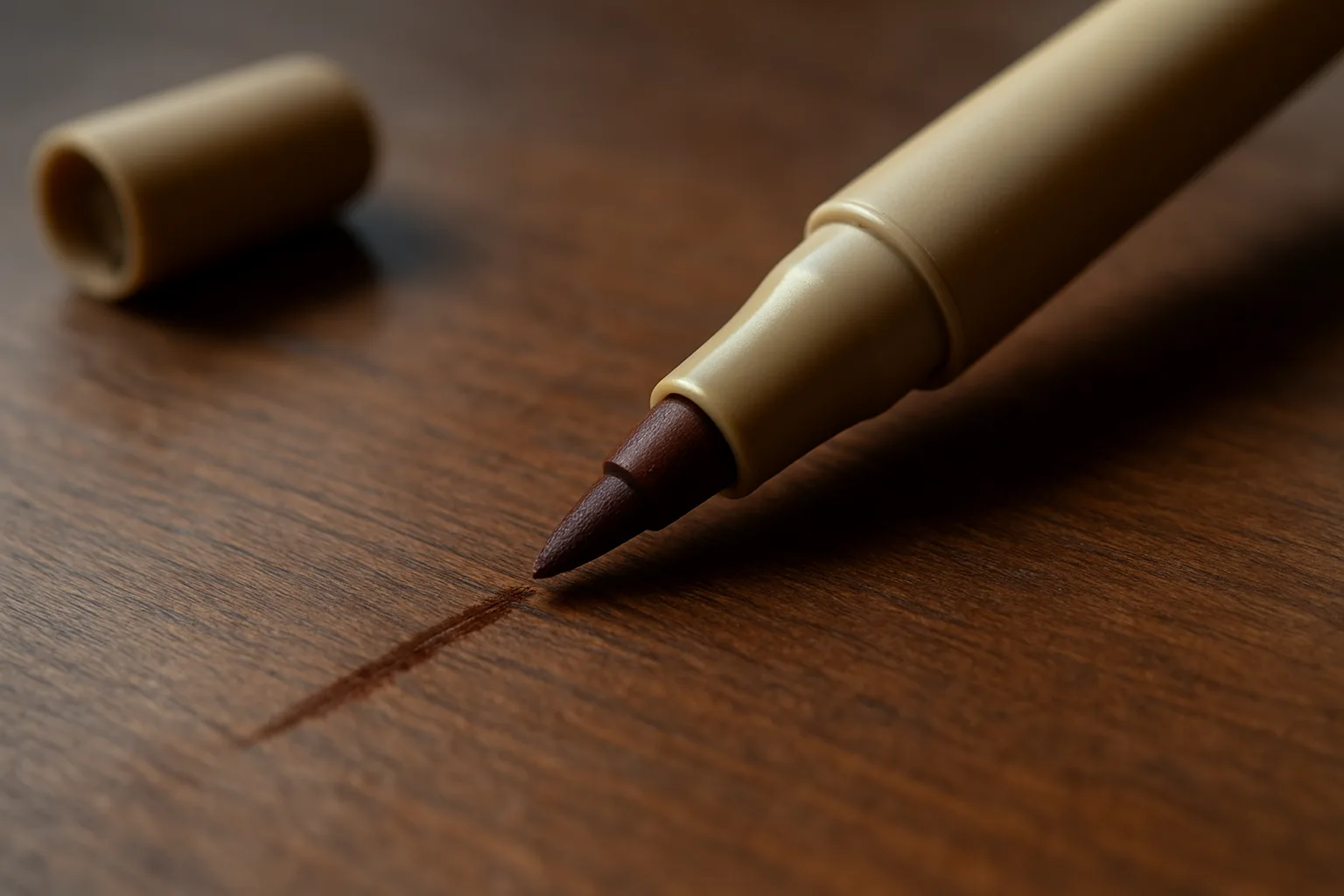
A wood finish stain marker is a pen-format applicator loaded with pigmented wood stain instead of ink, designed to deposit color into damaged wood fibers. Minwax’s own version is literally named “Wood Finish Stain Marker” — the same oil-based Wood Finish formula the brand sells in cans, packaged in a felt-tip barrel for small repairs.
It is not a general craft marker or a permanent marker repurposed for wood. A standard Sharpie is dye-based for paper and sits on top of a finish as a flat, uniform color; a wood finish stain marker is formulated to penetrate open wood grain the way a can of stain does, which is why it blends into surrounding wood tone instead of looking like a drawn-on line.
Four brands currently sell a version of this product: Minwax (oil-based, sold as single shades matching its 24-color Wood Finish line), Varathane by Rust-Oleum (oil-based, 12 named colors), General Finishes (oil-based, 15 color groups meant to be layered), and Rejuvenate (water-based, the only one of the four not built on an oil carrier).
How Does a Wood Finish Stain Marker Work?
A wood finish stain marker works by carrying dye and binder in a solvent that soaks into open wood pores, the same mechanism as liquid stain, just metered through a felt tip instead of a rag. Minwax’s product specifications list a 4–6 hour dry time, an immediate recoat window, one recommended coat, and mineral spirits for cleanup — identical handling to their canned stain.
The felt tip only holds enough stain for a few seconds of continuous contact before it starts running dry — work in short, overlapping strokes rather than dragging it the full length of a long scratch in one pass. Re-prime against scrap wood between strokes if the color starts to look patchy.
Because the mechanism is penetration, not film-building, the marker only works where wood fiber is actually exposed. A surface that’s still fully coated in old finish will resist the stain almost entirely, which is the source of most “it didn’t work” complaints.
How Do You Use a Wood Finish Stain Marker?
Shake the marker, prime the tip on scrap wood until stain flows evenly, then apply light strokes along the wood grain and blot — never rub — the excess with a clean cloth within seconds of application. The full sequence takes under ten minutes of active work; full color cure takes 4–6 hours per the manufacturer label.
- Shake the marker for several seconds until the internal mixing ball moves freely.
- Press the tip on a scrap piece of wood or a paper towel until stain flows evenly — do this before every use, not just the first.
- Test the color on a hidden spot first: inside a drawer, the underside of a shelf, or a floor spot a rug normally covers.
- Apply the stain in short strokes running with the wood grain, not across it, working only the damaged area.
- Blot the excess immediately with a clean, dry cloth — light dabbing pressure, not a wiping motion, which drags color outside the repair.
- Let it dry the full 4–6 hours before judging the final color or adding a second light pass.
- Recap tightly and store the marker on its side rather than tip-down, so the felt doesn’t flood or dry unevenly between uses.
For damage where a fingernail catches in the groove rather than gliding over it, color alone won’t fix it — that’s missing wood, not a color problem, and needs a wax filler stick first. Our wood marker buying guide covers that fingernail test and compares six specific marker and filler products if you’re deciding what to buy.
Do You Need a Topcoat After Using a Stain Marker?
Yes, on any surface that gets regular hand contact or foot traffic — a stain marker only replaces color, not the protective layer that was scratched away, so the repaired spot is left bare to moisture and wear until something seals it again. None of the four major brands’ product pages mention this step, which is why so many touch-ups fade or darken again within weeks on tables and floors.
A small dab of wipe-on polyurethane, paste wax, or the same topcoat already on the rest of the piece over the dried stain closes that gap. Furniture in low-touch spots — the back of a cabinet, a picture frame — can usually skip this step; anything you set a coffee cup or a shoe on cannot.
Will a Stain Marker Work Over Polyurethane or Another Sealed Finish?
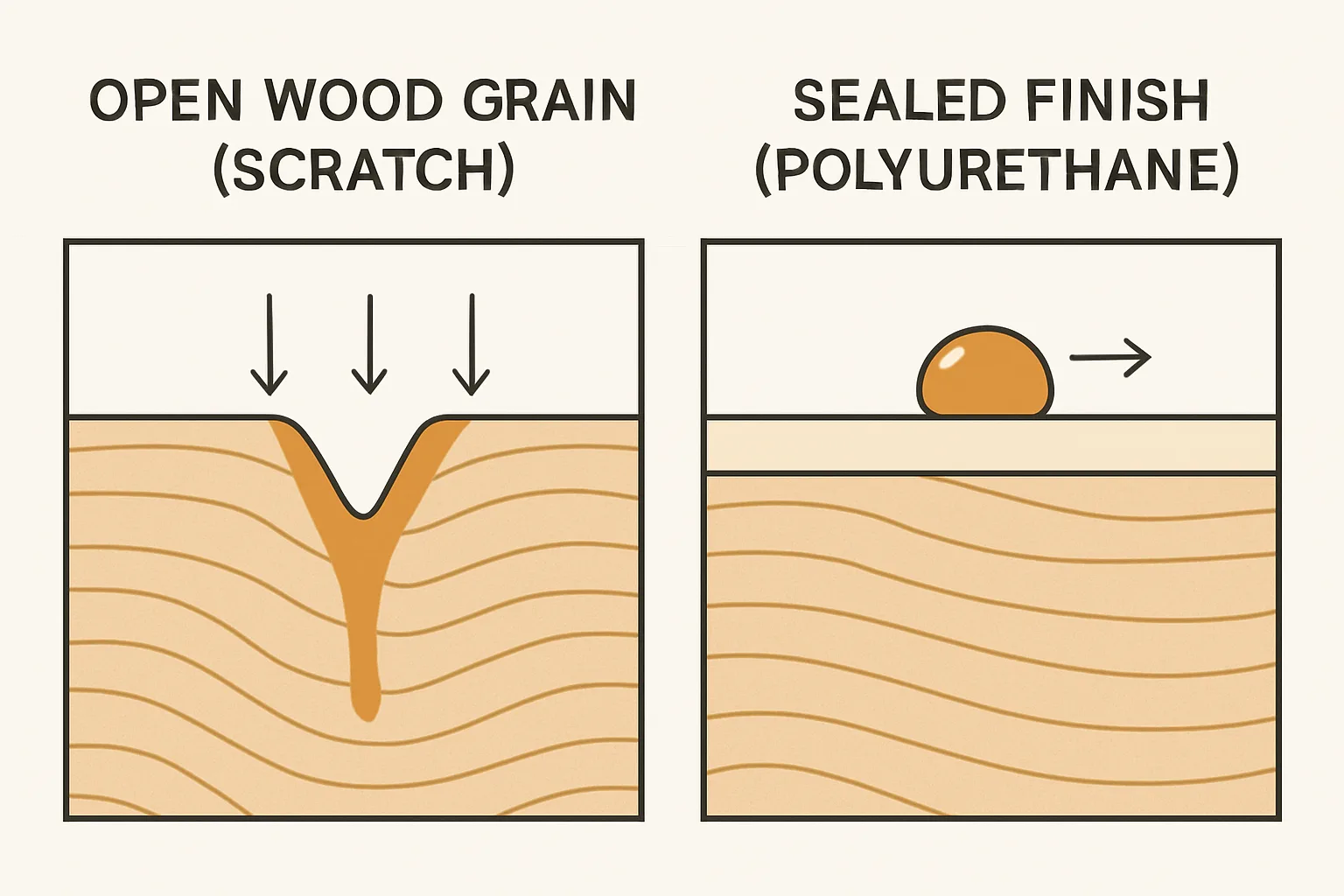
No, not on a surface where the finish film is still intact — a stain marker needs open wood grain to penetrate, and an unbroken polyurethane, lacquer, or varnish layer blocks it the same way it blocks a spilled drink. The color will sit on top, wipe around unevenly, and often never fully dry.
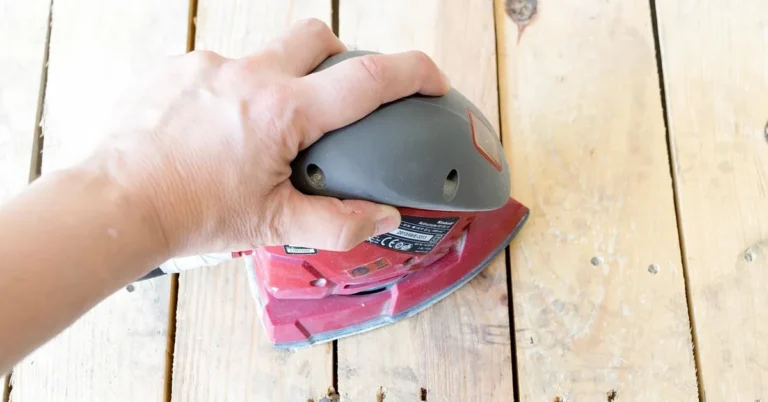
A genuine scratch that’s cut through the finish down to bare wood is different — the marker only needs to reach fiber inside that specific channel, not the surrounding intact finish. If a scuffed area looks dull but a fingernail can’t feel any break in the film, scuff it lightly with fine sandpaper first to open the surface before the stain will take.
Wood Stain Marker vs. Wax Filler Stick: What’s the Real Difference?
A stain marker adds color only; a wax filler stick adds material, pressing softened wax into a void to rebuild the missing surface before any color goes on top. Reach for a marker on a scratch that’s purely a color break with no missing wood; reach for wax first on anything deep enough to catch a fingernail.
The two aren’t competing products — on a chip or gouge, the professional sequence is wax first to rebuild the surface, then marker on top to restore color, since wax alone leaves a correctly-shaped but wrong-colored patch. For scratches where you’re not sure which format fits, our wood scratch remover comparison lines up markers, wax sticks, liquid covers, and finish restorers side by side by price and color range.
How Do You Match the Marker Color to Your Wood Tone Across Brands?
Match by testing candidate markers against the base wood tone in a hidden spot, not the darkest grain lines, and choose one shade lighter than your first guess — color is easy to deepen with a second pass and hard to lighten once applied. Cross-brand shade ranges differ enough that knowing which system you’re shopping matters as much as the color name.
| Brand | Carrier | Shade Range | How Shades Are Sold |
|---|---|---|---|
| Minwax Wood Finish | Oil-based | Matches most of Minwax’s 24-color Wood Finish stain line | Individual single-shade markers, plus multi-packs like the 6-marker Early American set |
| Varathane | Oil-based | 12 named colors across its touch-up marker range | Individual markers or warm/cool-tone assortment kits |
| General Finishes | Oil-based | 15 color groups, each covering a range of its gel, oil, water-based, and dye stains | Sold as a full 15-marker assortment, designed to be layered/combined |
| Rejuvenate | Water-based | 12 colors across two 6-marker sets (brown wood tones; white/gray tones) | Fixed 6-marker packs only, meant to be mixed for an exact match |
The practical shortcut: if you know your piece was originally stained with a specific Minwax, Varathane, or General Finishes color, buy that brand’s matching single marker or group first — it will read closer to the original than mixing a generic multi-tone kit. If you don’t know the original stain, General Finishes’ 15-group system or a light-to-dark multi-marker set gives more chances to blend a close match, since several brands’ own instructions describe combining two or more markers to fine-tune the tone. See our Minwax stain color chart for the full 24-color reference if Minwax is your starting point.
Does a Wood Finish Stain Marker Work on Hardwood Floors and Cabinets?
Yes — the same scratch-versus-gouge rule that applies to furniture applies to floors and cabinets: a marker fixes color-only surface scratches, while anything deep enough to catch a fingernail needs filler first. Floors and cabinets see more foot and hand traffic, so the topcoat step above matters even more there than on a rarely-touched shelf.
For scratches that run wider or deeper than a marker can realistically cover — a common issue on high-traffic hallway floors — see our guide to repairing hardwood floor scratches by depth for the floor-specific sanding and refinishing thresholds.
Is a Wood Finish Stain Marker Permanent? How Long Does It Last?
Yes, the color cures permanently once dry, and a correctly-applied touch-up typically holds for one to several years of normal indoor use before it visibly fades. Markers themselves also store well — unopened or lightly-used pens can sit for several years without drying out, and a hardened tip usually recovers after an overnight soak in mineral spirits.
Direct sunlight and repeated cleaning or abrasion in the same spot shorten that window, since UV and friction fade the same way they fade the surrounding original finish. When it does fade, reapplication is the same few minutes of work as the first repair.
Frequently Asked Questions
Can I use a regular marker or Sharpie instead of a wood finish stain marker?
Not for a repair you want to be invisible. A Sharpie is dye-based for paper and craft use, sits on top of the finish as a flat, single-tone color, and won’t penetrate wood grain the way a wood-finish marker’s stain does — it reads as an obviously different, uniform mark rather than blending into the surrounding wood tone.
What if the felt tip dries out between uses?
Remove the tip if possible and soak it in mineral spirits overnight, then re-prime it on scrap wood before using it on the repair. Storing the marker horizontally rather than tip-down between uses prevents most drying-out issues in the first place.
Can you remove a wood finish stain marker if you apply the wrong color?
While it’s still wet, wipe it immediately with a cloth dampened in mineral spirits to lift most of the color before it sets. Once fully cured, the stain has penetrated the wood fiber the same as a canned stain would, so full removal usually means light sanding down to bare wood in that spot and restaining.
Do wood finish stain markers smell or contain strong solvents?
Oil-based markers from Minwax, Varathane, and General Finishes carry the same mineral-spirit solvent smell as canned oil stain, though in a much smaller quantity per application. Rejuvenate’s water-based formula is the low-odor option if solvent smell is a concern in an occupied room.
Conclusion
A wood finish stain marker fixes color-only damage in minutes, but only three things actually determine whether the repair holds: matching the shade to your specific brand and stain, confirming the finish is actually broken (not just dull) before you apply it, and adding a topcoat on any surface that gets touched or walked on. Skip any one of those and the “quick fix” fades, mismatches, or never takes at all. For product picks and a side-by-side of six specific markers and filler kits, see our best wood markers for furniture touch-ups guide, or start from our full wood finishing guide if the damage turns out to need more than a touch-up.
Sponsored / affiliate links. As an Amazon Associate I earn from qualifying purchases. I may earn additional commission from eligible campaigns.