How to Build a Wood Fence on a Slope (Racked vs. Stepped)
Rack a wood fence on grades under 15% so the rails follow the ground in one continuous run; switch to stepping above that, since forcing a rated panel past its rack angle cracks the joints. Skip the extra 6 inches of post depth needed per 10% of grade and frost heave finds the shallow side within a season. This guide covers slope assessment, racking vs. stepping, post depth and spacing, and what a sloped install adds to your budget.
Should You Rack or Step Your Fence on a Slope?
Best Post Level Pick

Irwin Tools 1794482 Magnetic Post Level
Straps magnetically to two adjacent faces of a 4×4 post so you can check plumb in both directions without holding it.
- Best for: plumbing posts solo on uneven, sloped ground
- Why we picked it: magnetic hold frees both hands for backfilling while the post stays checked
- Main drawback: magnets need a steel post or bracket — use the elastic strap style on plain wood posts
Compare more post level options
 Option 1 Swanson Magnetic Post Level
|
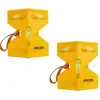 Option 2 Firecore 2-Pack Fence Post Level
|
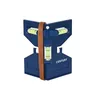 Option 3 Century Drill & Tool 72898 Post Level
|
As an Amazon Associate we earn from qualifying purchases.
The two methods solve the same problem — keeping a straight fence usable on ground that isn’t — in opposite ways. Racking angles the rails so the top and bottom of the fence follow the grade continuously, with no gap under the bottom rail. Stepping keeps every panel level and drops each one down at the post, so the fence descends the hill in stair-step sections instead of a smooth line.
Most manufactured wood panels are not built to rack. A panel engineered for stepping will split at the picket-to-rail joint if you force it to angle, so check the spec sheet before you buy if racking is the plan. Panels sold specifically as “rackable” use a routed or slotted rail that lets the pickets pivot.
| Slope Grade | Approx. Angle | Recommended Method | Typical Rack Range |
|---|---|---|---|
| Under 10% | ~6 degrees | Racking (standard rackable panel) | 10-15 degrees |
| 10-15% | 6-8 degrees | Racking (reinforced/aluminum-rail panel) | 20-30 degrees |
| 15-30% | 8-17 degrees | Stepping | Not applicable |
| Over 30% (max ~45 degrees) | 17-45 degrees | Stepping with retaining sections | Not applicable |
Racked fences also close the gap under the bottom rail completely, which matters if you’re fencing for a dog that will test every inch of the base. Stepped fences leave a triangular gap at each step unless you fill it with gravel boards, retaining wall block, or poured concrete curbing.
Planning and Layout: Mapping Your Fence Line on a Slope
Start at the highest point of the slope and work down — setting the first post at the top keeps your height reference consistent for every post after it. Stretch a string line from a stake at the top corner to a stake at the bottom corner, and use a line level to confirm how much drop you’re actually working with over the full run; guessing the grade by eye is the single most common reason a first-time layout ends up crooked.

- Measure the total drop: hook a line level to your string and record the vertical drop, in inches, from the top stake to the bottom stake.
- Divide into equal sections: mark post spacing (commonly 6 or 8 feet on-center) along the string, not along the slope of the ground, so every bay is the same width.
- Chalk each post location: mark the center of each hole so digging stays on line even after the string comes down.
- Check local rules before you dig: many municipalities require a permit or a height limit for fences over 6 feet, and utility locating (call 811) before any post hole.
Setting Fence Posts on a Slope: Depth, Frost Line and Spacing
Bury at least one-third of the post’s total length below grade, and go at least 6 inches below your local frost line regardless of what the one-third rule gives you — frost line depth ranges from 0 inches along the Gulf Coast to more than 60 inches in parts of the northern Midwest, so check with your local building department if you don’t already know your area’s number. On a slope, add roughly 6 inches of extra hole depth for every 10% of grade change, and always measure that depth from the lowest ground adjacent to the post — measuring from the high side leaves the downhill face of the hole too shallow, which is exactly where the post will lean first.
Set the corner and end posts first, since every line post in between gets positioned off the string stretched between them. Drop each post in plumb — not perpendicular to the slope, but truly vertical, checked on two adjacent faces with a level — then backfill with concrete or tamped gravel. A magnetic post level that straps to two faces at once makes this a one-hand job instead of a two-person one, which matters most on a slope where you’re already fighting footing.
For the exact number of posts and spacing across your specific run, our fence post spacing calculator works out the layout once you enter your fence length. If your posts are going into ground that stays damp at the base of the slope, read up on pressure-treated post ratings and how to keep wood posts from rotting in the ground before you backfill.
Attaching Stringers and Panels to a Sloped Layout
Cut stringers to length between each set of posts and attach them level (for stepping) or on the racked angle you measured earlier (for racking), using exterior-rated screws rather than nails at every connection — screws hold better under the constant racking stress a sloped fence puts on its joints. Install gravel boards along the base of each bay before the panels go in; they close the gap between panel and ground, keep splash-back off the bottom rail, and can be trimmed to follow the slope even on a stepped layout.
Slot panels into the stringers starting at the top post and working down the run. Expect to trim the last picket or two on a racked bay to keep the top line straight, and use wedge-shaped shims at any remaining gap between a panel and its post before driving the final screws. For the panel-by-panel mechanics of racking versus stepping in more detail, see our companion guide to installing wood fence panels on uneven ground.
What Does It Cost to Build a Fence on a Slope?
A wood fence typically runs $6 to $50 per linear foot installed, depending on picket style and height. Sloped or rocky ground adds to that baseline rather than replacing it — budget roughly 15% more labor for a gently sloped run and up to 40% more for steep or rocky terrain, since crews move slower digging angled holes and racking or stepping every bay takes longer than a flat, repeatable install.
| Cost Factor | Typical Range | When It Applies |
|---|---|---|
| Base installed cost | $6-$50 per linear foot | Flat ground, standard materials |
| Sloped-terrain labor premium | +15% to +40% | Any grade steep enough to require racking or stepping |
| Pre-install regrading | $1,022-$3,334 | Only if the slope needs leveling before posts go in |
📊 Sloped and rocky ground adds 15-40% to fence installation labor costs — Source: Angi/HomeAdvisor 2026 fencing cost data
DIY installation skips the labor markup entirely, which is where a sloped lot pays off the most — the extra time is yours, not billed by the hour. Renting a two-person auger for the post holes is usually worth it on a long, sloped run; hand-digging angled holes in compacted or rocky soil is the single biggest time sink DIYers underestimate.
Mistakes to Avoid When Building a Fence on a Slope
- Measuring post depth from the high side of the hole. This is the most common error I see and the fastest way to end up with a post that leans downhill within a year — always measure from the lowest adjacent grade.
- Racking a panel that isn’t rated for it. Forcing a stepped-only panel to angle cracks the rail-to-picket joint; check the manufacturer spec before installing, not after.
- Setting posts to follow the ground instead of a string line. A fence built to the contour of uneven soil, rather than to a level reference, ends up structurally weaker and more likely to rack loose over time.
- Skipping the frost line check. A hole that meets the one-third rule but sits above the local frost line will still heave in a hard winter.
- Ignoring gaps at the base on a stepped layout. Left open, these gaps let pets and water underneath; close them with gravel boards, shims, or retaining block as you go, not as an afterthought.
In the shop, the post-depth mistake above is the one I’ve seen trip up more first-time builders than any tool or technique question — a post that looks perfectly plumb sighted from the high side of a slope can still be shallow by several inches on the downhill face, and that’s exactly where frost heave and wind load go looking for the weak point first.
Frequently Asked Questions
How do you build a wooden fence on a slight slope?
On a slight slope (under about 10%), rack the fence: set posts plumb from the top of the run down, angle the rails inside the posts to follow the grade, and add roughly 6 inches of extra post depth for every 10% of grade. Most standard rackable panels handle this range without modification.
Should a fence be level or follow the ground?
Neither, exactly — individual posts should be plumb (perfectly vertical) rather than perpendicular to the slope, but the fence as a whole should follow the ground’s contour through racking or stepping rather than running dead level and leaving a rising gap underneath on one end.
What is the easiest fence to install on a slope?
A racked fence on a gentle grade (under 15%) is the easiest DIY option, since it uses standard panels and doesn’t require the extra cutting and fitting that stepping does. On steeper ground, stepping with pre-built panels is more forgiving than trying to rack past a panel’s rated angle.
How many degrees can a fence panel be racked?
Standard rackable wood panels typically handle 10 to 15 degrees of angle. Reinforced or metal-framed rackable panels can go 20 to 30 degrees. Beyond that, most manufacturers recommend switching to a stepped installation instead of forcing the rail joints further.
How deep should fence posts be on a slope?
Bury at least one-third of the post’s total length, and at least 6 inches below your local frost line, whichever is deeper. On sloped ground, add about 6 inches of extra depth for every 10% of grade change, measured from the lowest point of soil next to the post.
Conclusion
Racking and stepping solve the same slope in different ways — pick racking under about 15% grade for a continuous, gap-free line, and stepping above that so you’re not forcing panels past their rated angle. Get the post depth and frost-line numbers right before the first hole goes in, since that’s the step a sloped yard punishes hardest if it’s skipped.
Sponsored / affiliate links. As an Amazon Associate I earn from qualifying purchases. I may earn additional commission from eligible campaigns.