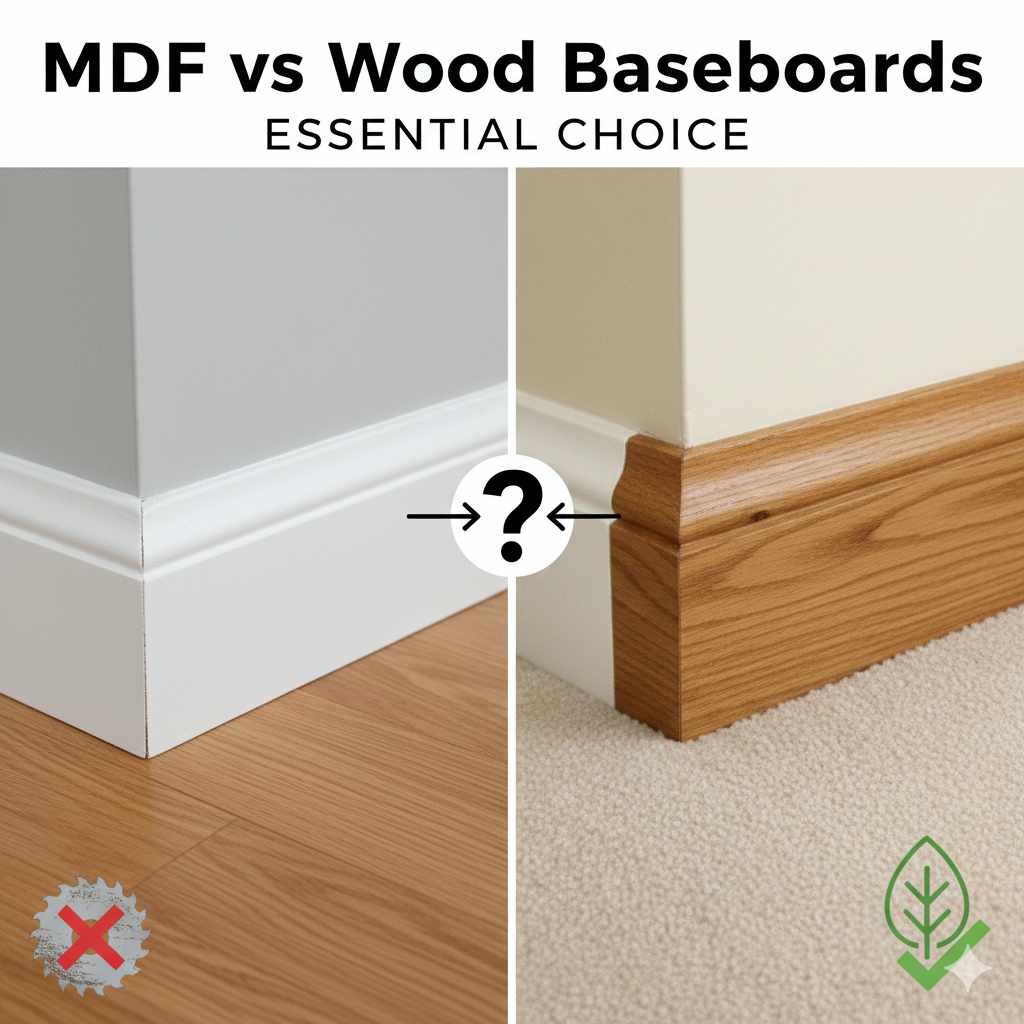
MDF vs Wood Baseboards: Essential Choice
Choosing between MDF and wood baseboards depends on your budget, desired look, and installation environment. Wood offers natural beauty and durability, ideal for high-traffic areas and custom finishes, while MDF is cost-effective, smooth for painting, and stable but less moisture-resistant and prone to damage.
Hey there, DIY friends and future woodworkers! Md Meraj here. We’ve all been there: standing in the paint aisle, staring at two very different-looking strips of material, wondering, “Which one is right for my baseboards?” It’s a common question, and honestly, it can feel a bit overwhelming when you’re just starting out. You want your home to look great, but you also want to make a smart, lasting choice. Don’t you worry! We’ll break down the differences between MDF and wood baseboards in a way that’s super simple, no confusing jargon. By the end of this guide, you’ll feel confident in picking the perfect baseboard for your next project.
MDF vs Wood Baseboards: Making the Essential Choice for Your Home
Baseboards are more than just trim; they’re the finishing touch that frames your rooms, hides those unsightly gaps between the wall and floor, and adds a professional, polished look. But when it comes to choosing what goes on your walls, you’ll quickly encounter two main players: Medium-Density Fiberboard (MDF) and solid wood. Each has its own set of pros and cons, and understanding these differences is key to making an “essential choice” that you’ll be happy with for years to come. Let’s dive in and explore what makes each material tick!
What Exactly is MDF?
MDF, or Medium-Density Fiberboard, isn’t exactly wood in the traditional sense, but it’s made from wood fibers. Think of it as a high-tech composite. It’s created by breaking down hardwood and softwood into tiny wood fibers, then combining them with wax and resin binders. These ingredients are pressed together under high heat and pressure to form flat, dense panels. This process results in a very smooth, uniform material that doesn’t have knots or grain patterns like solid wood. Because of this, MDF is a favorite for painting and creating clean, modern looks. You can learn more about its manufacturing process on sites like the National Park Service’s technical preservation services where they discuss its usage in historic contexts.
What is Solid Wood Baseboard?
Solid wood baseboards are what most people picture when they think of traditional trim. These are made from actual lumber from trees—like pine, oak, poplar, or maple. Each piece of solid wood has its own unique grain pattern, natural color variations, and sometimes even knots, giving it a natural, classic, and premium feel. Because it comes directly from a tree, it has inherent strength and can be sanded and refinished multiple times. The type of wood you choose can significantly impact its hardness, appearance, and cost, offering a wide range of aesthetic and functional possibilities for your home.
MDF vs. Wood Baseboards: A Detailed Comparison
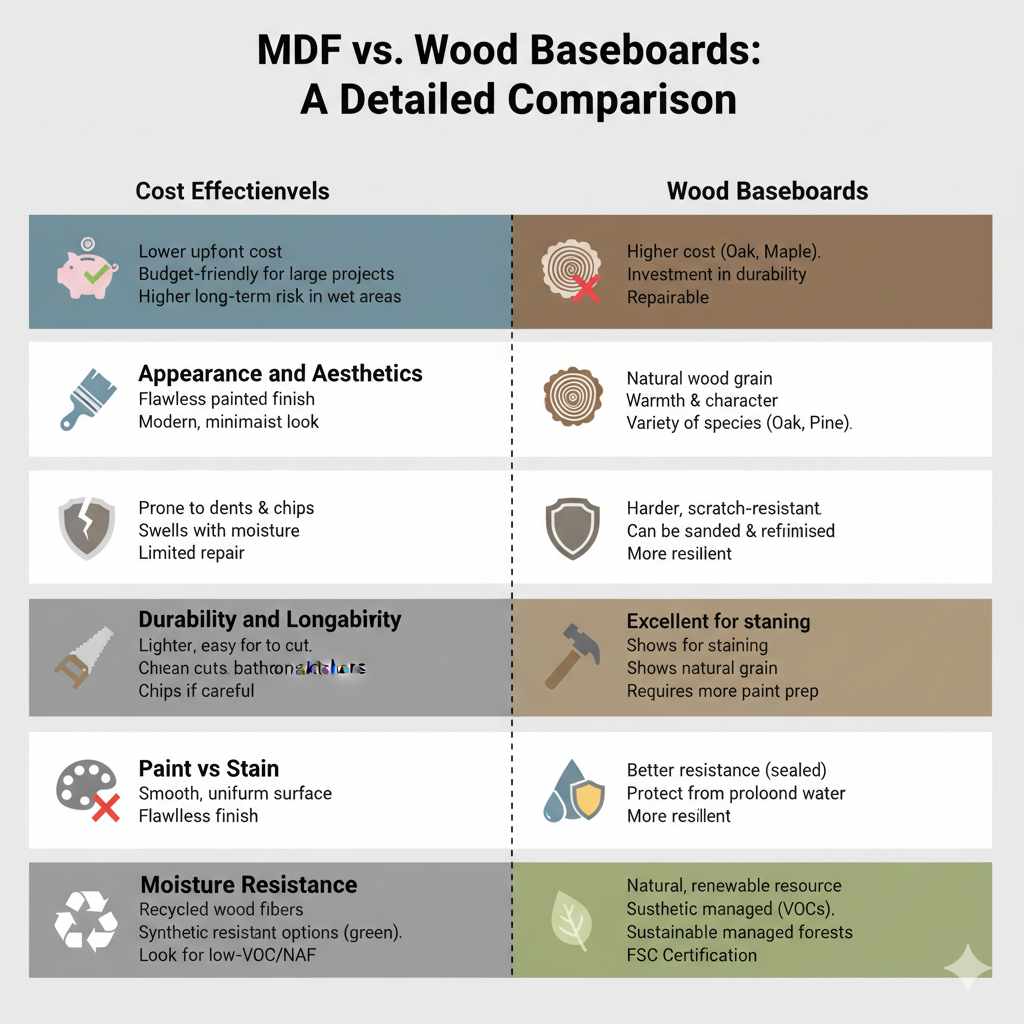
Deciding between MDF and wood baseboards is a big decision that impacts the final look, feel, and durability of your home’s interior. Let’s break down the key aspects to help you weigh your options. This isn’t just about what looks good now, but what will perform best over time.
Cost-Effectiveness
When budget is a primary concern, MDF often takes the lead. It’s typically more affordable than solid wood, especially when you consider the cost of common hardwoods like oak or maple. This lower price point makes it an attractive option for large projects or for homeowners looking to get the most house for their money. However, the lower upfront cost of MDF might be offset by its potential for damage and limited repair options down the line, especially in high-moisture areas.
Appearance and Aesthetics
Solid wood baseboards offer a natural, timeless beauty. The visible wood grain adds warmth and character that many homeowners find irreplaceable. You can choose from a variety of wood species, each with its own distinct grain and color, allowing for a highly customized look. Popular choices like oak and pine provide different aesthetics, from rustic charm to elegant sophistication. MDF, on the other hand, is perfectly smooth. This makes it an excellent canvas for painting, allowing for crisp, clean lines and a flawless painted finish. If you’re aiming for a modern, minimalist look or a bold, painted color, MDF shines. For a natural, stained finish, solid wood is usually the preferred choice. You can explore different wood grain finishes and learn about wood types on resources like the Wood Database, which catalog various wood species and their characteristics.
Durability and Longevity
Solid wood is generally more durable than MDF. It’s harder, more resistant to scratches and dents, and can withstand the wear and tear of everyday life, especially in busy households. In cases of minor damage, solid wood can often be repaired by sanding and refinishing. MDF, while dense, is more susceptible to damage from impacts and can chip or dent more easily. Its biggest weakness is moisture; it will swell and deteriorate if exposed to water for extended periods, making it unsuitable for bathrooms, kitchens, or basements without significant protection. Solid wood, while still vulnerable to moisture over time, is generally more resilient and can handle occasional spills better.
Installation and Workability
When it comes to installation, both MDF and wood are relatively straightforward for DIYers. However, there are subtle differences. MDF is lighter than many hardwoods, which can make it easier to handle and cut. Its consistent density means that saw blades don’t have to contend with knots, leading to cleaner cuts. However, MDF can be more prone to chipping if not handled carefully during cutting and installation. Solid wood, depending on the species, can be harder to cut and drill. It’s also heavier, which might require more effort during installation. Both materials can be fastened effectively with nails or screws, but pre-drilling is often recommended for solid wood to prevent splitting, especially near the ends of longer boards.
Paint vs. Stain
This is a major differentiator. MDF is a dream for painters. Its super-smooth, uniform surface takes paint beautifully, offering a flawless, professional finish with minimal prep work. It’s ideal for achieving that crisp, clean painted look. Solid wood, while it can be painted, often requires more prep work, such as priming and sanding, to conceal the wood grain and achieve a smooth finish. For homeowners who love the natural look of wood, solid wood is unbeatable for staining. The rich patterns of the wood grain come through beautifully with a stain, showcasing its natural beauty. MDF cannot be stained effectively to achieve a wood-like appearance.
Moisture Resistance
This is where MDF often falls short. Standard MDF is highly susceptible to moisture. Even small spills, if left unattended, can cause the material to swell, warp, and crumble. This makes it a risky choice for areas prone to humidity or water exposure, such as bathrooms, laundry rooms, or unfinished basements. While some manufacturers offer moisture-resistant MDF (often colored green), it’s still not as robust as solid wood in damp environments. Solid wood, when properly sealed and finished, offers much better resistance to moisture. However, it’s still advisable to protect any wood baseboard from prolonged water exposure.
Environmental Impact
The environmental impact of both materials can be viewed differently. MDF is made from recycled wood fibers, which can be a positive aspect, utilizing waste materials. However, the manufacturing process involves synthetic resins and adhesives, which can emit volatile organic compounds (VOCs) if not properly certified. Look for low-VOC or no-added-formaldehyde (NAF) MDF options. Solid wood is a natural, renewable resource if sourced from sustainably managed forests. Certifications like FSC (Forest Stewardship Council) can help ensure responsible forestry practices. The environmental impact of choosing wood also depends on the species and where it’s harvested from.
Pros and Cons at a Glance
To help you quickly compare, here’s a handy summary of the advantages and disadvantages of MDF and wood baseboards:
MDF Baseboards:
- Pros:
- More affordable price point
- Extremely smooth surface, perfect for painting
- Uniform density, no knots or grain
- Lightweight and easy to handle
- Stable and less prone to warping from humidity changes (unless exposed to standing water)
- Cons:
- Poor moisture resistance; can swell and crumble
- More susceptible to dents and chipping from impacts
- Cannot be stained to look like wood
- Dust from cutting can be fine and irritating
- May contain formaldehyde (look for NAF options)
Solid Wood Baseboards:
- Pros:
- Natural beauty and unique grain patterns
- Durable and long-lasting
- Can be sanded and refinished multiple times
- Resistant to moisture (when properly sealed)
- Can be stained or painted for diverse looks
- Environmentally friendly if sourced sustainably
- Cons:
- More expensive, especially for hardwoods
- Can be heavier and more challenging to cut/install
- Prone to warping with extreme humidity fluctuations if not acclimated properly
- Knots in some wood types can affect appearance and workability
- Requires more prep work for a smooth painted finish
When to Choose Which: Practical Scenarios
Understanding the technical differences is one thing, but knowing when to apply them is another. Let’s look at some common situations:
Choose MDF If:
- You are painting your baseboards a solid color (especially white or a bold hue).
- You are on a tight budget but want a clean, modern look.
- The baseboards will be installed in a dry, low-traffic area of your home (e.g., a hallway or living room that doesn’t experience spills).
- You’re looking for a material that is very stable and won’t expand or contract much with minor temperature changes.
- You want a perfectly smooth, uniform finish without any wood grain distractions.
Choose Solid Wood If:
- You want a natural, stained wood finish to showcase the grain.
- You are installing baseboards in a high-moisture area like a bathroom or kitchen where durability and water resistance are crucial (and you plan on sealing it well!).
- You need unmatched durability for high-traffic hallways or children’s play areas.
- You plan on refinishing your floors and baseboards in the future and want the ability to sand and renew them.
- You appreciate the unique character and warmth that natural wood brings to a room.
- Authenticity is key, and you want a traditional, high-end look that ages gracefully.
Installation Tips for Beginners
No matter which material you choose, a successful installation makes all the difference. Here are some beginner-friendly tips:
- Measure Twice, Cut Once: Always measure the length of the wall section you need to cover. It’s wise to buy a little extra to account for mistakes or tricky angles.
- Acclimate the Material: Before installing, let both MDF and wood baseboards sit in the room where they’ll be installed for at least 48 hours. This helps them adjust to the room’s temperature and humidity, reducing the chance of warping or shrinking after installation.
- Use the Right Tools: A sharp miter saw is essential for making clean, angled cuts, especially for corners. A finish nailer with appropriate nails (16 or 18 gauge) is ideal for fastening them securely without splitting the material. If you don’t have a nailer, a hammer and finishing nails are perfectly fine, but take care not to split the wood or damage the MDF.
- Start in a Less Visible Area: If you’re new to this, practice your cuts and installations on a wall that’s not the most prominent in the room.
- Achieve Tight Joints: For inside corners, cut your baseboards at a 45-degree angle, with the long point ending at the corner. For outside corners, also use a 45-degree angle, but ensure the short point is at the corner. You might need to use a coping saw for a really perfect fit on inside corners, a skill that takes practice but yields beautiful results.
- Fill Nail Holes: Once installed, filling nail holes with wood putty or filler (matched to your paint or stain) will give your baseboards a seamless, professional look.
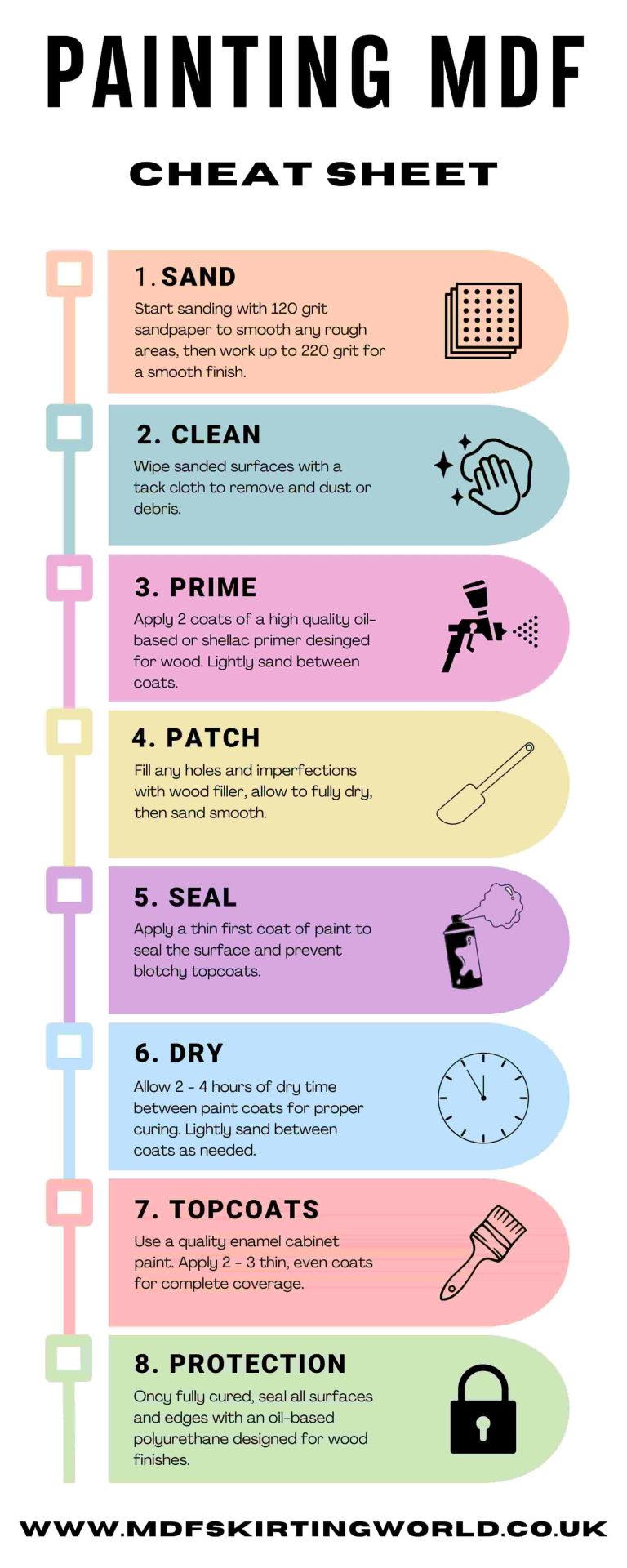
- Seal and Protect: For MDF, especially if it’s going anywhere there’s a slight chance of moisture, applying a good primer and multiple coats of paint is crucial. For wood, seal it with a quality primer and paint or a durable stain and topcoat to protect it.
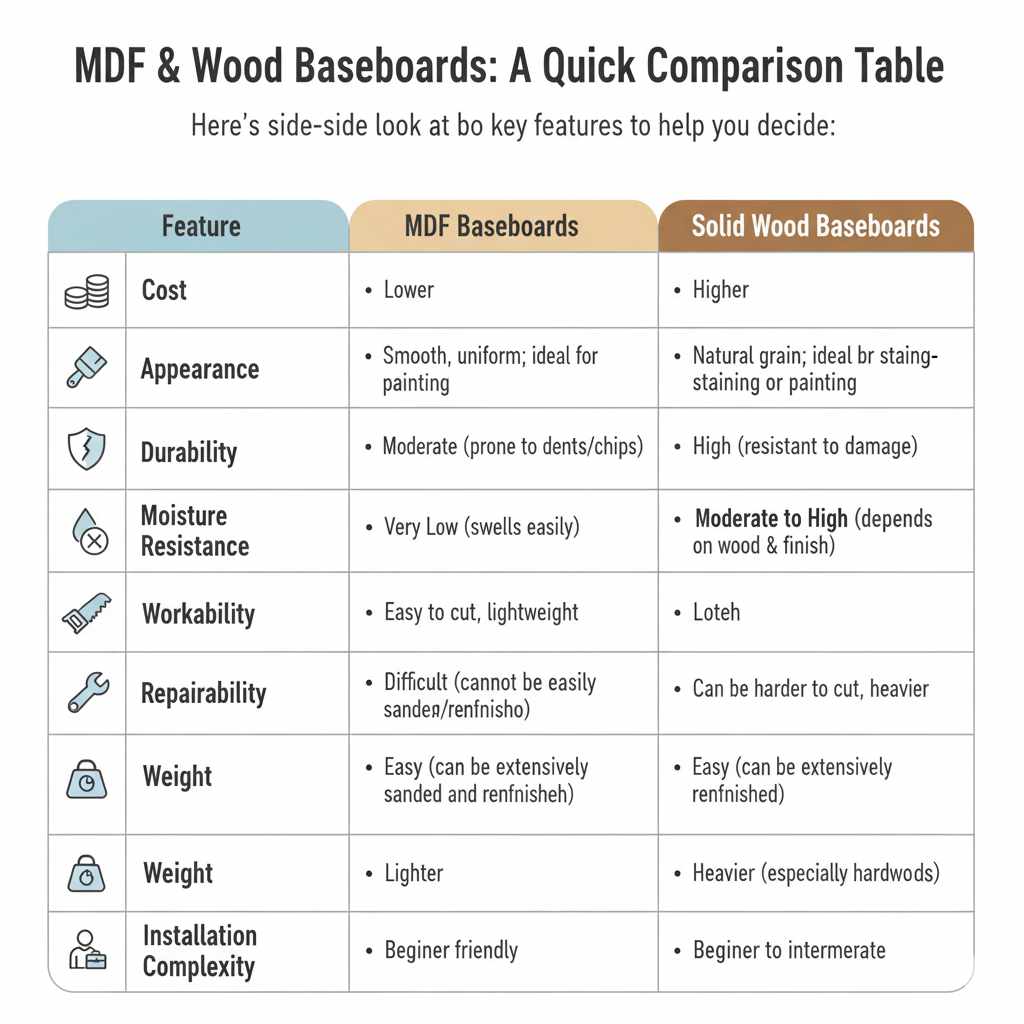
MDF & Wood Baseboards: A Quick Comparison Table
Here’s a side-by-side look at the key features to help you decide:
| Feature | MDF Baseboards | Solid Wood Baseboards |
|---|---|---|
| Cost | Lower | Higher |
| Appearance | Smooth, uniform; ideal for painting | Natural grain; ideal for staining or painting |
| Durability | Moderate (prone to dents/chips) | High (resistant to damage) |
| Moisture Resistance | Very Low (swells easily) | Moderate to High (depends on wood & finish) |
| Workability | Easy to cut, lightweight | Can be harder to cut, heavier |
| Repairability | Difficult (cannot be easily sanded/refinished) | Easy (can be extensively sanded and refinished) |
| Weight | Lighter | Heavier (especially hardwoods) |
| Installation Complexity | Beginner friendly | Beginner to intermediate |
Frequently Asked Questions (FAQ)
Q1: Can I mix MDF and wood baseboards in my house?
While you can, it’s generally not recommended for a cohesive look. Most homeowners prefer to stick with one material throughout their home for consistency. If you’re on a budget, you might use MDF in less visible areas and wood in more prominent spaces, but ensure they are painted the same color if the styles differ significantly.
Q2: Which is better for a DIY project, MDF or wood?
For beginners, MDF is often easier to work with due to its consistent density and lighter weight, making for cleaner cuts and easier handling. However, wood offers more versatility if you plan to stain and provides greater durability. Both are achievable for DIYers with the right tools and patience.
Q3: How do I protect MDF baseboards from moisture?
The best way to protect MDF is to prevent moisture exposure altogether. If it must be used in a slightly damp area, ensure it’s thoroughly primed with an oil-based primer, followed by at least two to three coats of high-quality paint. However, for true moisture-prone areas, solid wood is always a safer bet.
Q4: Can I paint over wood baseboards that have been stained?
Yes, you can paint over stained wood baseboards, but it requires proper preparation. You’ll need to clean them thoroughly, sand them to rough up the surface, and then apply a good quality primer (like an oil-based primer) before painting. This ensures good adhesion and a smooth finish.
Q5: Will MDF baseboards warp if I move house?
MDF itself is quite stable and doesn’t warp as much as solid wood due to changes in humidity under normal conditions. However, if the MDF baseboards sustain moisture damage (swelling), that portion would be warped. If they are intact, they are generally robust enough to be uninstalled and reinstalled, though care must be taken not to break them. Proper acclimation before installation is key to their stability.
Q6: How should I finish wood baseboards for a natural look?
To achieve a natural wood look, start by thoroughly sanding the wood, working through progressively finer grits of sandpaper. Clean off all dust. Then, apply a pre-stain conditioner if recommended for your wood type. Apply your chosen stain evenly, wiping off excess. Once the stain is dry, apply several coats of a clear protective finish, such as polyurethane or varnish, for durability and shine. Choose a finish sheen (matte, satin, semi-gloss) that complements your décor.
Conclusion: Your Baseboard Decision
So, there you have it! The choice between MDF and wood baseboards isn’t about one being definitively “better” than the other, but about finding the right fit for your specific project, budget, and aesthetic goals. If you’re aiming for a clean, painted finish and cost is a major factor, MDF is a fantastic, user-friendly option for dry areas.